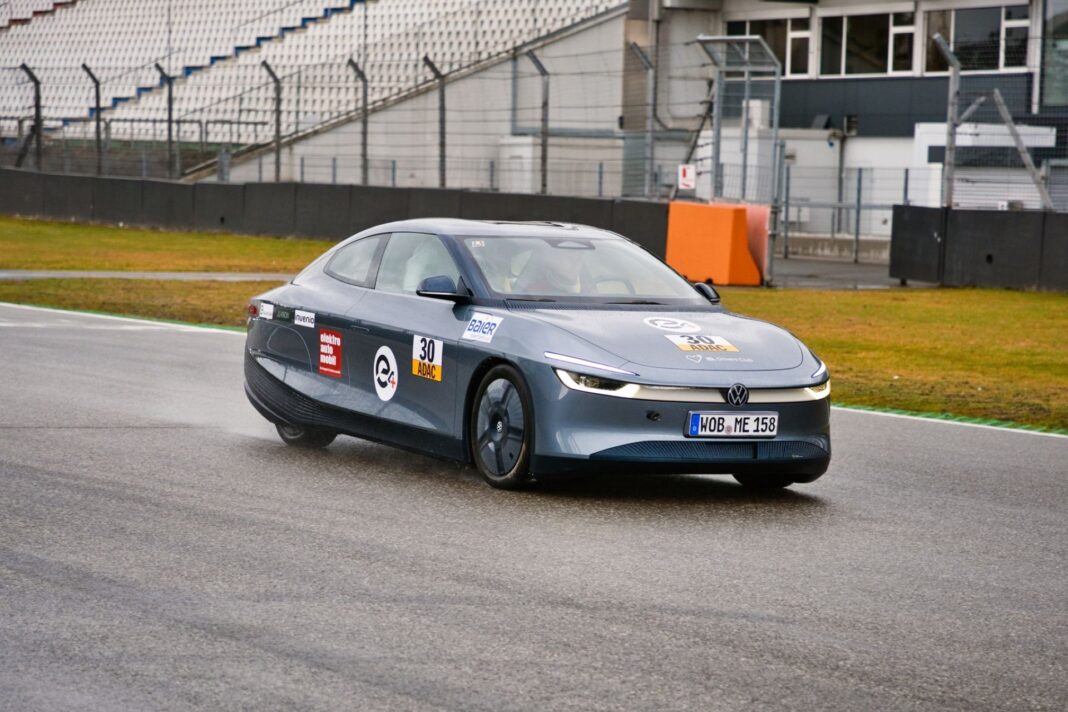
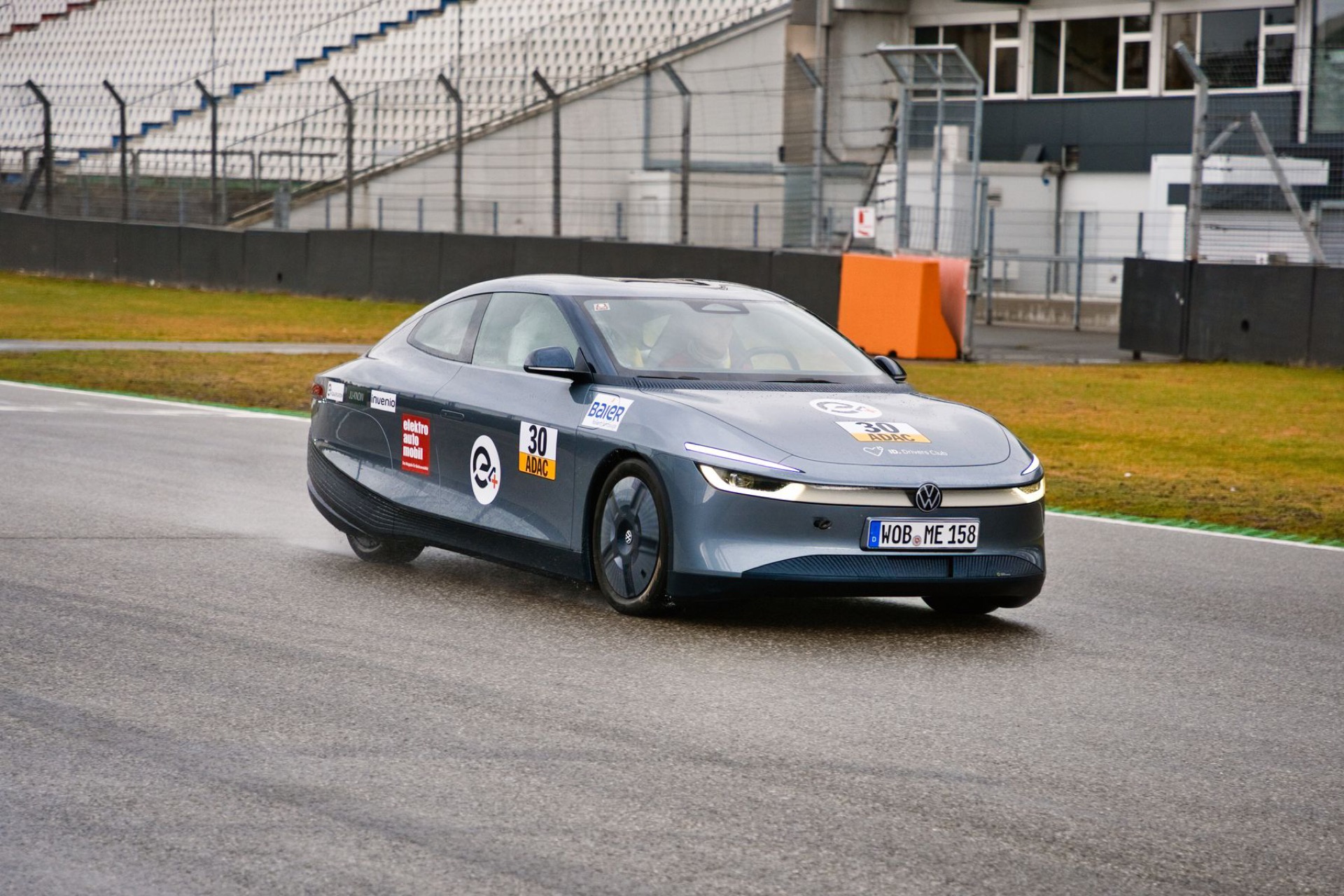
The Hockenheimring is one of Germany’s most iconic racing circuits. This is where Michael Schumacher was celebrated as a national hero and where Sebastian Vettel famously beached his Ferrari in the gravel while leading the Formula 1 World Championship. However, there is little motorsport romance about tonight’s proceedings. Instead, we’re behind the wheel of Volkswagen’s Mission Efficiency prototype, attempting to cover as much distance as possible during a 17-hour endurance challenge.
It’s the middle of the night, and the headlights of the VW Mission Efficiency provide little more than a faint glow rather than the brilliant illumination we’ve come to expect from modern LED technology. The circuit stretches ahead like a dark grey ribbon through the Baden-Württemberg countryside, with the darkness swallowing almost every familiar reference point.
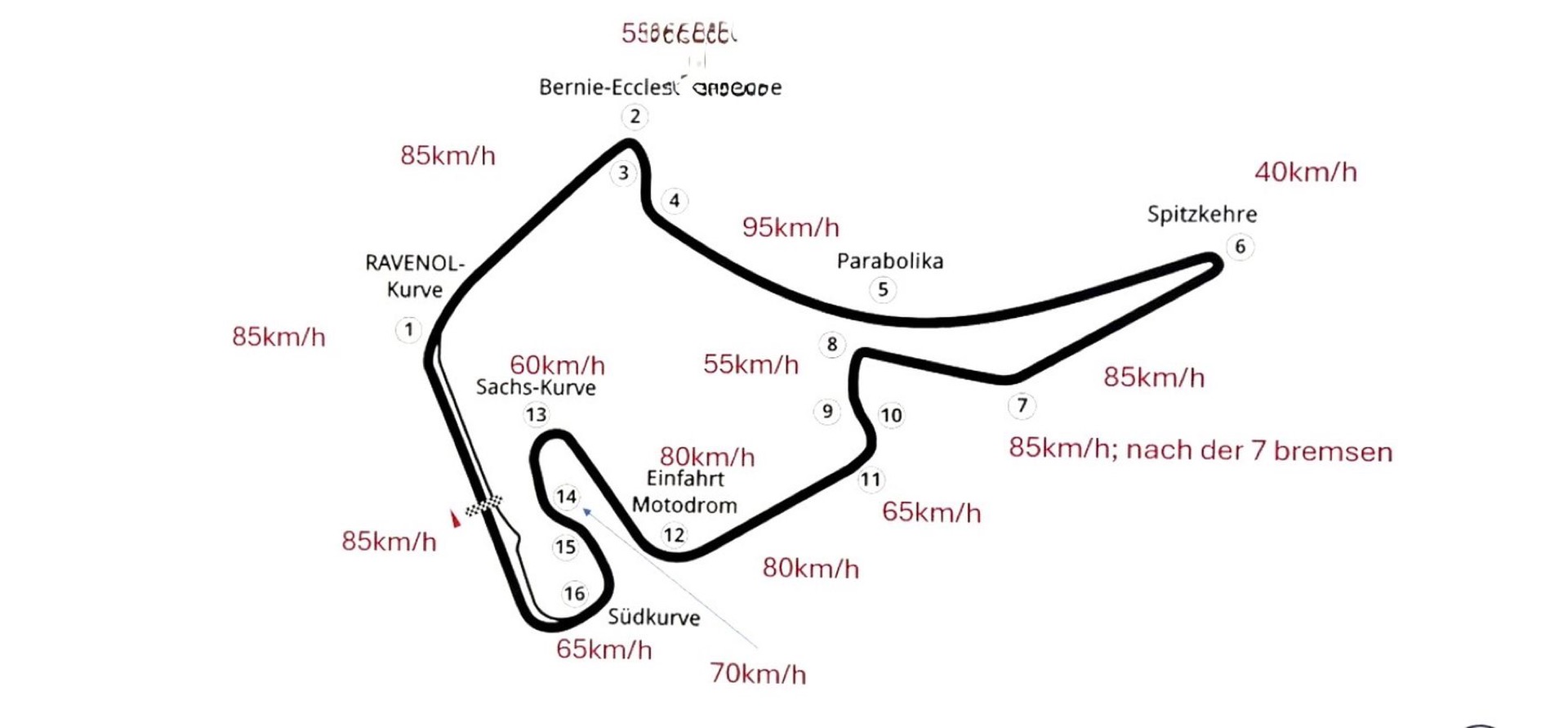
We have to find new ones. As soon as the inside kerb of the Ravenol corner comes into view, we turn in. In dry conditions, the corner can be taken at 85 km/h, but overcoming the natural instinct to brake requires a leap of faith. We summon our courage and plunge into the darkness. It works. The Mission Efficiency sweeps cleanly through the corner, and now it’s time to coast.
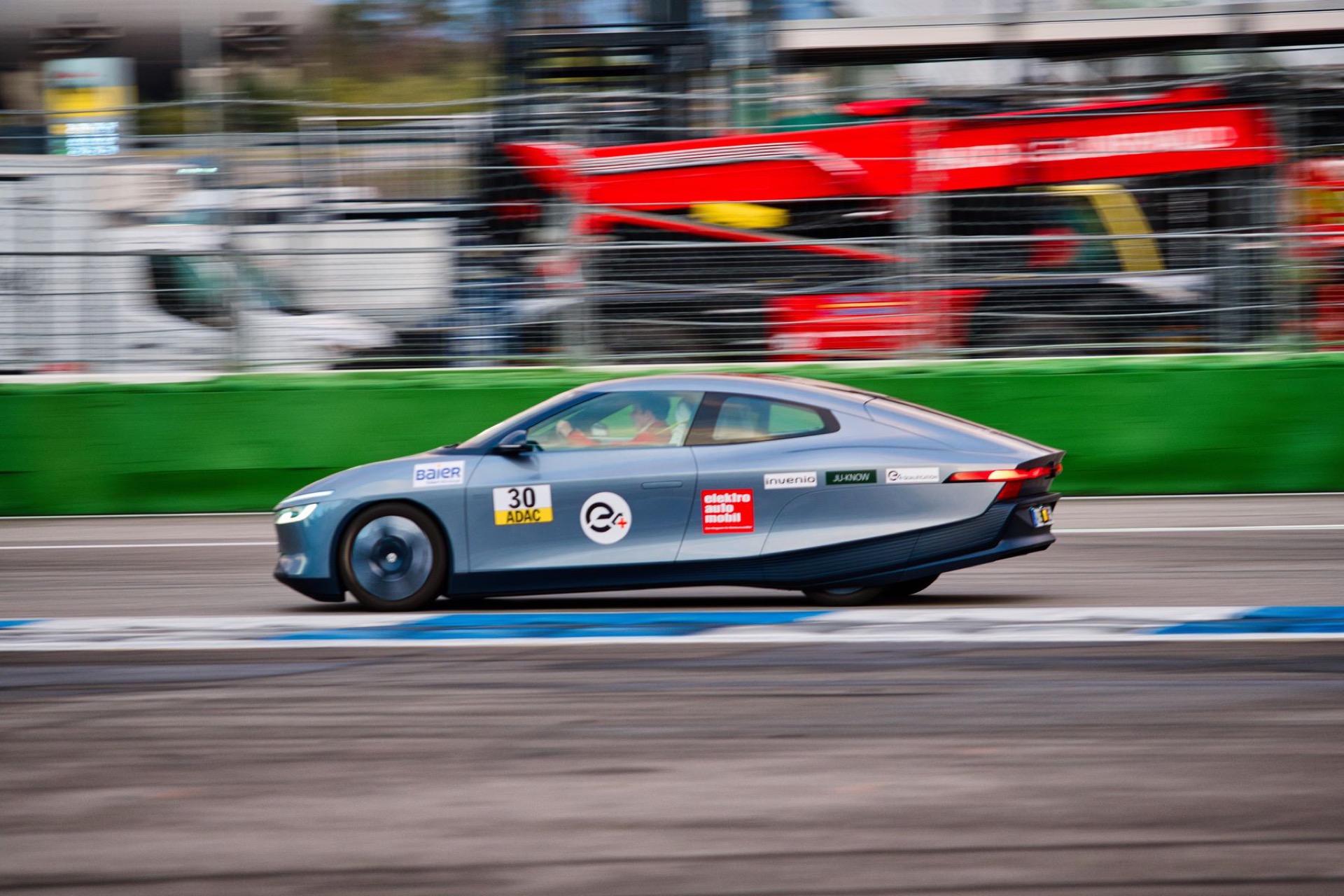
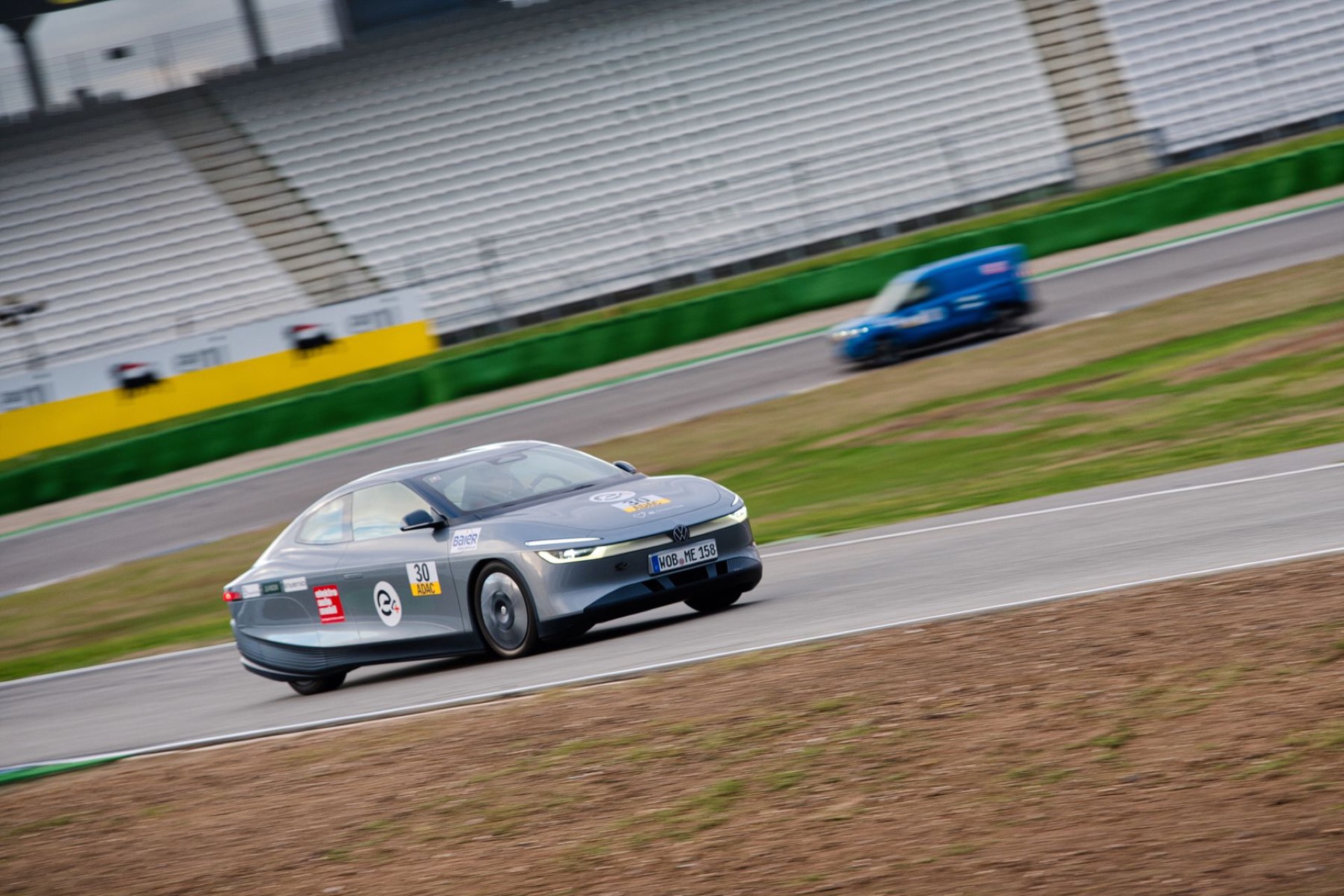
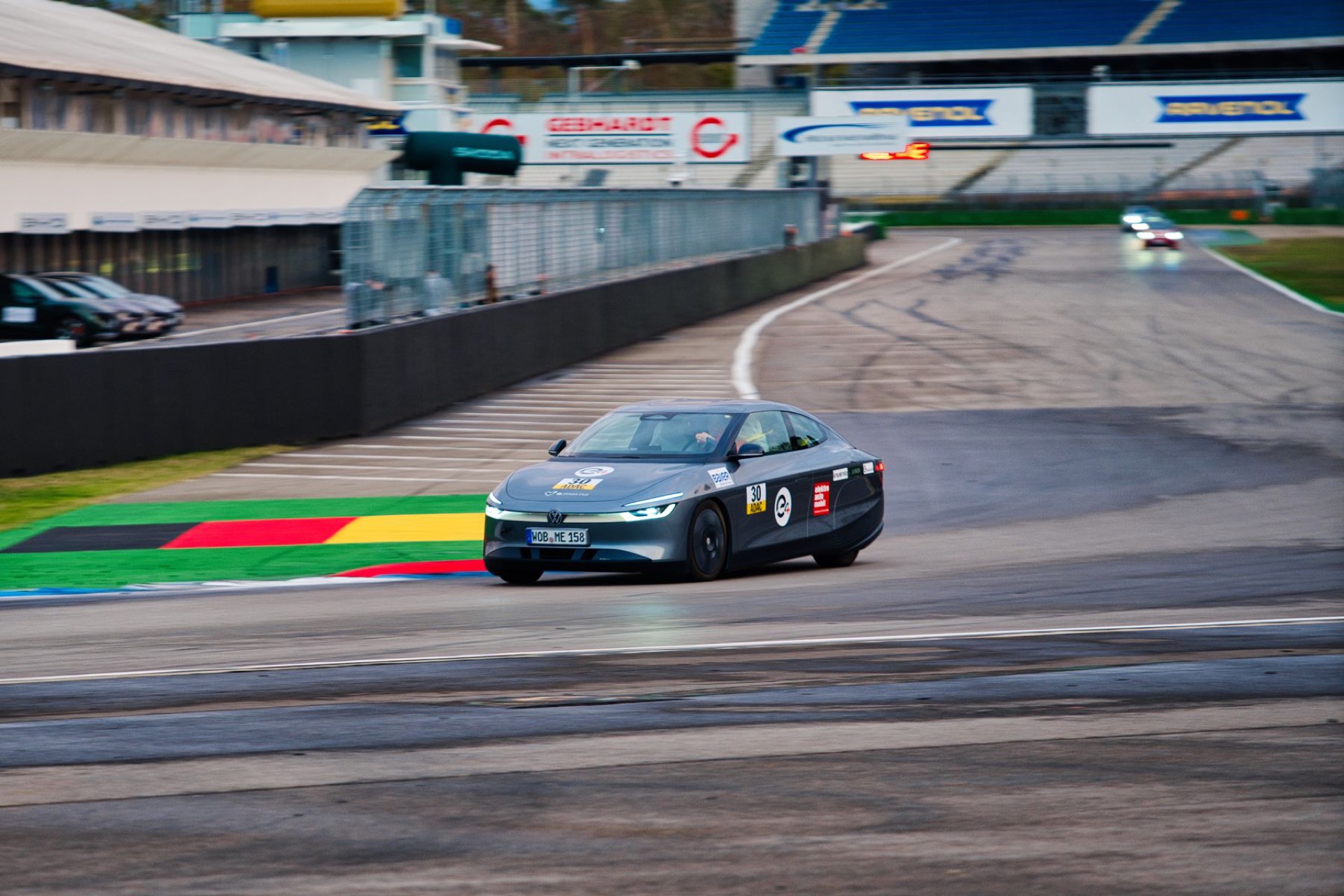
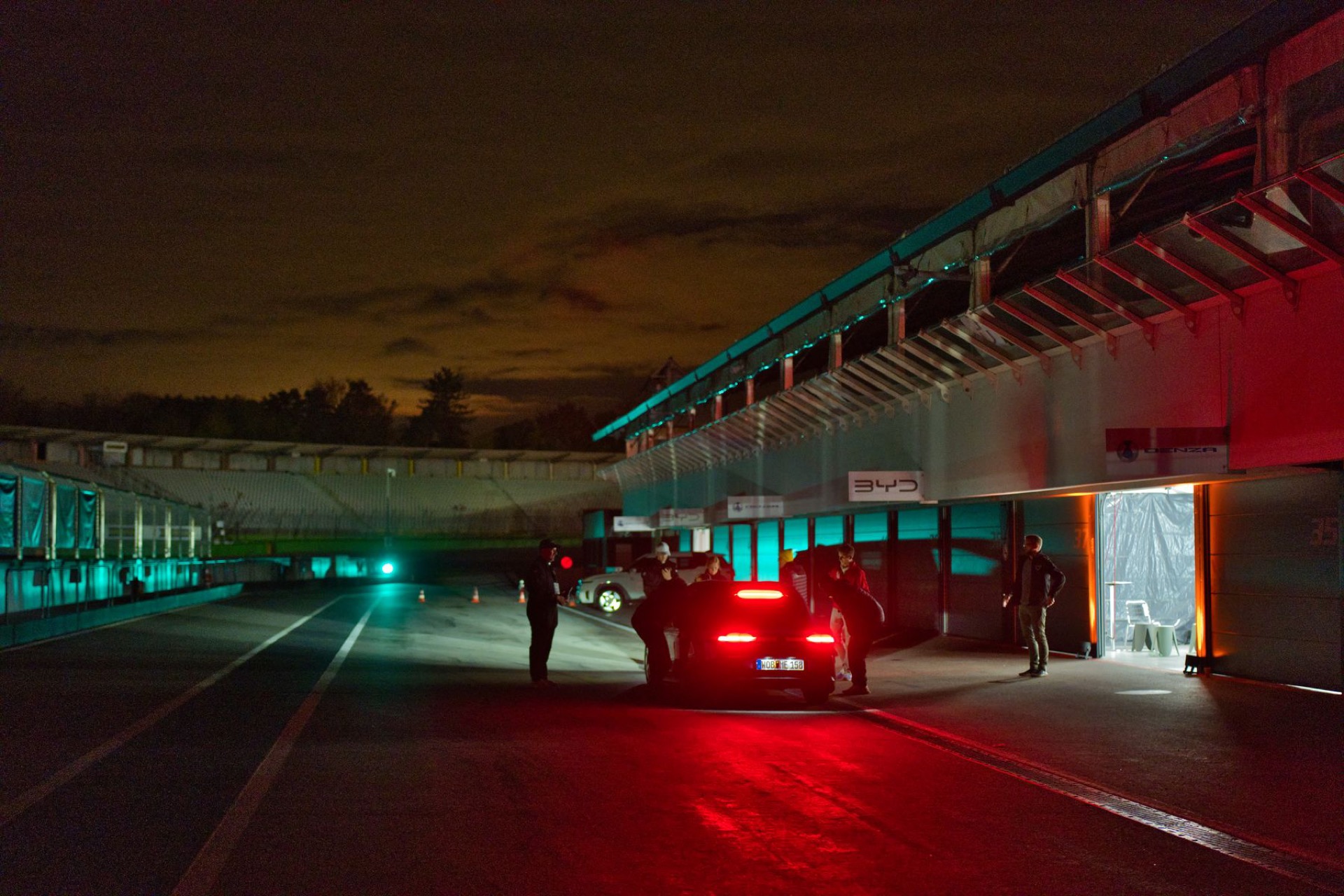
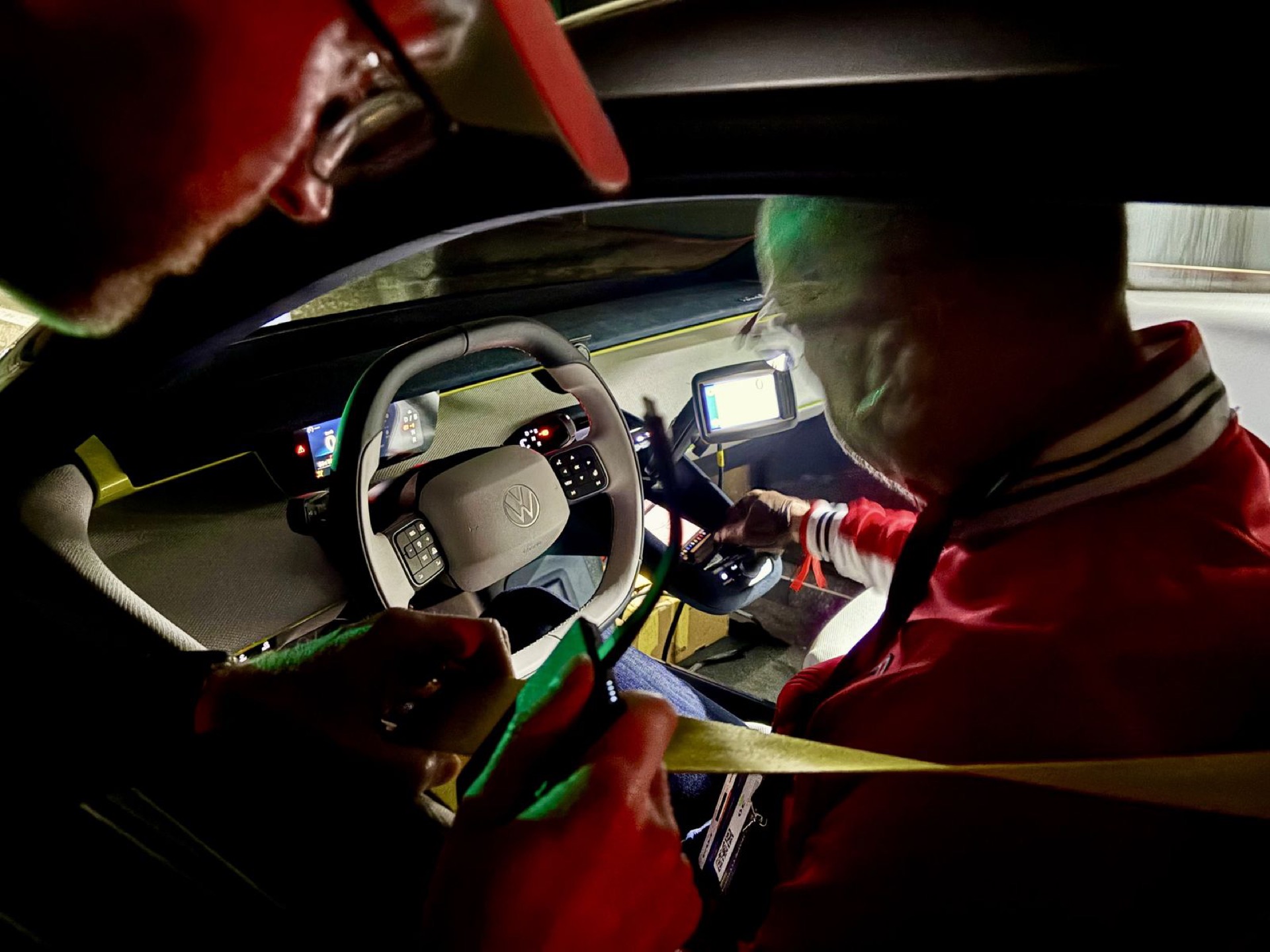
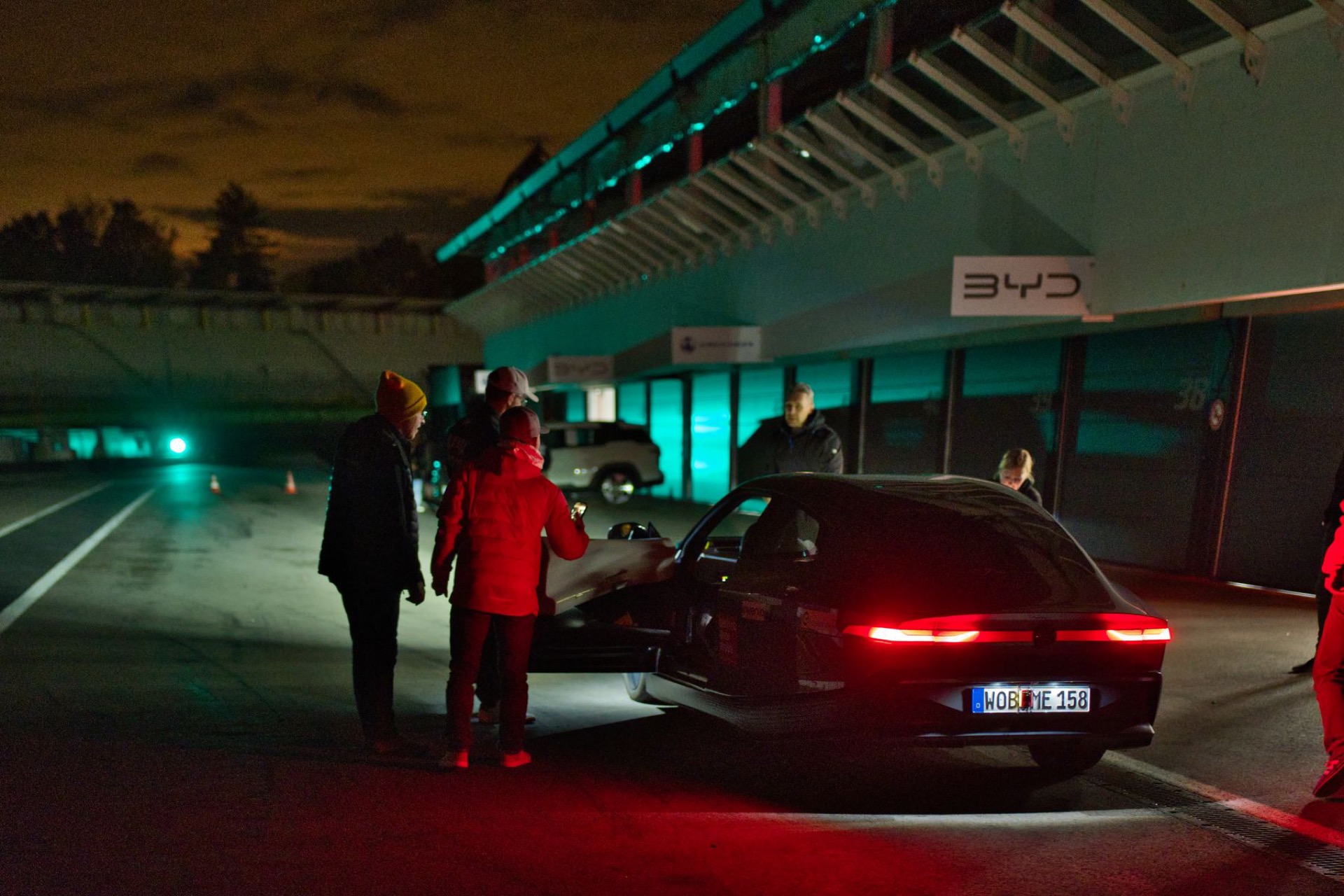
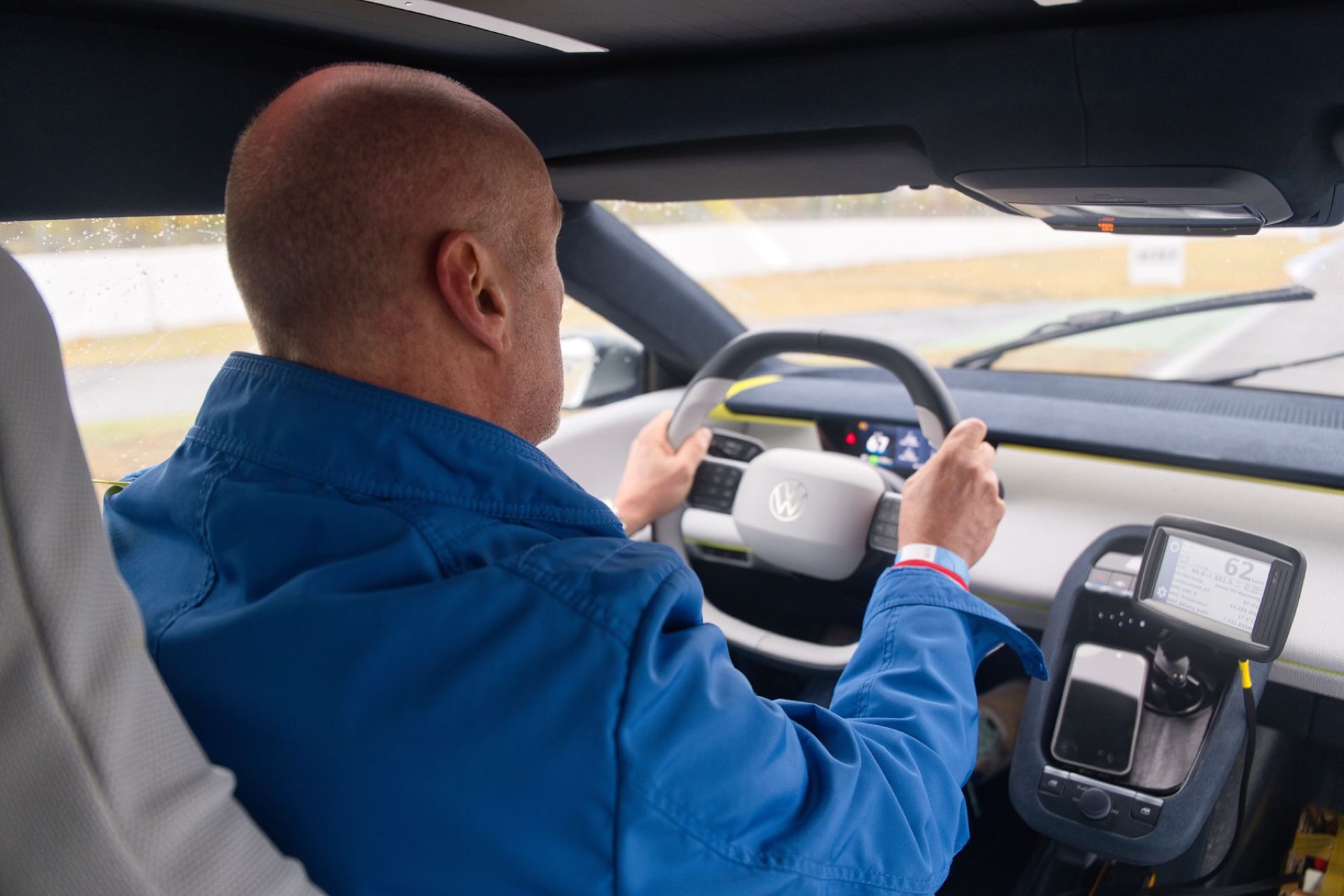

After all, we’re not chasing lap records. We’re chasing efficiency. In the 17-hour challenge, victory doesn’t go to the fastest car, but to the team that manages its energy most effectively, maintains a competitive pace and chooses the smartest charging strategy.
For Volkswagen, anything less than an overall victory would be a disappointment, even if our result won’t officially count. The Mission Efficiency is a prototype, and only production cars are eligible for classification. Nevertheless, its name is both a statement of intent and a challenge to live up to.
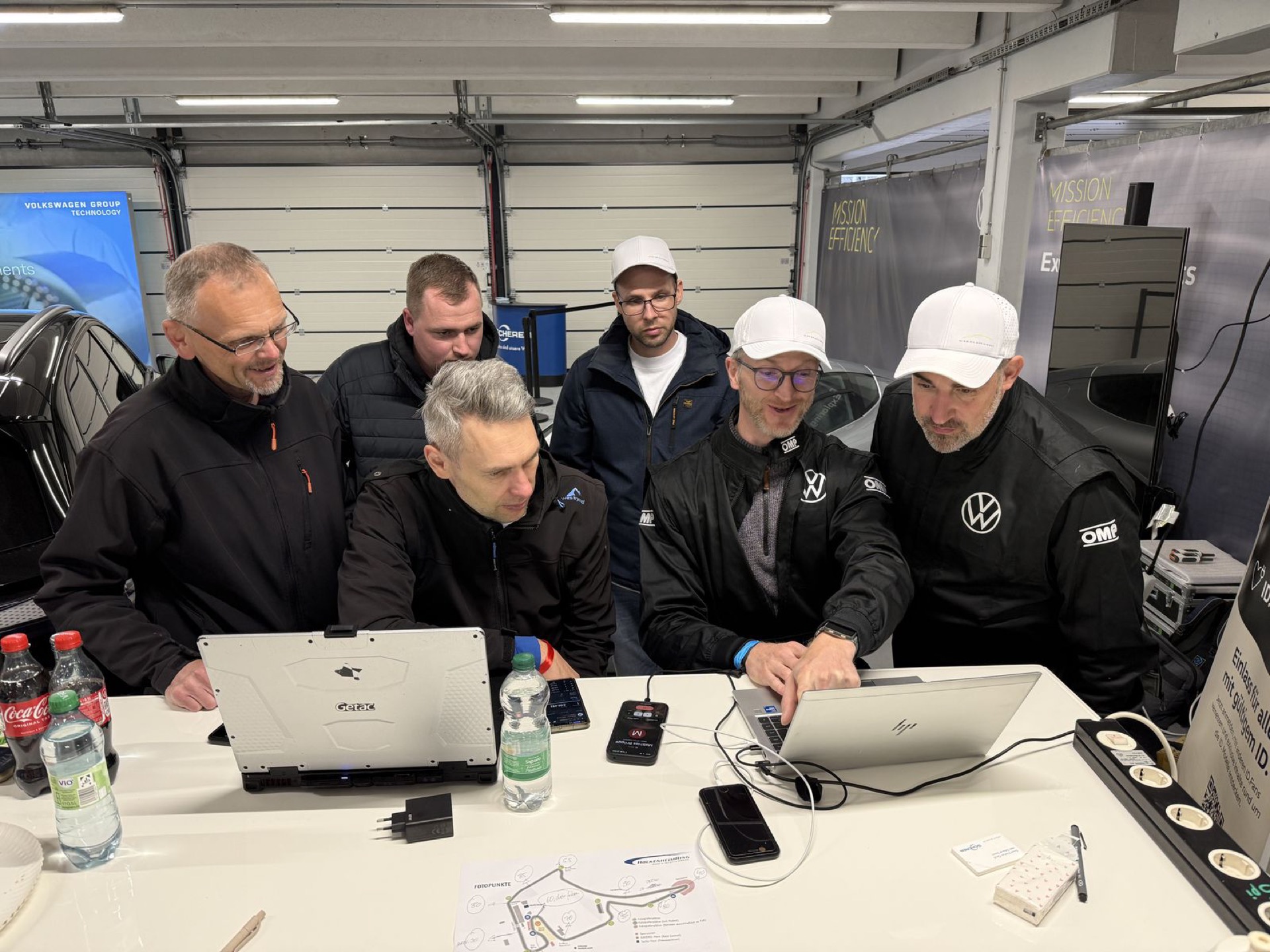
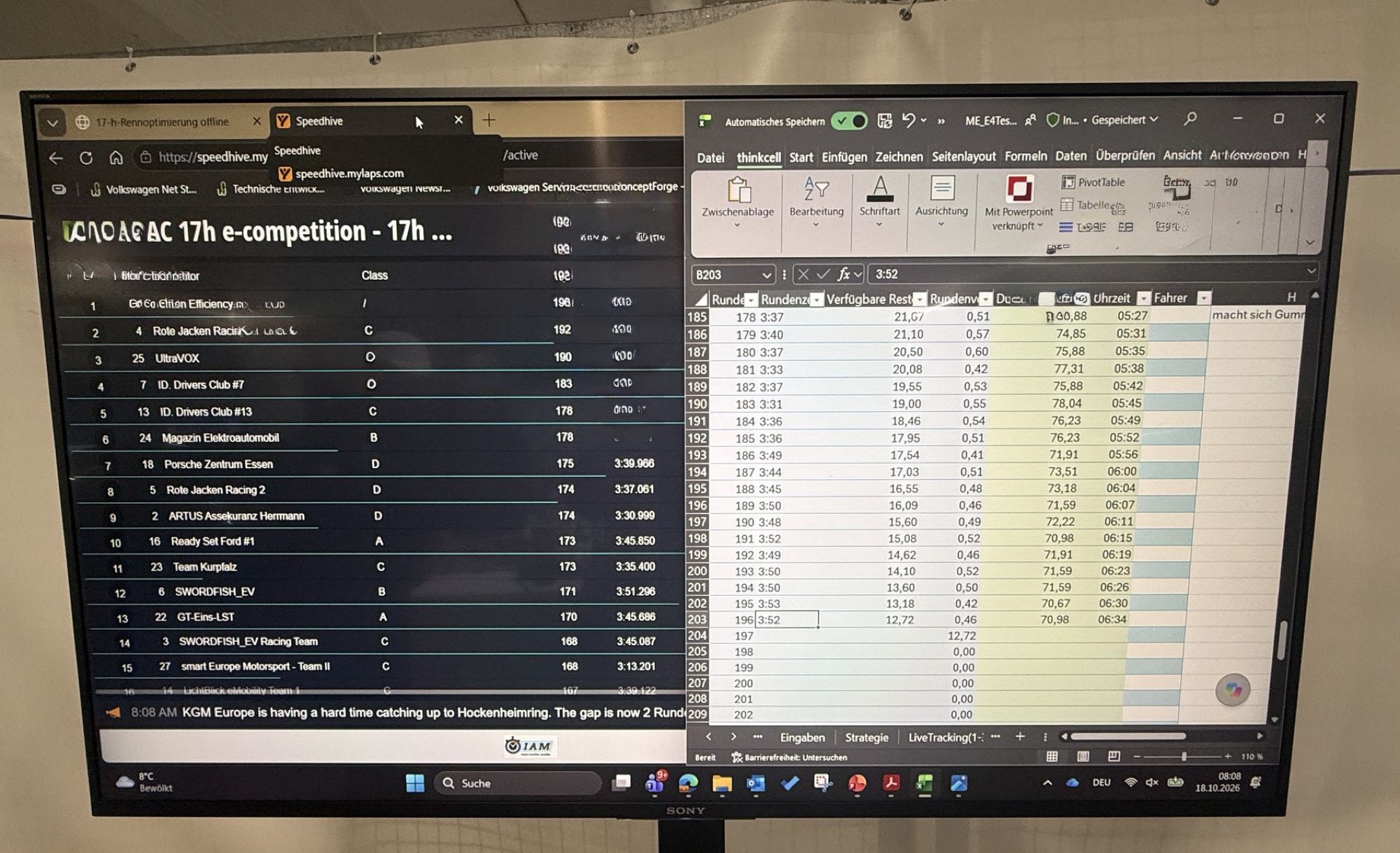
Volkswagen has approached the event with meticulous preparation. We’re in constant contact with two engineers in the pits, who monitor our energy consumption and calculate the optimum strategy, adjusting our target speeds accordingly. Another technician is following proceedings remotely from Wolfsburg.
The objective is to complete more than 212 laps of the 4.574-kilometre circuit and establish a new record. Ideally, Volkswagen wants to achieve 219 laps in 17 hours, equivalent to just over 1,000 kilometres. Quite literally, a milestone.
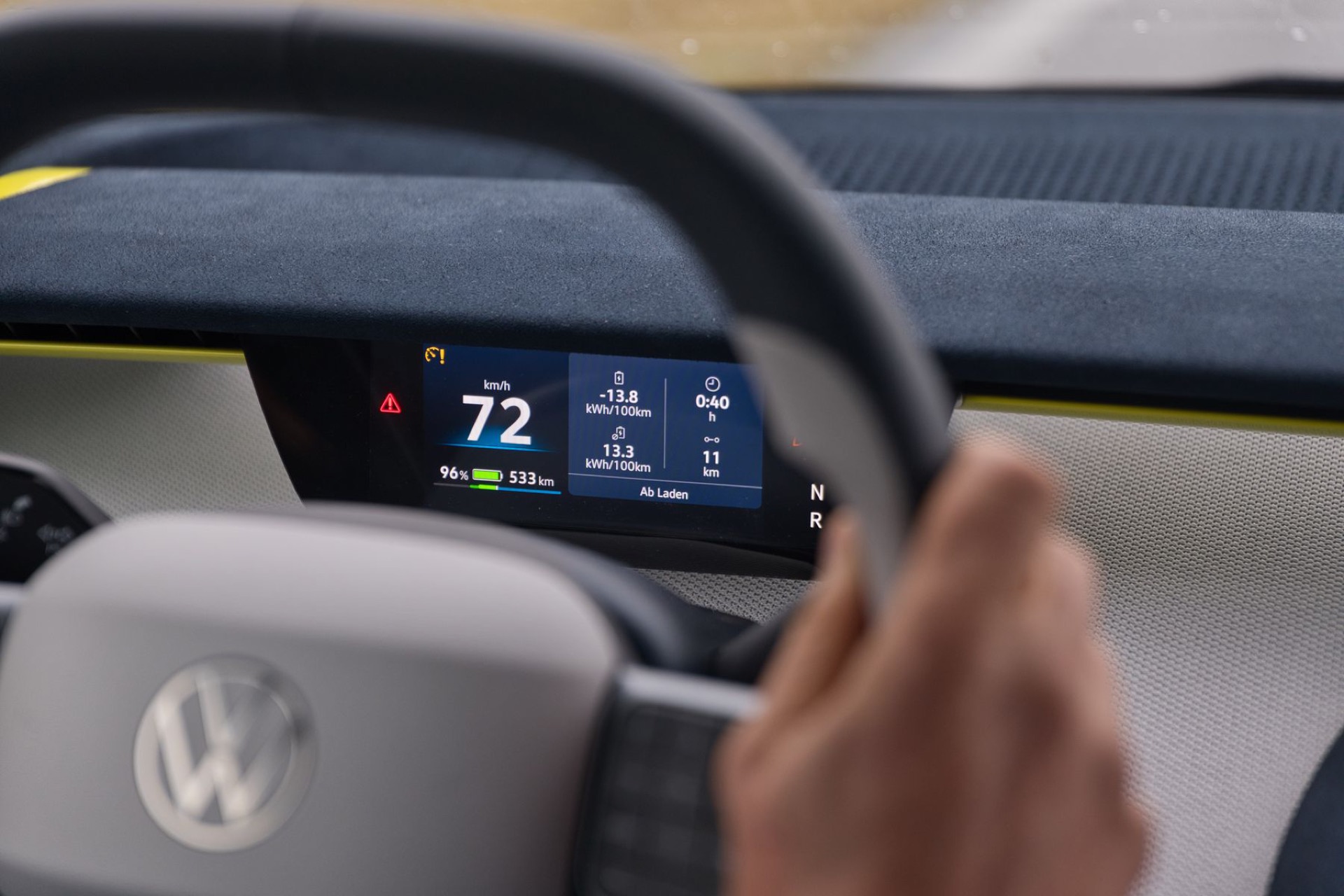
Every time we cross the start-finish line, we report the UBE reading from a specially installed display on the centre console. This indicates the remaining usable energy in the 55 kWh battery, which offers a net capacity of 52 kWh. Our driving style is dictated by an Excel spreadsheet.
After spending several laps following an ID.3 Neo at a relatively brisk pace, the command centre intervenes. “Let him go. We’re using too much electricity.”
Orders are orders. The tail lights of our Volkswagen stablemate disappear into the darkness as we concentrate on coasting rather than accelerating. This effortless progress is one of the Mission Efficiency’s defining characteristics, and helps explain its internal project name: ID.2 Fly.
The prototype has already demonstrated its remarkable efficiency on public roads. During a record-breaking journey from Wolfsburg through Poland and the Czech Republic to Vienna, it covered 1,278.36 kilometres, consuming just 6.89 kWh/100km and requiring only a single charging stop.
Perhaps the most interesting aspect is that the powertrain and battery are largely derived from the Volkswagen ID. Polo. The connection is also evident inside, with familiar components including the steering wheel and climate control buttons. Unlike some extreme efficiency prototypes, the Mission Efficiency retains much of the comfort and usability of a production car.
Admittedly, there are compromises. During our record attempt, the climate control remains switched off. With outside temperatures hovering around eight degrees Celsius, thermal underwear and gloves are essential.
The front axle comes from the Polo GTI, while conventional steel suspension replaces energy-consuming adaptive dampers. This also allows the body to sit another 15 millimetres lower than the production car.
Volkswagen’s engineers have concentrated on minimising aerodynamic drag and mechanical losses. The brakes are enclosed, while the underbody has been extensively optimised to improve airflow.
For us, this means avoiding the conventional brakes wherever possible and staying away from the kerbs. With the brakes enclosed, heat cannot escape easily, increasing the risk of overheating. Climbing over the kerbs could also damage the aerodynamic elements positioned ahead of the front axle. Consequently, we have to keep our distance from the edges of the track, even when approaching an apex.
At 4.775 metres long, the Mission Efficiency is 72 centimetres longer than the ID. Polo, yet stands just 1.392 metres tall and measures 1.744 metres wide. By comparison, the ID. Polo is 4.053 metres long and 1.530 metres high.
Its elongated bodywork, constructed from large aluminium panels and composite materials, is almost completely enclosed. The result is an exceptionally low drag coefficient of just 0.158, which Volkswagen claims is a record for road-legal cars.
Combined with a relatively small frontal area of 2.08 square metres, this gives the Mission Efficiency a drag area of just 0.329 square metres. This is particularly important at higher speeds, as aerodynamic drag increases with the square of velocity.
On Hockenheim’s long Parabolika section, we reach a maximum of 100 km/h before coasting towards the hairpin. Eventually, we have to use the brake pedal to recover energy through regenerative braking, but even this is less efficient than simply allowing the car to roll.
Ideally, we should approach the hairpin at just under 40 km/h without needing to brake at all. The lesson for the next lap is simple: accelerate less and apply the power more gently.
The electric motor is another component borrowed from the ID. Polo. The permanently excited synchronous motor, designated APP290, develops 99 kW (135 PS) and 264 Nm of torque. Its single-speed transmission has been given a taller ratio and modified oil cooling, while a newly developed Volkswagen inverter manages power delivery and energy recuperation.
Despite its focus on efficiency, the Mission Efficiency is hardly sluggish. It accelerates from 0 to 100 km/h in nine seconds and has a top speed of 160 km/h.
The wheels present another important aerodynamic challenge. According to Volkswagen, the wheels and wheel arches account for between 25 and 30 per cent of a vehicle’s total aerodynamic drag. To combat this, the engineers have developed closely fitting wheel arches, patented wheel deflectors and smooth wheel covers to minimise turbulence.
Interestingly, conventional door mirrors have been retained rather than replaced with cameras. Volkswagen’s engineers concluded that the aerodynamic benefits of camera mirrors were minimal, while their electrical consumption and additional cost outweighed any potential efficiency gains.
The door handles, meanwhile, sit flush with the bodywork. Not that the prototype is destined for approval in China.
The tyres are another crucial part of the package. Continental has developed a bespoke tyre based on its EcoContact 7, achieving a rolling resistance of just 4.9 kilograms per tonne.
That is approximately 25 per cent below the threshold for the EU’s highest tyre efficiency rating, Class A. Importantly, this doesn’t mean a 25 per cent improvement over an average production tyre. The difference is considerably more significant, and it becomes immediately apparent in the way the Mission Efficiency rolls so effortlessly.
The secret lies in the rubber compound and tyre construction, which have been optimised to reduce deformation losses. During vulcanisation, the engineers also used different temperatures for the tread and sidewalls to further minimise rolling resistance.
For us, this means treating the tyres gently and maintaining smooth, flowing lines through the corners. Tyre durability is one of the biggest unknowns of the challenge. Spare sets are available, but changing them would be a complicated process because of the aerodynamic bodywork surrounding the wheels.
Fortunately, that proves unnecessary. The tyres last until the finish and continue to provide sufficient grip even when rain arrives.
After two hours of driving through the darkness, we hand over the steering wheel to the next driver.
Over the course of the challenge, the Mission Efficiency makes two charging stops, taking on a total of 46.42 kWh of electricity from the 19 kW charger mandated by the regulations.
Shortly after 9:30am, the prototype crosses the finish line having completed 218 laps. That equates to 997 kilometres. Including the mandatory cool-down lap, Volkswagen achieves its target of 1,000 kilometres.
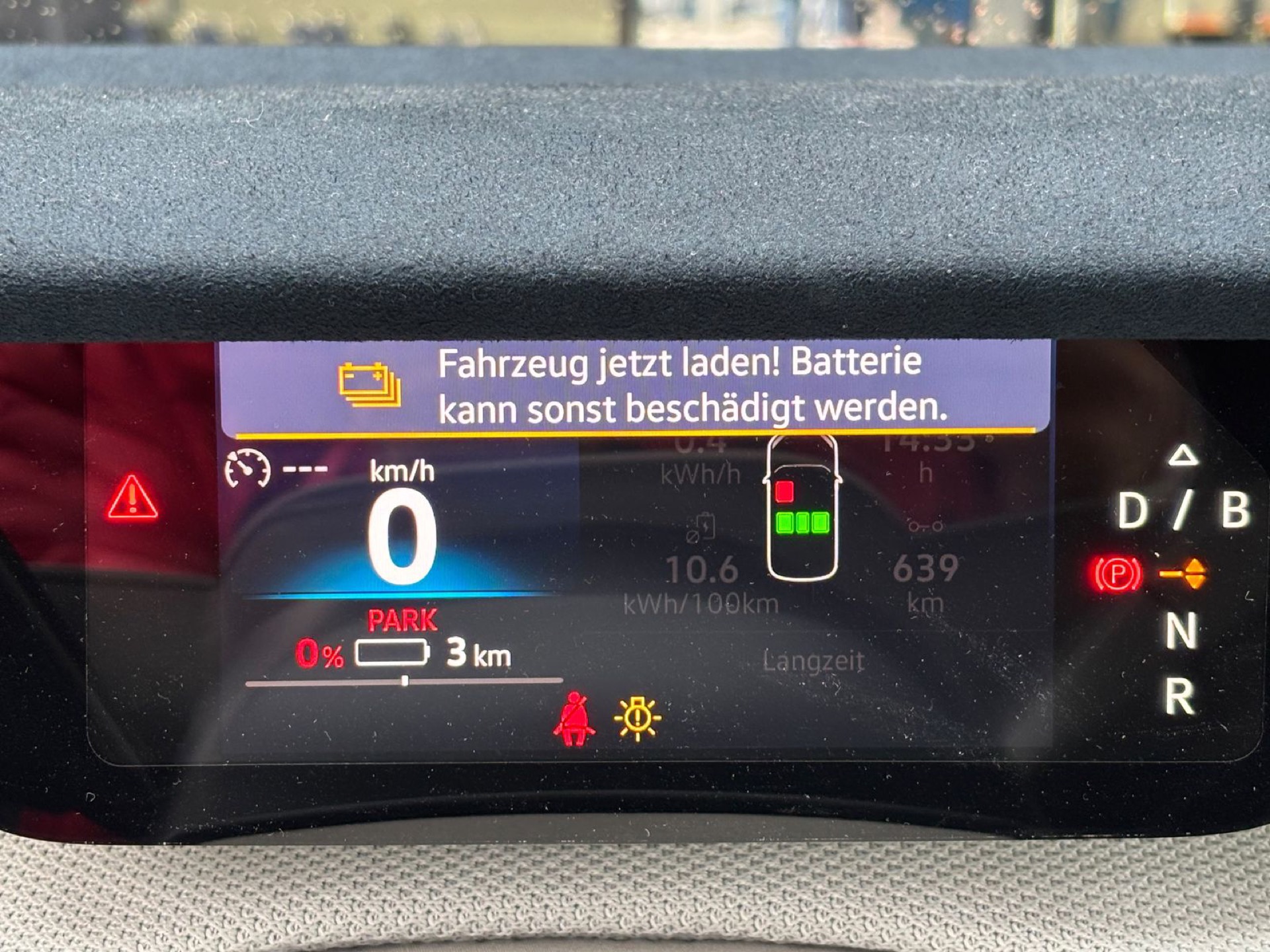
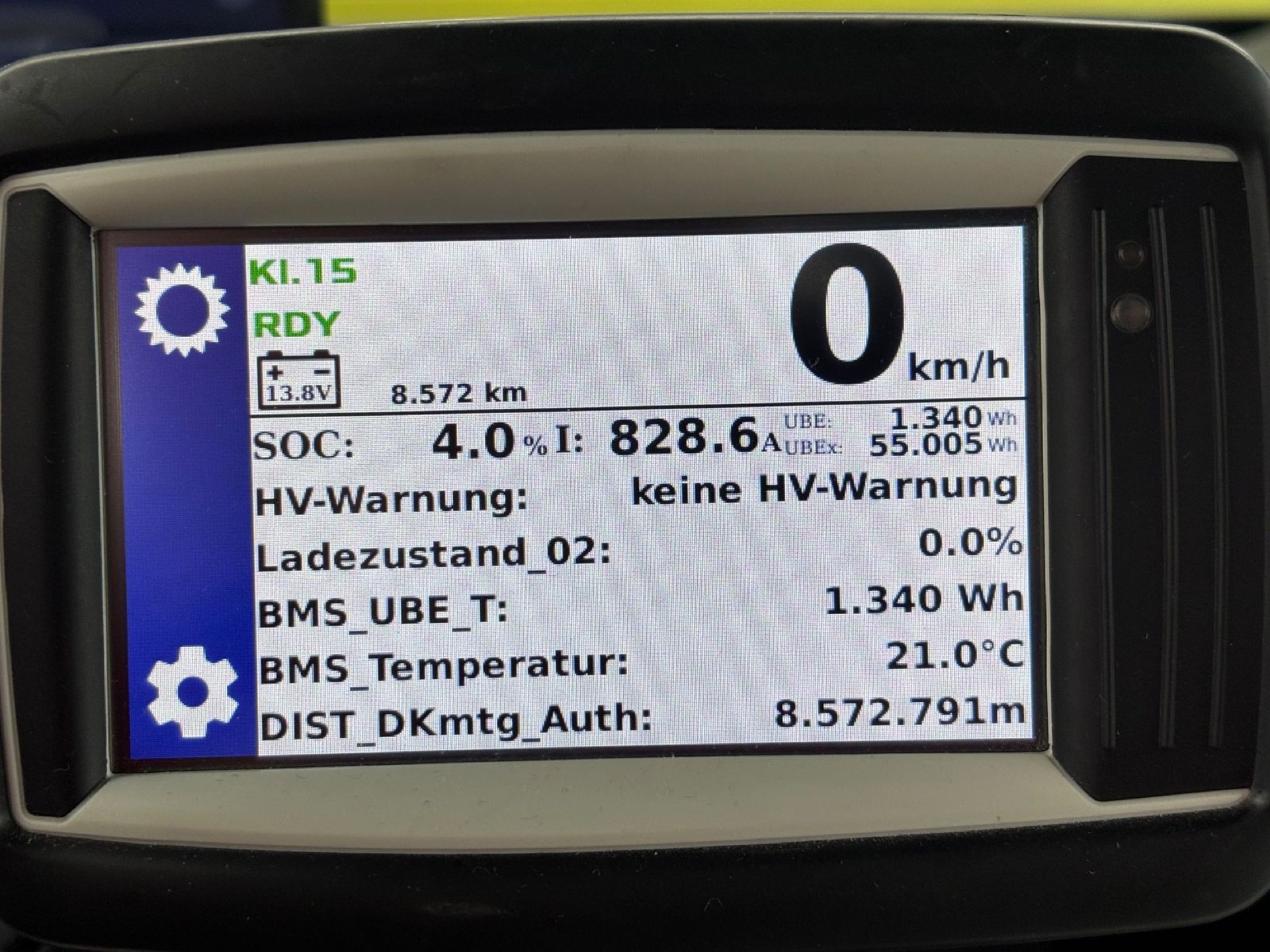
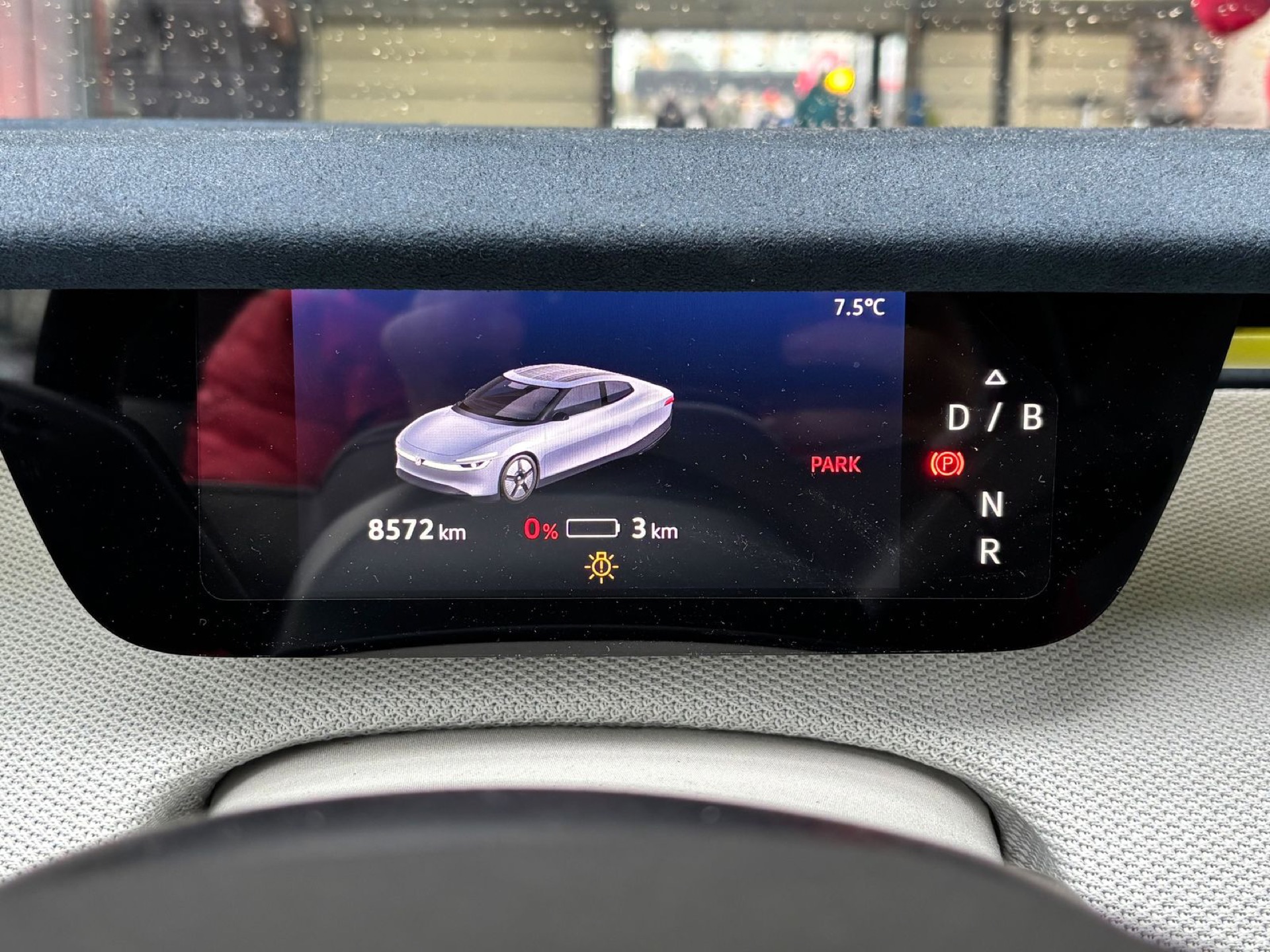
Back in the pits, the trip computer displays a battery state of charge of zero per cent and a remaining range of just three kilometres. The figures suggest that the engineers have judged their calculations almost perfectly.
In reality, the battery still contained 1.6 kWh when the car crossed the finish line, falling to 1.34 kWh after the slow cool-down lap. The recorded average speed was 72.25 km/h, while average energy consumption stood at 10.06 kWh/100km.
That is considerably higher than the figure achieved during the earlier record-breaking road journey.
Volkswagen engineer Stephan Vogel explains: “On the racetrack, the aerodynamic advantage only comes into play to a limited extent. The constant changes in load, the climatic conditions and the fact that the lights were switched on all contributed.”
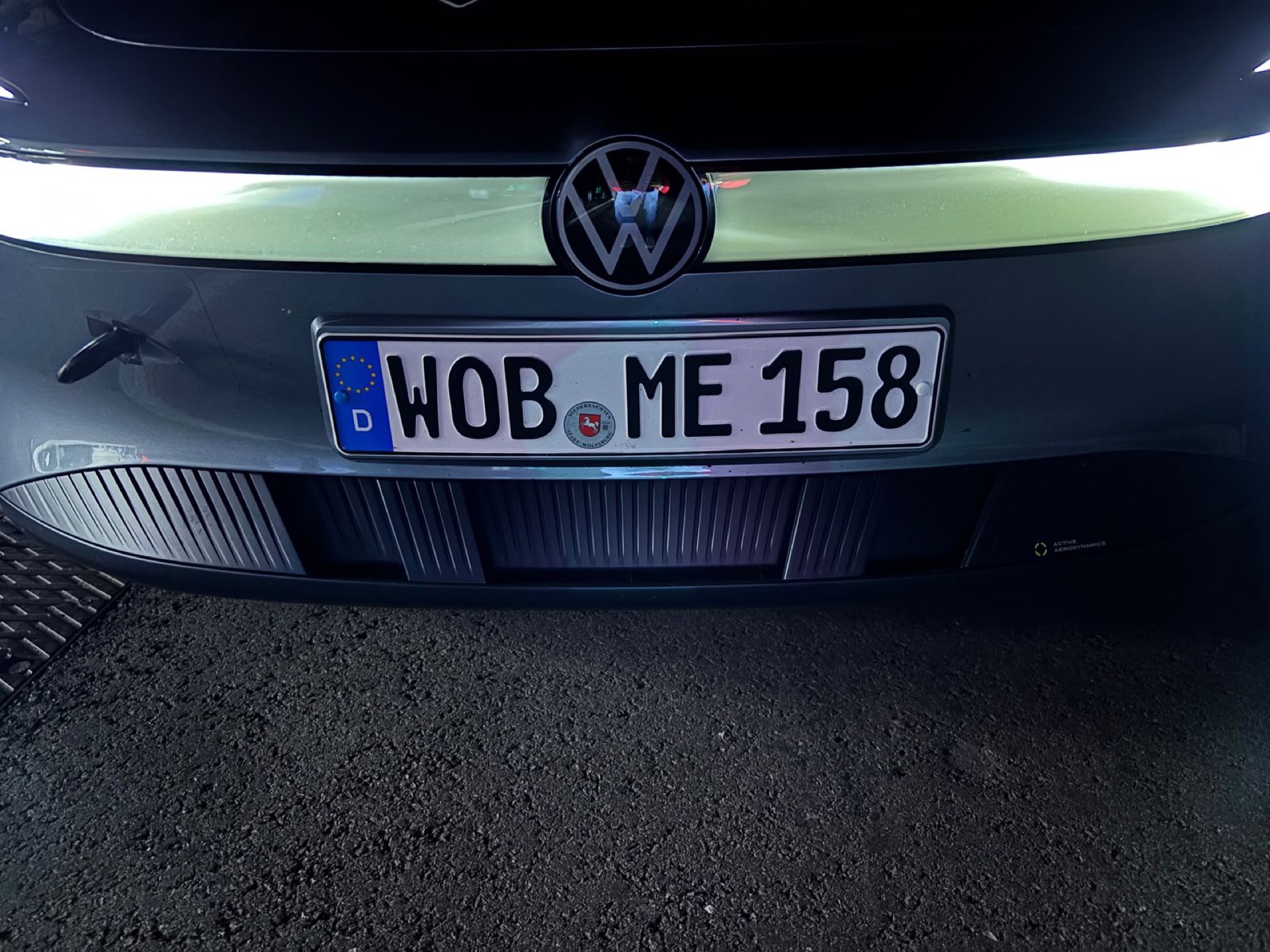
Another complication was that the ventilation flaps in the front bumper remained permanently open, negatively affecting aerodynamic efficiency. The engineers suspect that the high humidity was responsible.
Nevertheless, the result speaks for itself. Although the prototype is ineligible for official classification, the Mission Efficiency completes the challenge four laps ahead of its nearest rival.
For a car designed to demonstrate just how far electric efficiency can be pushed using technology closely related to a production Volkswagen, that is quite an achievement.