BMW did not introduce me to the seventh-generation M3 with a PowerPoint presentation.
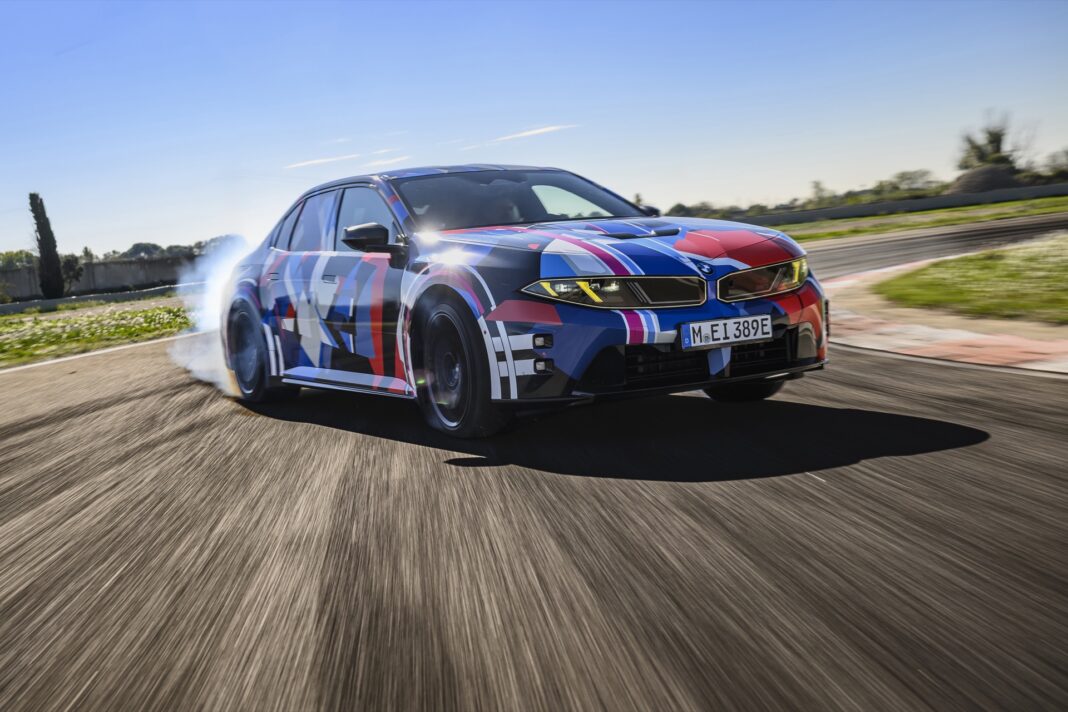
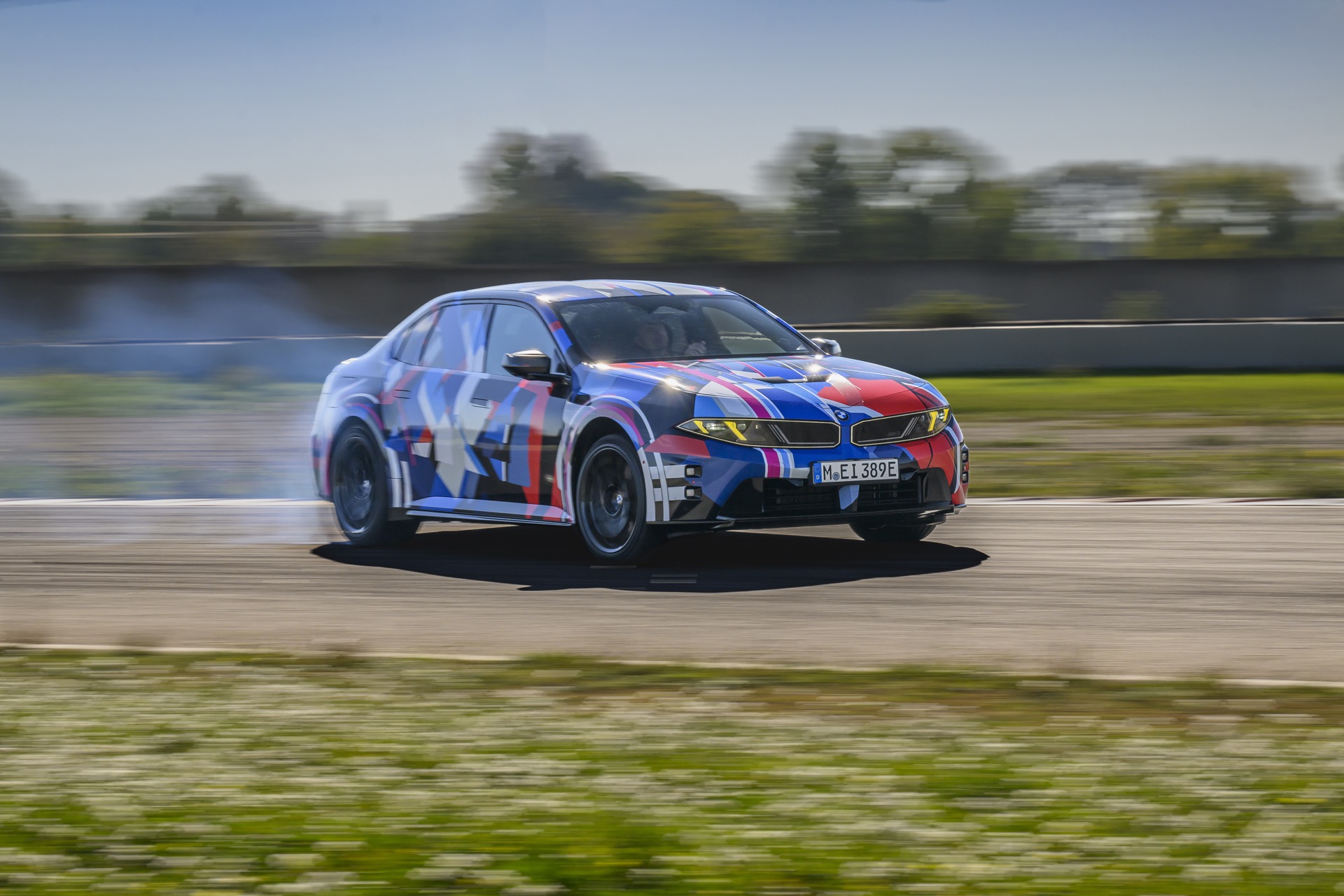
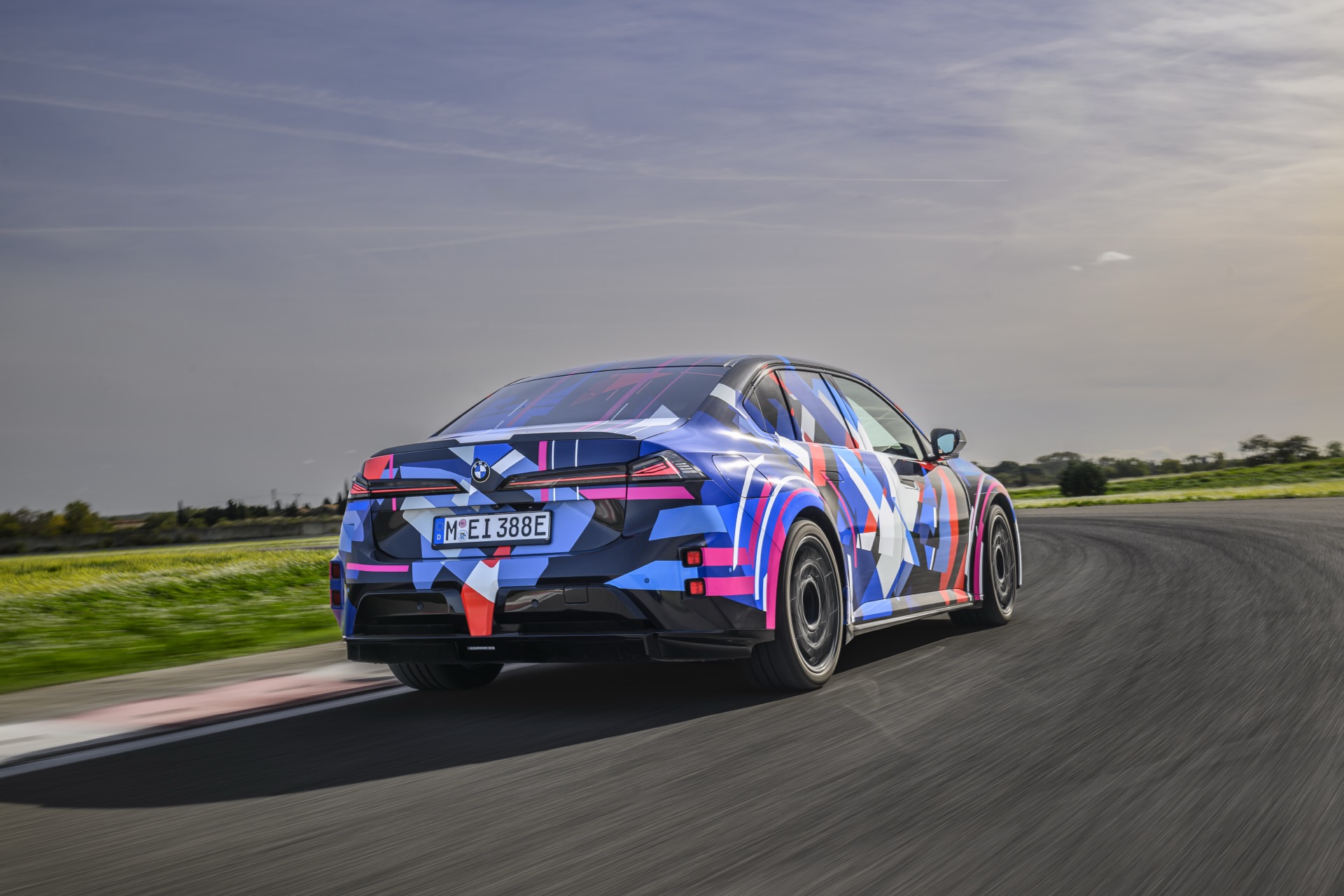
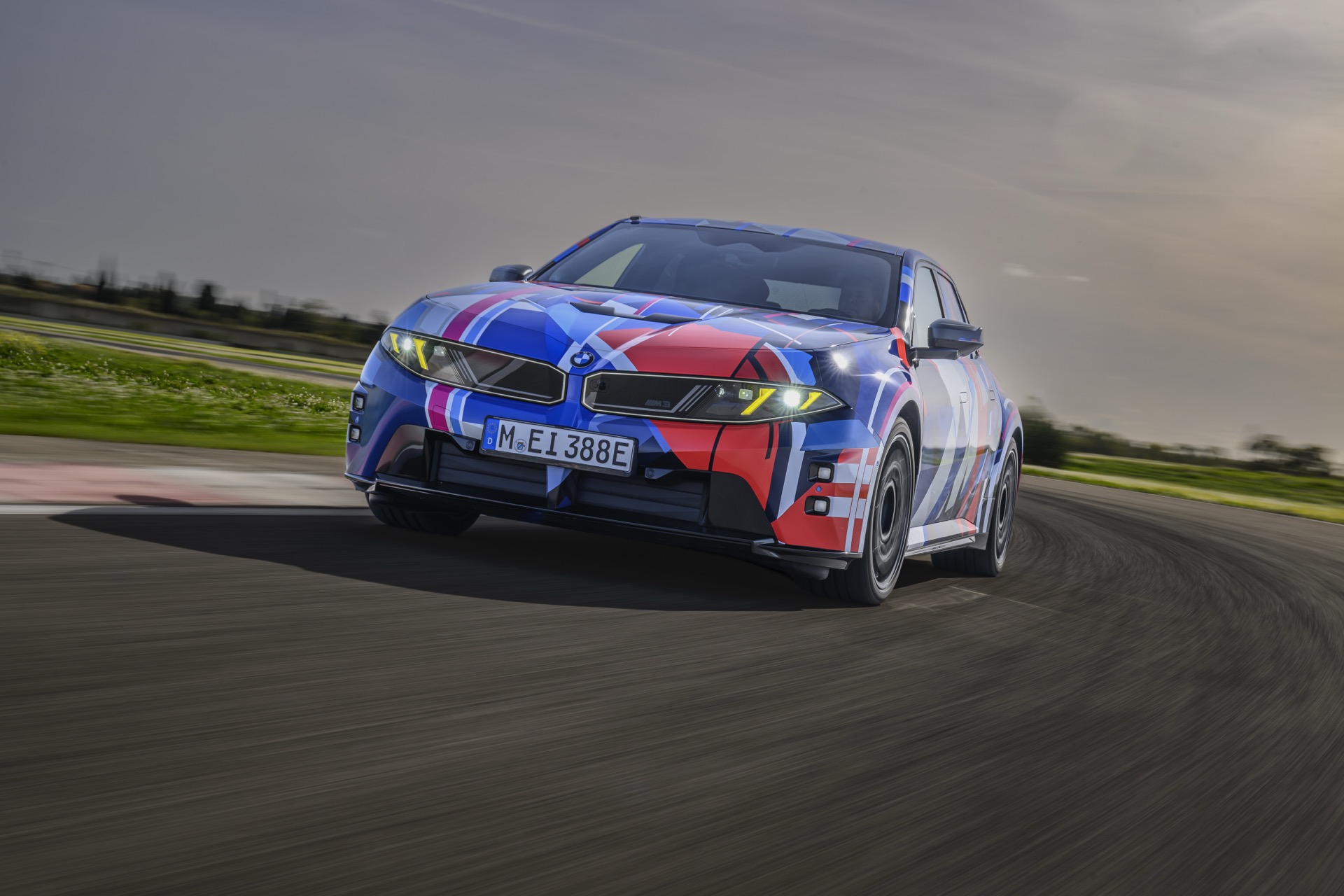
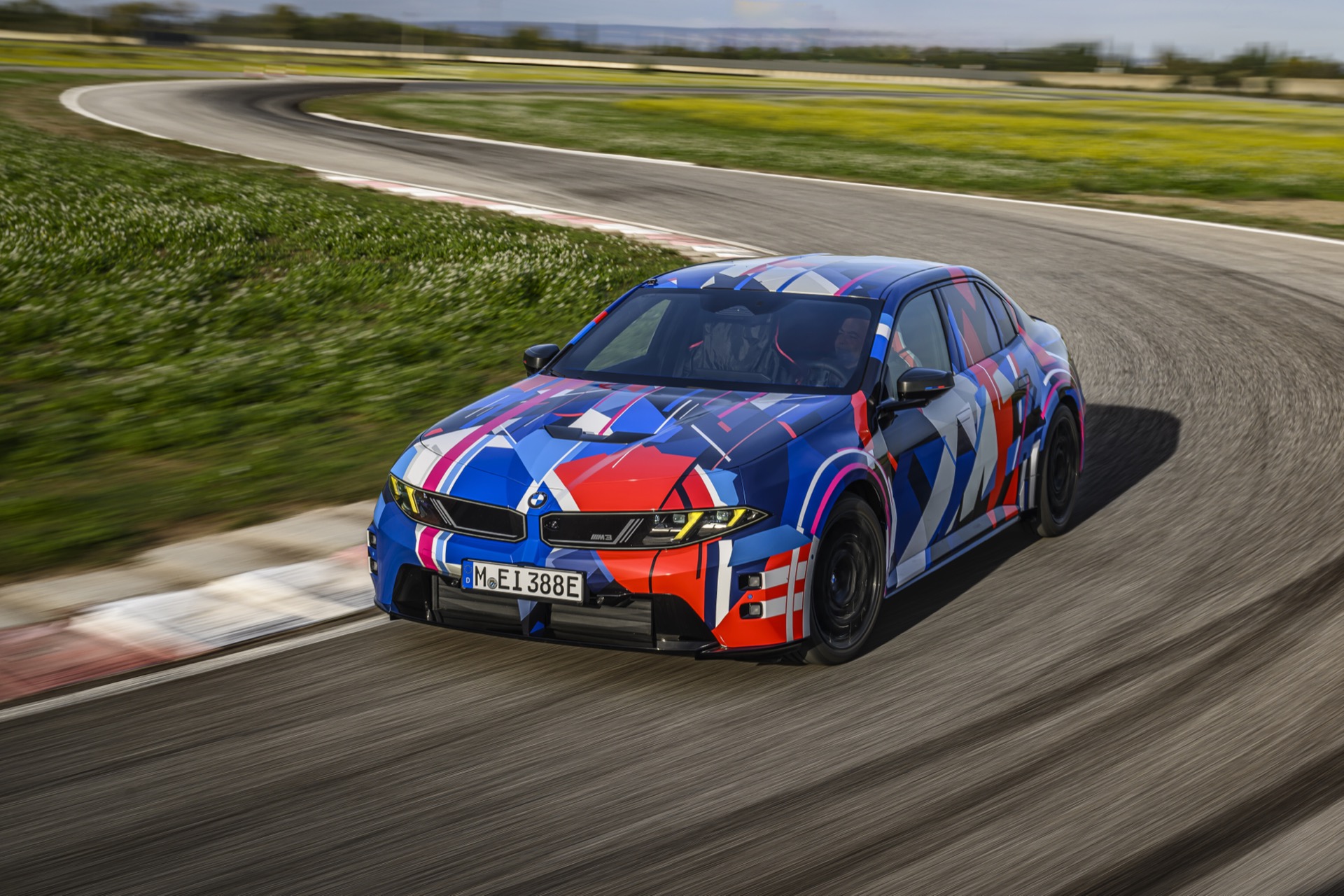
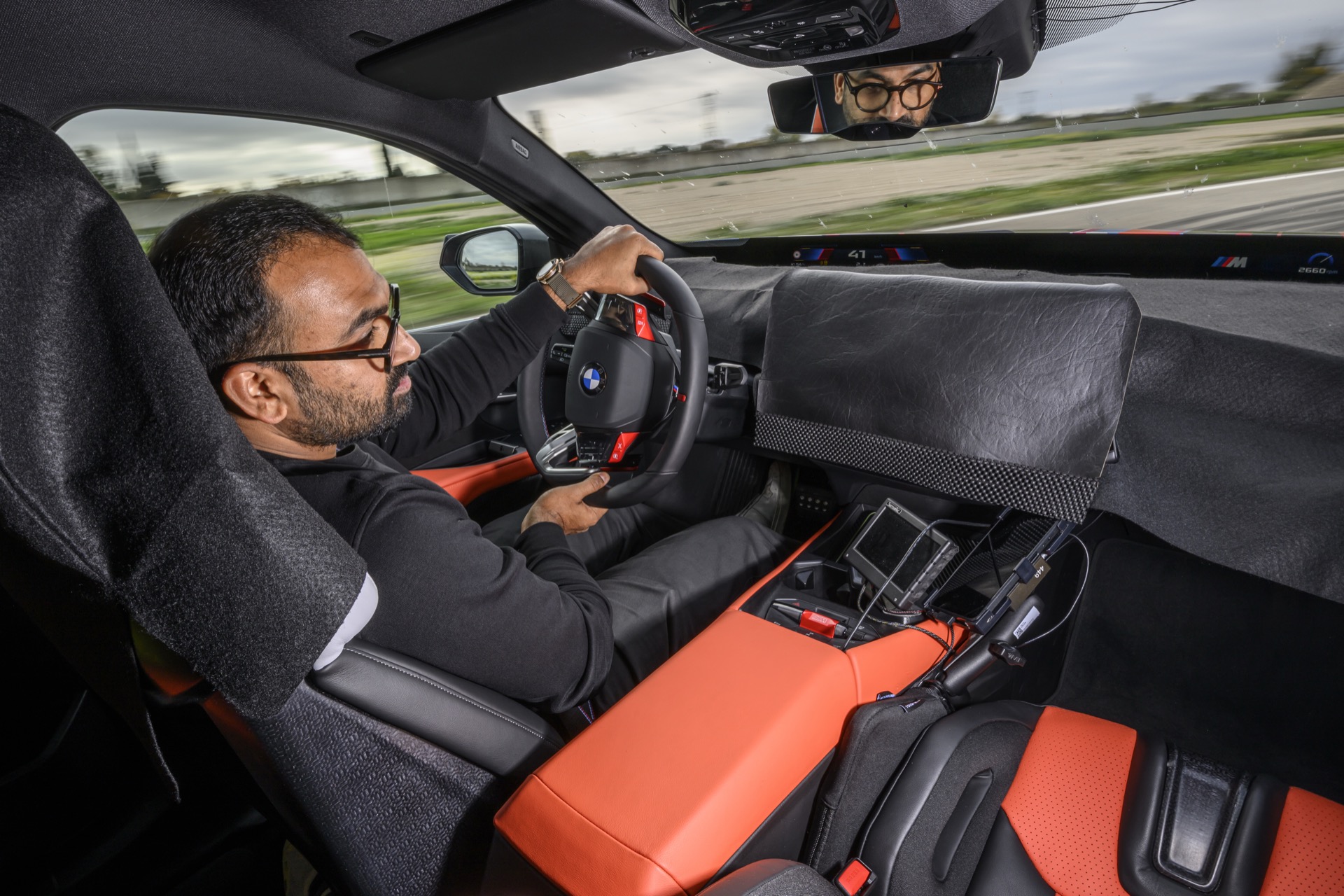
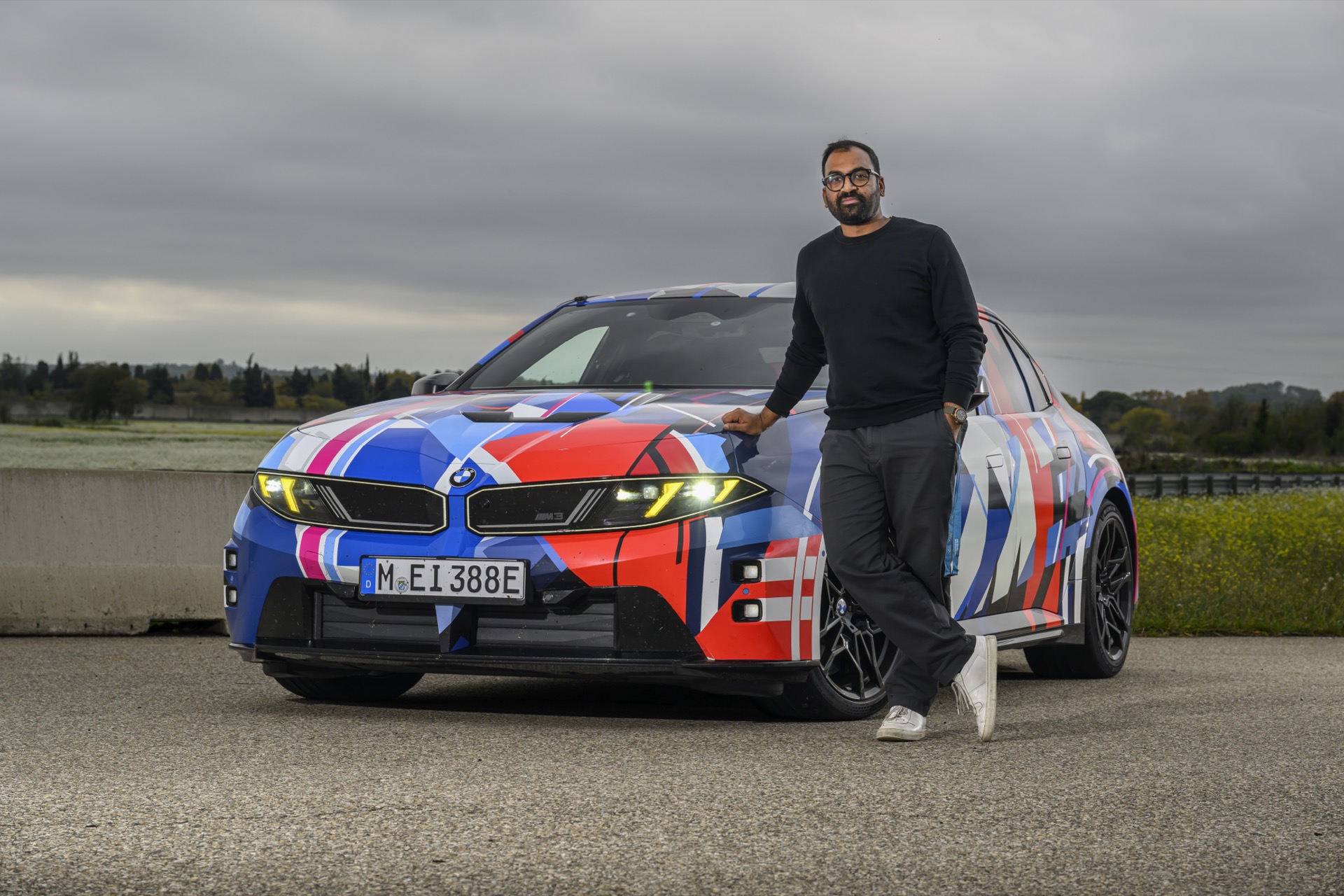
Instead, I was strapped into the passenger seat of a heavily camouflaged, very early pre-production prototype at the Autodrome de Miramas in southern France. We rolled out of the pits, launch control was activated and my first thought as the car fired itself down the narrow, fast and flowing test track was fairly unprintable. The acceleration is savage.
My second thought concerned the noise. There is something surprisingly menacing about it, with hints of a V8 DTM car mixed with a raspy straight-six and something altogether more futuristic. Then I noticed the driver pulling paddles behind the steering wheel. What exactly was he shifting? Welcome to the electric BMW M3.
It is important to stress just how early this drive was. These were development cars, still heavily disguised and some way from production specification. Consequently, BMW is not yet quoting a 0–100 km/h time, top speed, final kerb weight or price. Even the performance figures remain approximate. What BMW will say is that this will be the fastest and most powerful M3 ever made.
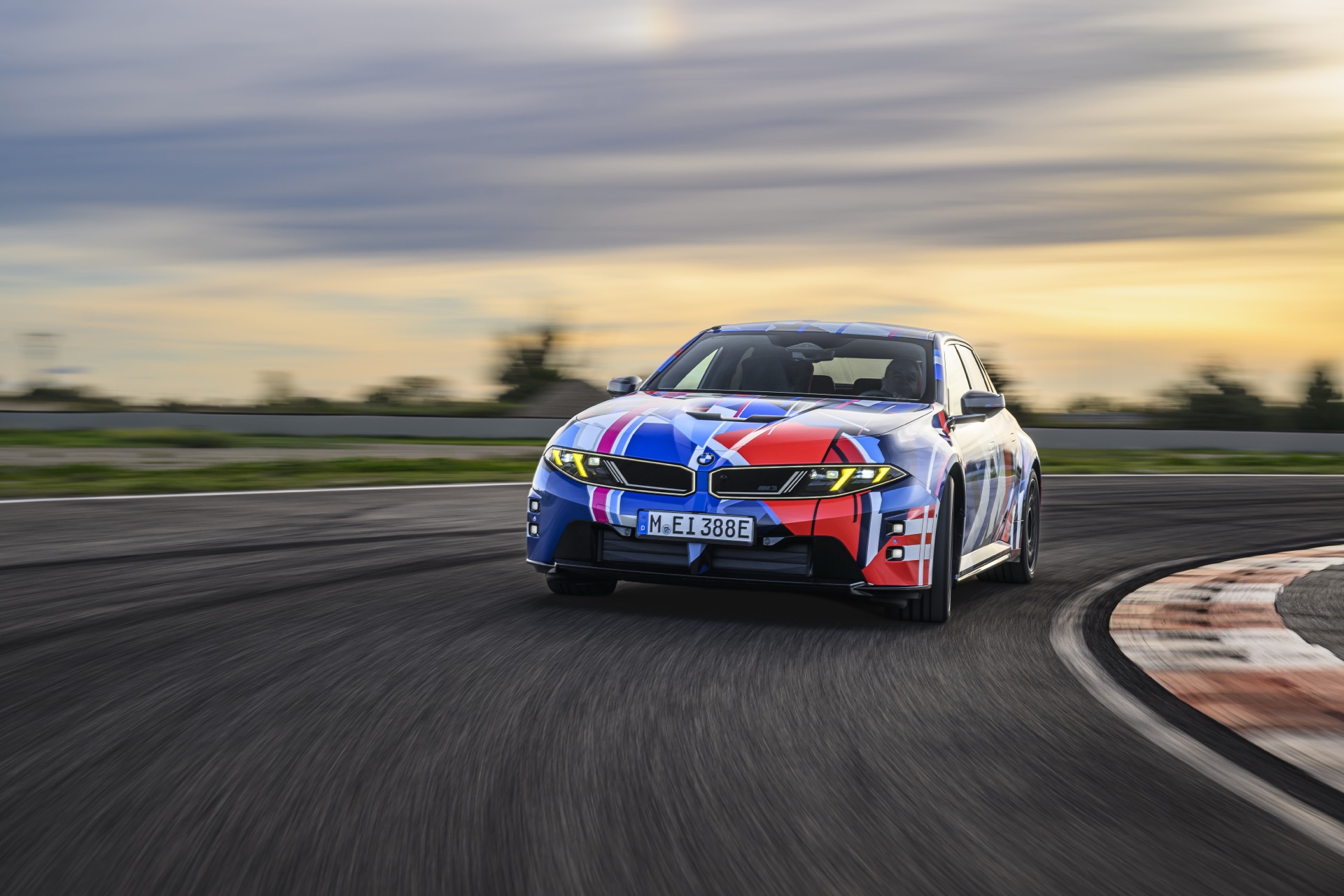
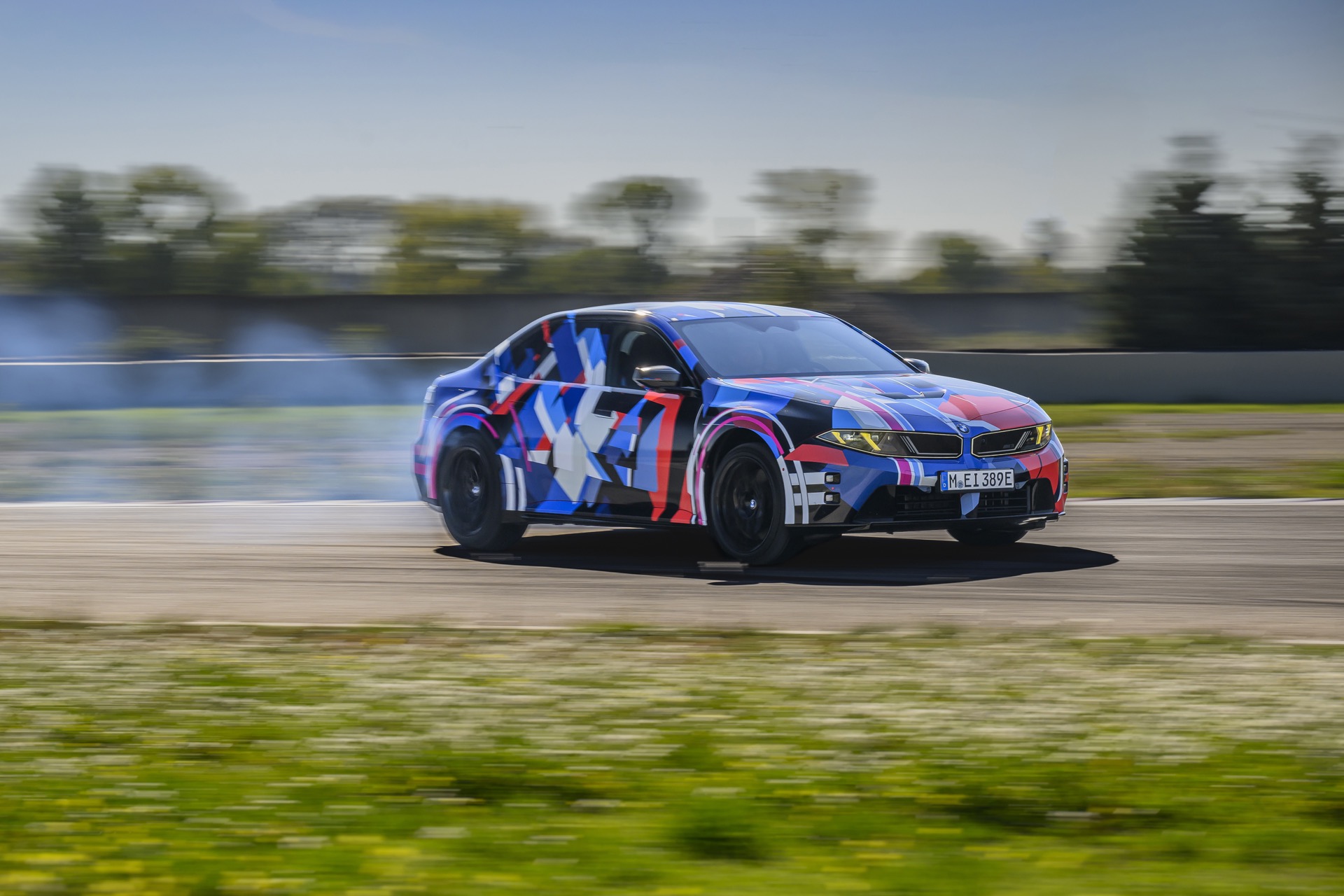
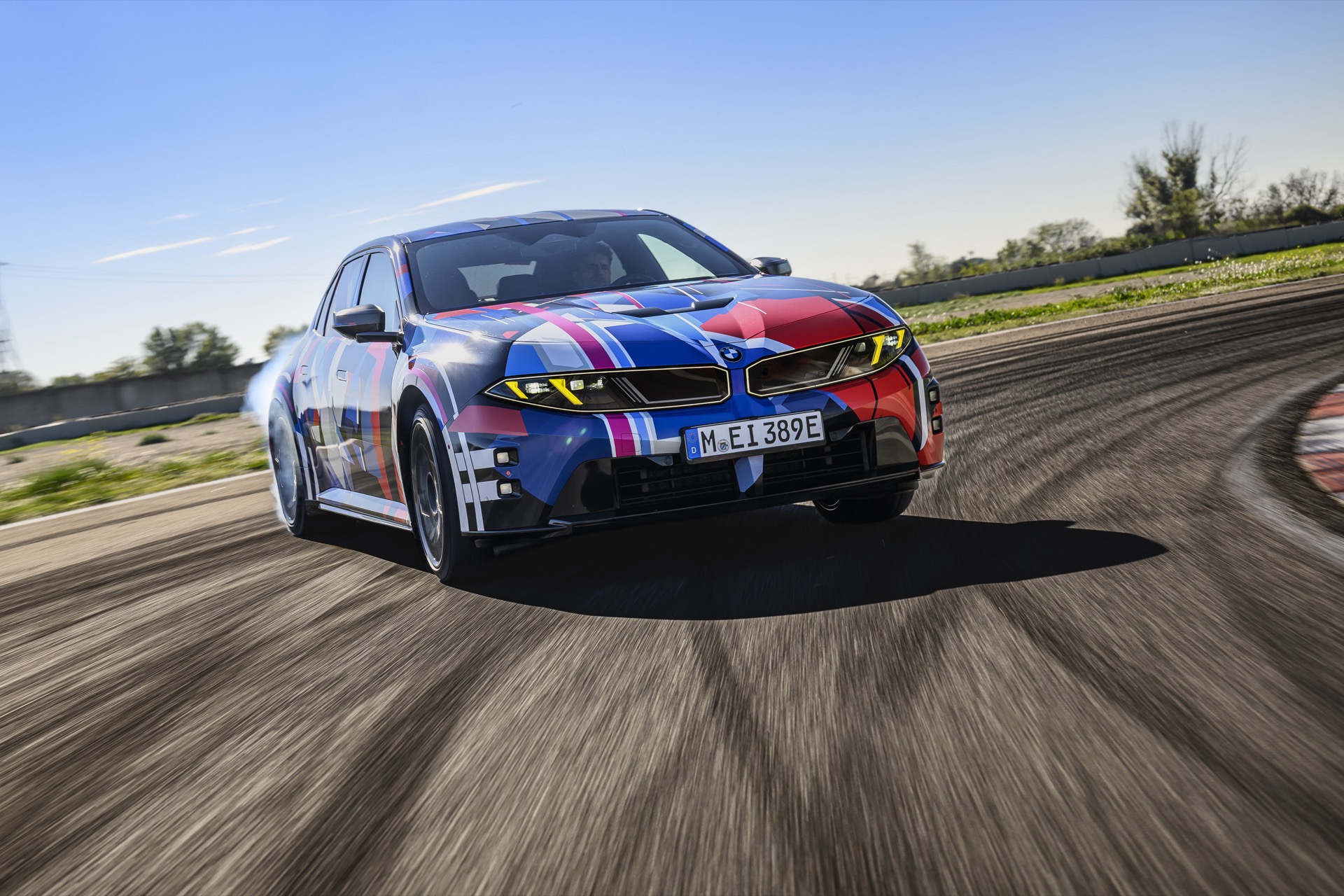
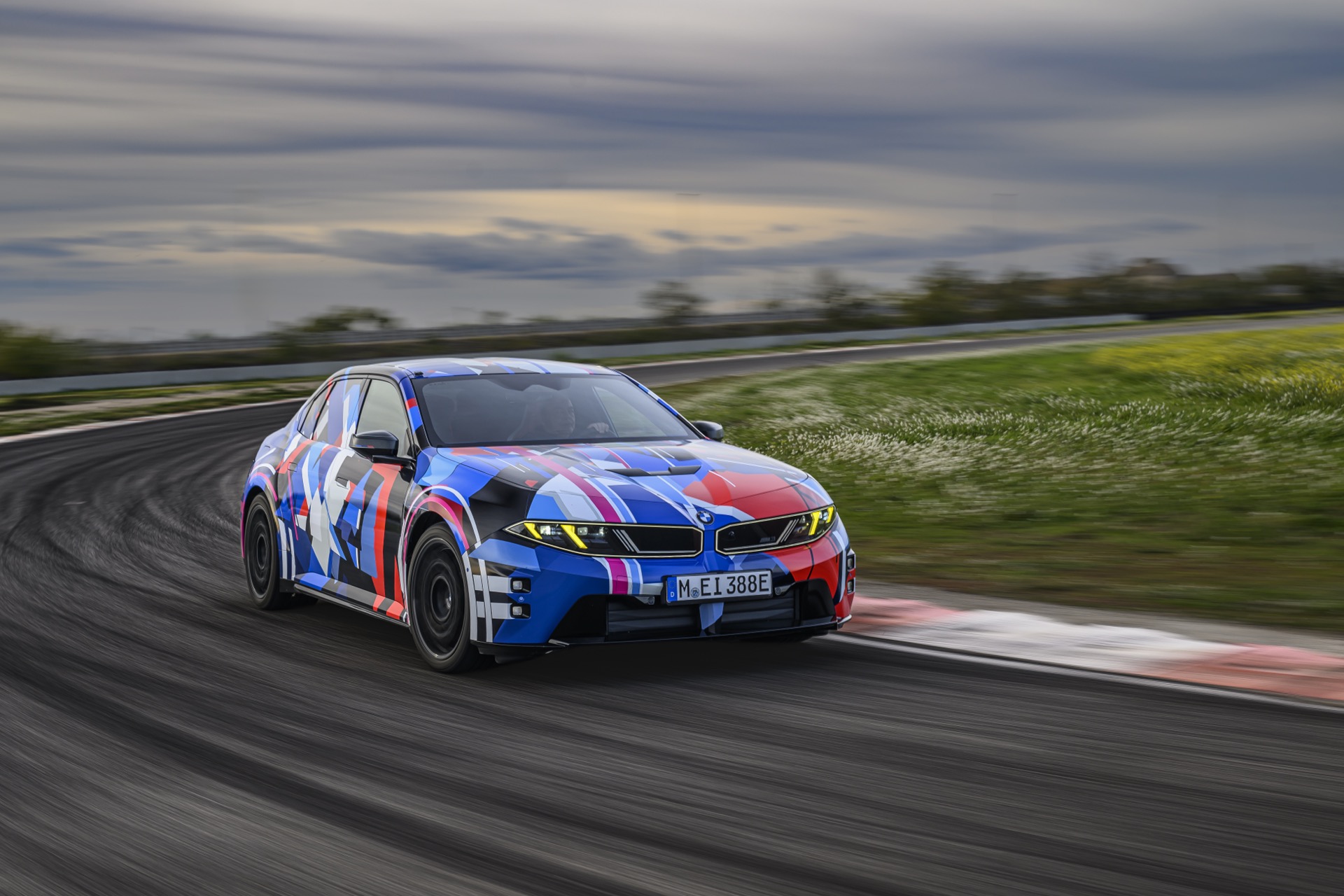
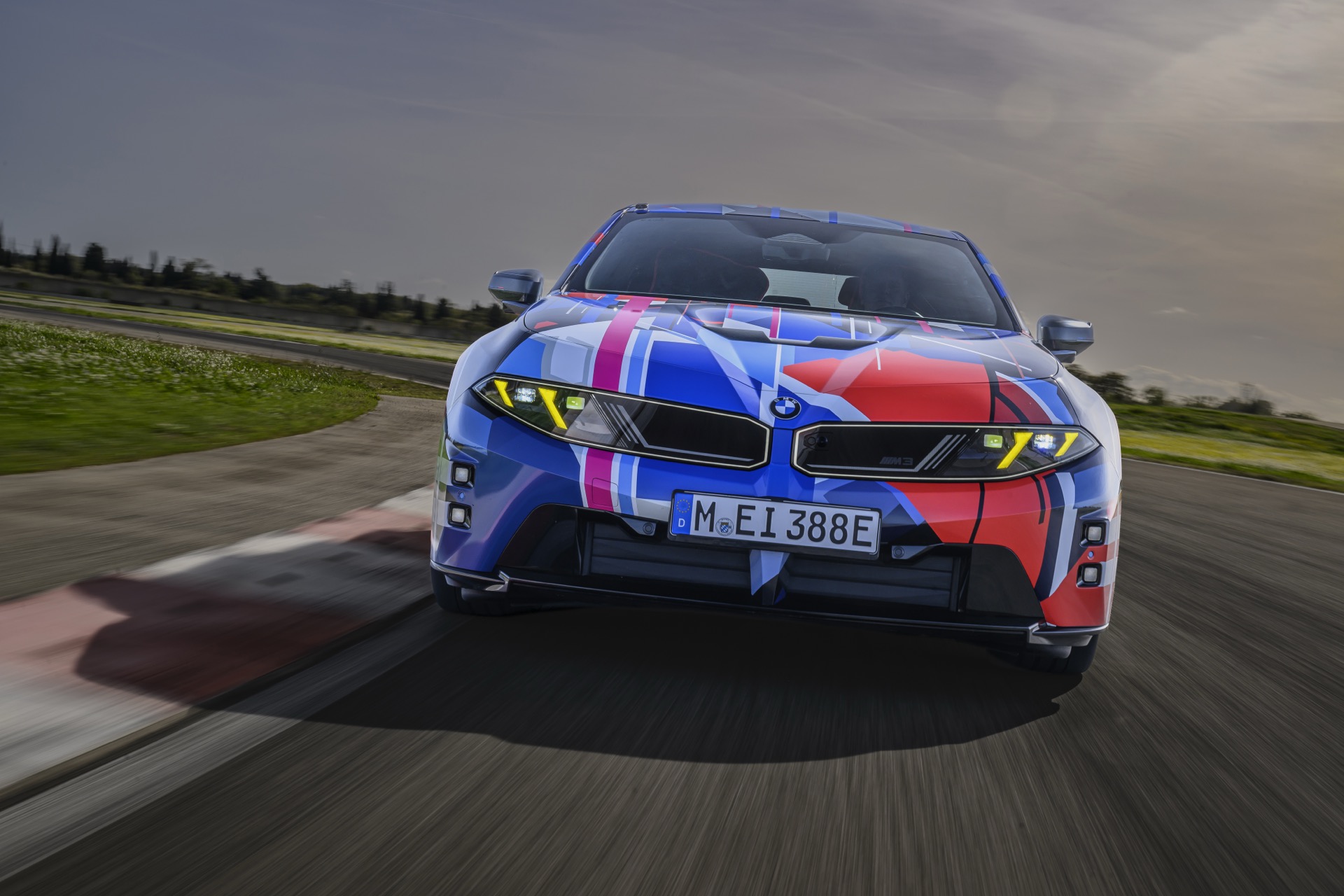
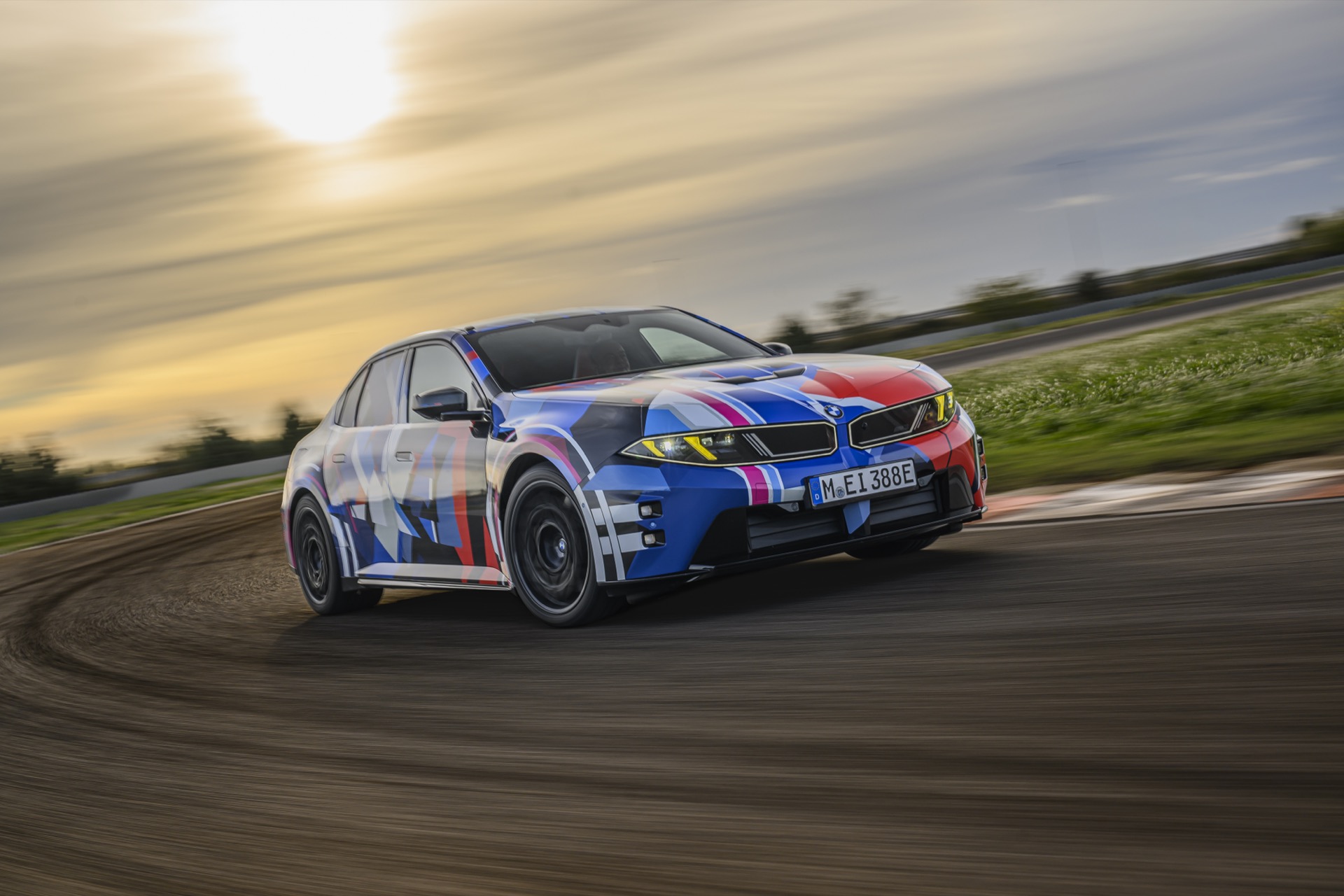
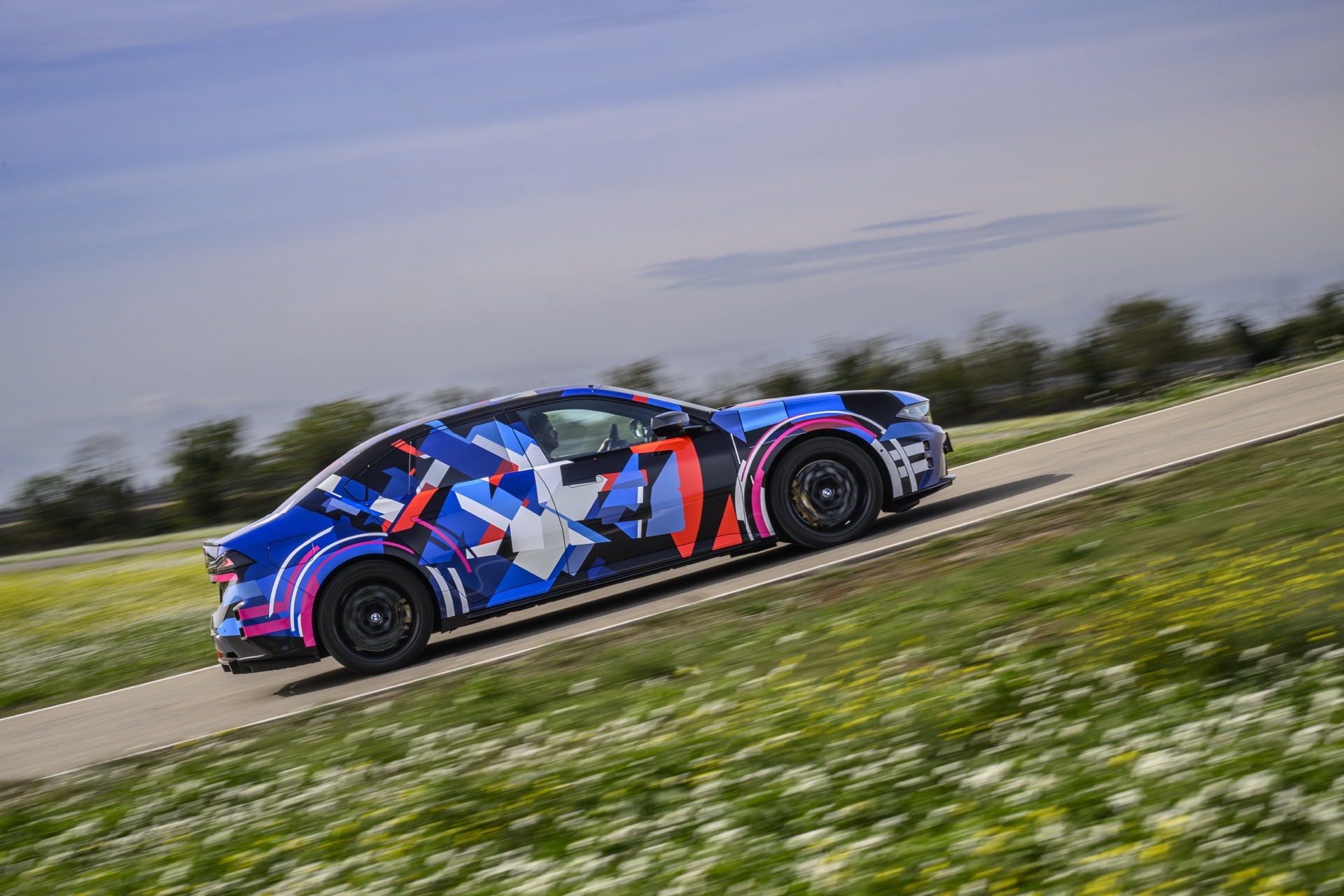
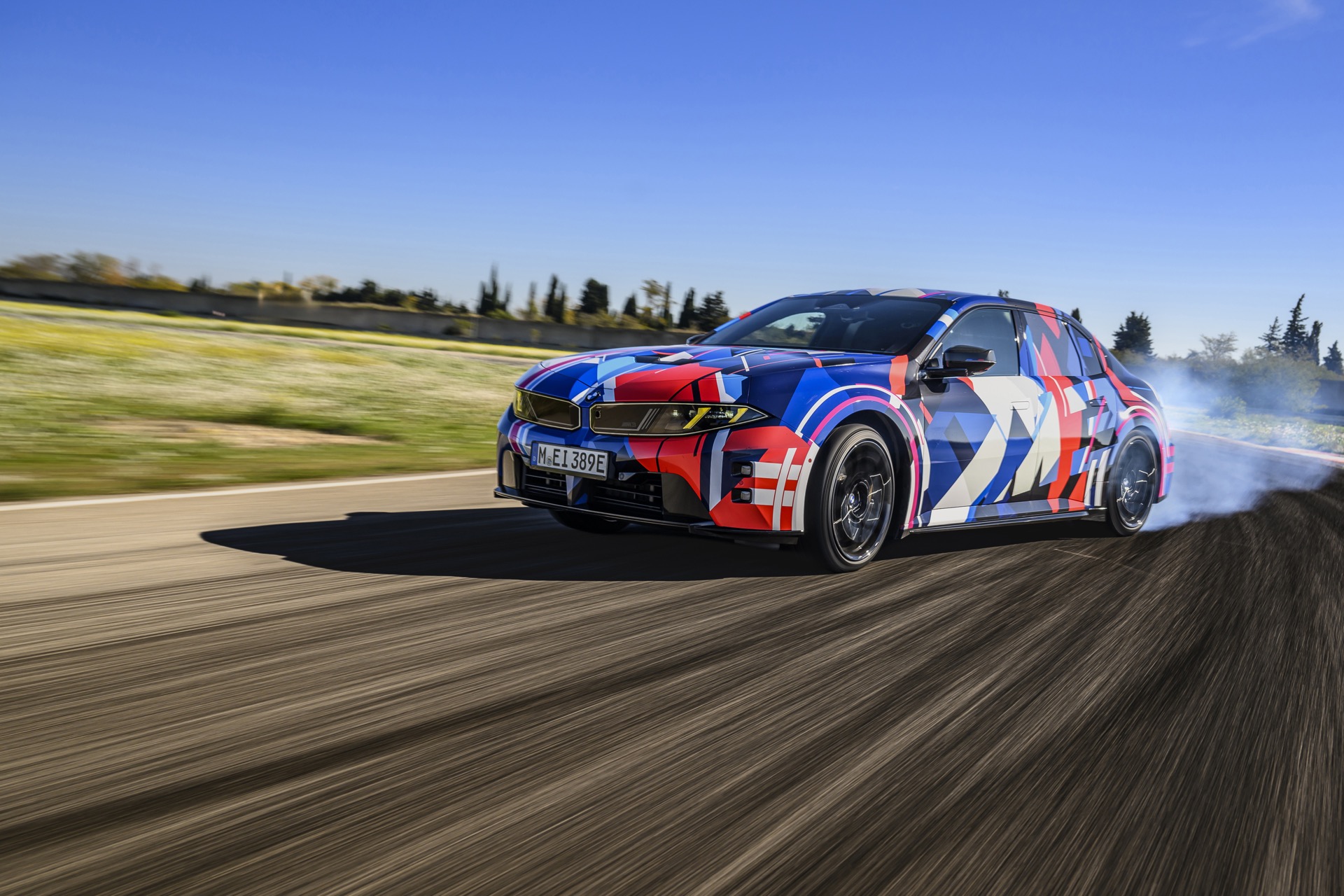
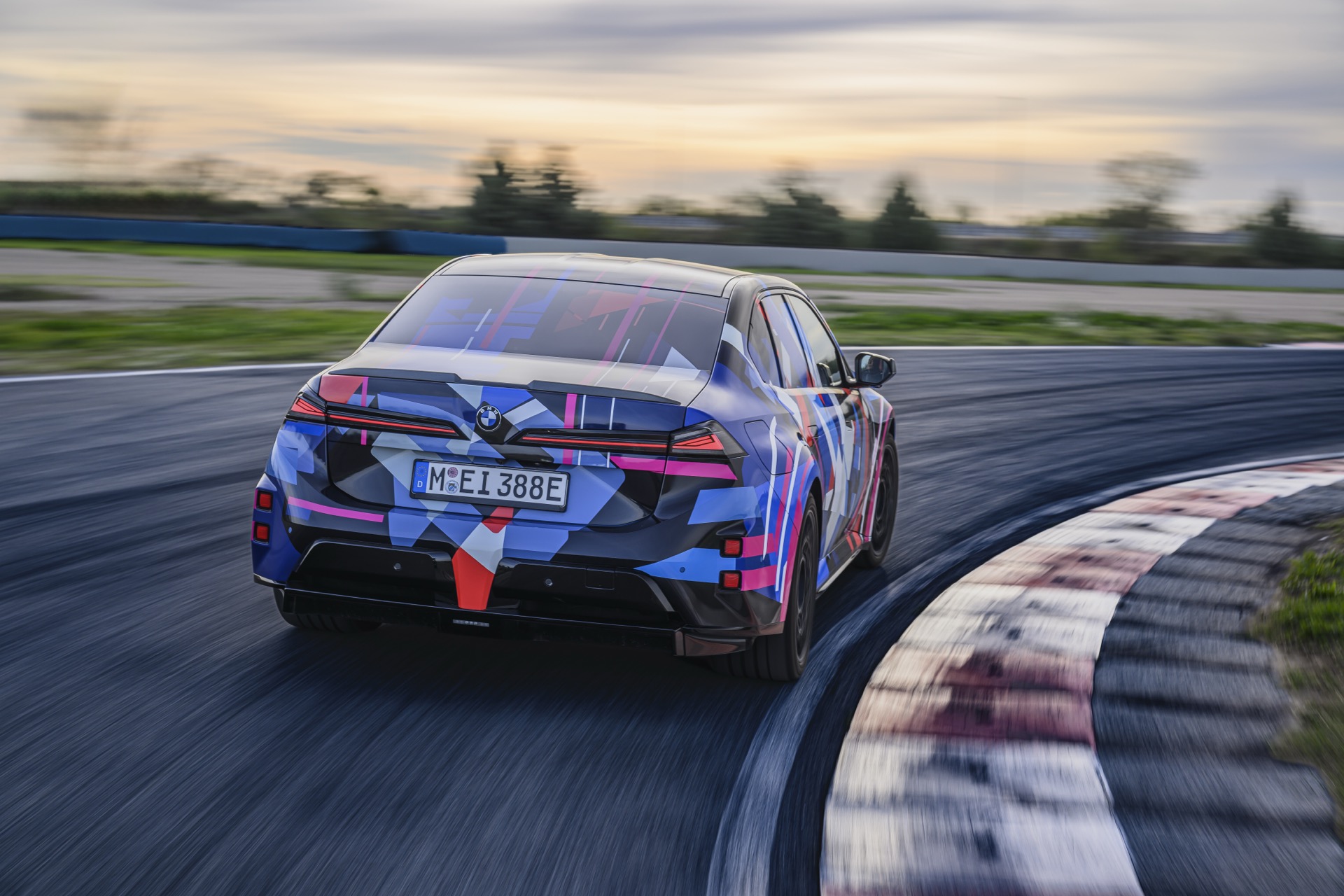
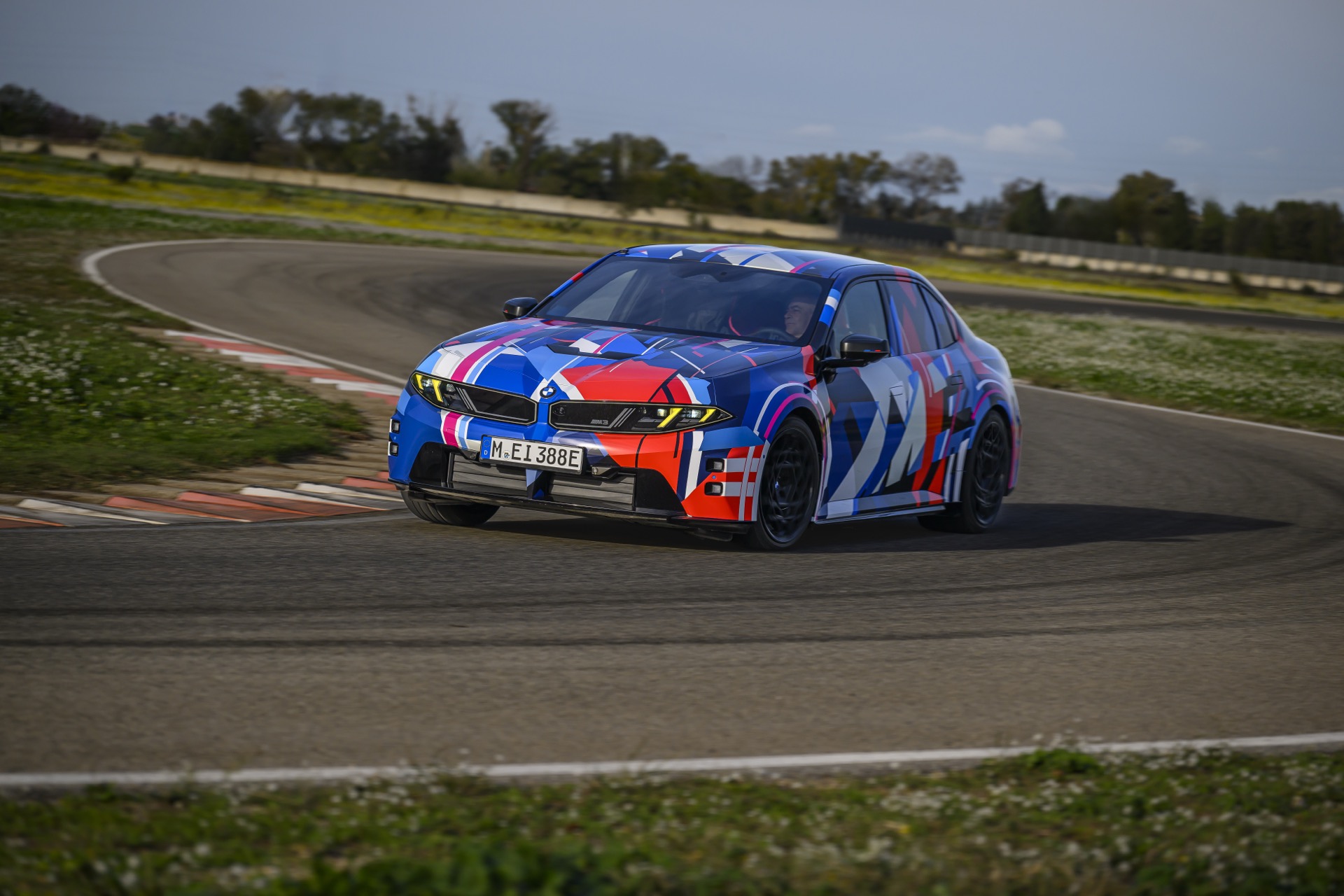
The current target, and the suggestion from the BMW team, is around 625 kW, equivalent to 838 hp, and approximately 1,200 Nm of system torque, with still more power available temporarily under launch control. The hardware is capable of considerably larger individual axle peaks: BMW quotes up to 480 kW and 540 Nm at the front axle, and 560 kW and 1,000 Nm at the rear. Those figures are the respective axle capabilities rather than numbers that can simply be added together to calculate total system output.
The reason for those extraordinary axle figures is the most important technical change of all. There are four electric motors, one controlling each wheel through front and rear electric sport drive units. Together with BMW’s Heart of Joy architecture and M Dynamic Performance Control, the system can manipulate acceleration and deceleration torque wheel-by-wheel with extraordinary precision. BMW is adamant that the objective is not simply maximum traction, but feedback, controllability and the adjustability expected of an M car. That distinction matters.
We have reached a point where making an electric performance car brutally fast is relatively easy. Making one interesting is considerably harder. From behind the wheel, the first real surprise is not the outright speed but the predictability.
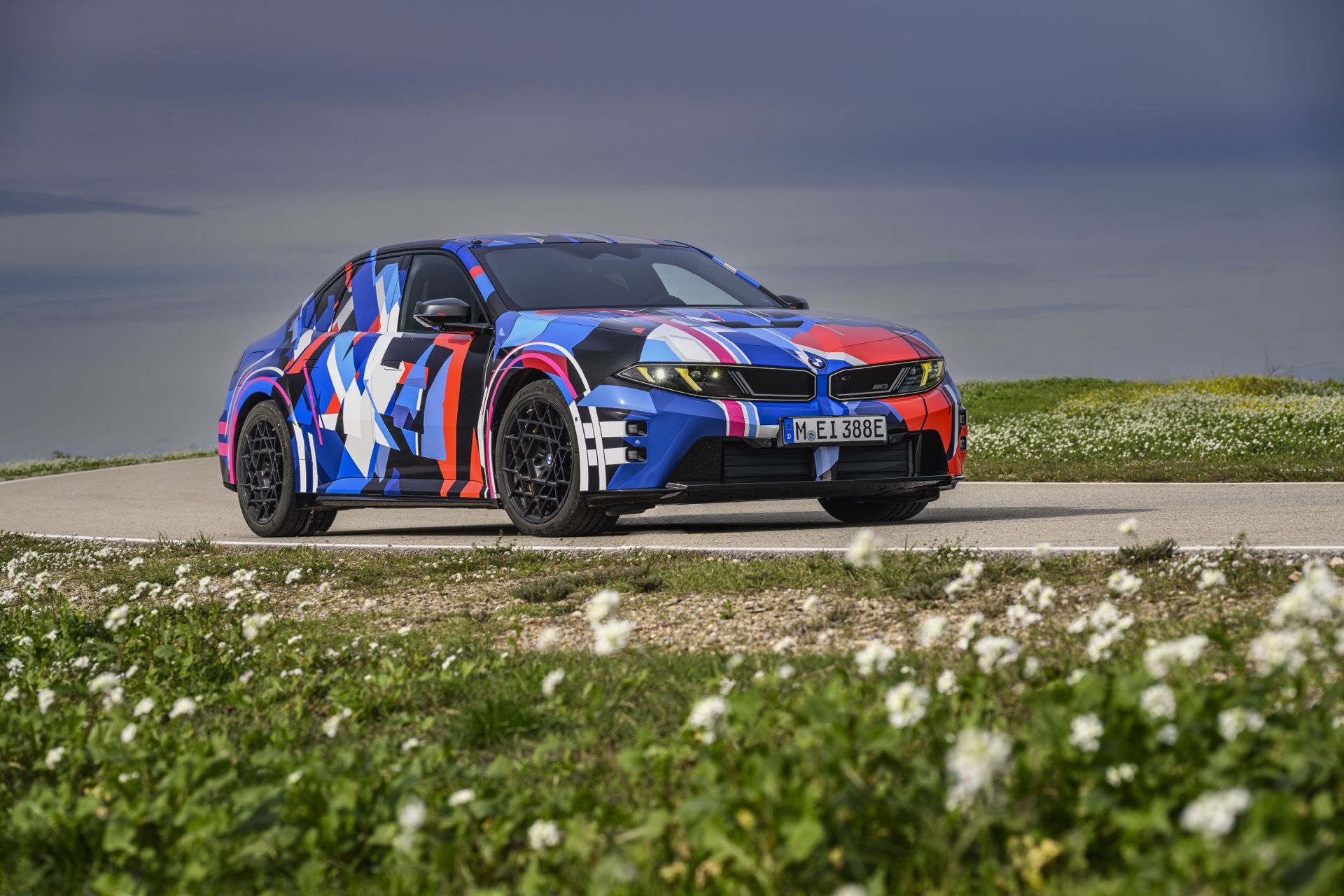
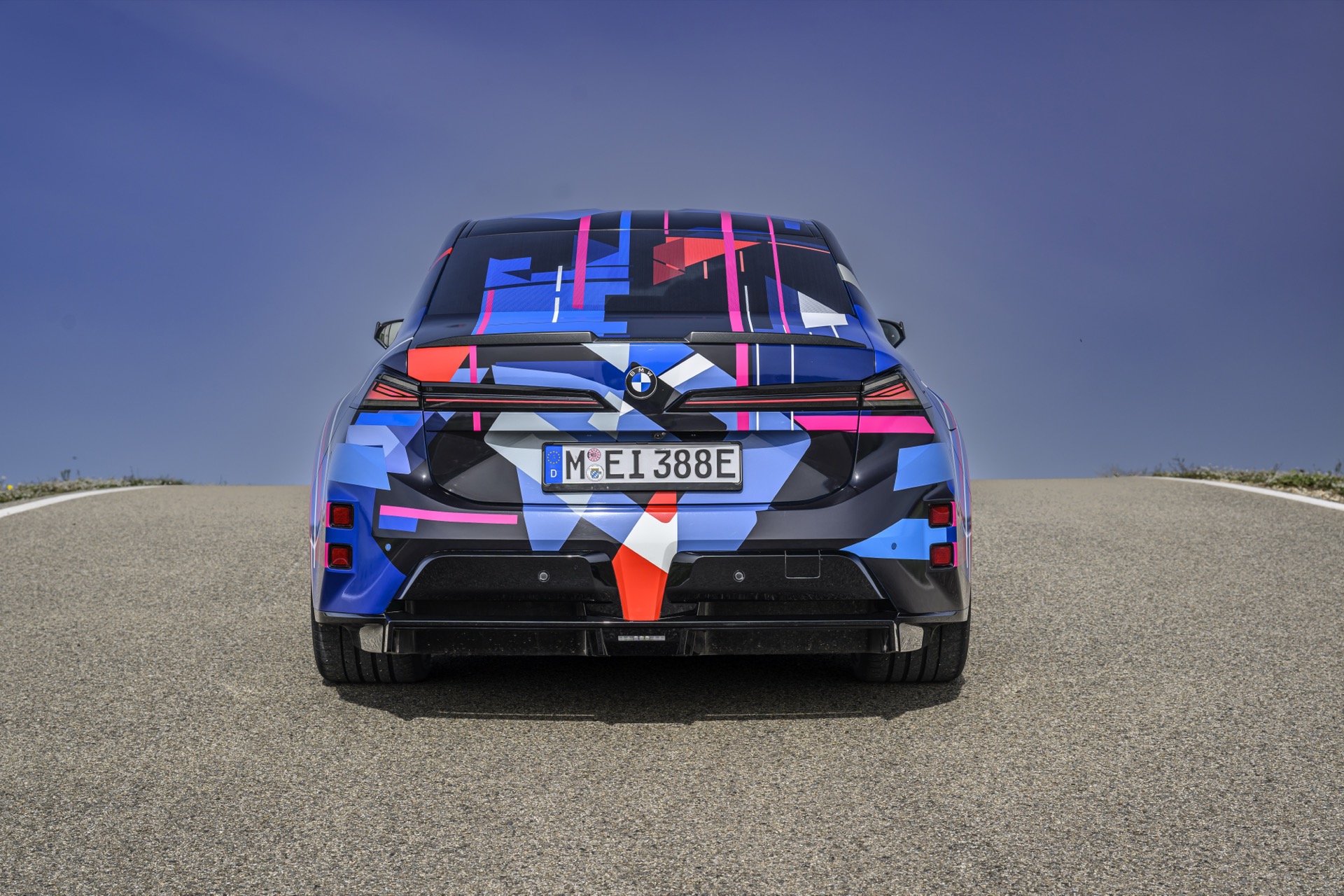
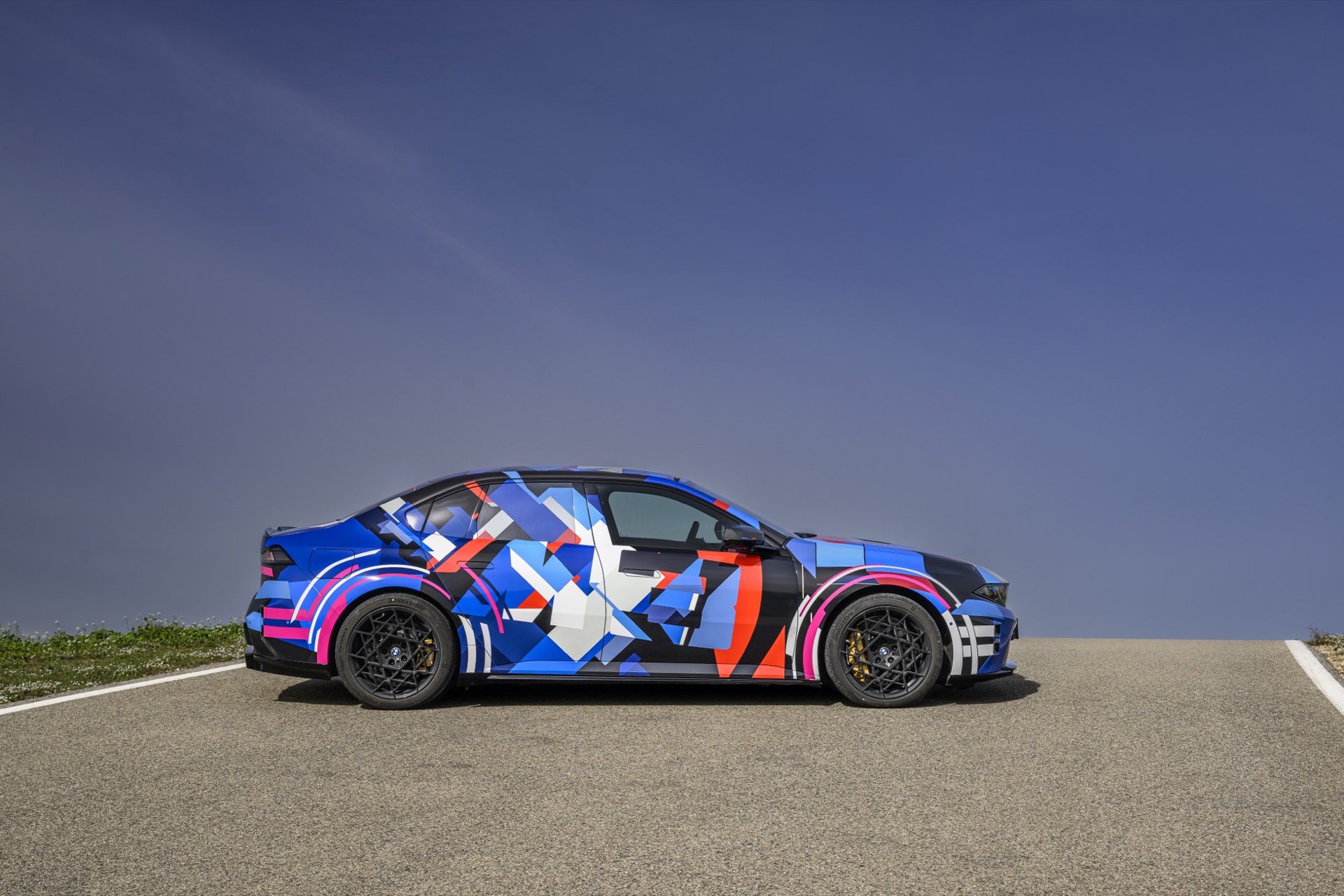
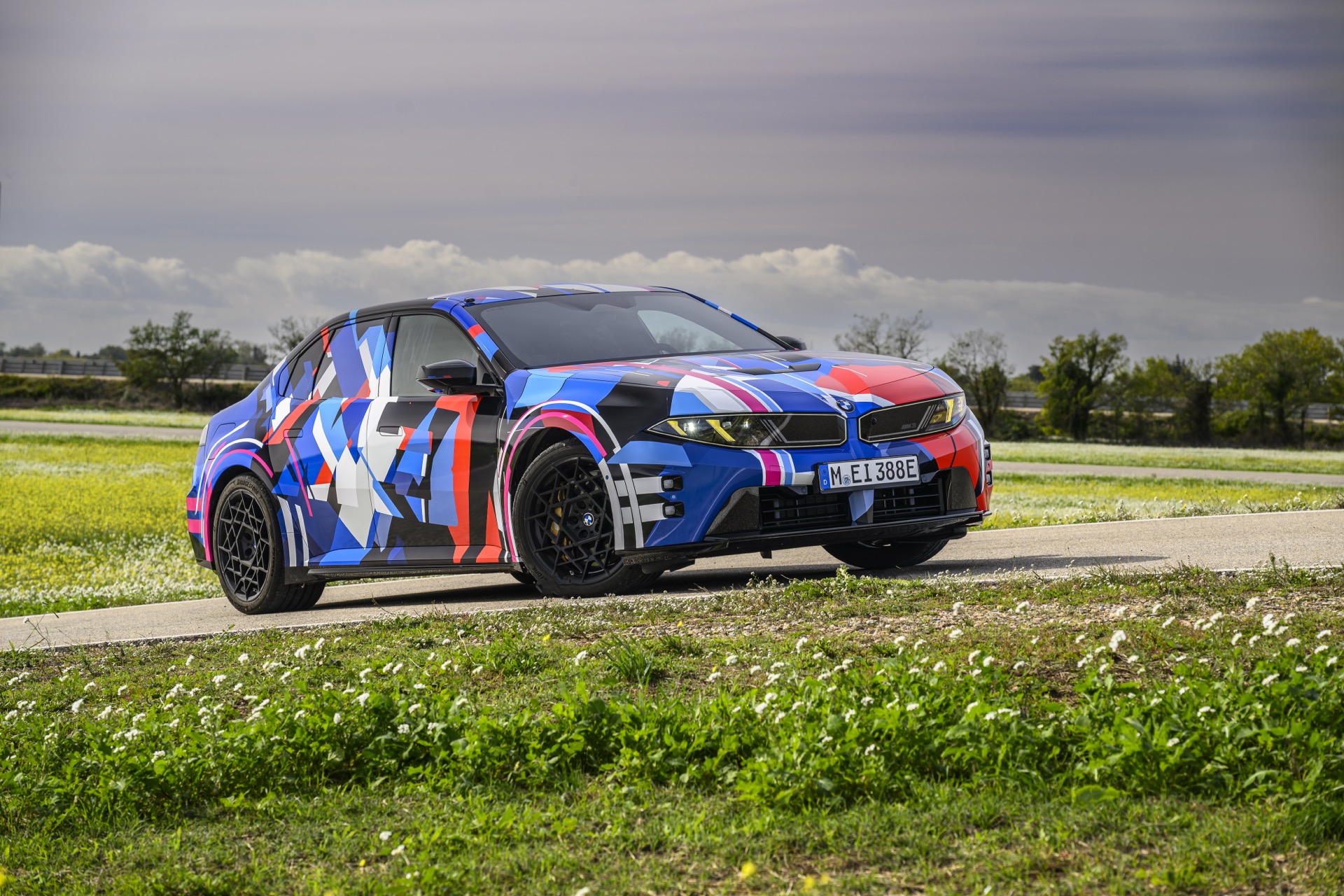
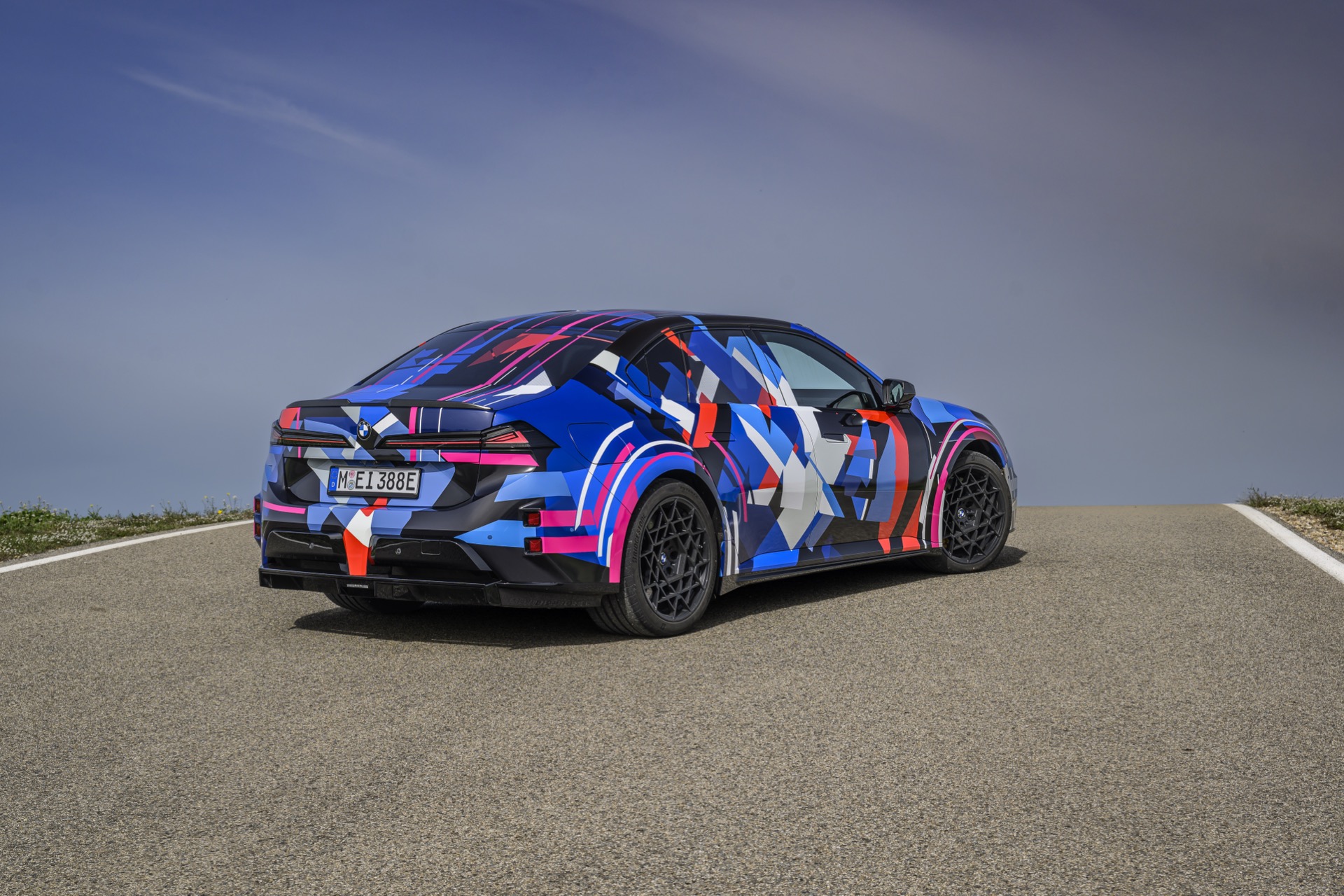
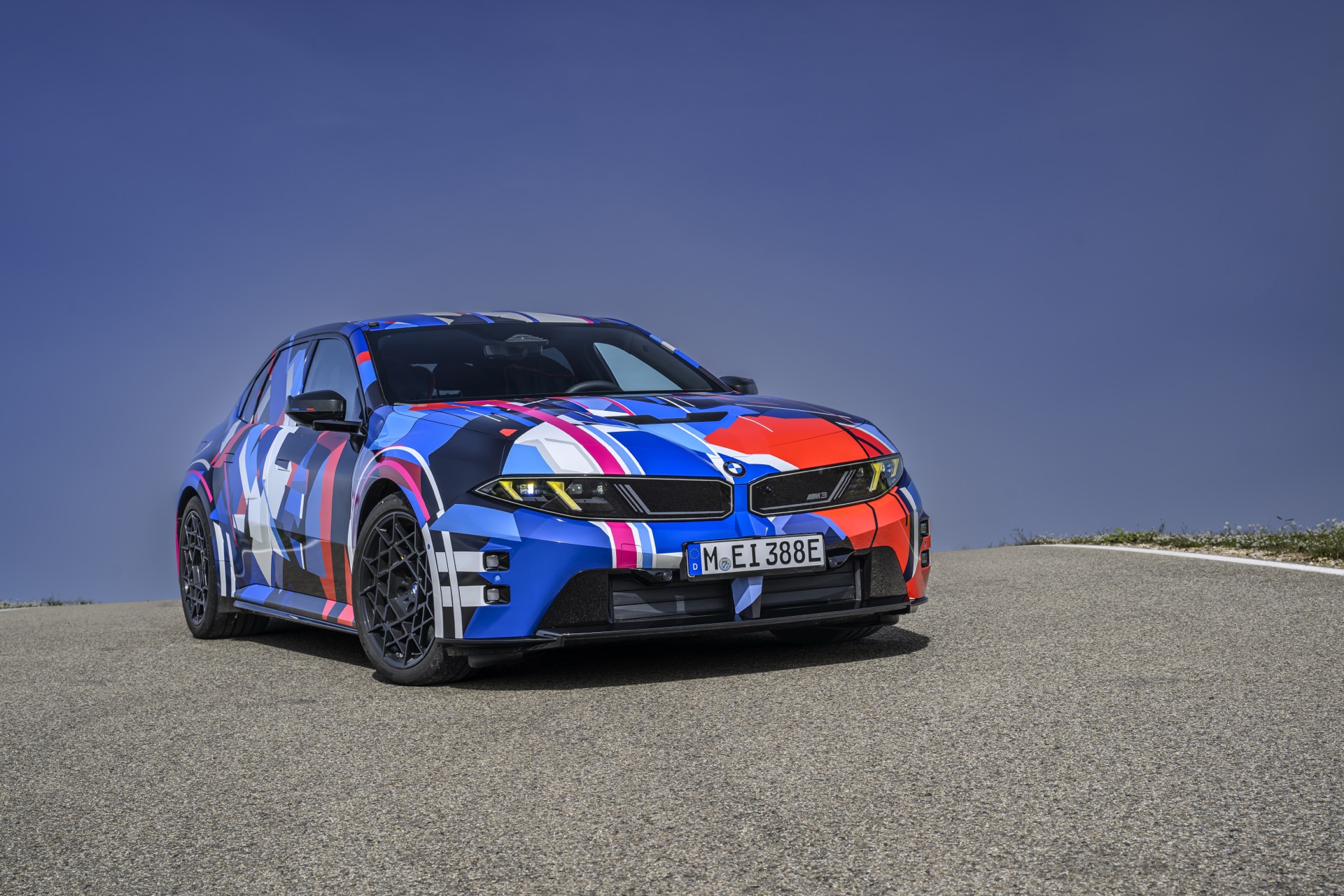
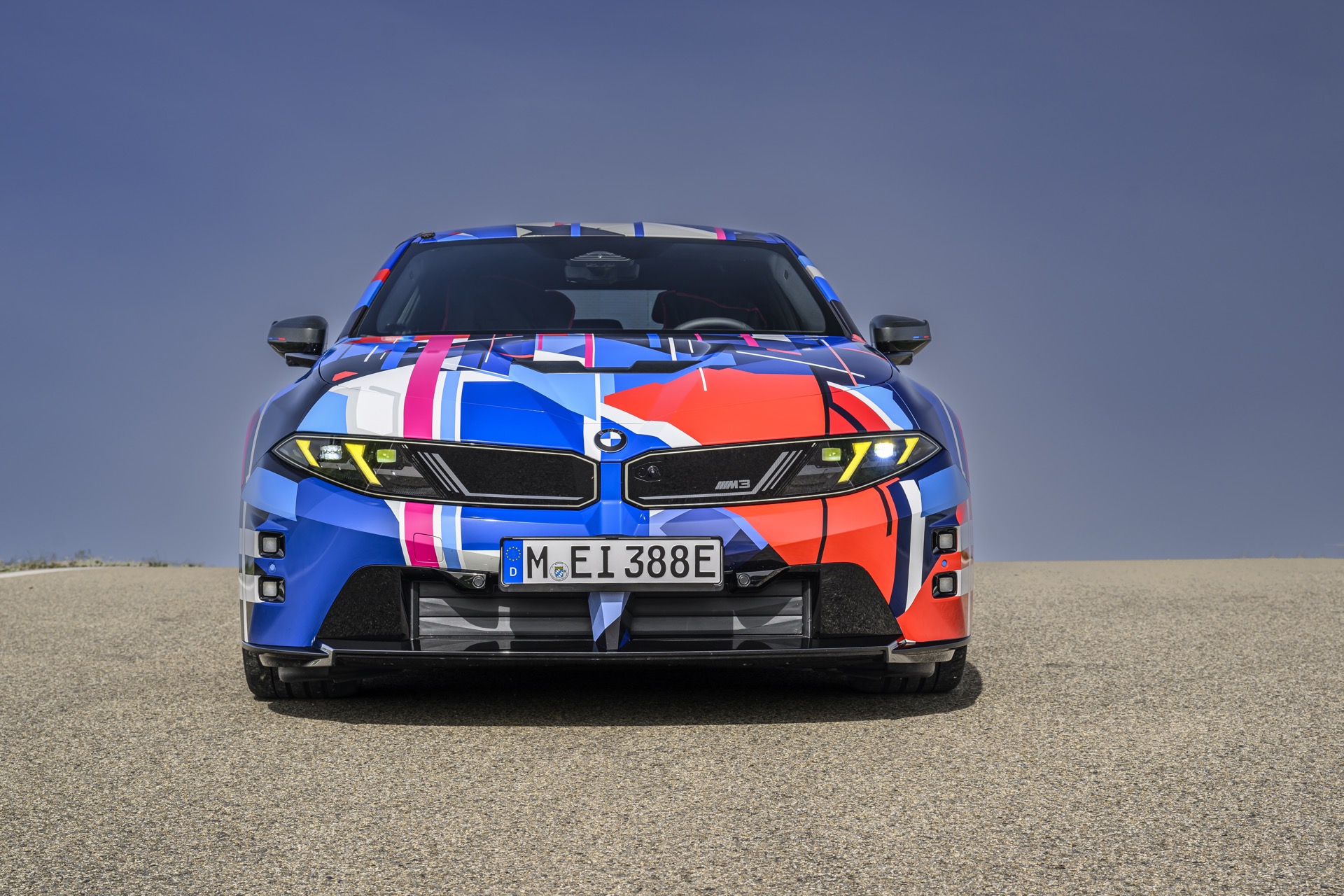
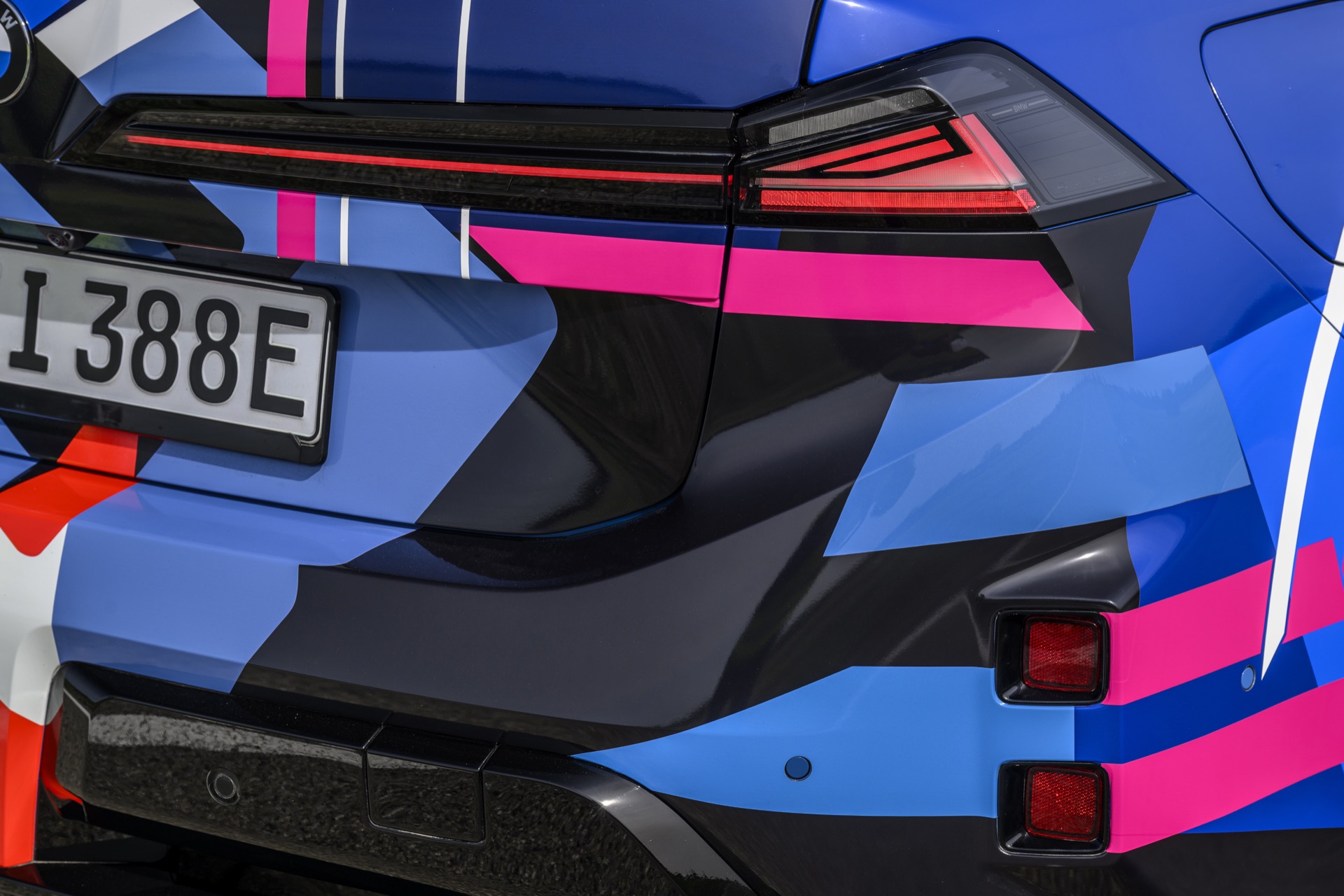
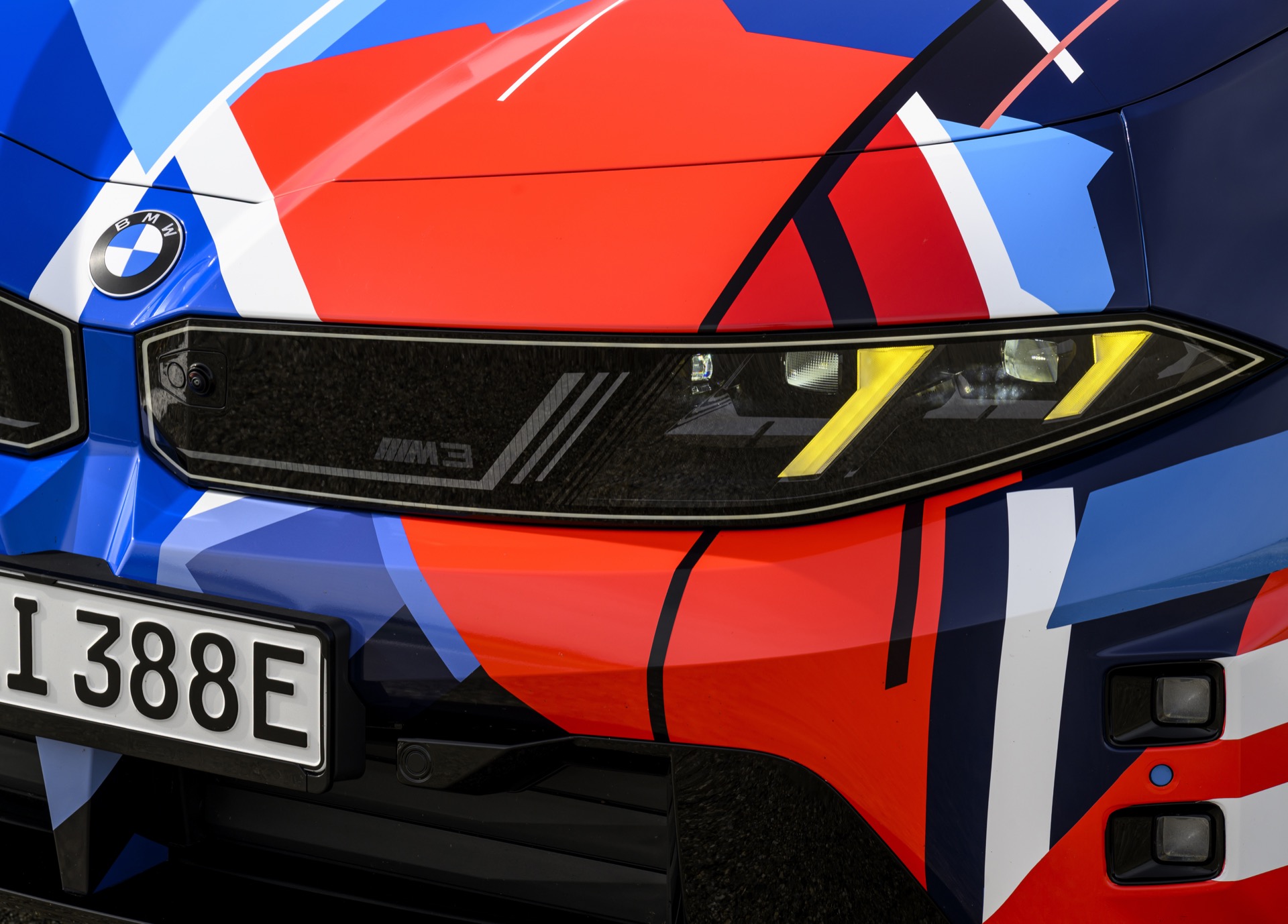
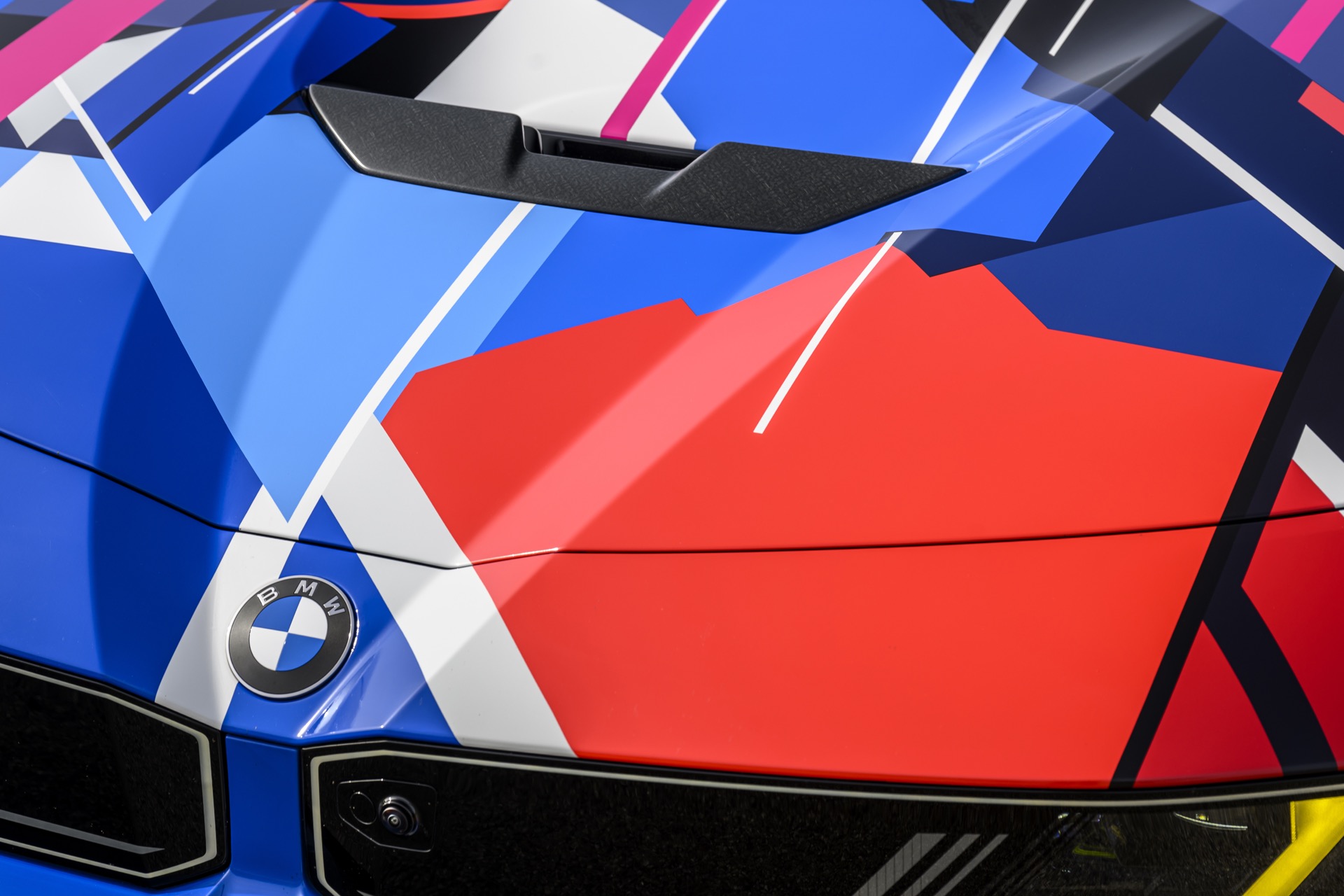
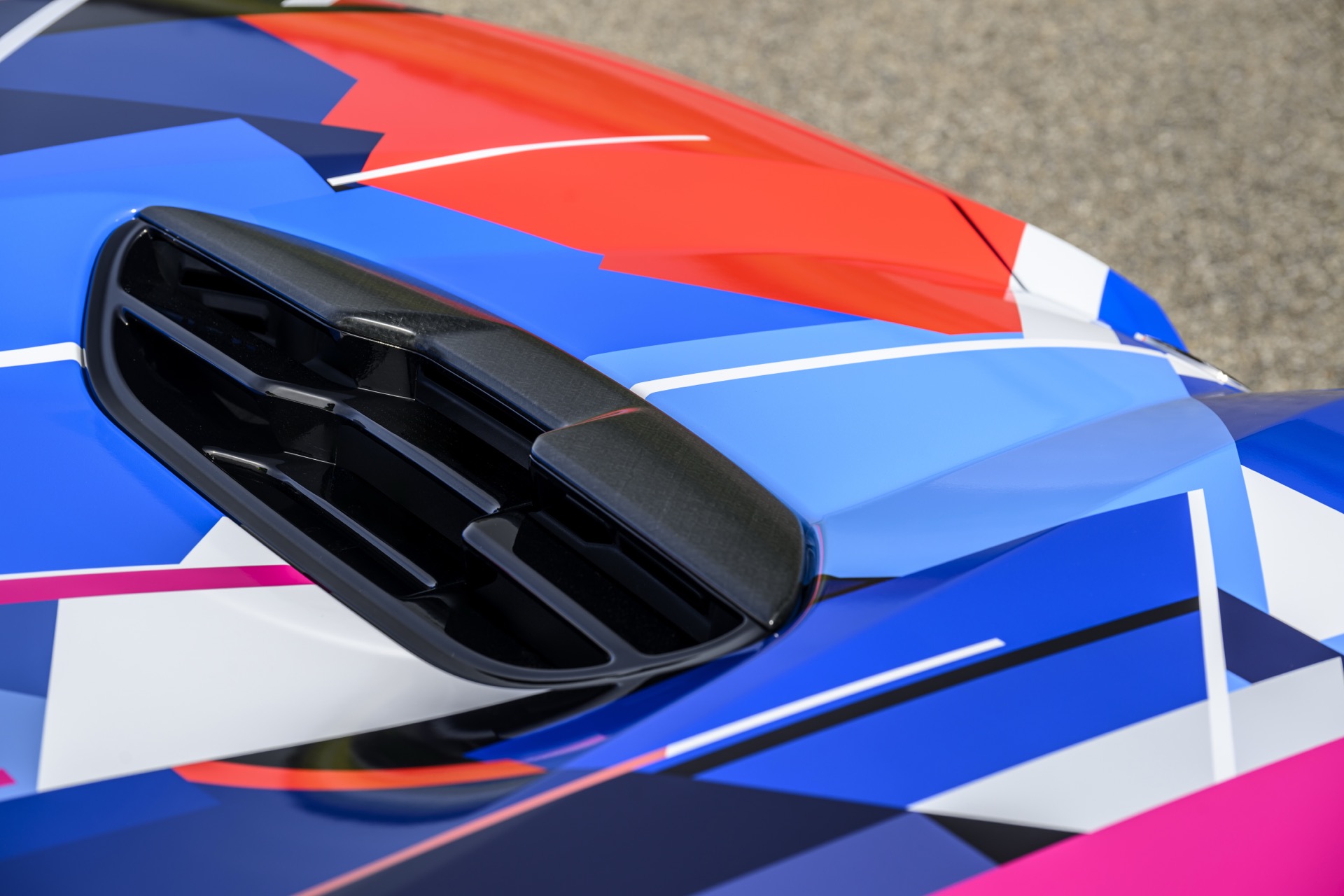
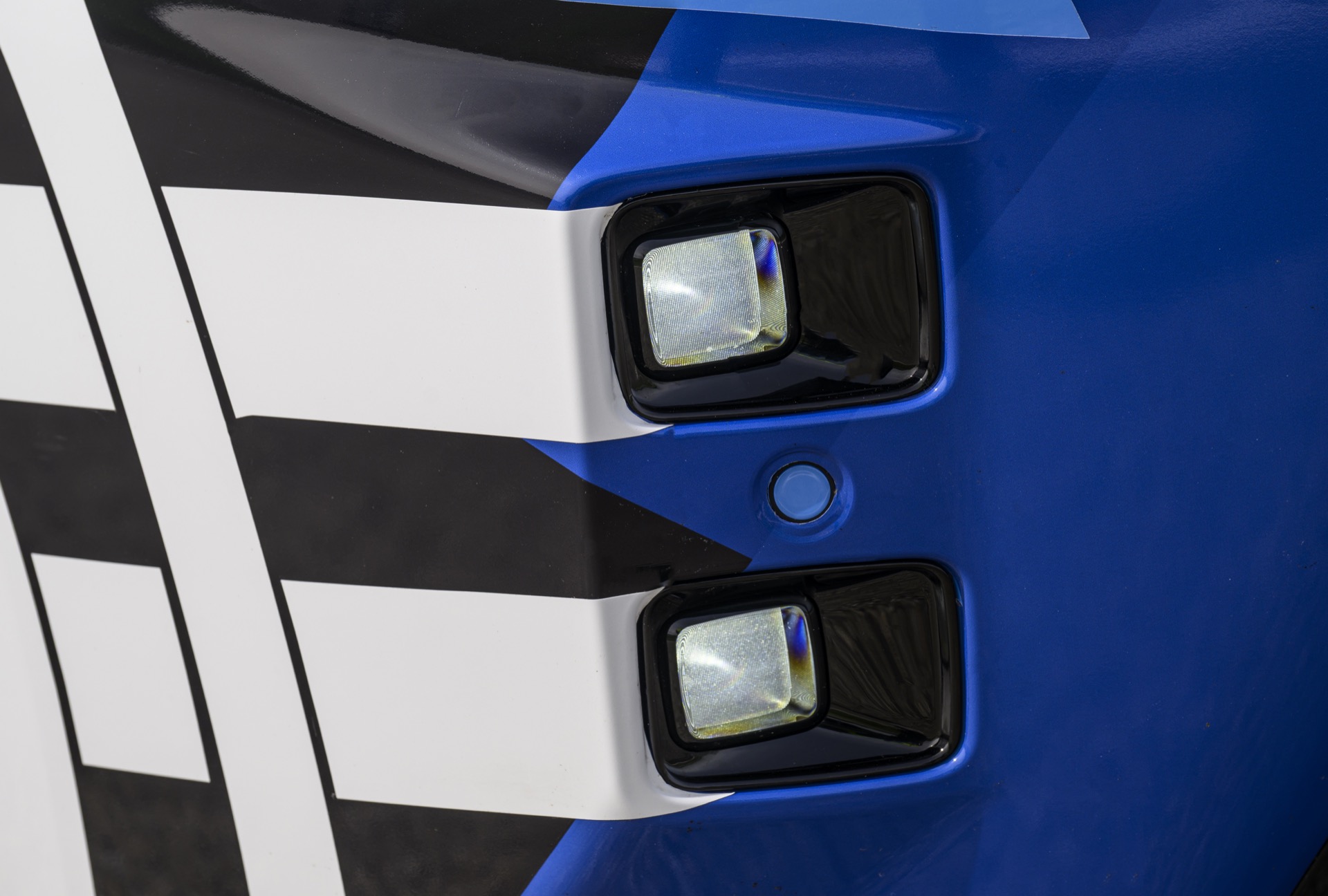
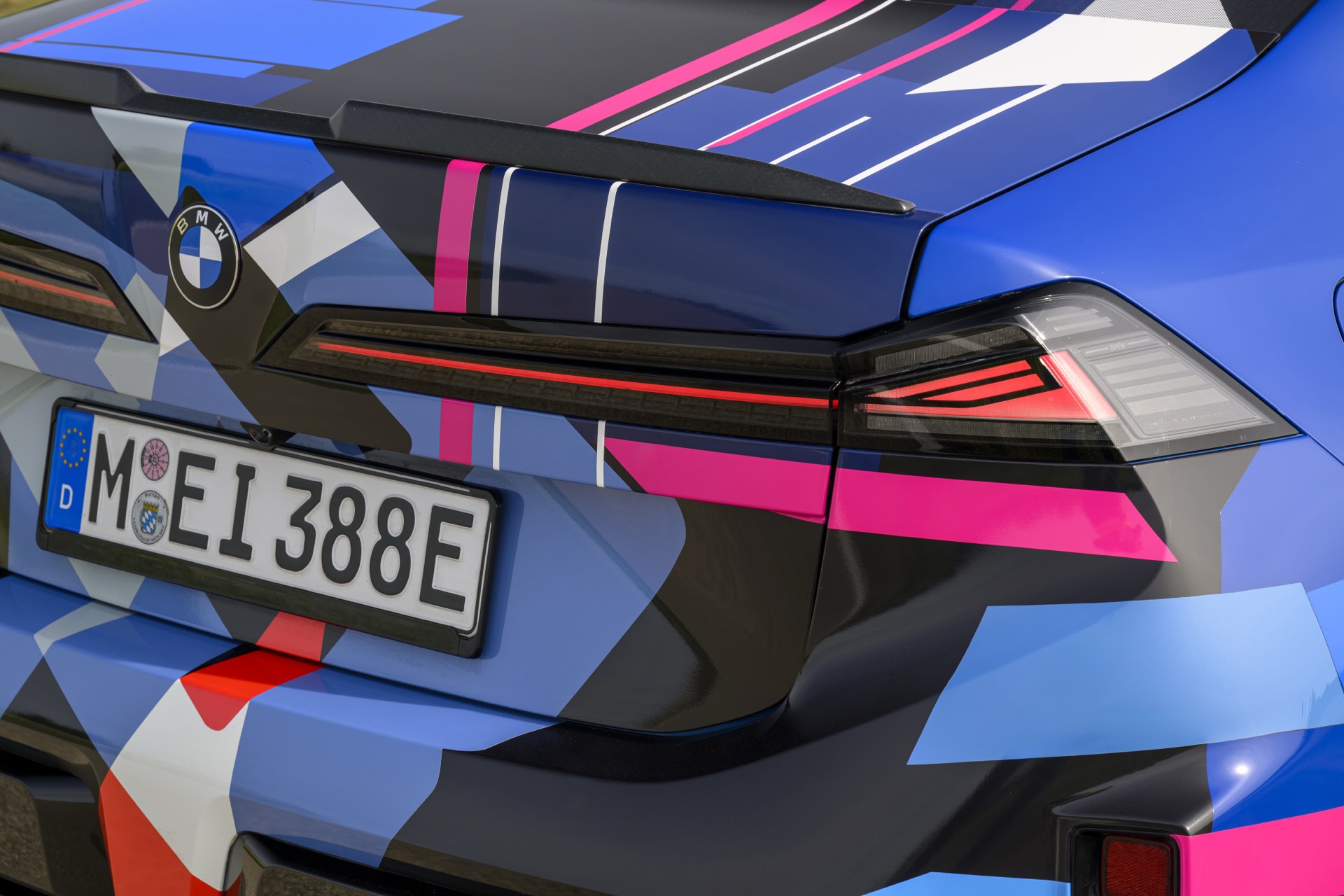
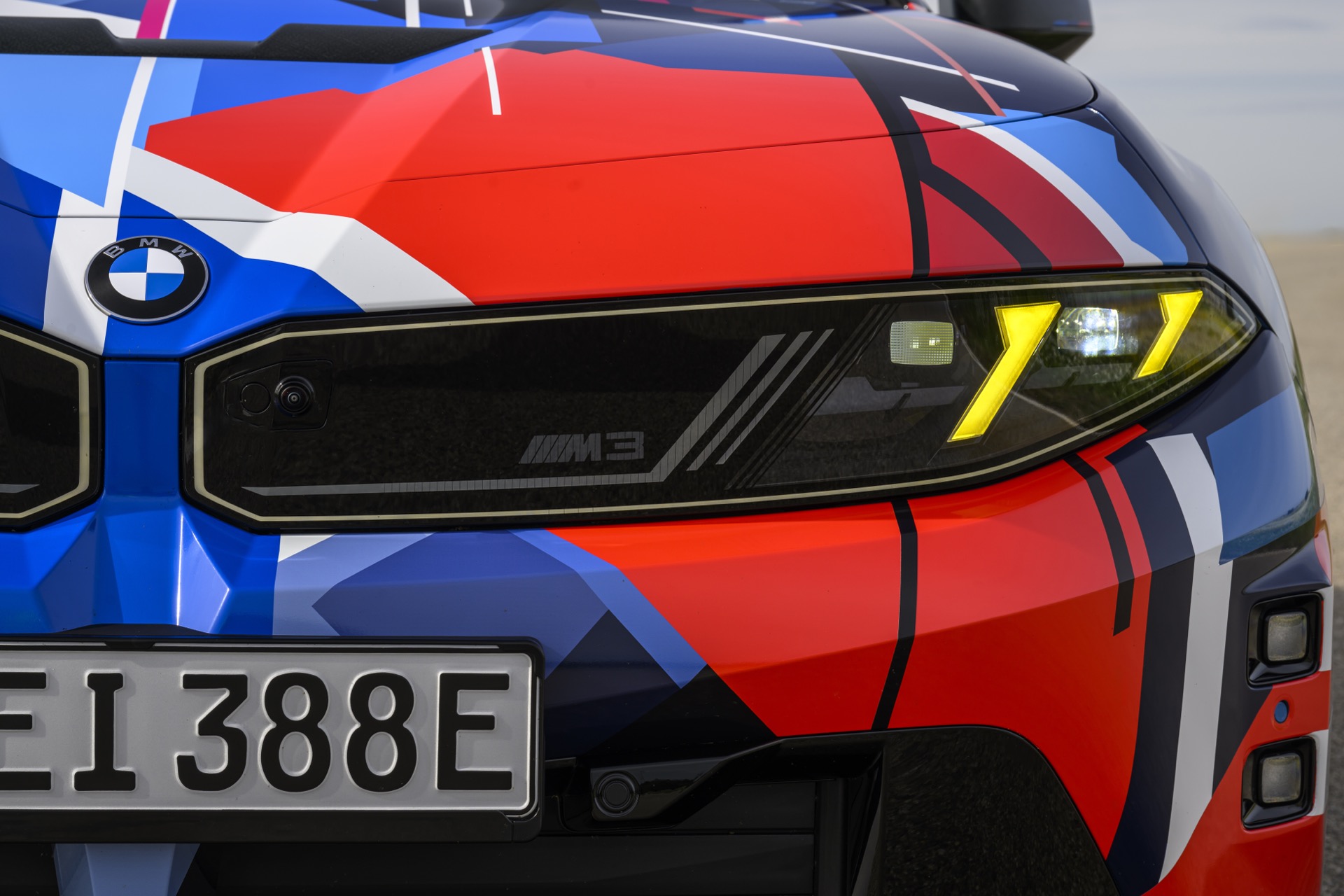
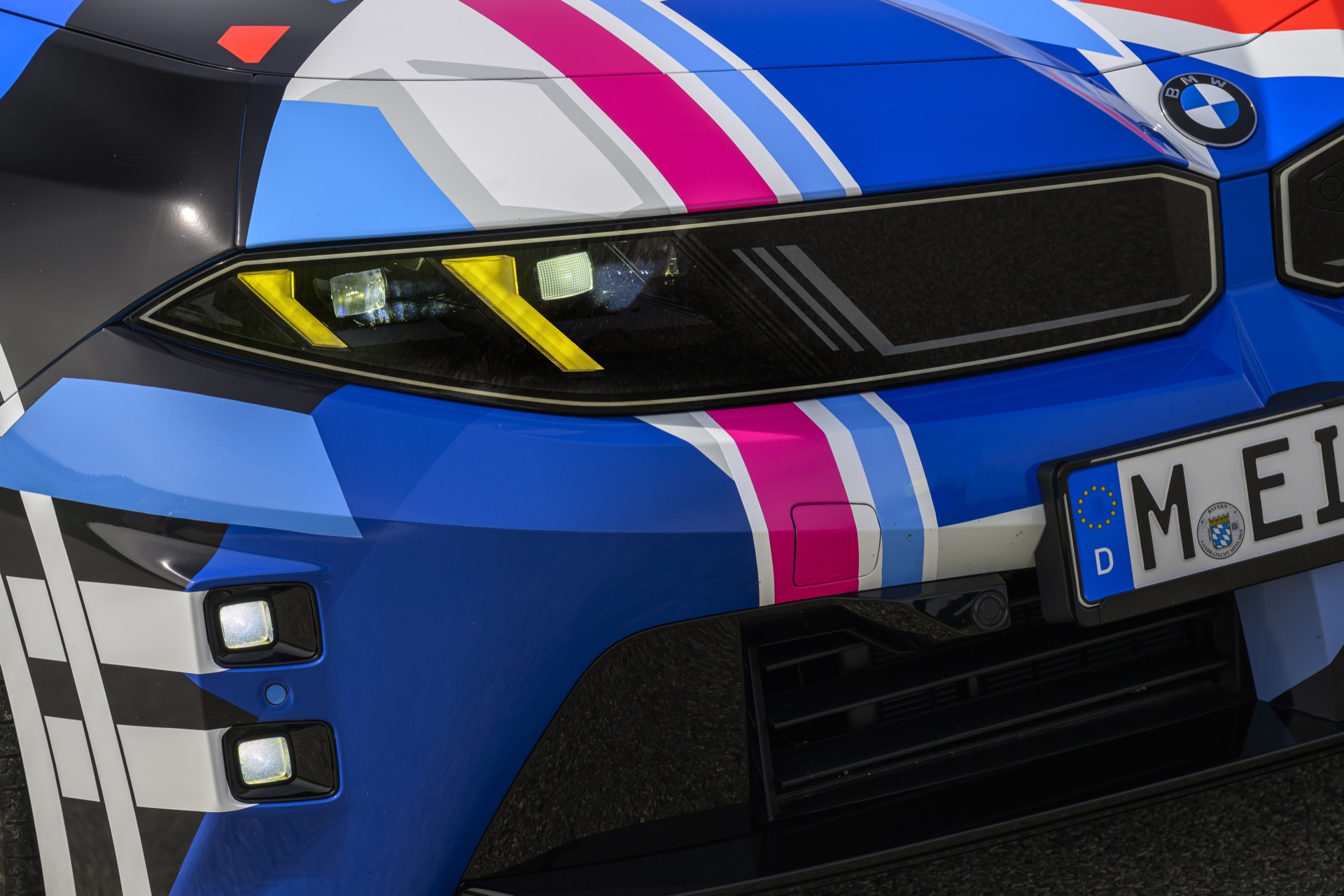
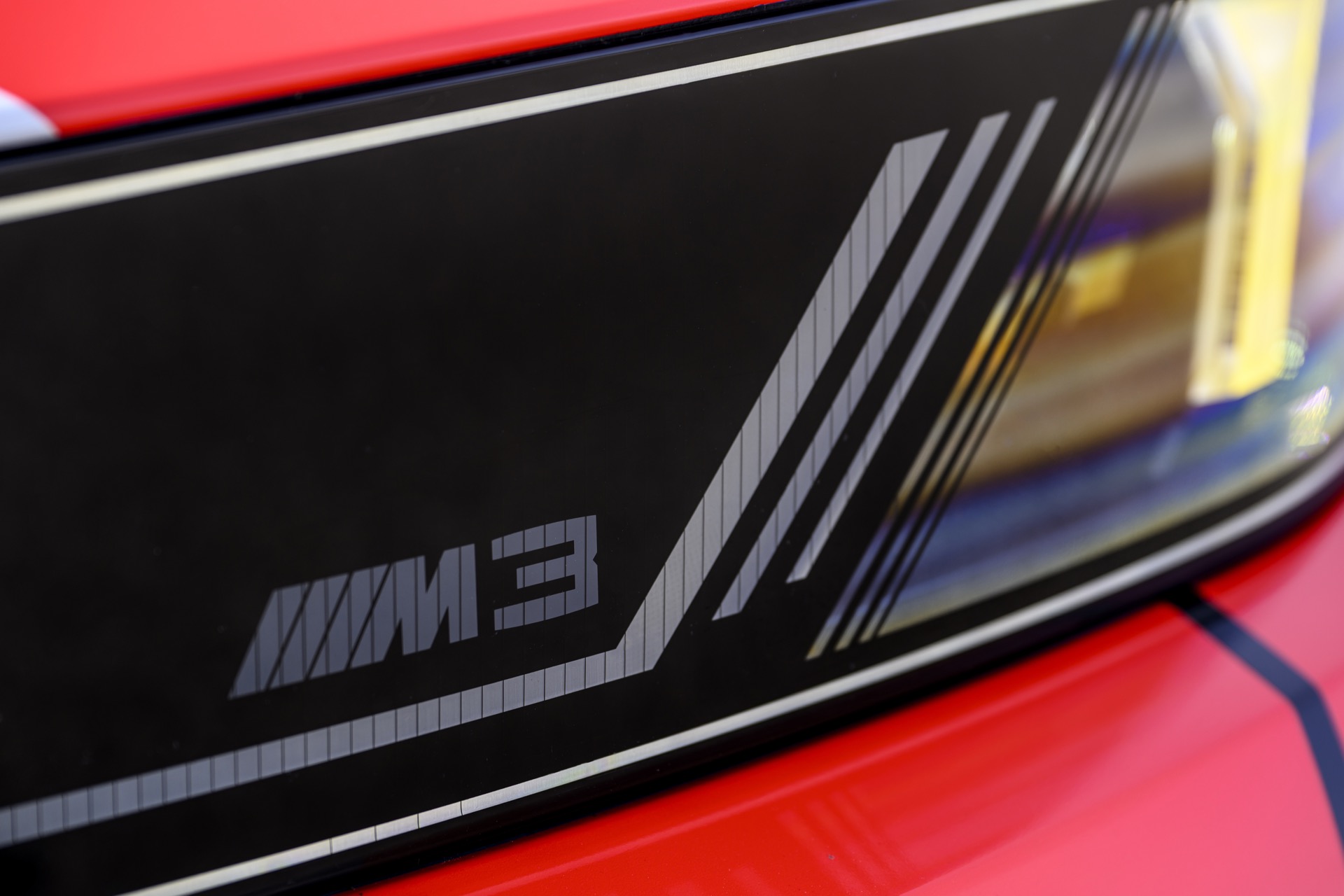
The M3 feels enormously planted, and there is a confidence to the way it responds that makes its performance remarkably approachable. Turn in, lean on that enormous torque reserve and the car follows your inputs. Even adjusting your line midway through a fast corner does little to unsettle it.
Some of that sensation will inevitably be related to mass. BMW has not yet revealed how much the production car will weigh, although it openly acknowledges the challenge of the additional weight inherent in a high-performance BEV. It was suggested that it will be heavier than the Neue Klasse i3 and its 2,280kg kerb weight. Regardless of the stated figure, the M engineers have worked their magic to make it feel substantially lighter.
Considerable effort has therefore gone into structural rigidity. M-specific subframes, forged aluminium components, front and rear stiffening plates and A-pillar bracing are joined by the battery itself, which forms part of the structural system linking the chassis, body and axles.
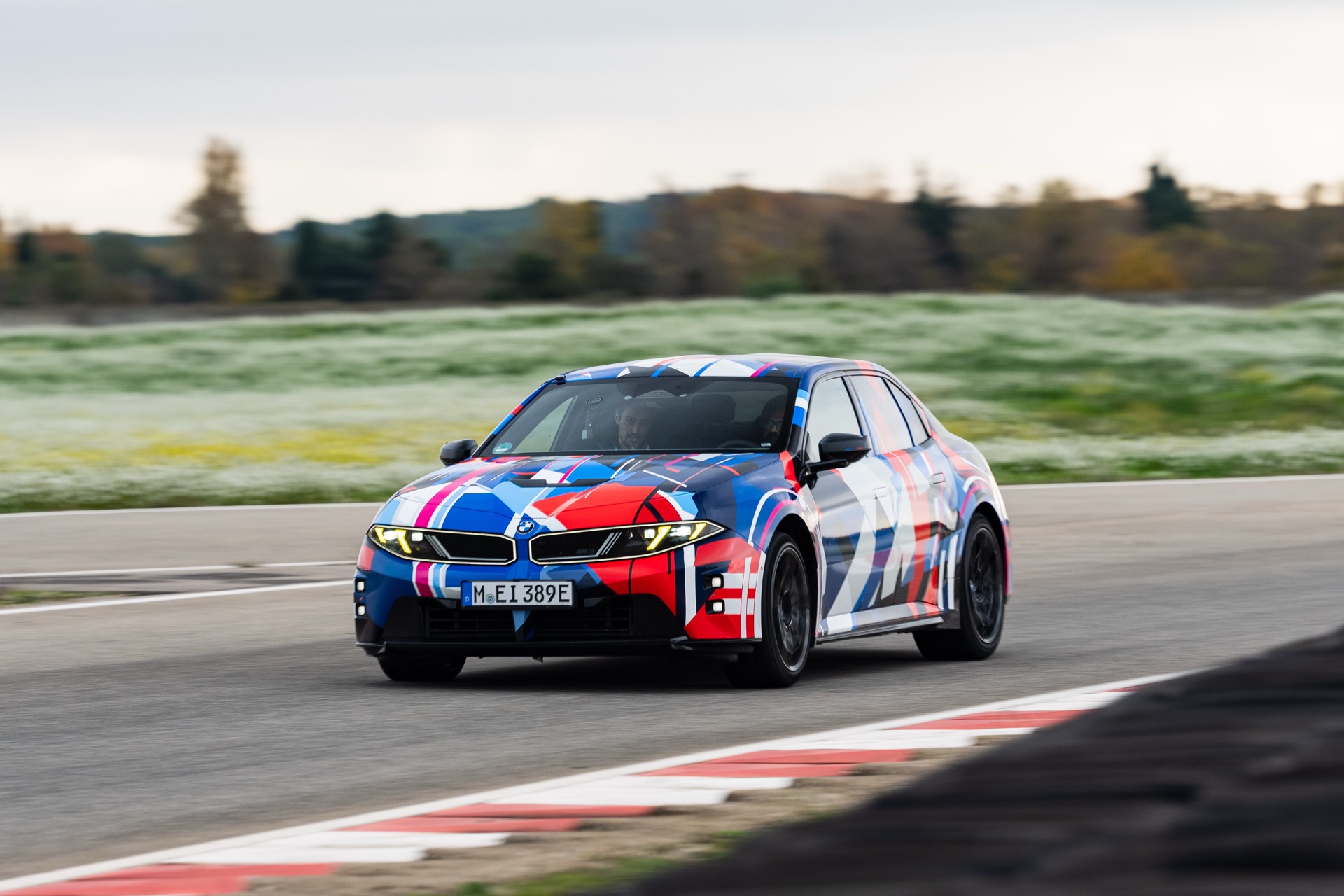
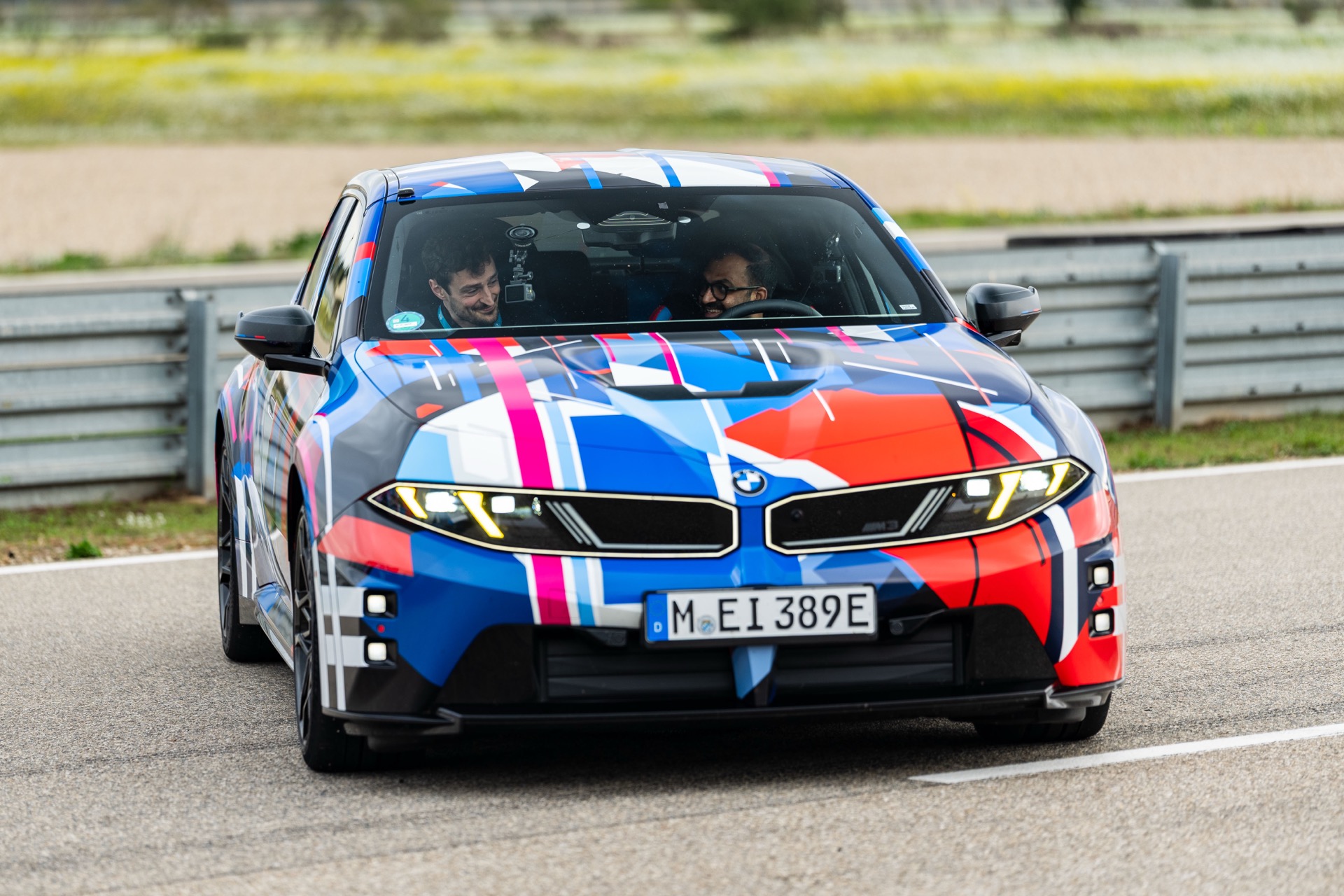
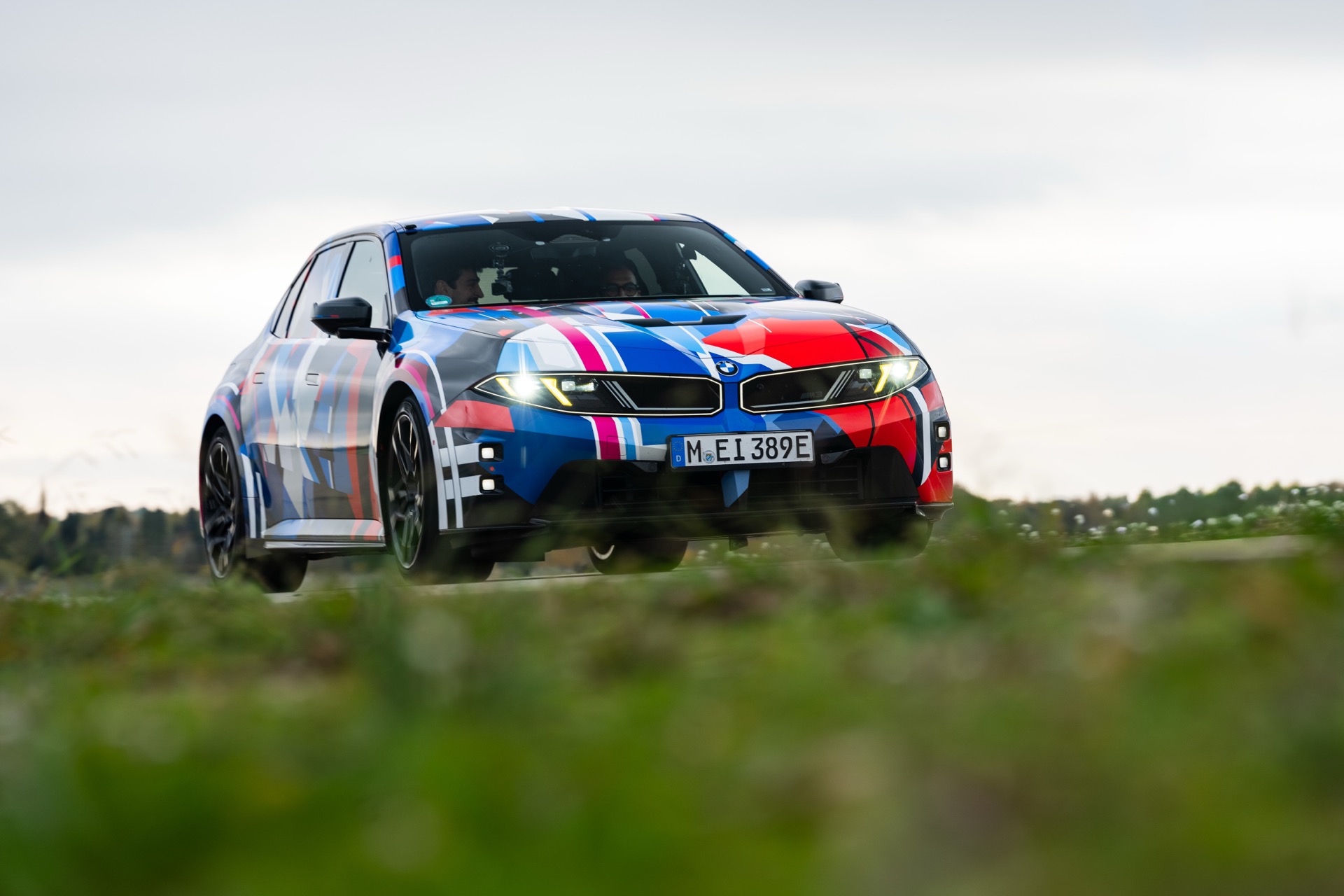
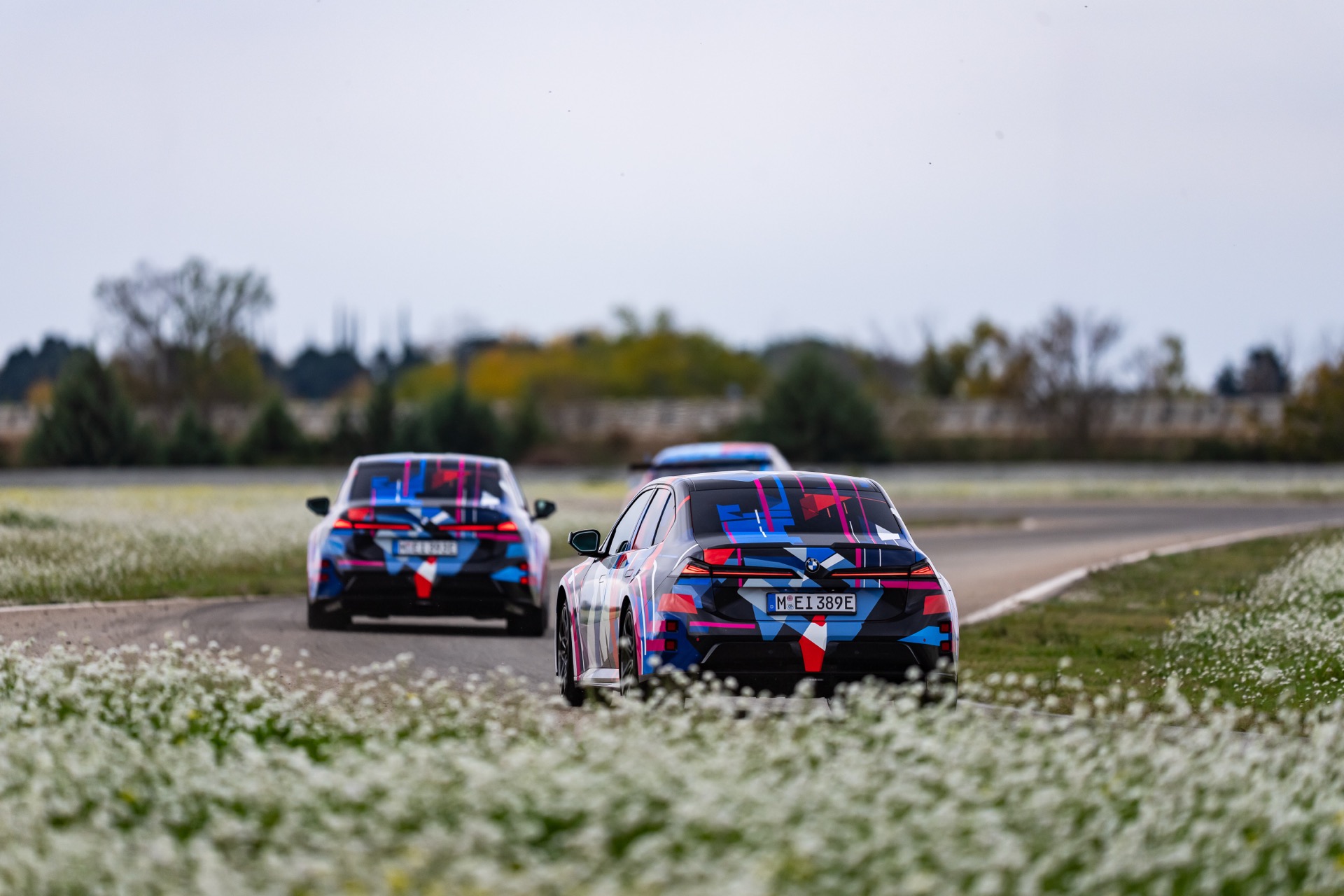
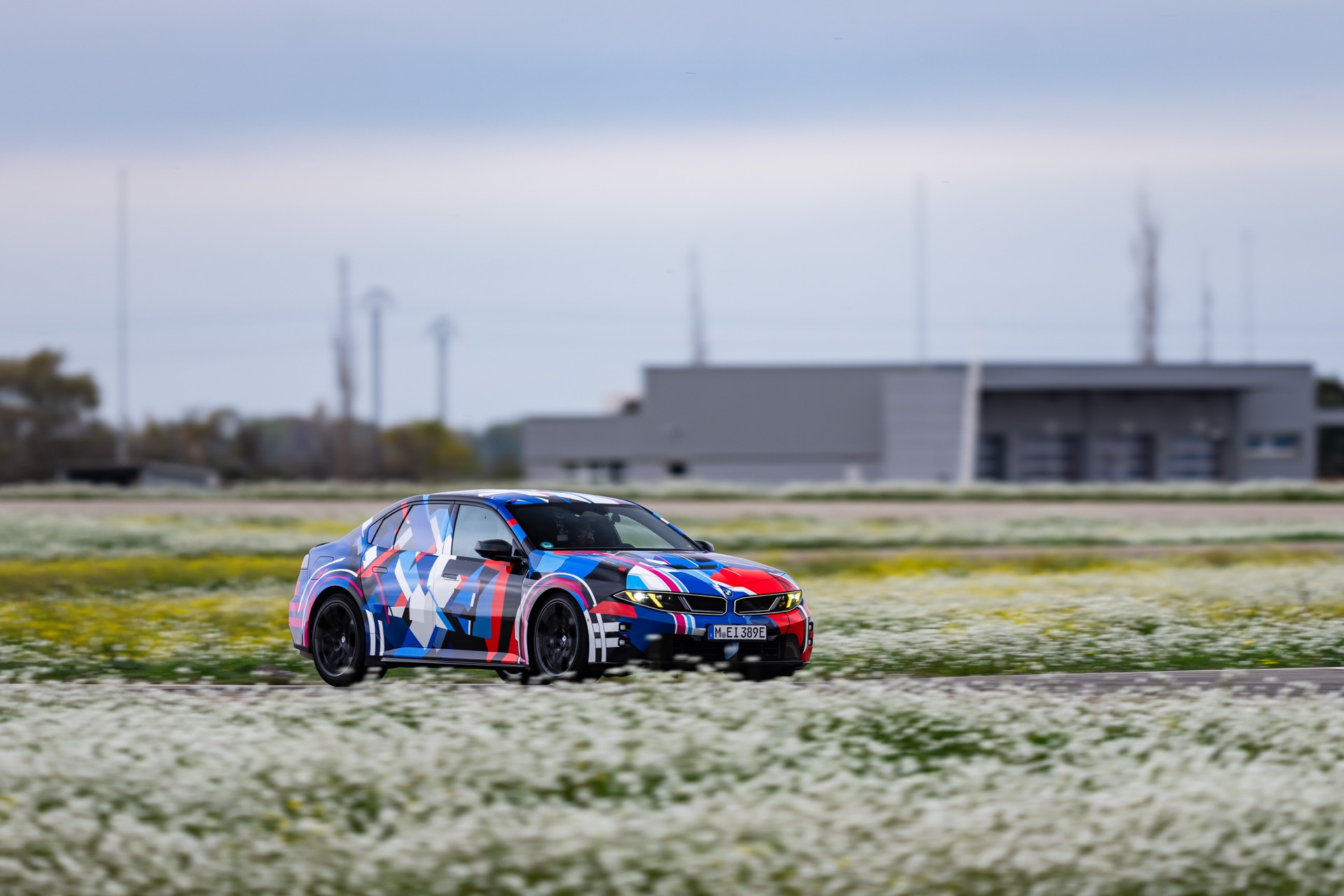
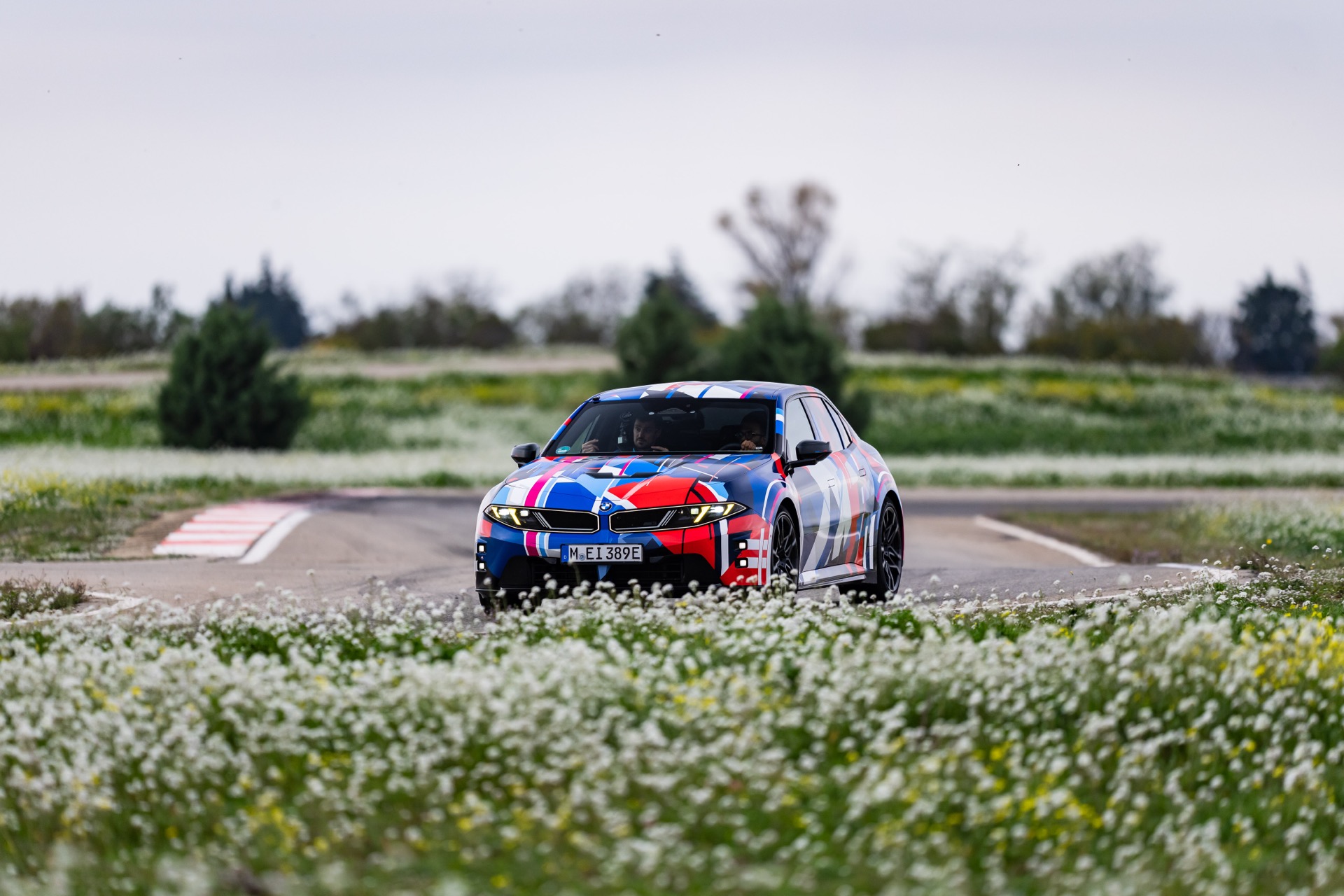
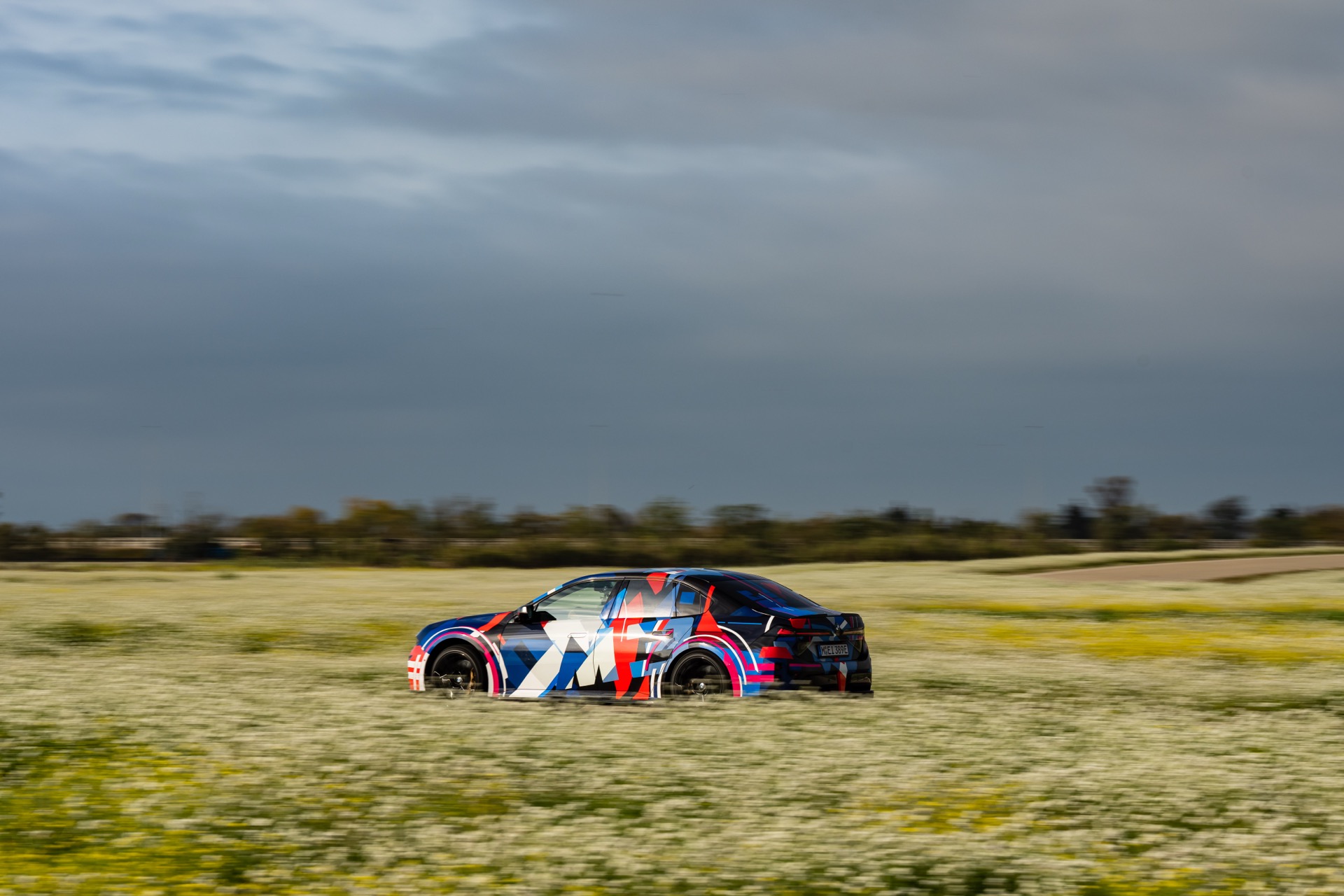
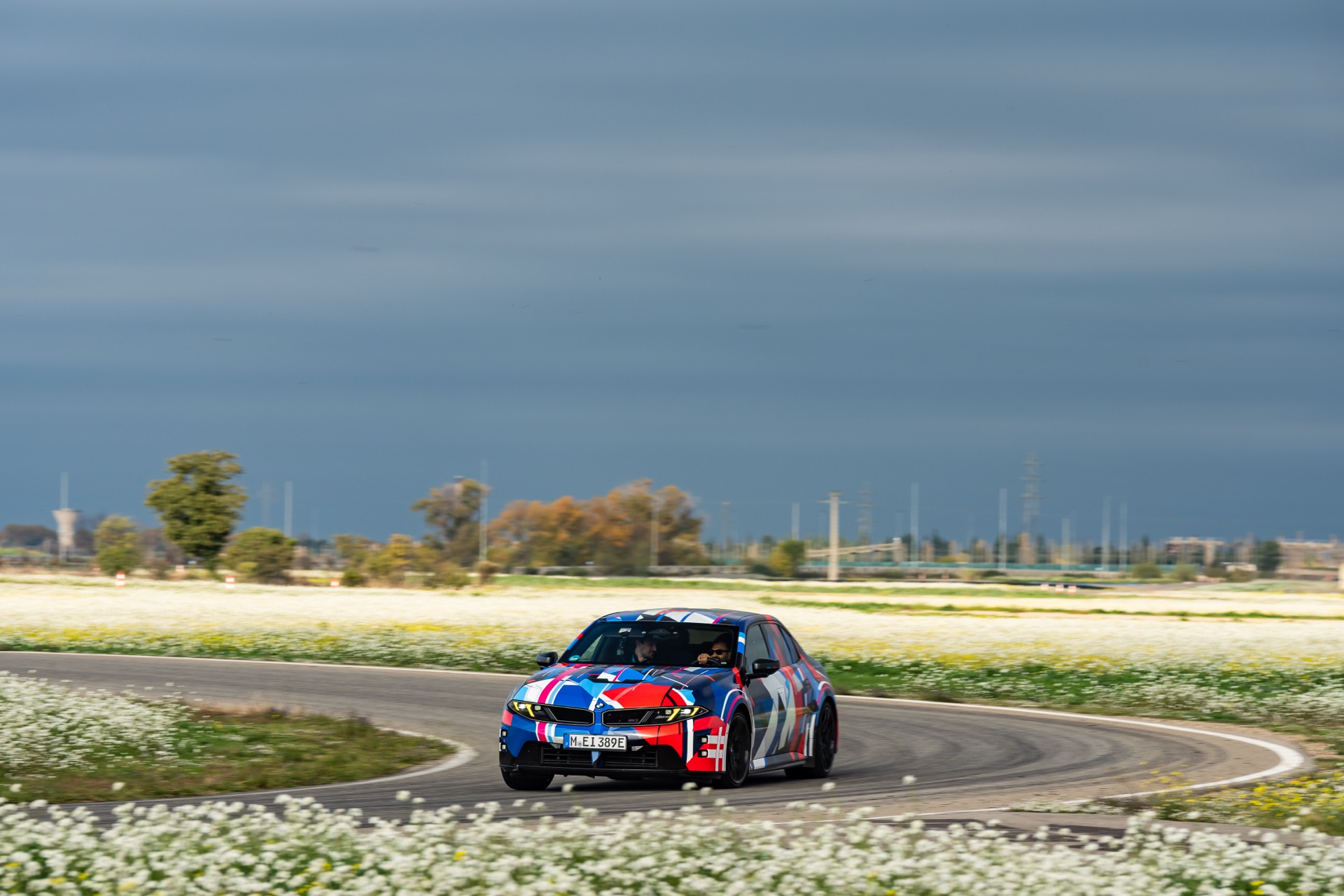
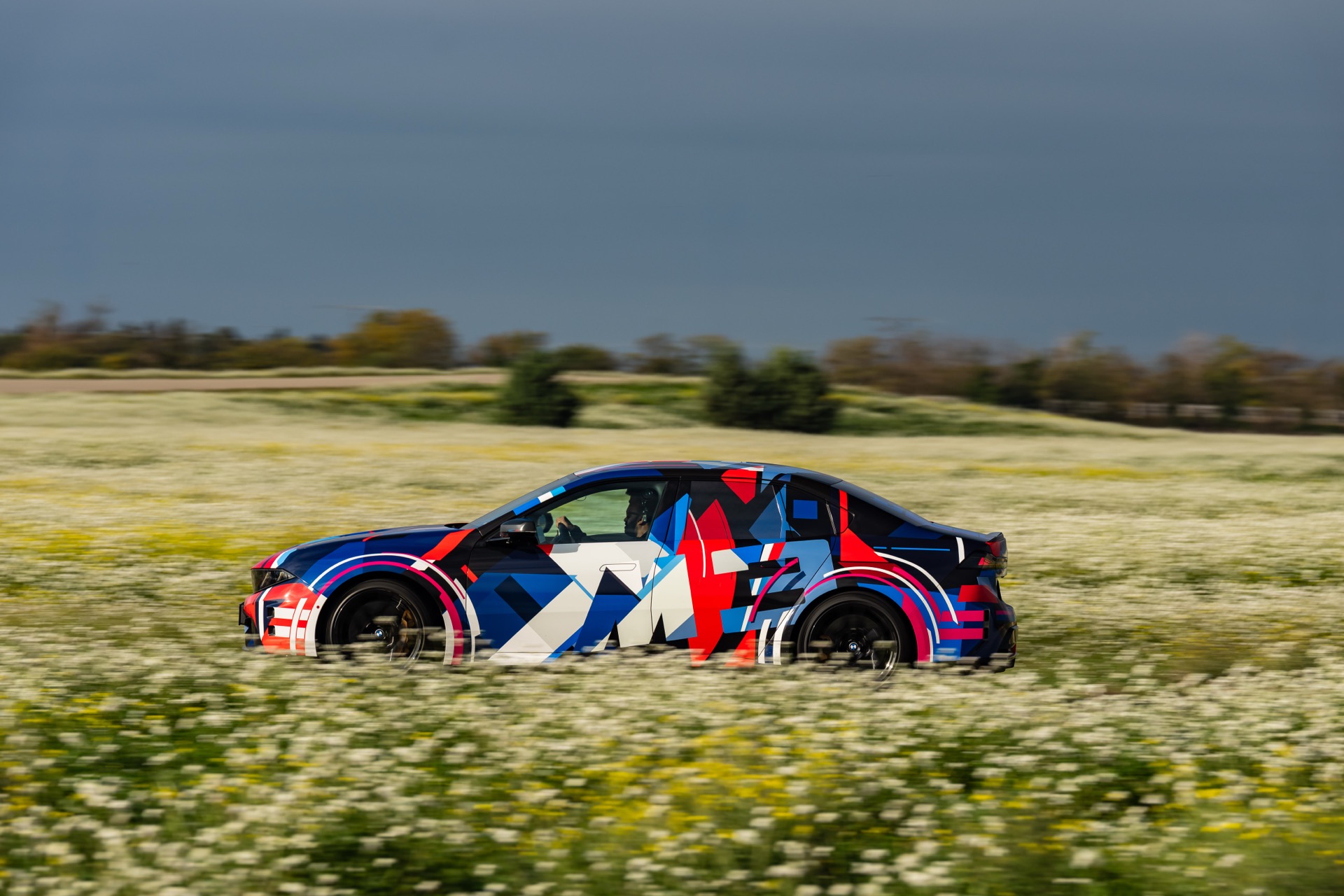
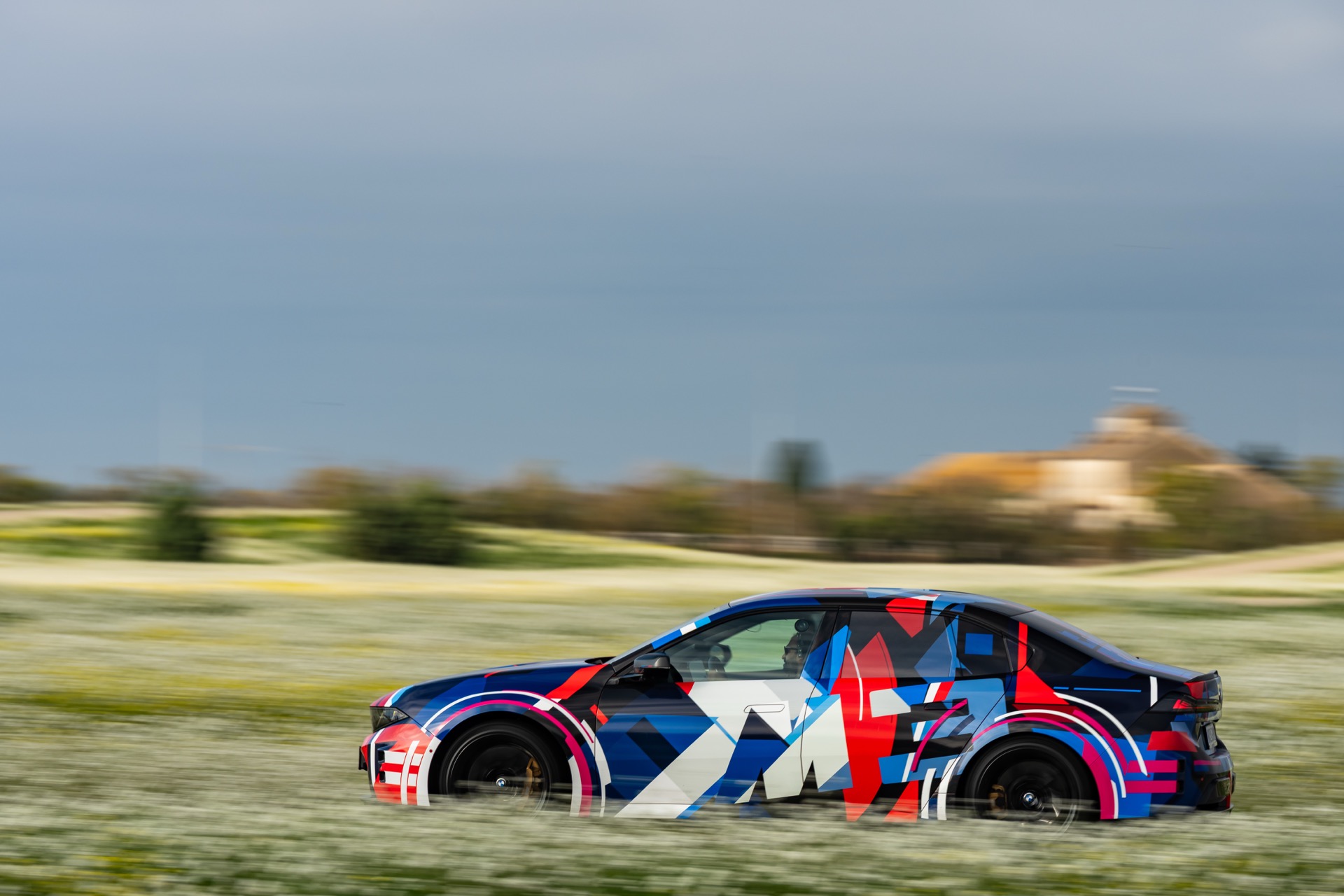
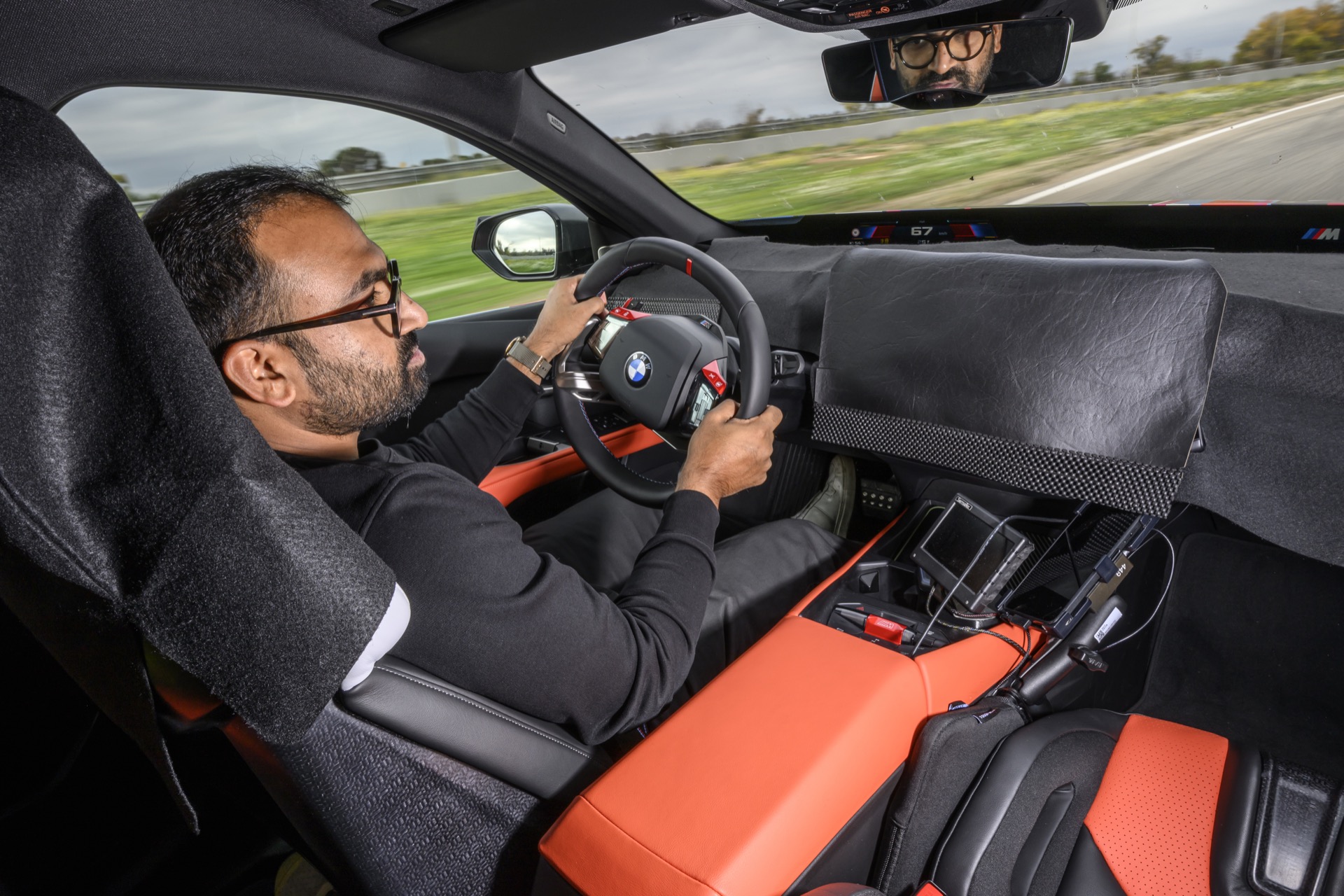
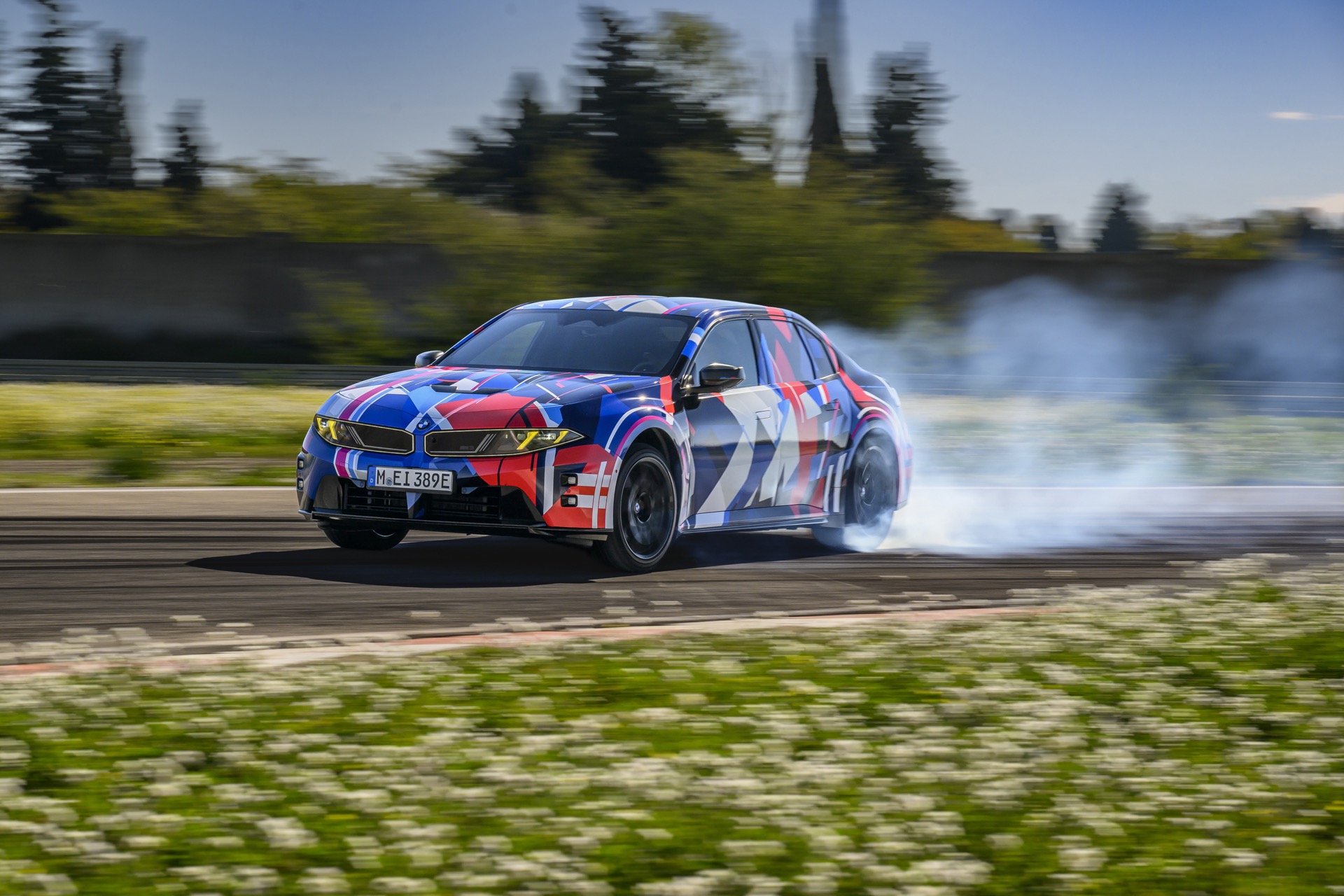
But confidence is only half of the M3 equation. Activate M Dynamic Mode and the character changes dramatically. Suddenly that four-motor precision can be used not simply to preserve grip, but to relinquish it. The power slides you can achieve are hilarious.
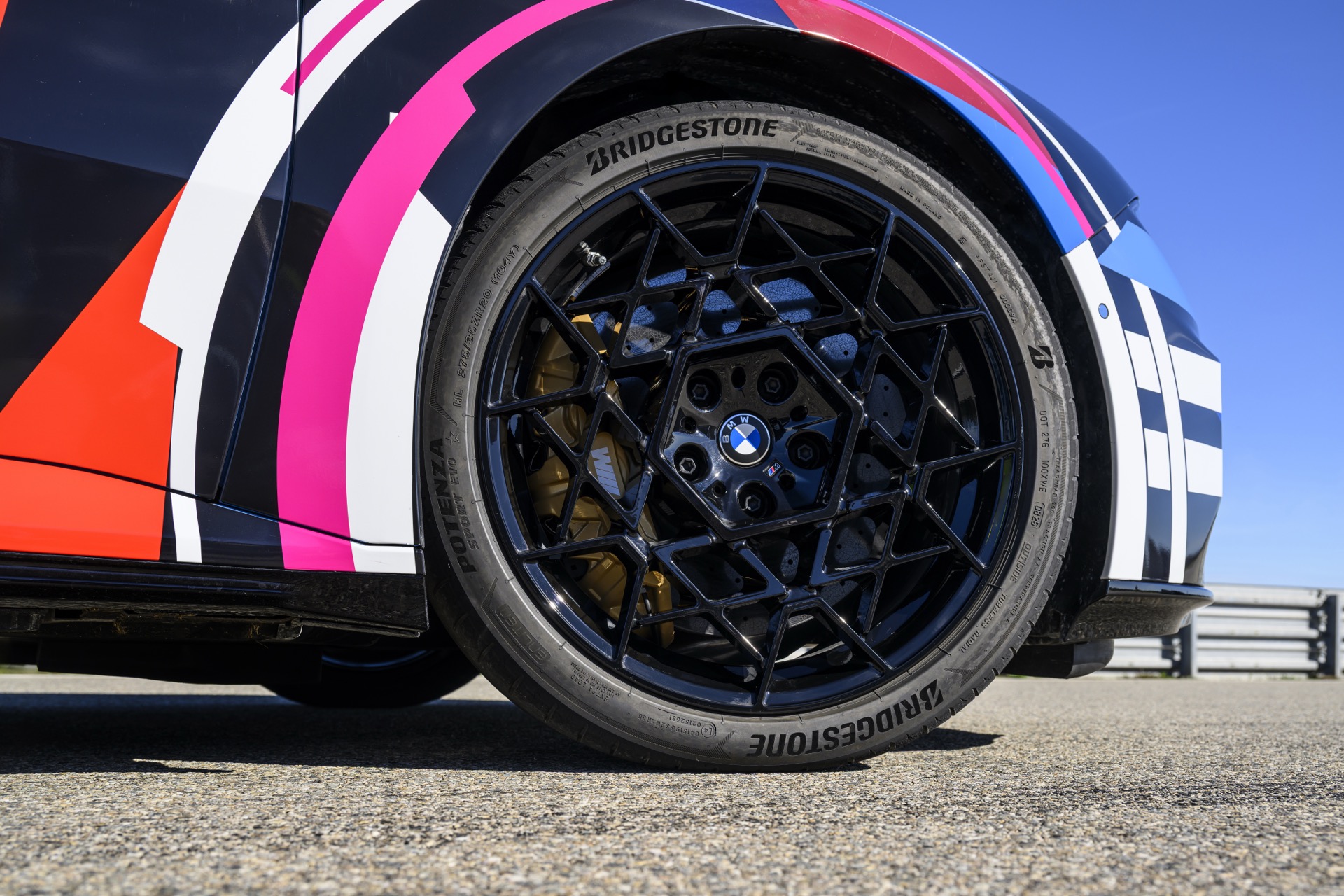
The breakaway is gentle and remarkably predictable. Within a couple of laps I was comfortable leaning into the rear axle, feeling the new Michelin Pilot Sport S 6 tyres begin to surrender and using the throttle to hold the car there. You can take liberties with it, yet there is always a sense that the car is on your side. That was perhaps the moment it began to feel most like an M car rather than simply an extremely fast electric saloon.
Then there are those paddles. BMW calls the system M eDrive, and the M3 can effectively be driven in three ways. Switch the staged system off and it behaves like a conventional single-speed EV. Leave it in Auto and the car works through six virtual stages itself. Select Paddle Mode and those stages become yours to control, complete with shift lights and a virtual limiter.
There are, of course, no six physical gear ratios hiding beneath the floor. Instead, the stages alter how the car delivers its performance. A lower stage gives a more aggressive, spiky response, while moving upwards changes the relationship between vehicle speed and available torque. You can run into the limiter and pull the right paddle just as decades of combustion-car muscle memory tells you to. It sounds artificial because it is.
Yet the driving interaction works far better than I expected. The accompanying M eSound is more divisive. At maximum intensity it is extremely loud (to be heard through a helmet) and completely synthetic. There are shades of V8, raspy straight-six and spaceship in the soundtrack, and its pitch and intensity provide a useful audible indication of what the electric drivetrain is doing.
I am much less convinced by the simulated downshift sound. Pull the left paddle and the artificial response is particularly reminiscent of a racing simulator. For me, it crosses the line from adding useful feedback into trying slightly too hard to manufacture theatre that is not mechanically occurring. Thankfully, none of this is compulsory. The sound can be reduced or turned off, while the staged drivetrain can be left to shift automatically or abandoned altogether for a conventional seamless EV experience. That choice is important because I suspect opinions on just how much synthetic theatre an electric M3 needs will vary enormously.
BMW has taken an equally serious approach to regeneration. Maximum recuperation is approximately 540 kW, but the clever part is not simply the size of that number. With four individually controlled motors, regenerative deceleration can be distributed wheel-by-wheel and integrated into the car’s dynamic control strategy.
BMW estimates around 30 per cent of the energy used during sporty driving can be recovered, depending on the circuit and conditions.
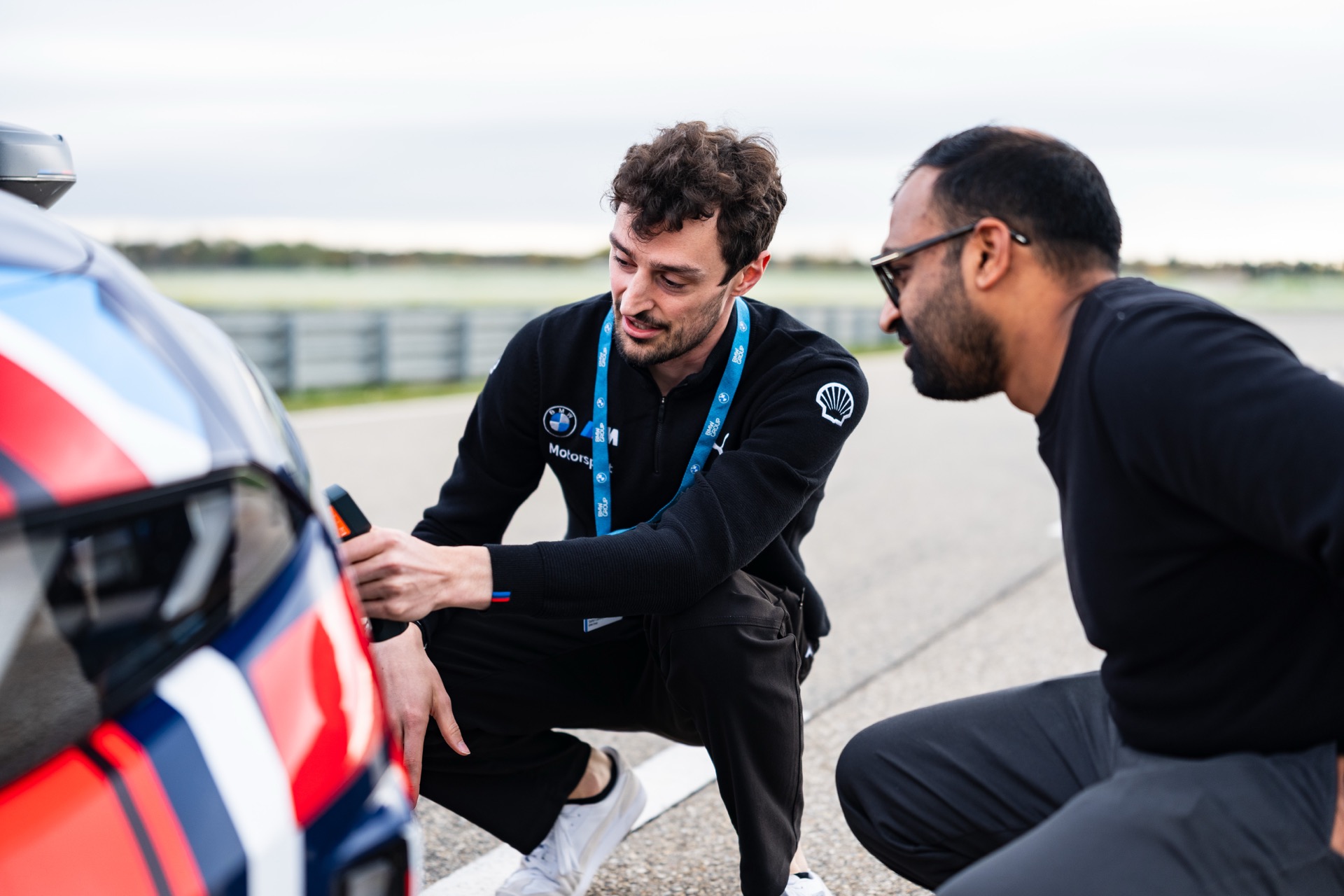
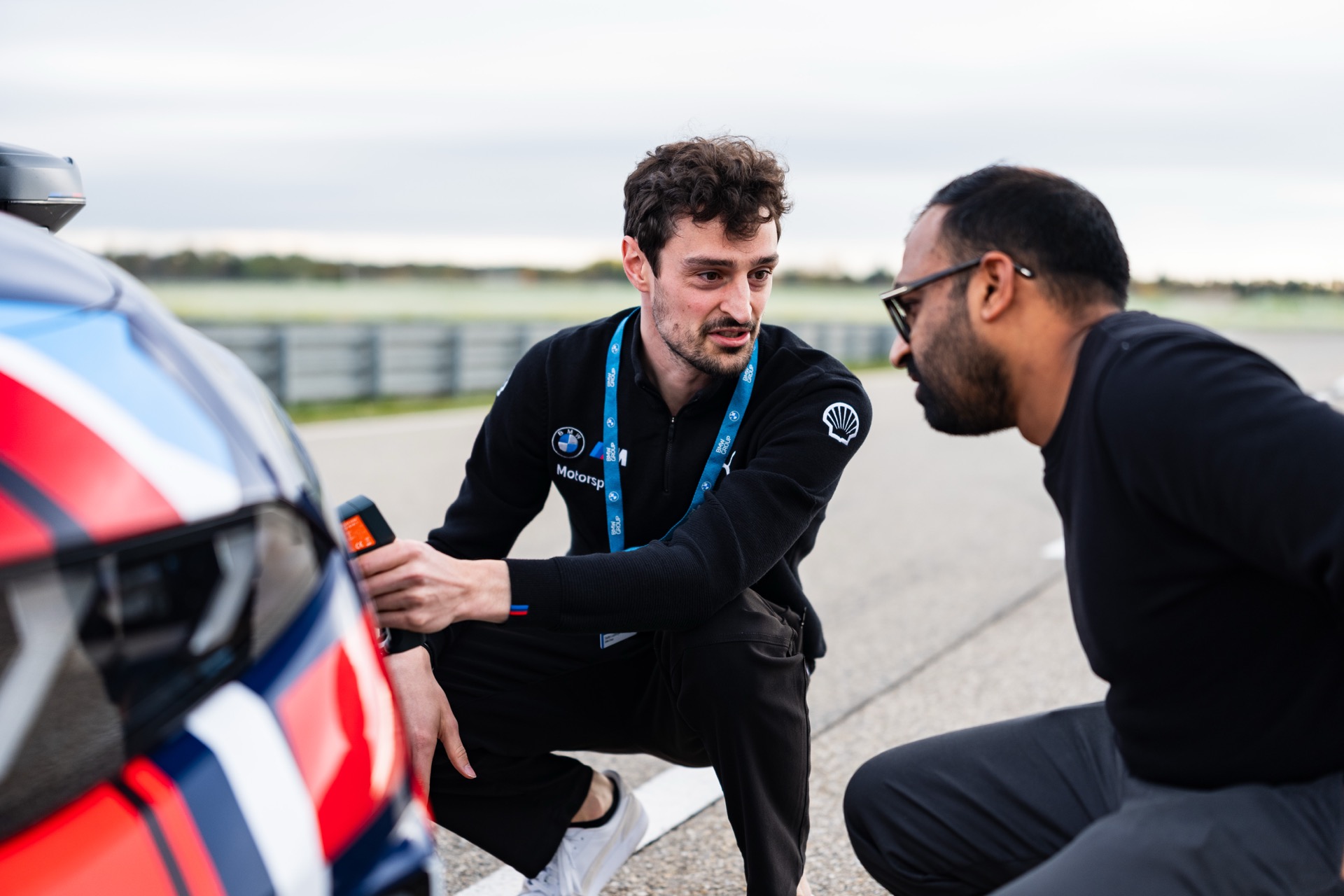
The integration with the mechanical brakes is impressive. Our prototypes were fitted with M carbon-ceramic discs, yet after several hard laps they measured only around 55°C. The motors were doing a remarkable amount of the slowing, particularly with recuperation turned to maximum, but the transition through the brake pedal felt natural and consistent. The stopping force itself was more than adequate for what will unquestionably be a heavy car.
BMW also knows M3 owners go to track days. A dedicated Track preset preconditions the car before a session, while Stint Control allows you to tell it exactly what you intend to do: a Hot Lap of up to two minutes, a Short Run of up to eight minutes or a Long Run of up to 15. The car then manages its temperatures and available performance around that target, with the intention of providing repeatable output rather than one extraordinary lap followed by dramatic derating. That requirement has influenced the battery itself. The approximately 100 kWh sixth-generation pack receives an M-specific, performance-oriented configuration and cooling strategy. BMW currently quotes approximately 650 km of WLTP range, around 300 miles on the EPA cycle and peak charging at roughly 420 kW. Under ideal conditions, it says as much as 350 km of range can be added in ten minutes. The front drive unit can also be decoupled when it is not required, reducing losses during less demanding driving.
On track, efficiency feels a very long way down the list of priorities. The steering becomes noticeably heavier in its sportiest setting. On the glass-smooth Miramas test circuit it was difficult to judge how much genuine information was reaching my hands. It did not strike me as particularly communicative, but neither did it do anything offensive. A proper verdict will require a production car and, preferably, a far less perfect road surface.
What does stand out already is the calibration of everything around it. This car is very, very fast. That was inevitable. What was not inevitable was how quickly I trusted it. The precision of four individually controlled motors gives the M3 an extraordinary ability to react to what the driver asks of it. When you are tidy, it rewards you with tremendous traction and stability. When you want to be less tidy, M Dynamic Mode unlocks another side of the car and lets you play.
There are still huge questions to answer. We do not know how fast the finished M3 will accelerate, how heavy it will be, how fast it will ultimately go or how much BMW will charge for one. More importantly, a few laps on a perfectly surfaced proving ground cannot tell me how this substantial electric saloon will breathe with a difficult B-road. Nor can an early prototype establish whether the staged drivetrain and theatrical soundtrack will remain entertaining after twelve months rather than twelve laps.
But that is precisely why this was called a pre-drive rather than a review of the finished car. At this stage, BMW wanted to answer a more fundamental question: can an electric M3 still put the driver at the centre of the experience? On this evidence, it can. What’s more surprising is how natural the electric M3 feels, despite the complexity of the software and the work being done by those four motors.
BMW has not solved that simply by throwing 838 hp at the problem. It has concentrated on the relationship between the driver, four motors, the tyres and the road, then layered interaction on top through the stages, paddles and sound.
Not every element works for me. I could happily lose the racing-simulator downshift noise. But beneath the theatre is a car that feels predictable, adjustable and, most importantly, playful. For such an early version of the first electric M3, that is an extremely promising place to start.