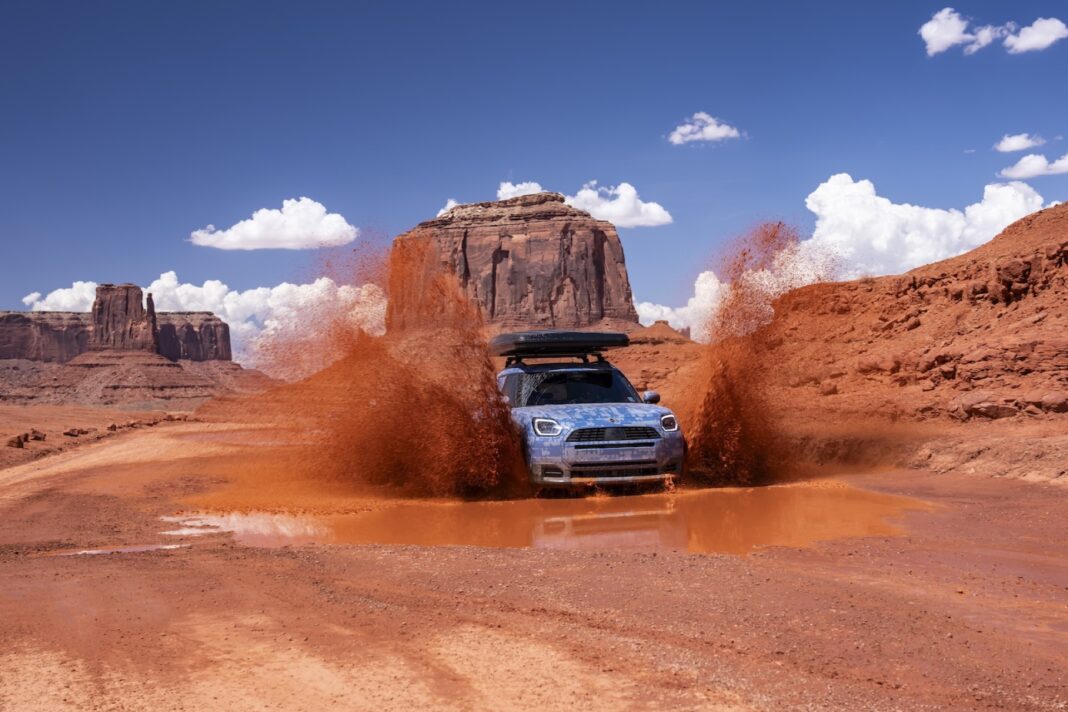
Mini wants to rediscover its adventurous side. The best evidence is the upcoming off-road version of the Mini Countryman, due to make its debut this autumn. We joined the engineering team during the final validation programme in the Rocky Mountains, where the prototype faced dust, deep water crossings, temperatures exceeding 40°C and altitudes of more than 4,300 metres — a punishing test before production begins.
The camouflage is impossible to miss. Whether in Denver, Vail or the off-road paradise of Moab, the disguised Countryman prototype attracts attention wherever it goes. Recent Mini special editions such as Paul Smith and Untamed leaned heavily towards urban lifestyles. This latest version heads in the opposite direction.
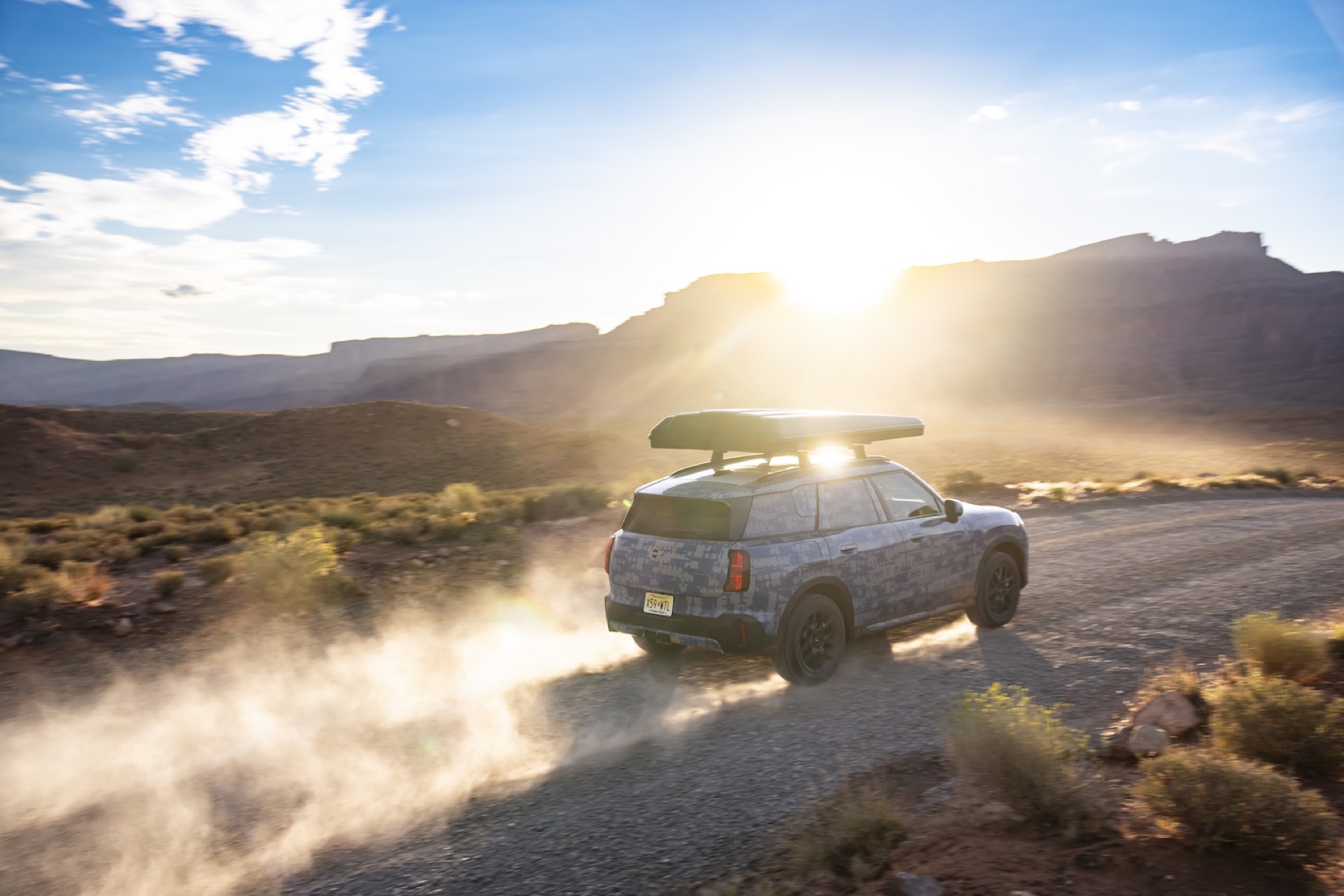
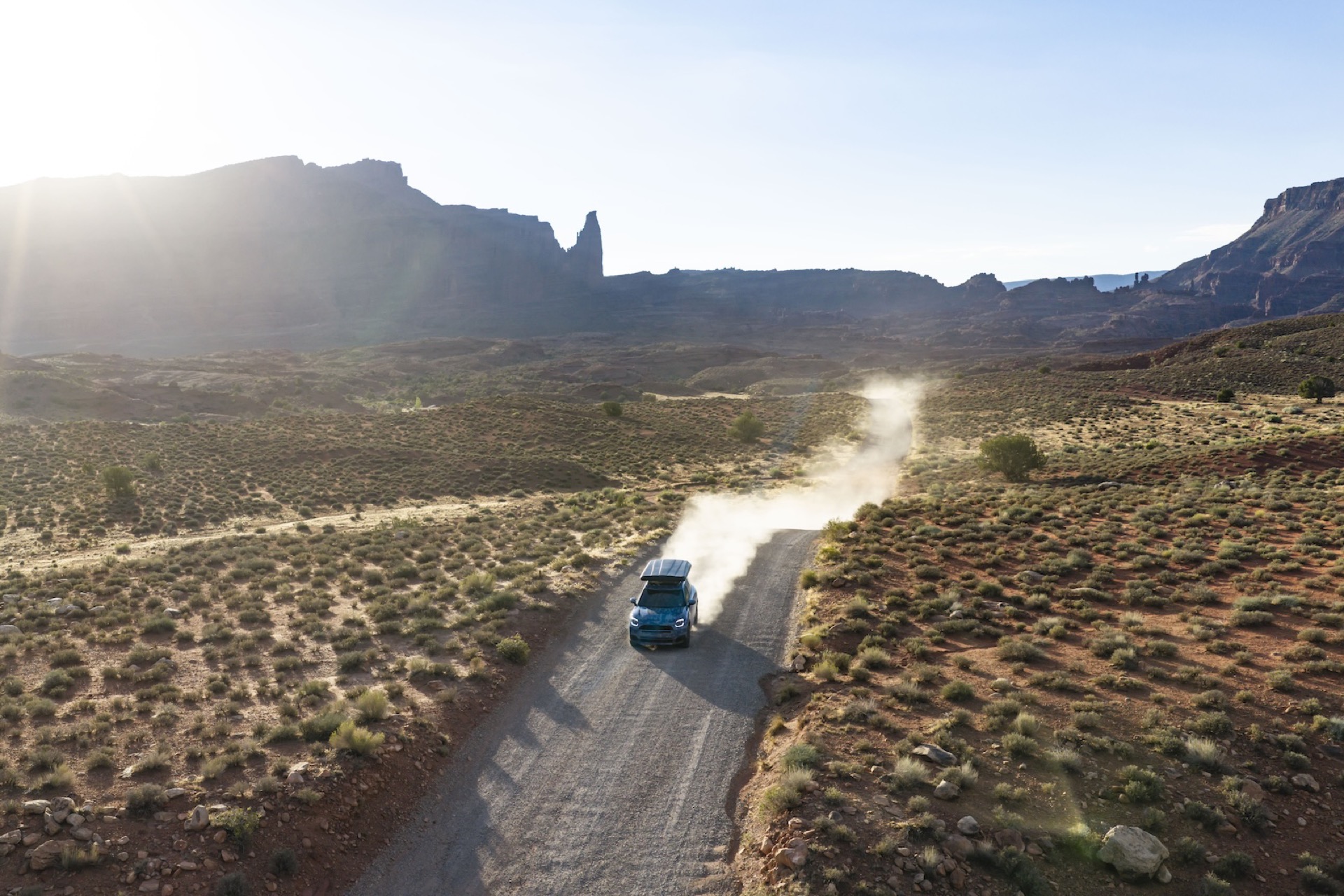
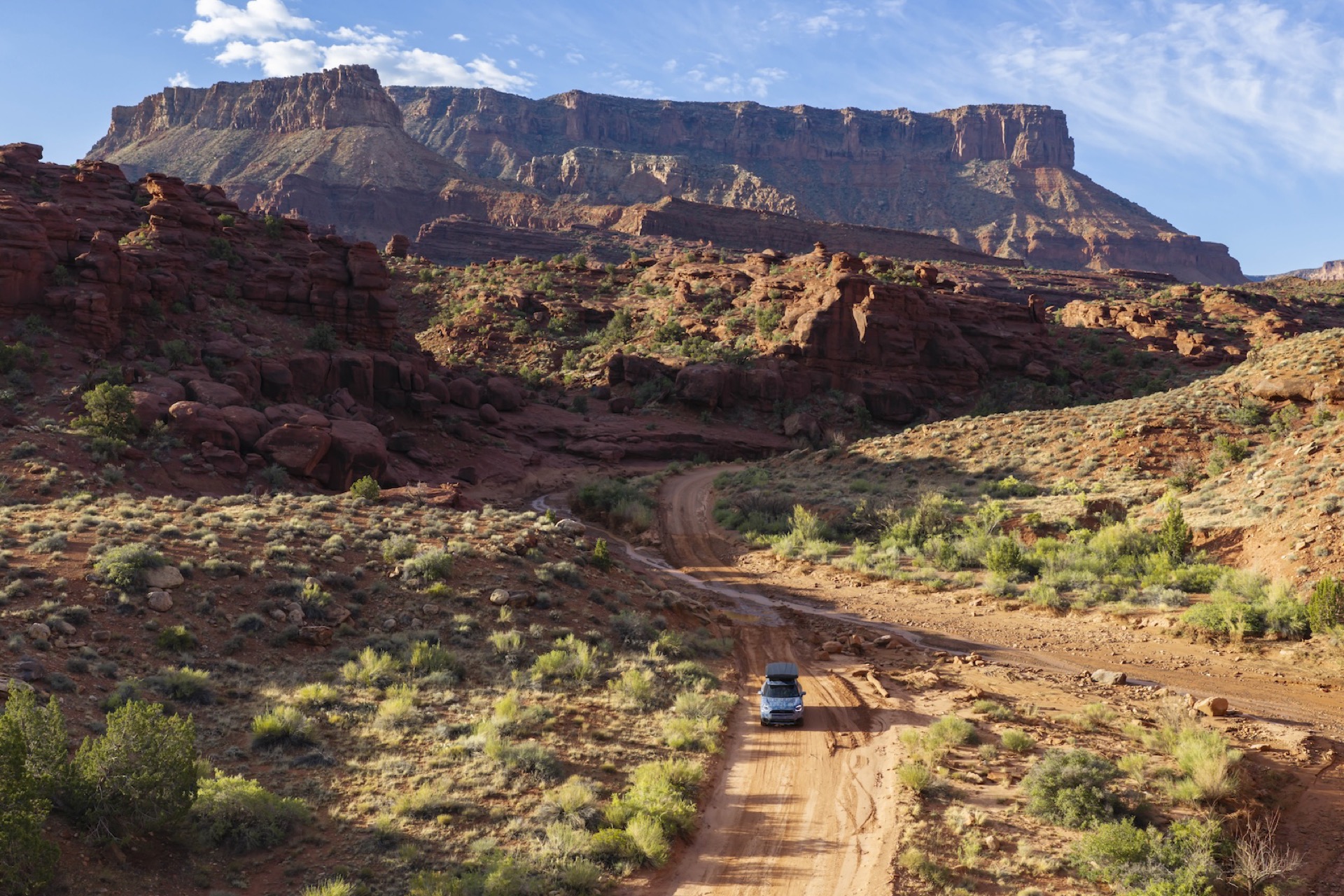
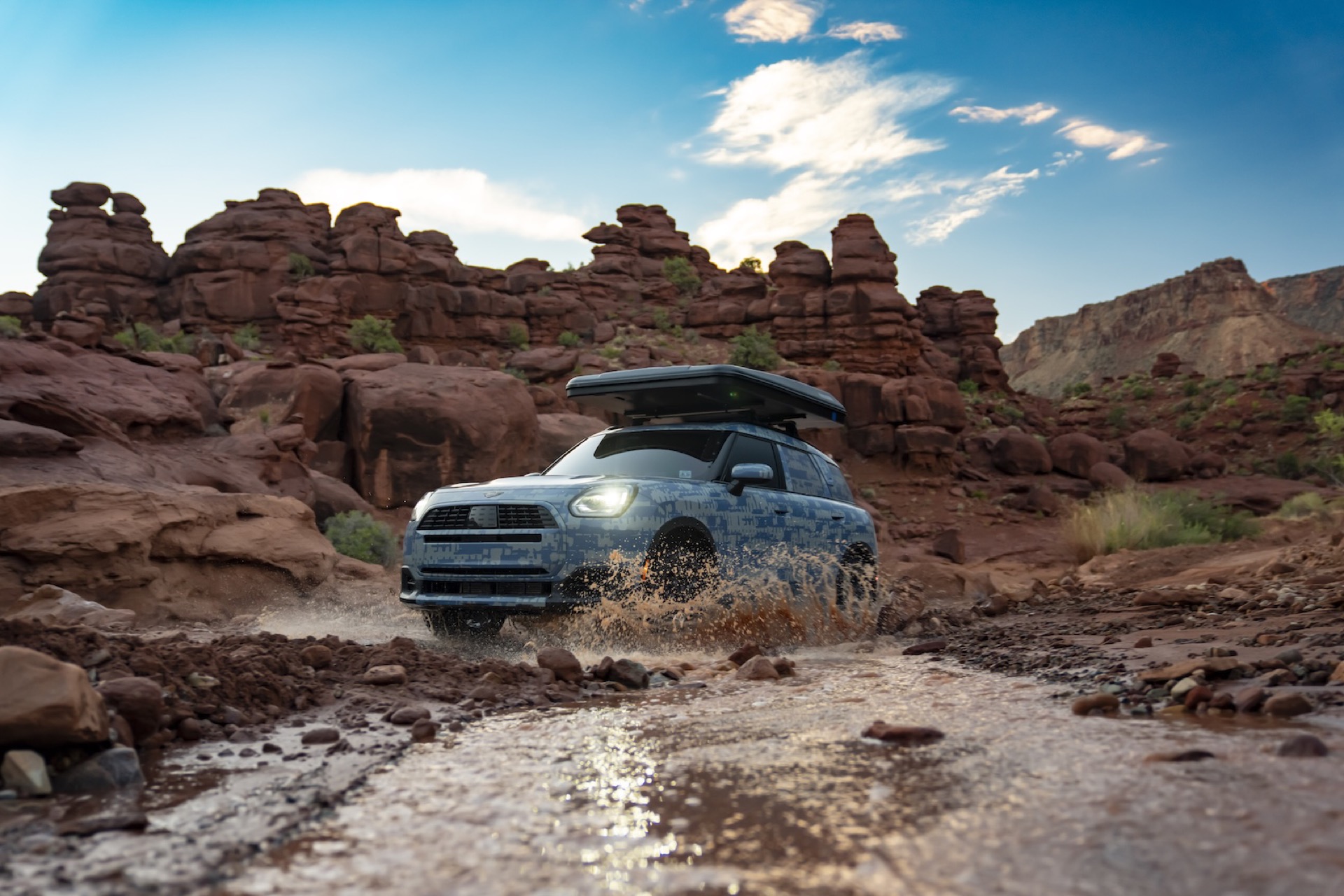
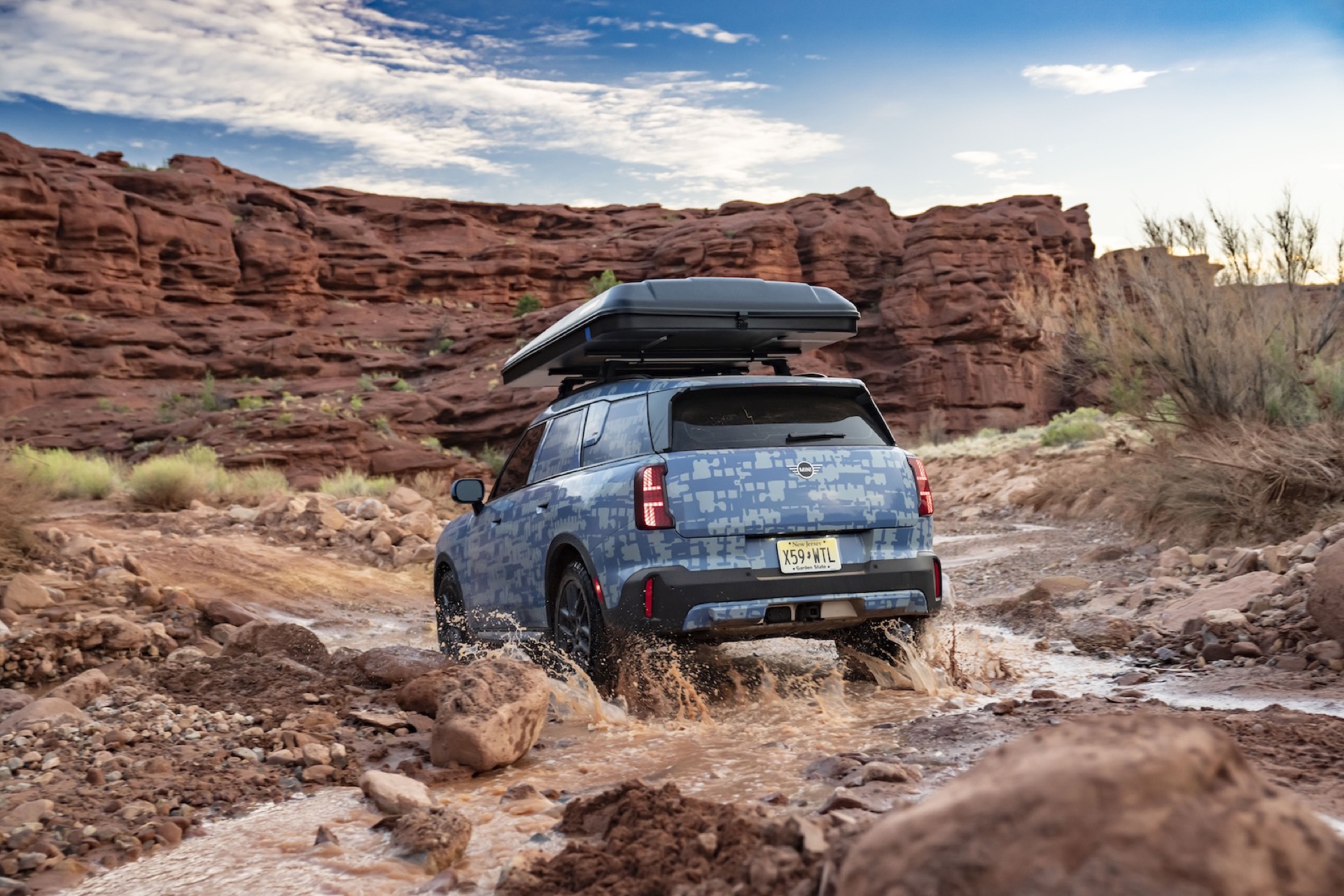
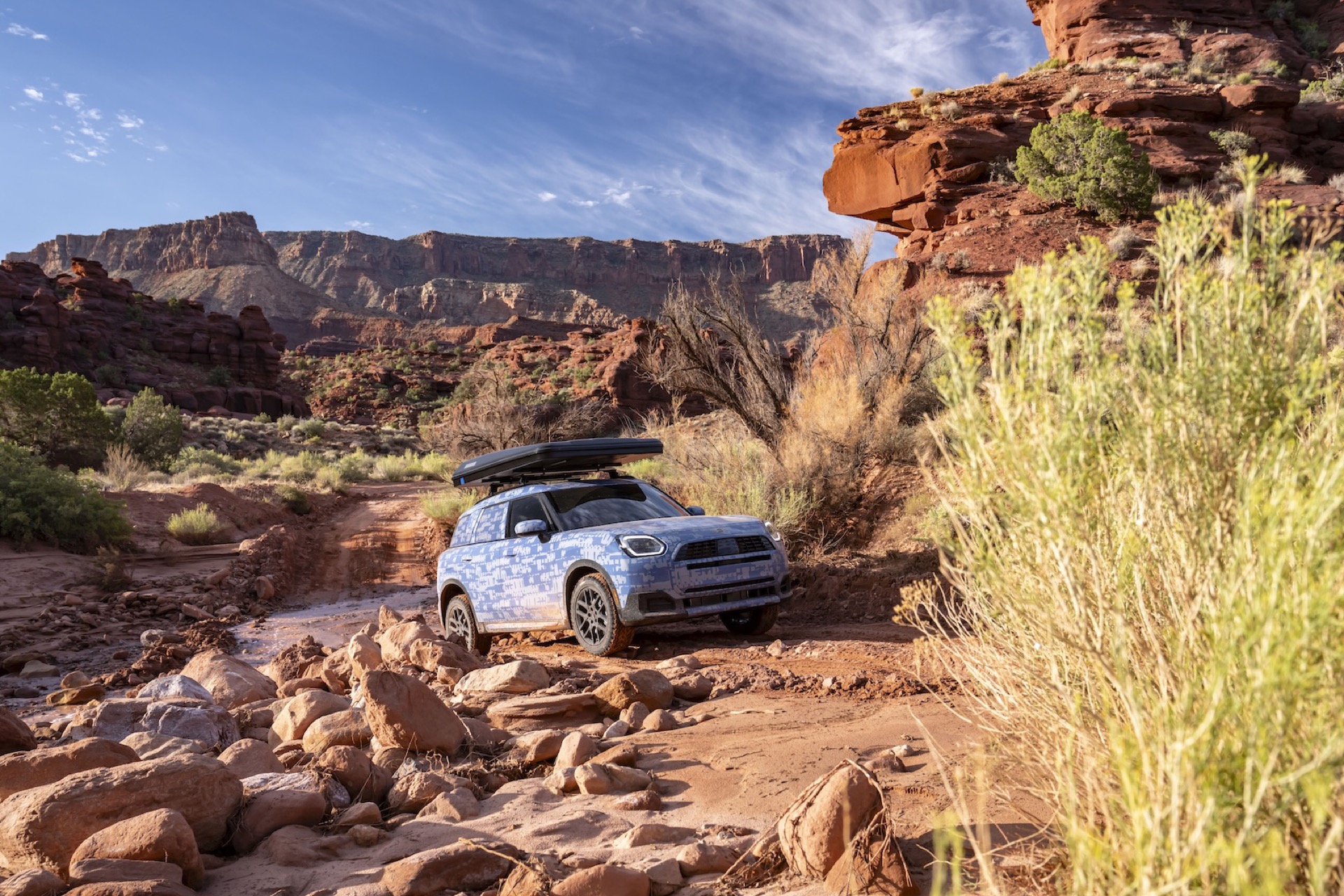
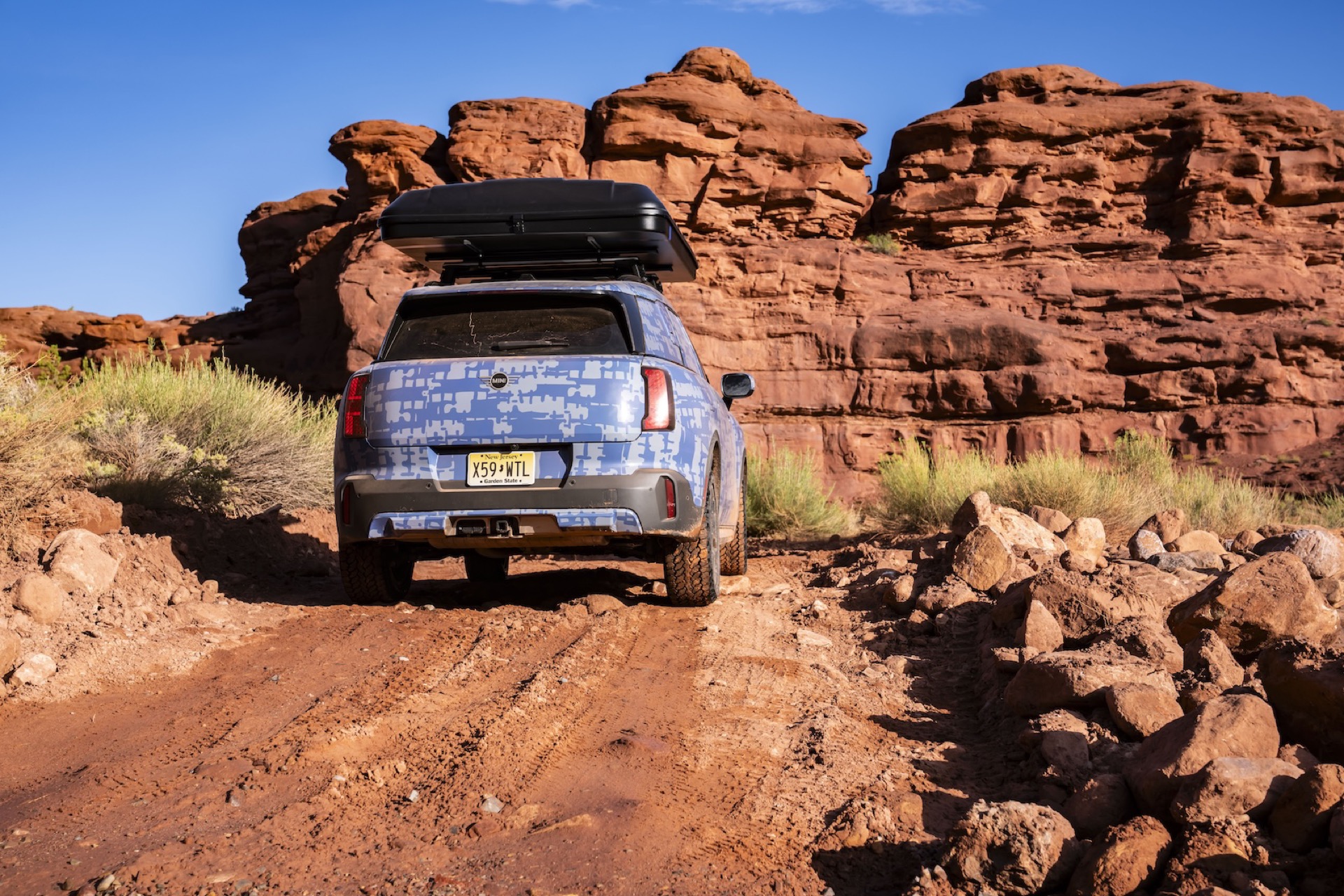

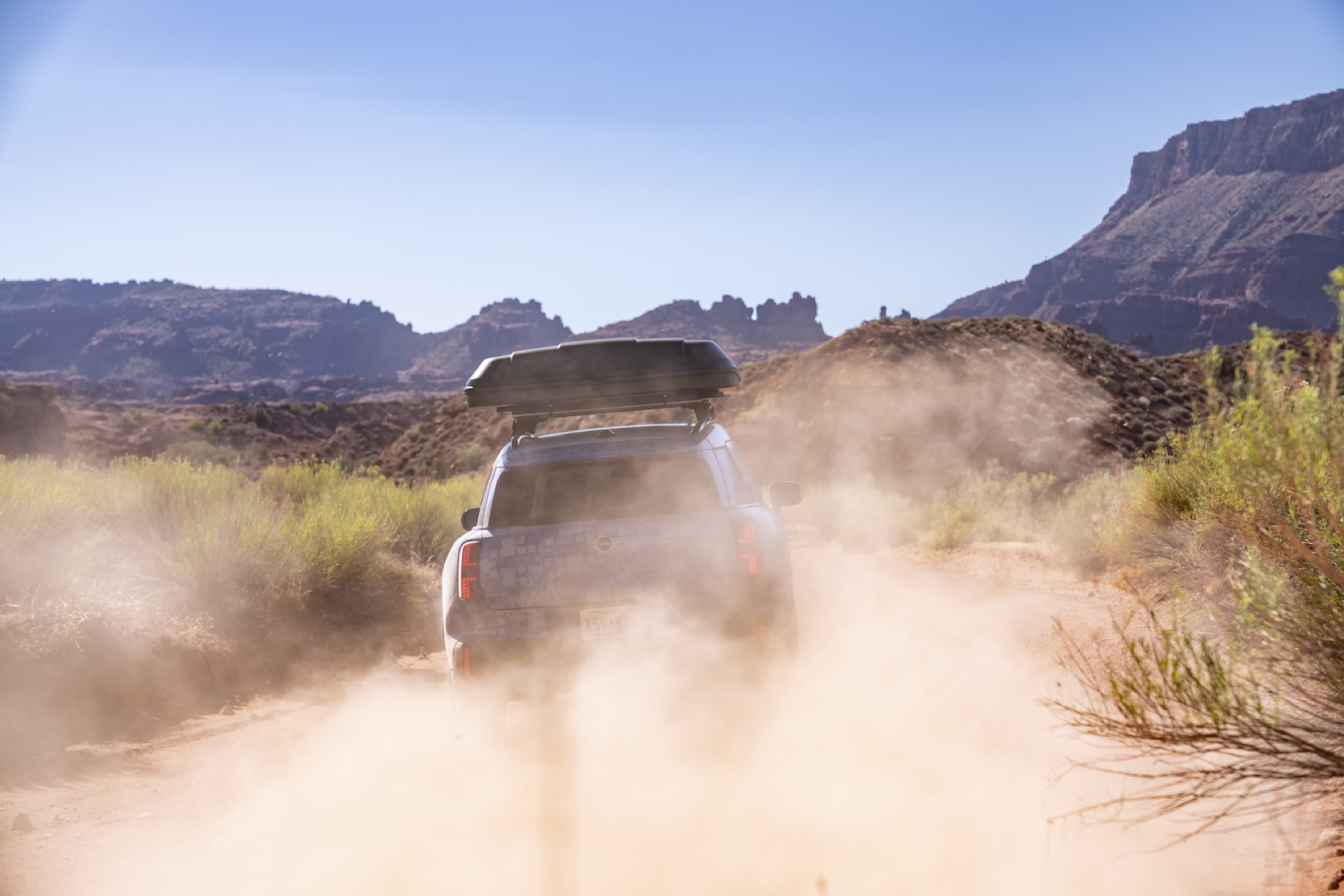
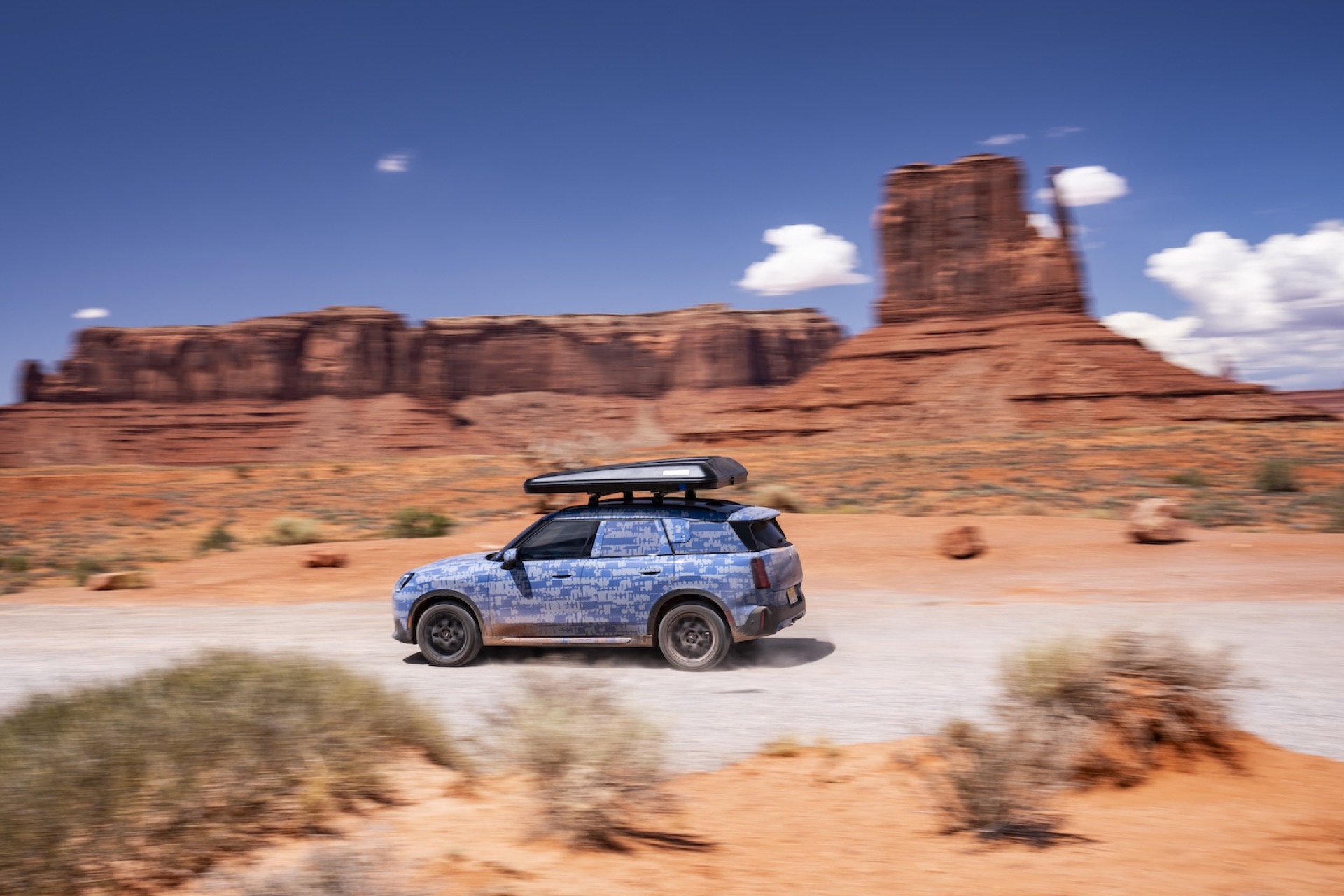
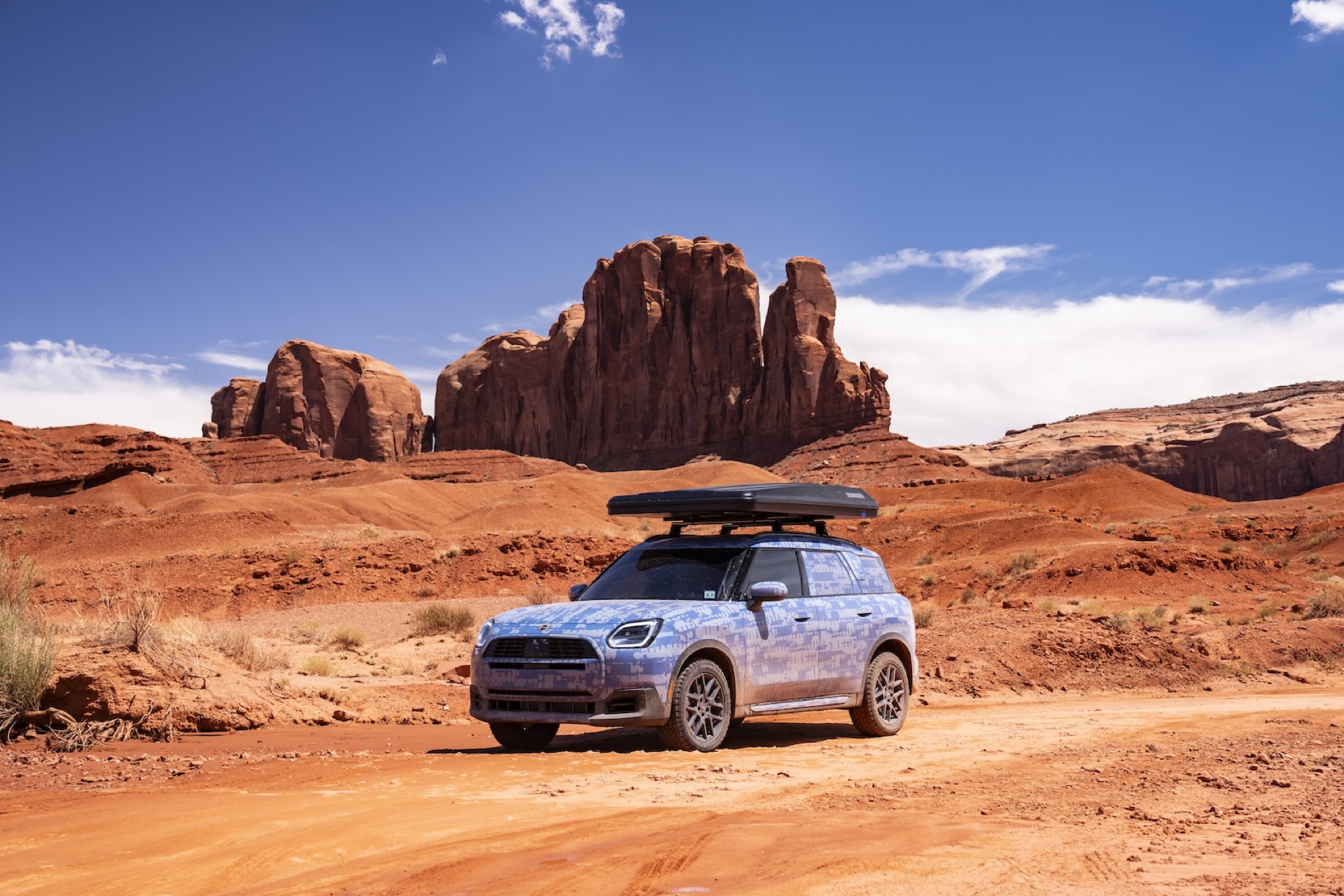
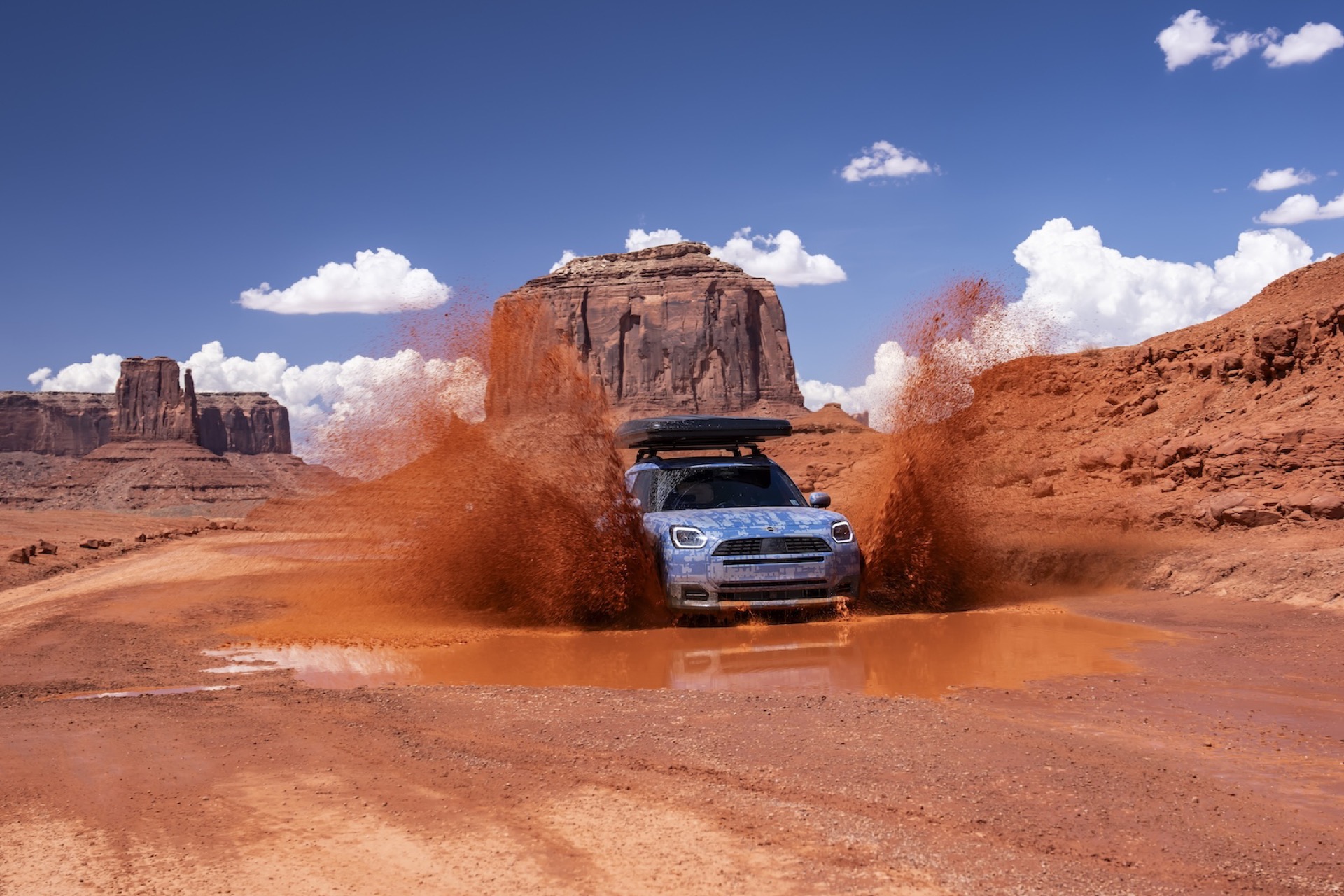

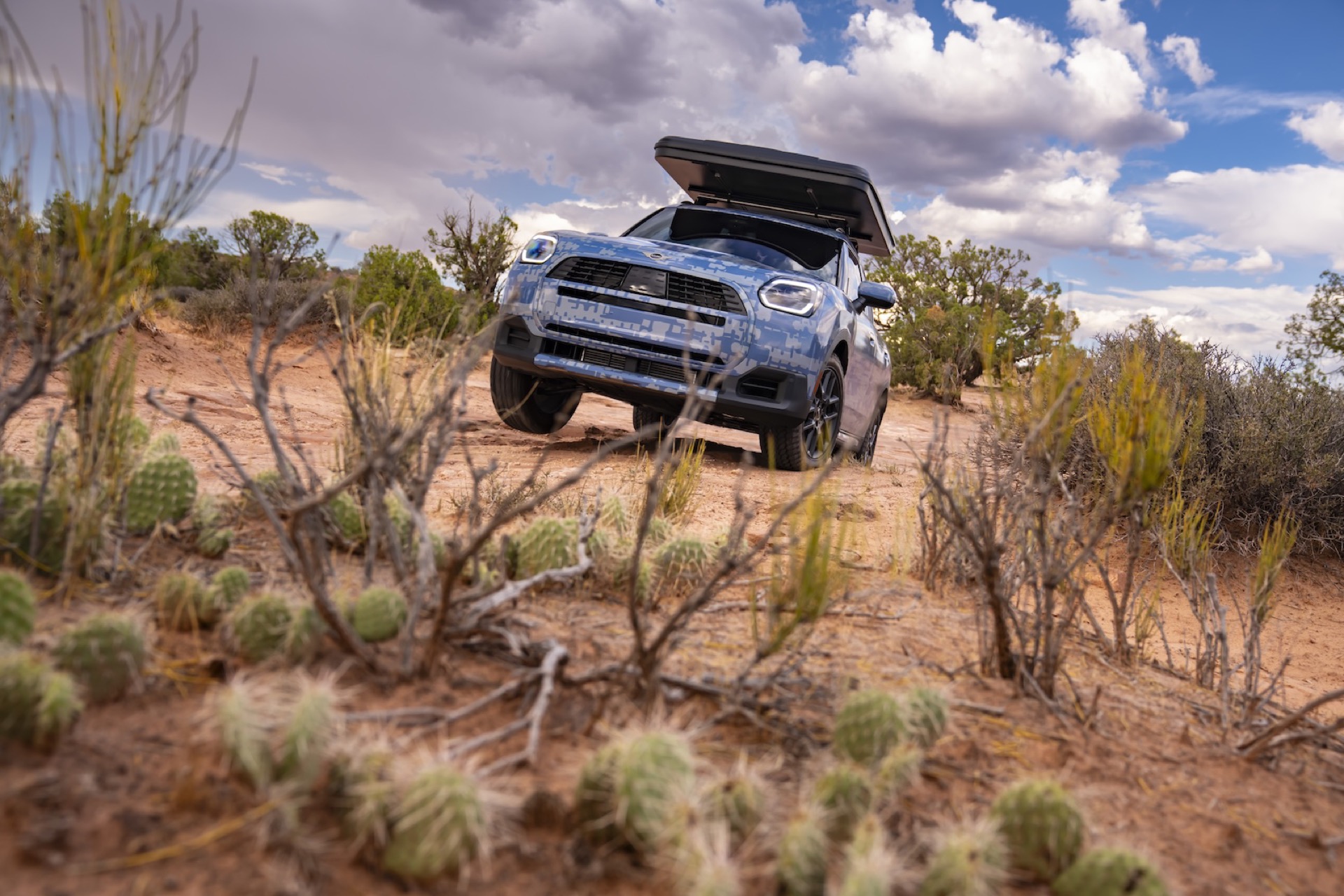
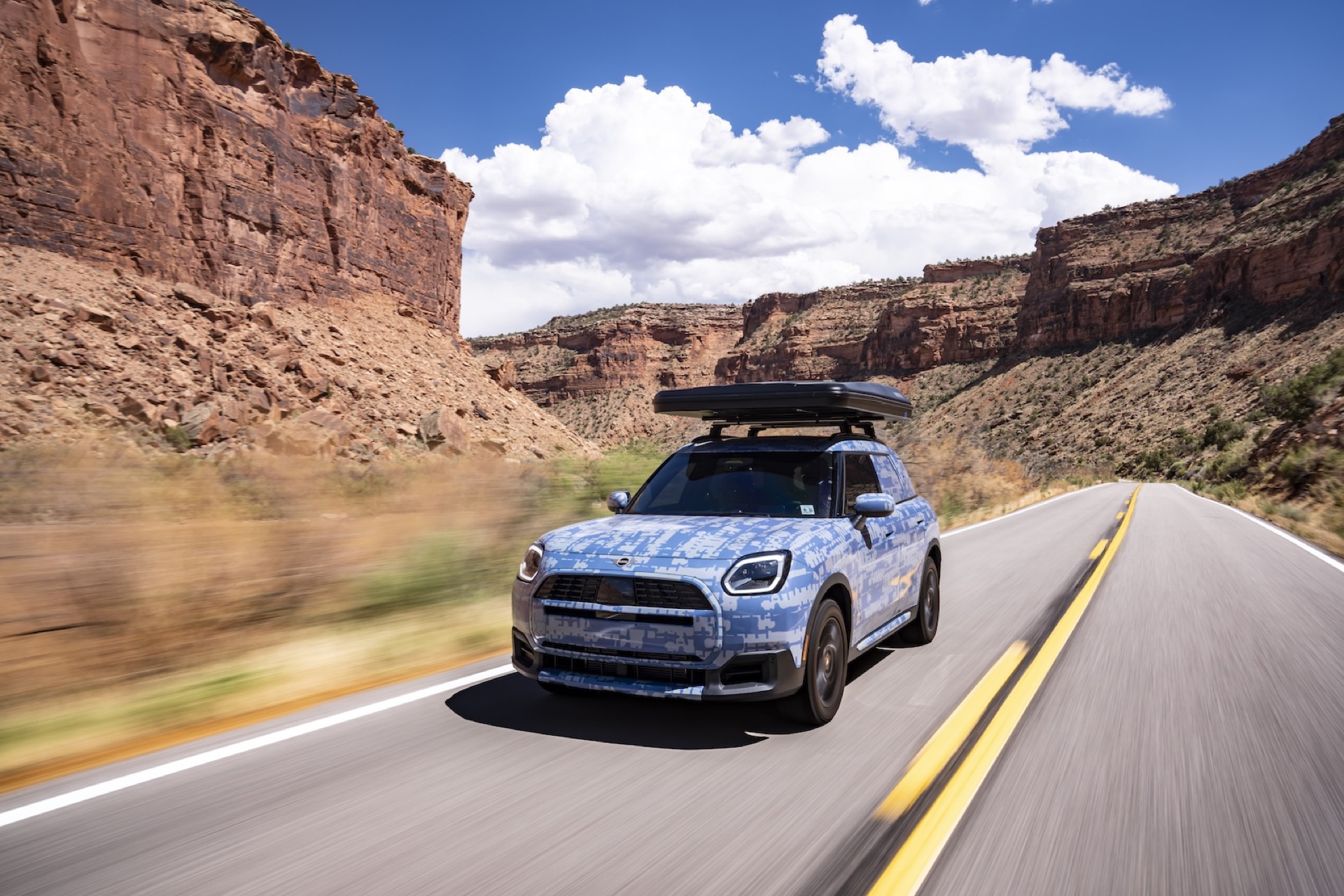
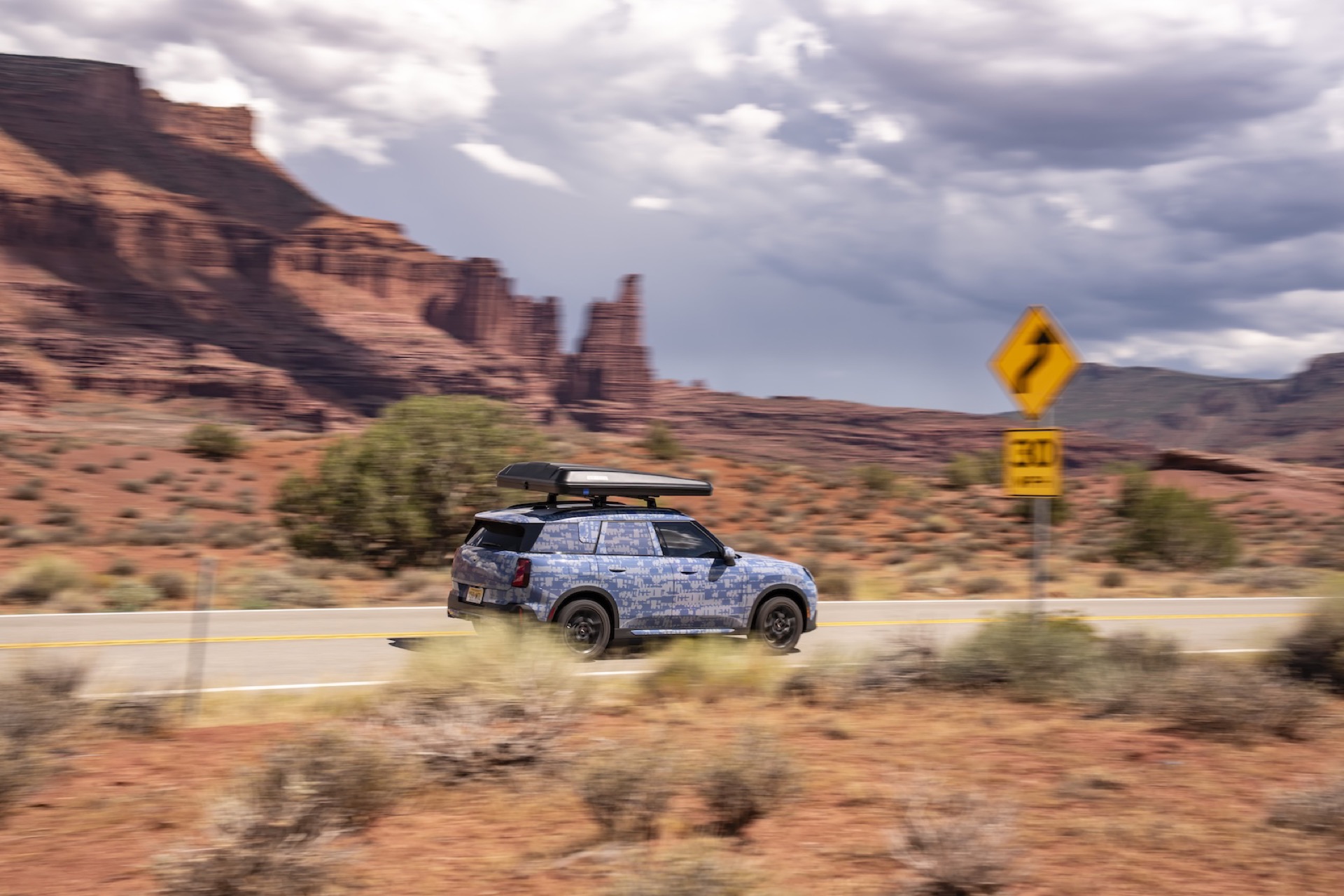
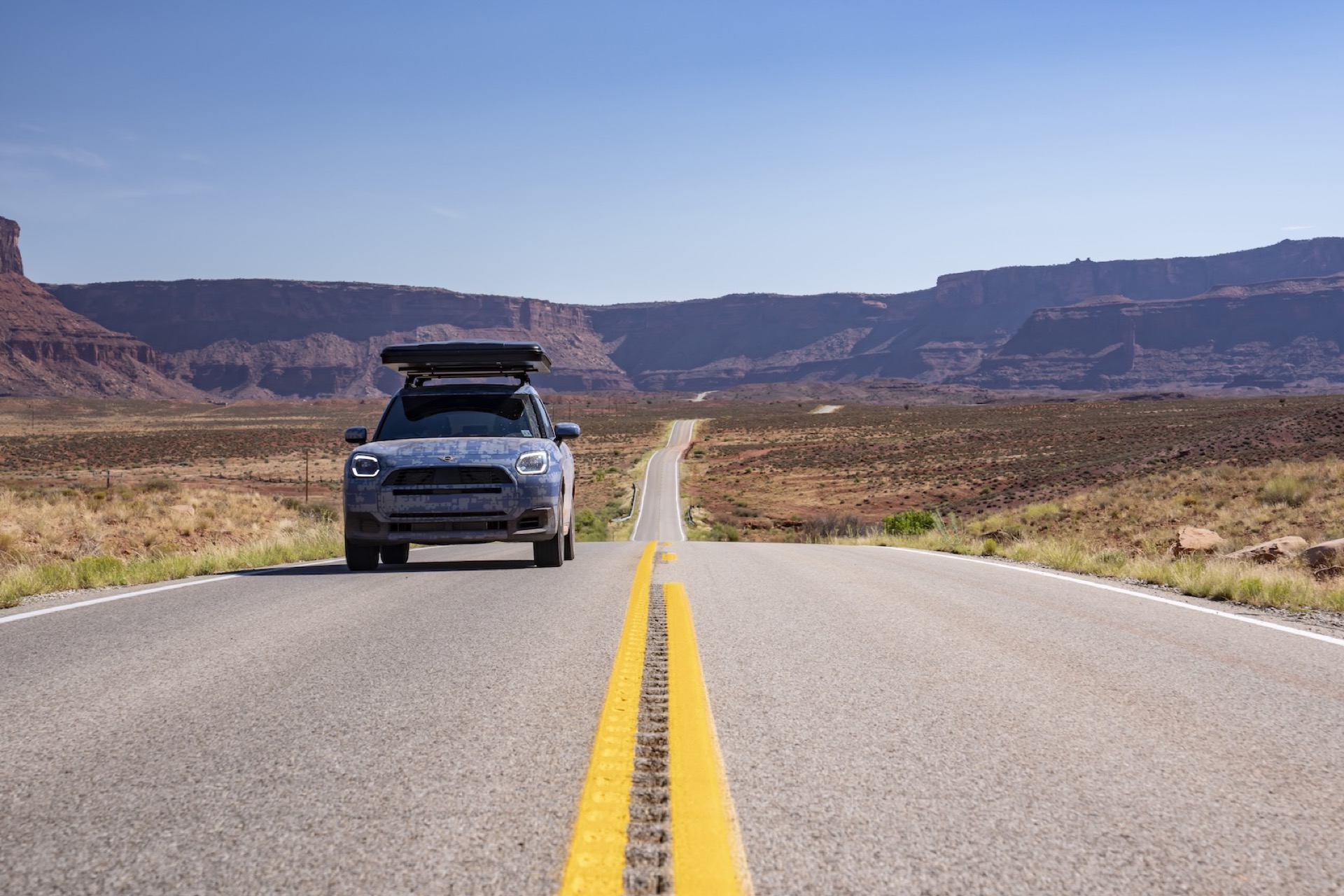
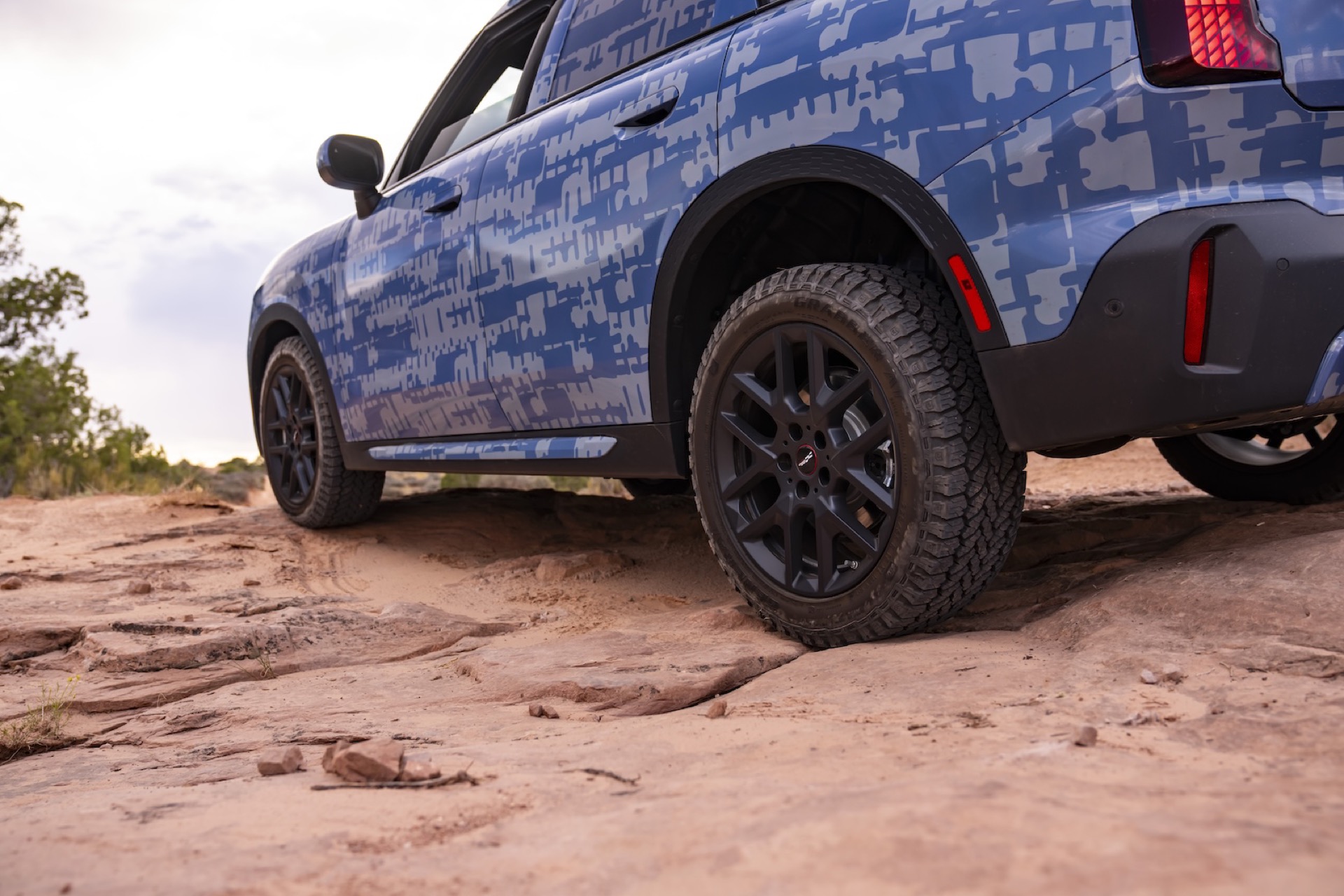
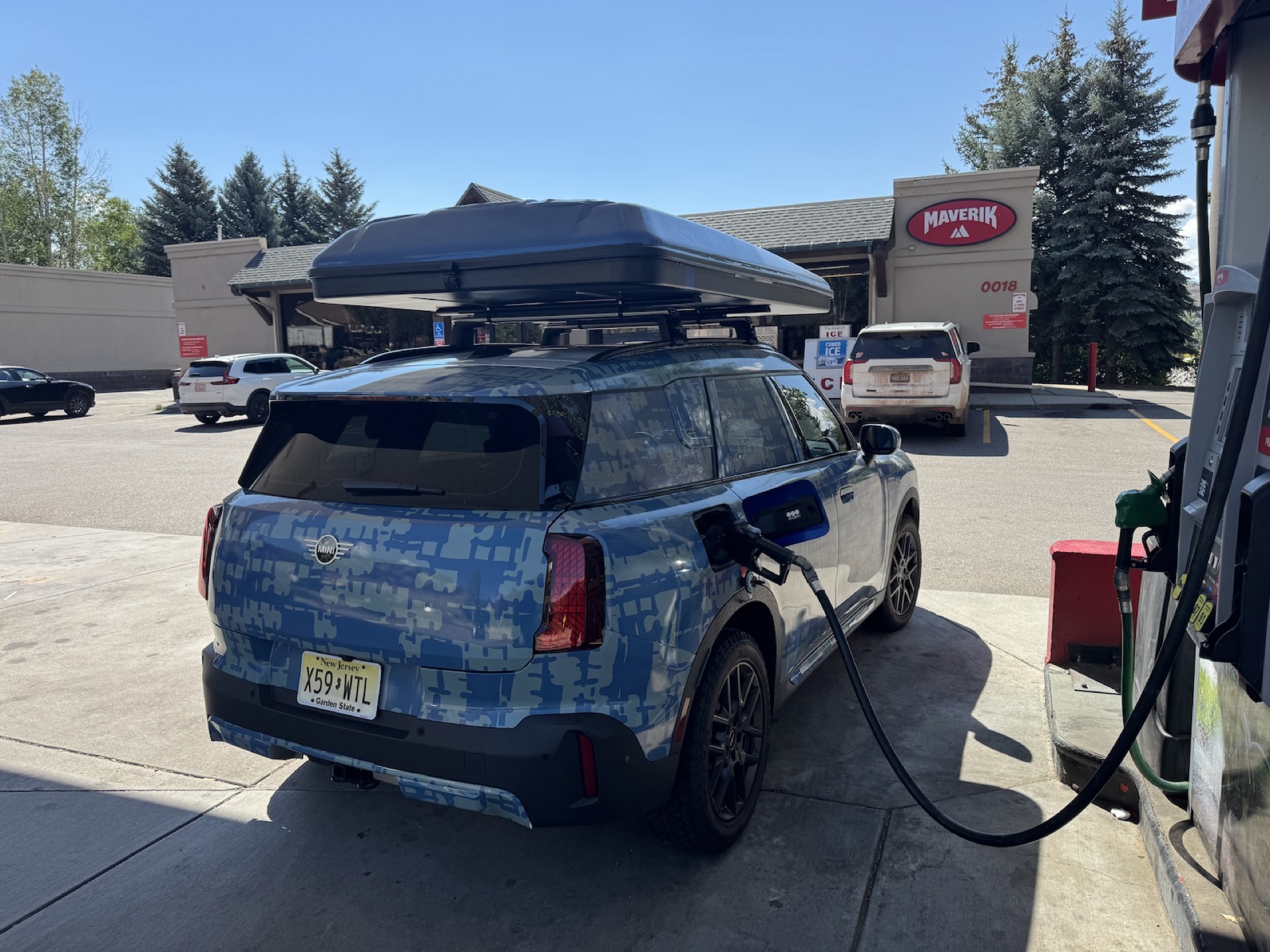
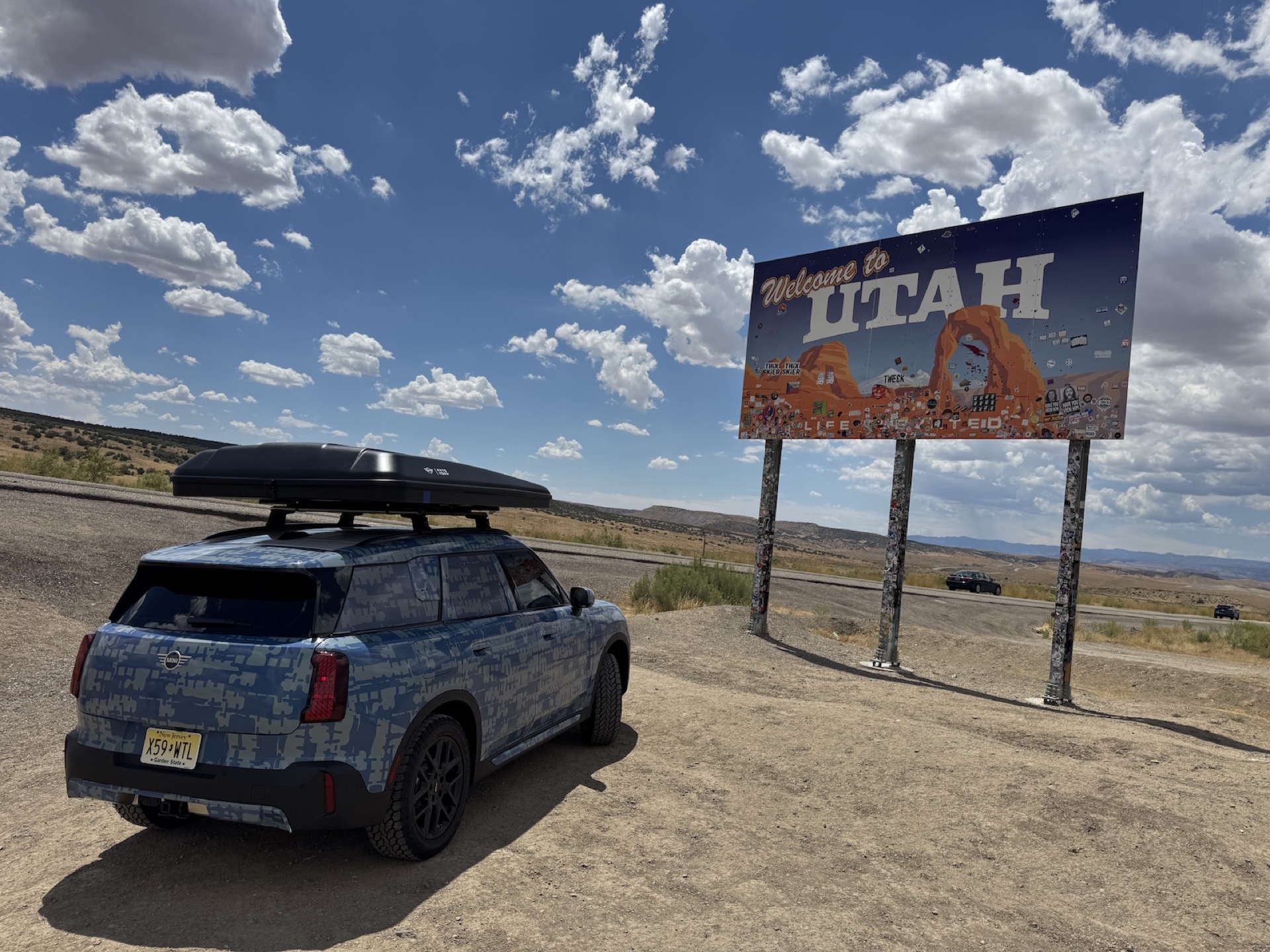
To be clear, the upcoming Countryman Offroad is no hardcore rock crawler. Equally, it is far more capable than a crossover designed purely for gravel driveways. The prototype makes its intentions obvious with chunky all-terrain tyres, increased ground clearance, a tow bar and the option of a roof tent. Around Moab in Utah, it tackled dusty desert trails, rocky climbs and deep water crossings with surprising confidence. Select the dedicated off-road mode via the centre console and the otherwise civilised family crossover transforms into a genuinely capable adventure vehicle, shrugging off steep descents, loose rock and river crossings on the way to campsites and hiking trails. The roof tent, naturally, comes along for the journey.
Conditions during the final validation programme could hardly have been more demanding. Temperatures remained consistently above 40°C while the pre-production prototype tackled the challenging Onion Creek Trail near the Colorado River before moving on to the rain-soaked terrain around the Shafer Trail. Alongside suspension tuning, engineers focused heavily on tyre selection. The off-road rubber needed to deliver genuine all-terrain capability while remaining civilised over more than 1,800 kilometres of highways and secondary roads between Denver and Los Angeles. After all, few owners will spend their lives exclusively off-road.
The development route therefore pushed every major system to its limits. Engine cooling, brakes, drivetrain and climate control all faced maximum loads during climbs to the 4,300-metre summit of Pikes Peak and long high-speed runs along Interstate 70 towards Vail, the highest point on the US Interstate network.
The itinerary across six western states became even more demanding on smaller Rocky Mountain passes before heading into the spectacular landscapes of Monument Valley. Even the heavily rutted tourist tracks there normally require proper four-wheel-drive vehicles. Yet the camouflaged Countryman descended towards North Window with complete composure, roof tent and all, before tackling the route towards the famous Three Sisters rock formation, including deep red water crossings that failed to penetrate either the engine bay or the cabin.
Questions remain before production begins. It will be interesting to see whether the finished vehicle receives additional underbody protection and auxiliary lighting. Buyers intending to use the Countryman as intended will certainly appreciate greater protection against rocks and rough terrain, particularly on poorly maintained forest tracks after dark.
The prototype we drove used Mini’s familiar 2.0-litre turbocharged petrol engine, but the Offroad model will also be available with an electric drivetrain. Only the 300 PS John Cooper Works derivative is expected to remain outside the off-road range.
Pricing is expected to sit broadly alongside the JCW model when the Countryman Offroad makes its public debut in October, with a starting price of around €54,000.