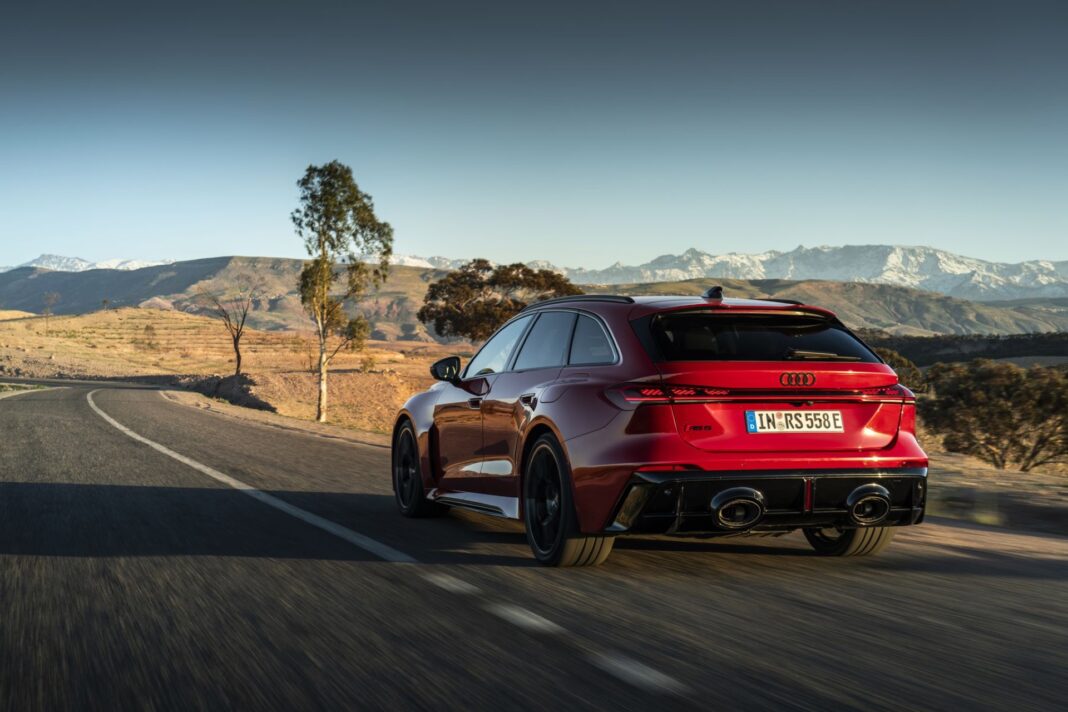
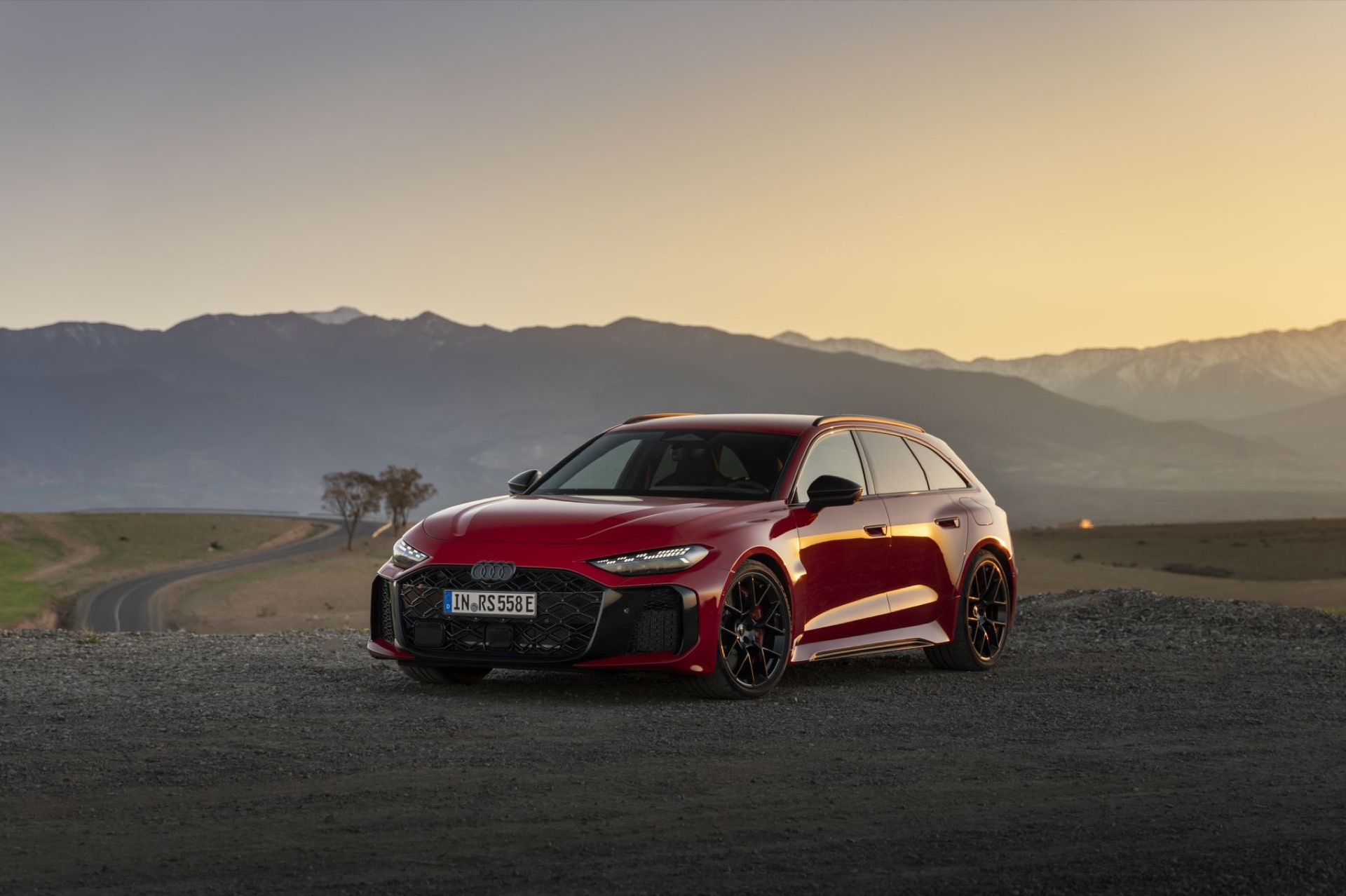
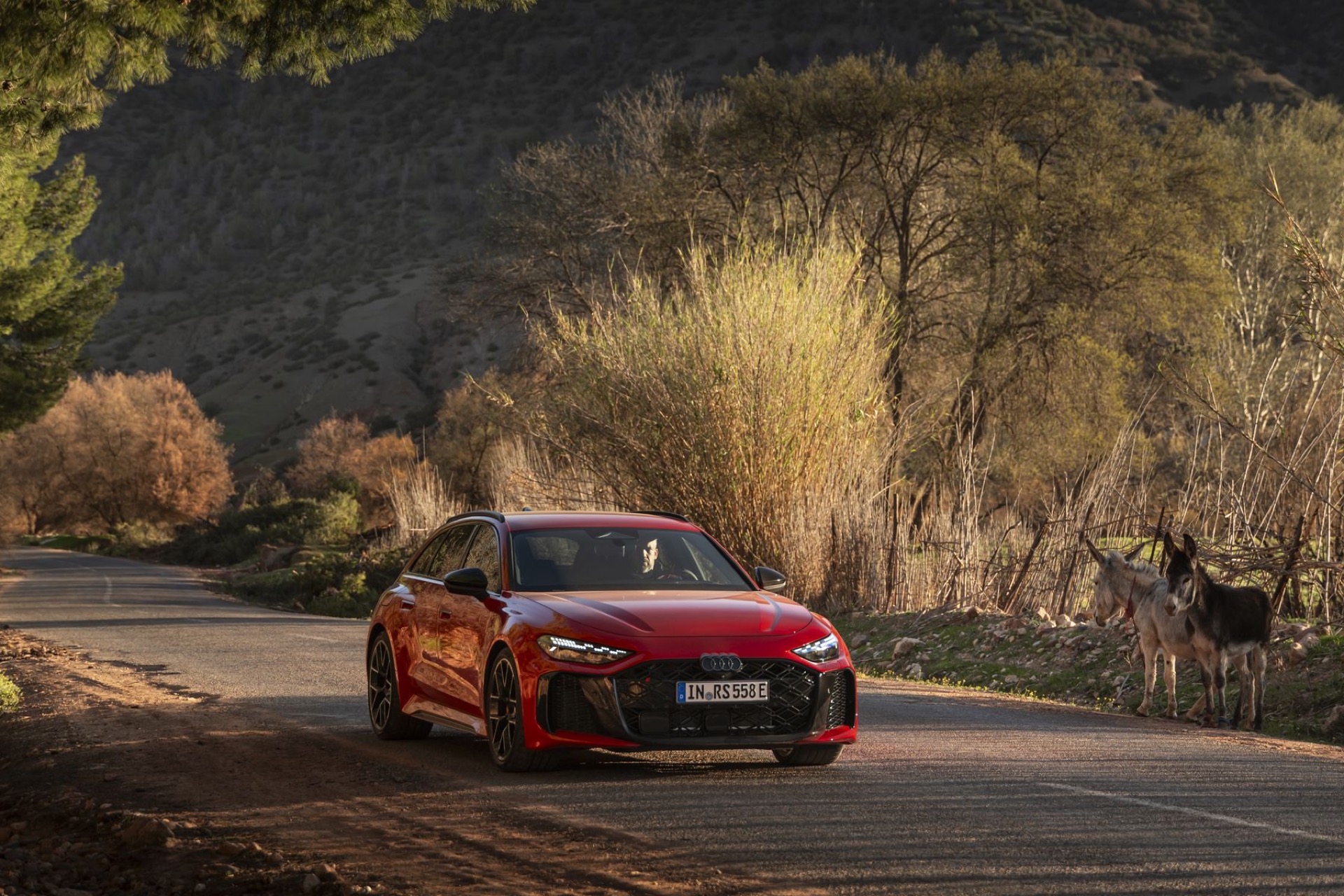
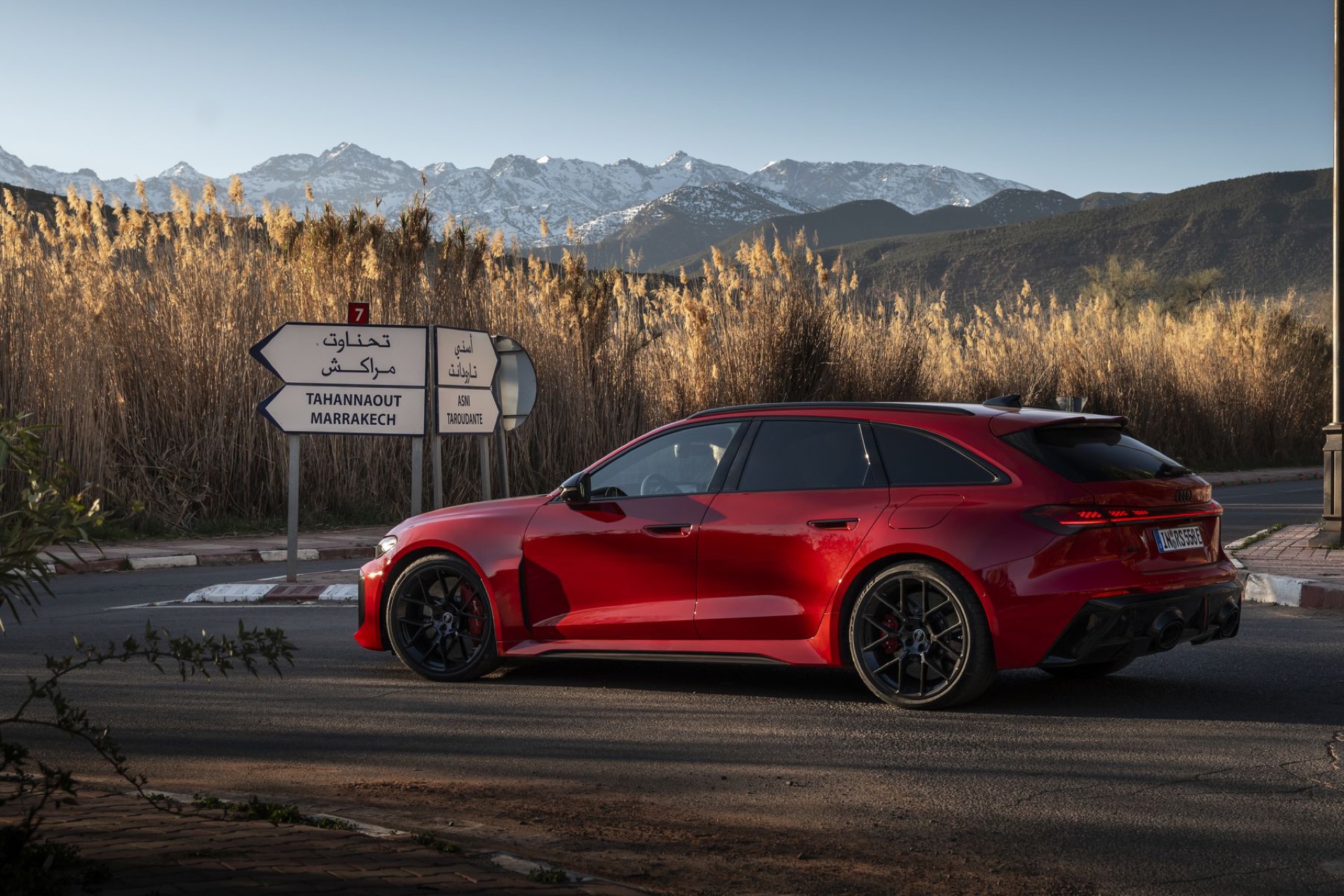
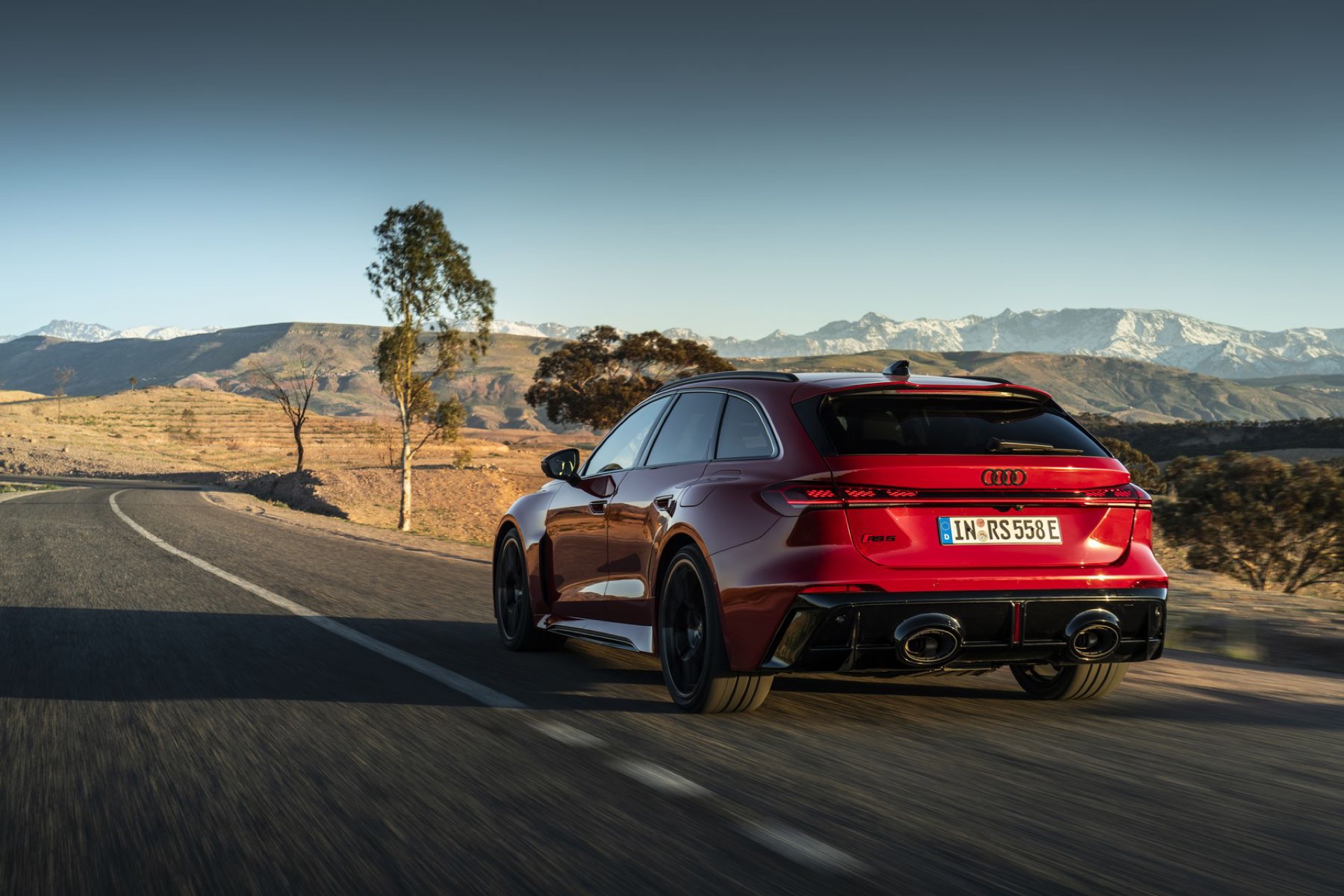
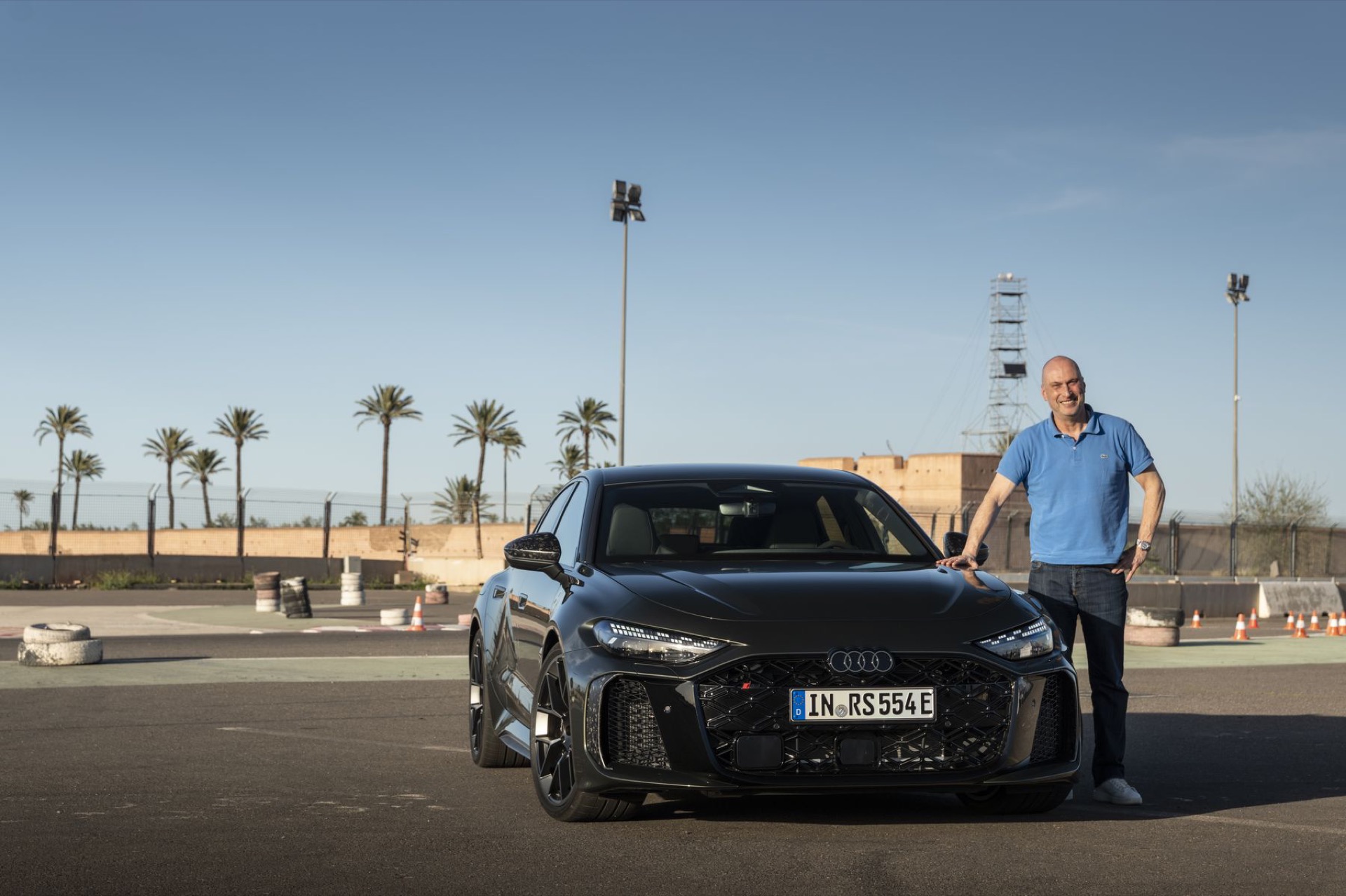
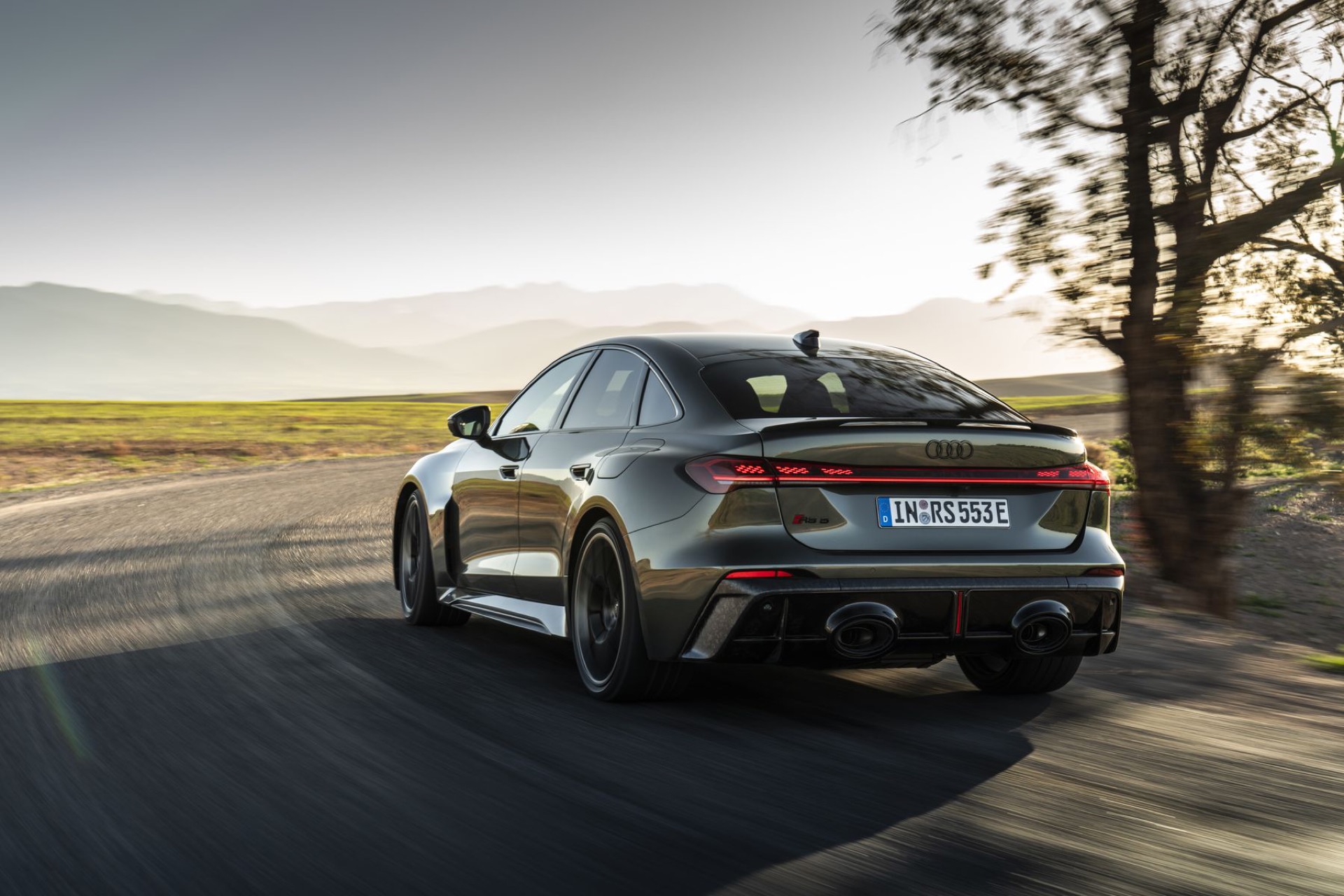
At 2,370 kilograms and with enormous exhaust outlets, the Audi RS5 Avant cuts an imposing figure both visually and on paper. Yet despite its considerable mass, the plug-in hybrid performance estate delivers impressive agility.
The Audi RS5 stands broad and muscular on the road. Even at a standstill it radiates overtaking authority pressed into sheet metal. Many buyers will naturally gravitate towards the Avant estate, though the saloon arguably looks even more elegant. That, of course, is a matter of taste. What cannot be debated is the sheer presence of this BMW M3 rival from Ingolstadt. Thanks to plug-in hybrid assistance, the RS5 delivers 470 kW (639 PS) of system output and 825 Nm of torque across both axles. A 25.9 kWh battery, with 22 kWh usable capacity, enables up to 84 kilometres of electric-only driving. The downside is weight. At 2,370 kilograms, the RS5 Avant is far from light. For comparison, a BMW M3 Competition Touring xDrive weighs 1,940 kilograms, the Porsche Cayenne Turbo GT 2,245 kilograms and even the larger Audi RS6 Avant comes in at just under 2.1 tonnes, though without any hybrid module.
BMW fans may mock the Audi as a “heavyweight”, yet a glance at the BMW M5 Touring shows a similar reality. It too is a plug-in hybrid and tips the scales at 2,425 kilograms. Anyone who wants electric assistance must accept extra mass. That is the reality regardless of which engineers developed the car. In fact, a new philosophy has emerged among engineers. Instead of chasing ultra-lightweight construction, the mantra now is simple: weight only matters if you can feel it.
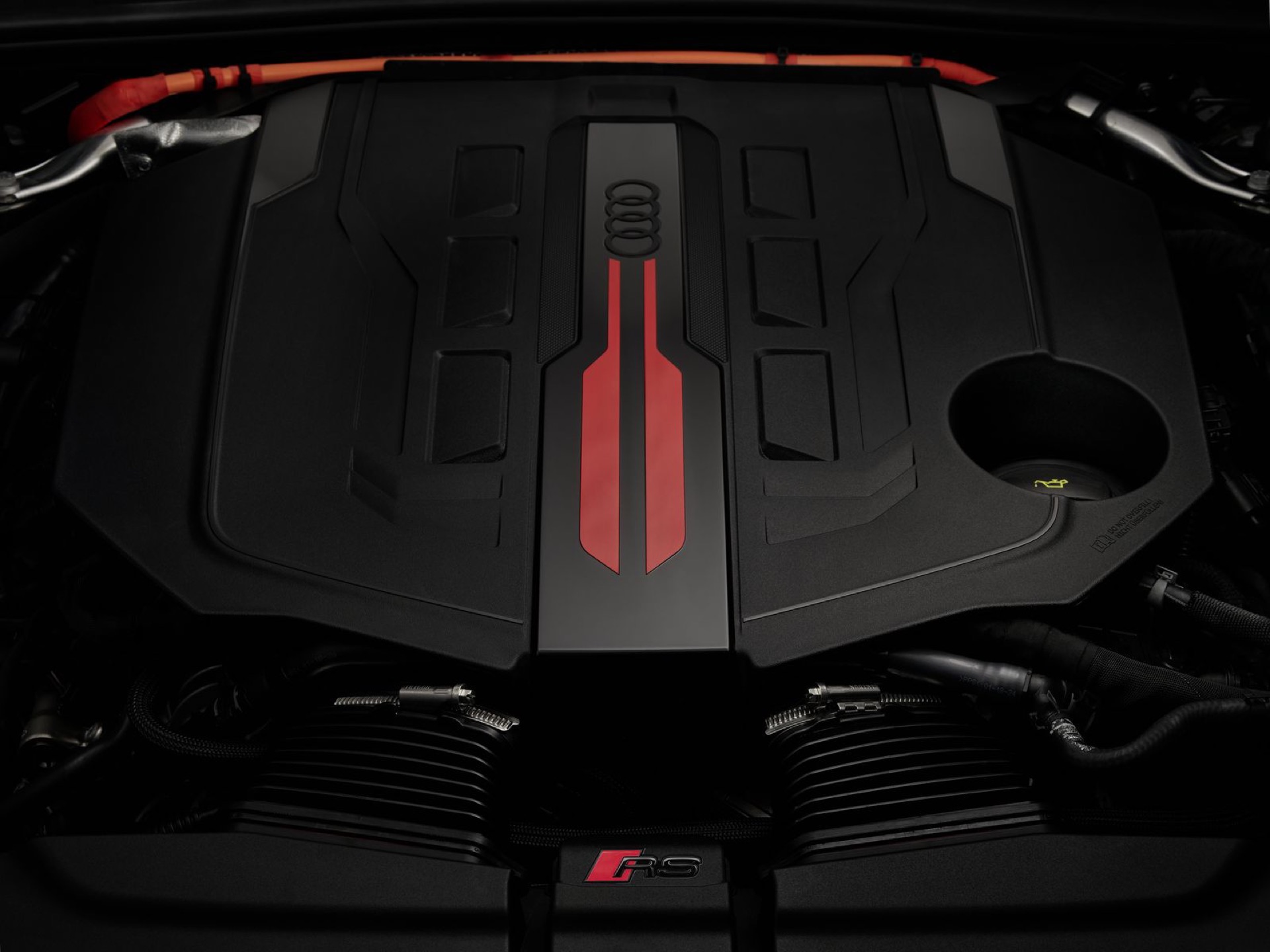
That philosophy becomes clear once the RS5 is in motion. Engineers have pushed the interaction between hardware and software further than before. At the heart lies the drivetrain. The 2.9-litre twin-turbo V6 produces 375 kW (510 PS) and 600 Nm. It sits longitudinally at the front, followed by an eight-speed tiptronic transmission that houses the electric motor delivering 130 kW (177 PS) and 460 Nm. A Torsen centre differential distributes torque between the axles depending on driving mode, ranging from 70:30 to 15:85 front-to-rear.
To ensure the system works as a cohesive unit, the engine operates in a modified Miller cycle, closing the intake valves earlier to improve efficiency under partial load. This matters in a plug-in hybrid, where the combustion engine frequently operates at partial load alongside the electric motor. Two variable-geometry turbochargers ensure rapid response and a broad torque curve. Boost pressure reaches up to 1.5 bar, injection pressure is higher, and the intake tract has been shortened. For the first time in this series, a water-to-air intercooler is used. Altogether, engineers extracted 44 kW (60 PS) more from the engine than in the previous RS4. Combined output rises to 470 kW (639 PS) and 825 Nm.
Performance is suitably dramatic. The RS5 Avant accelerates from zero to 100 km/h in 3.7 seconds, while electronics limit top speed to 250 km/h. Yet raw figures tell only part of the story. What matters is how the technology performs on the road.
Here the rear axle plays a crucial role. A planetary gearset allows torque to be distributed electromechanically between the rear wheels. Unlike clutch-based systems, Audi Dynamic Torque Control actively shifts power without relying solely on traction differences. A water-cooled permanent-magnet motor producing 8 kW (11 PS) generates up to 40 Nm of torque for this purpose. Together with a mechanical superposition gearbox and a conventional differential, this setup can create a torque difference of up to 2,000 Nm between the rear wheels.
The system checks driving conditions every five milliseconds and can direct torque in either direction, under acceleration, deceleration or braking. It stabilises the car precisely when the mass of the hybrid system might otherwise reduce agility.
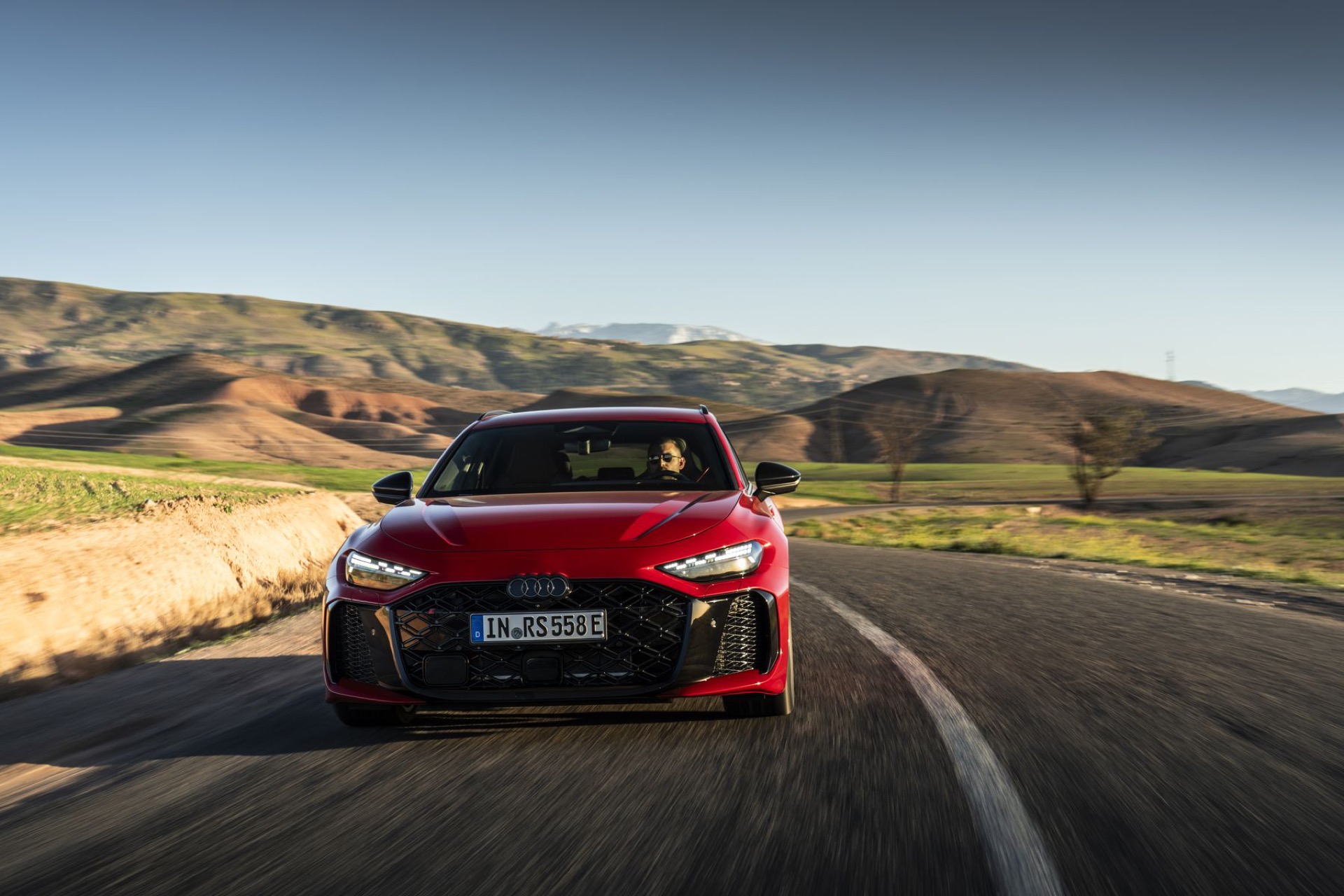
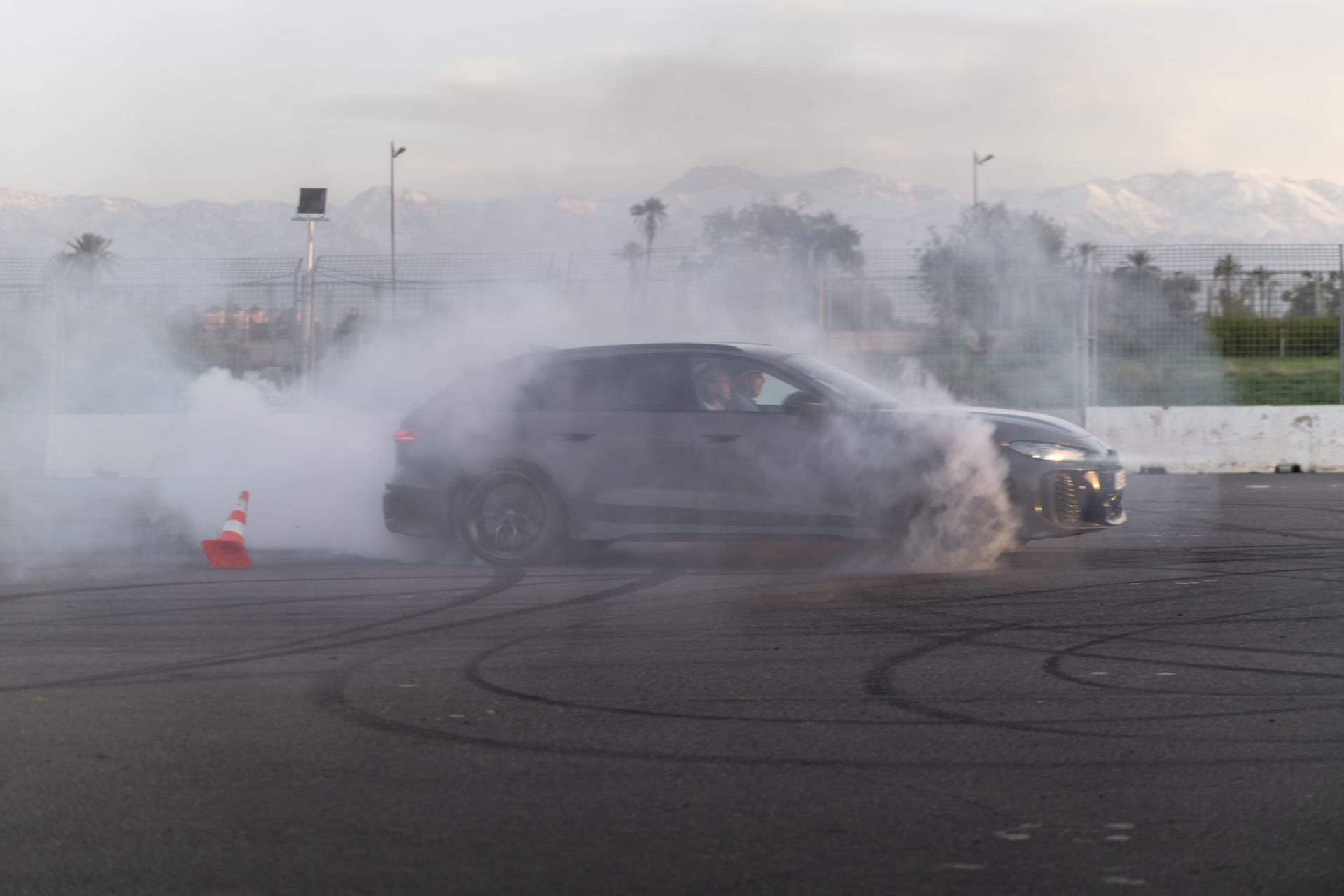
The engineering effort pays off. Whether on a racetrack, mountain road or sweeping country lane, the RS5 moves through corners with surprising lightness and makes high speeds feel effortless. The front axle responds eagerly to steering inputs, while the rear gently rotates into corners. Never aggressive, never nervous, but always supportive. Push hard enough and the mass inevitably becomes noticeable, yet the Audi remains controllable and composed. The optional ceramic brakes deliver powerful stopping performance when required.
Various driving modes allow the RS5 to be tailored to different preferences. Comfort, Balanced and Dynamic are joined by RS Sport, RS Torque Rear and RS Individual. In Balanced mode the RS5 behaves predictably, and electric driving is only available in this and Comfort mode. Dynamic allows the rear axle more influence. RS Sport focuses on maximum traction and lateral acceleration. RS Torque Rear unlocks the playful side, turning the Audi into a drift machine by directing more torque to the outer rear wheel.
RS Individual mode allows drivers to fine-tune steering, suspension, throttle response, sound, ESC and torque distribution. The boost function provides an extra burst of acceleration for ten seconds at the press of a steering wheel button. Adaptive dampers keep the ride balanced, never overly harsh and never too soft, even on rough mountain roads.
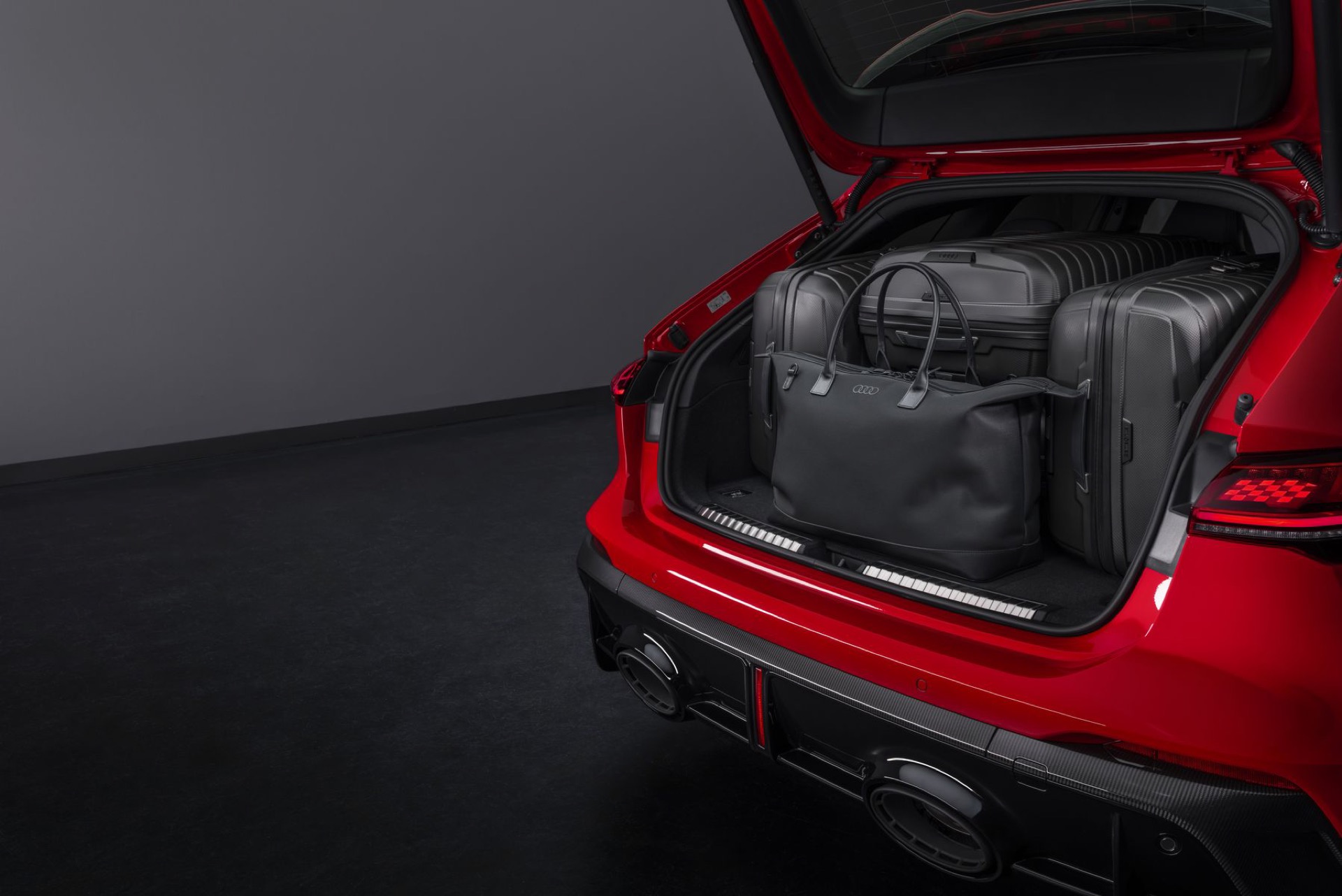
In everyday use, however, the RS5’s size becomes apparent. Including mirrors, it measures 2.10 metres wide, around nine centimetres more than the A5. Narrow streets or motorway construction zones demand careful judgement. The hybrid packaging also affects practicality. Boot capacity drops from 495 litres in the standard A5 Avant to 361 litres. That is even 20 litres less than in a VW Golf. Fold the rear seats and the volume increases to 1,302 litres. In the saloon version it ranges from 331 to 1,170 litres.
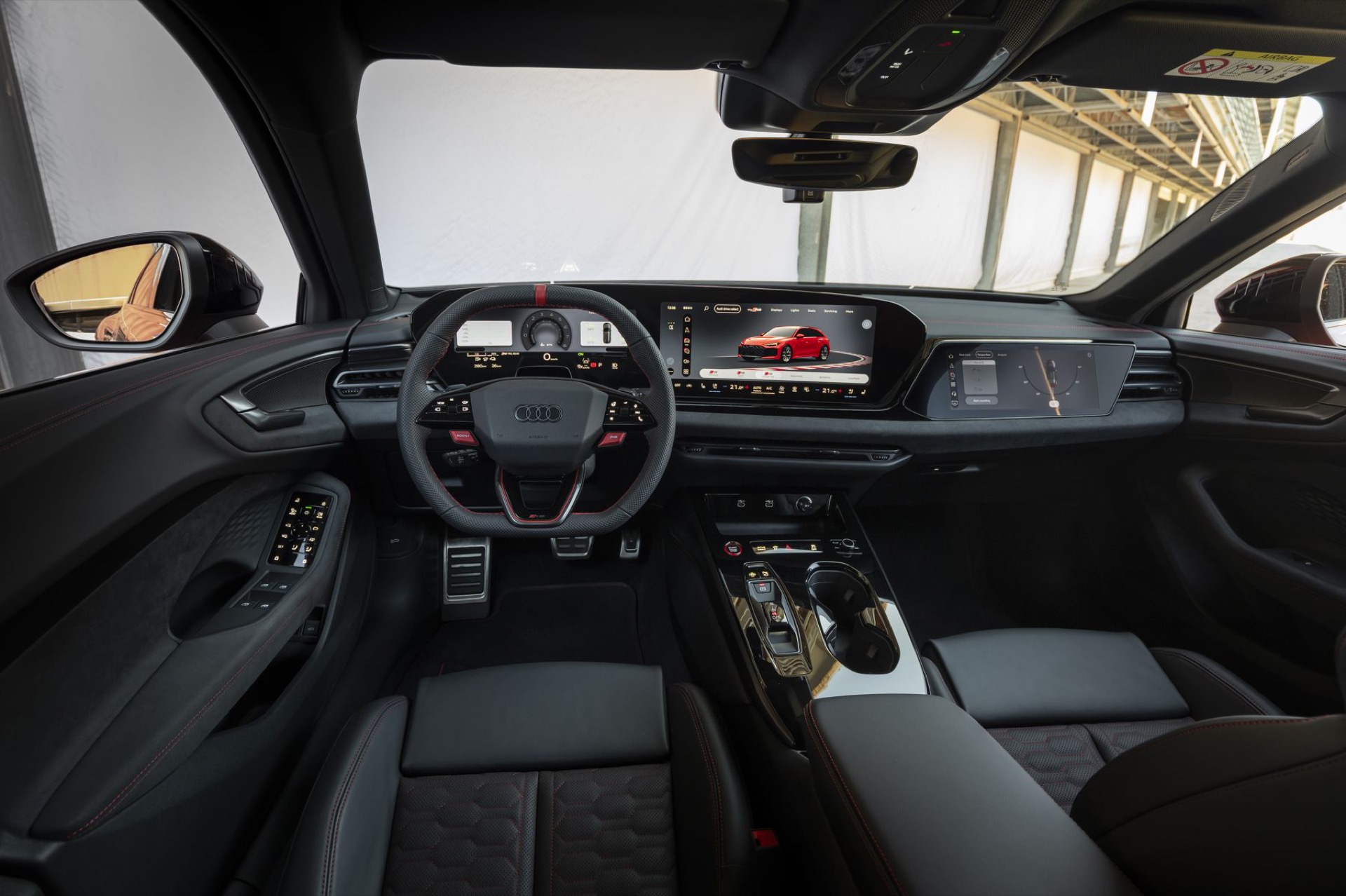
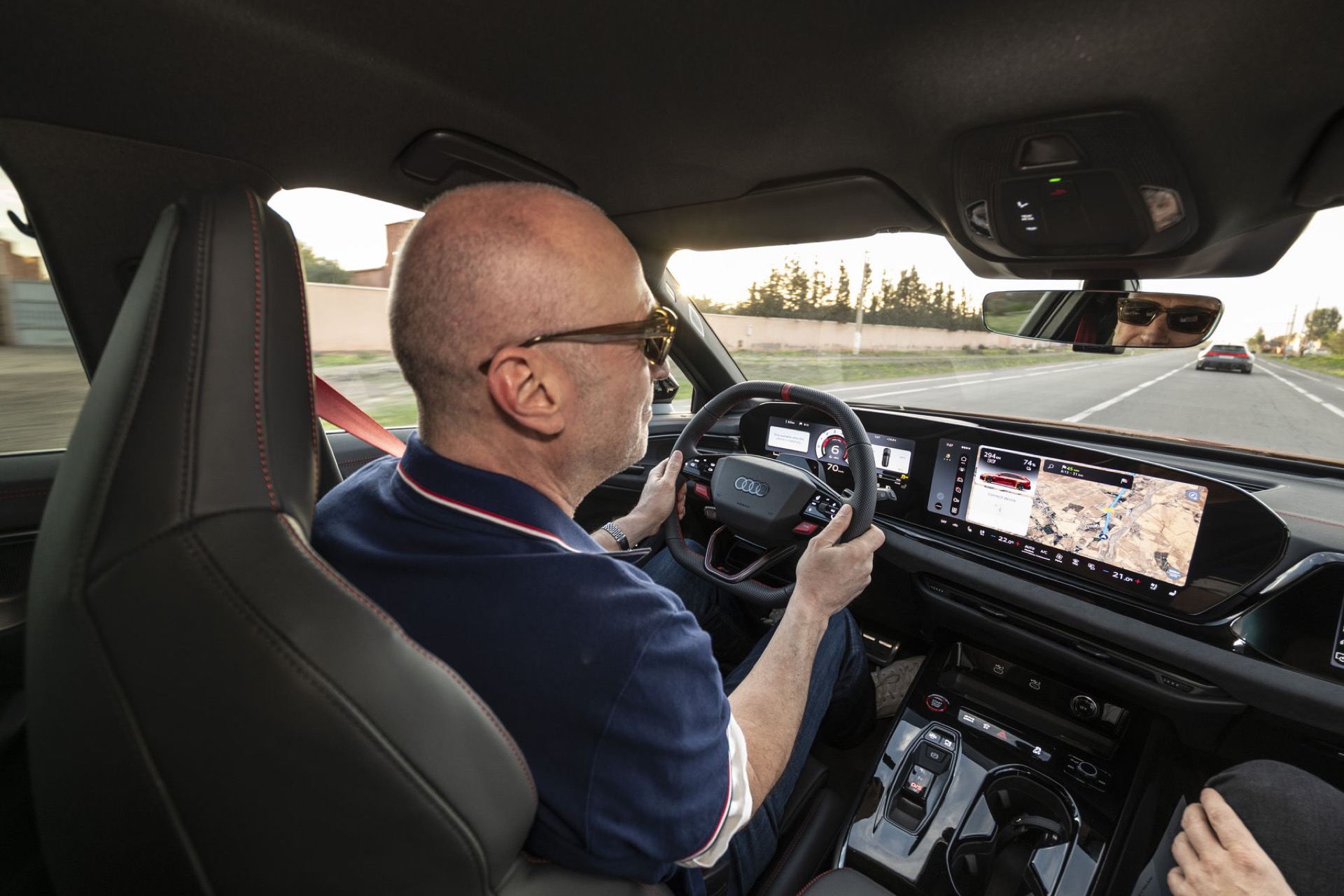
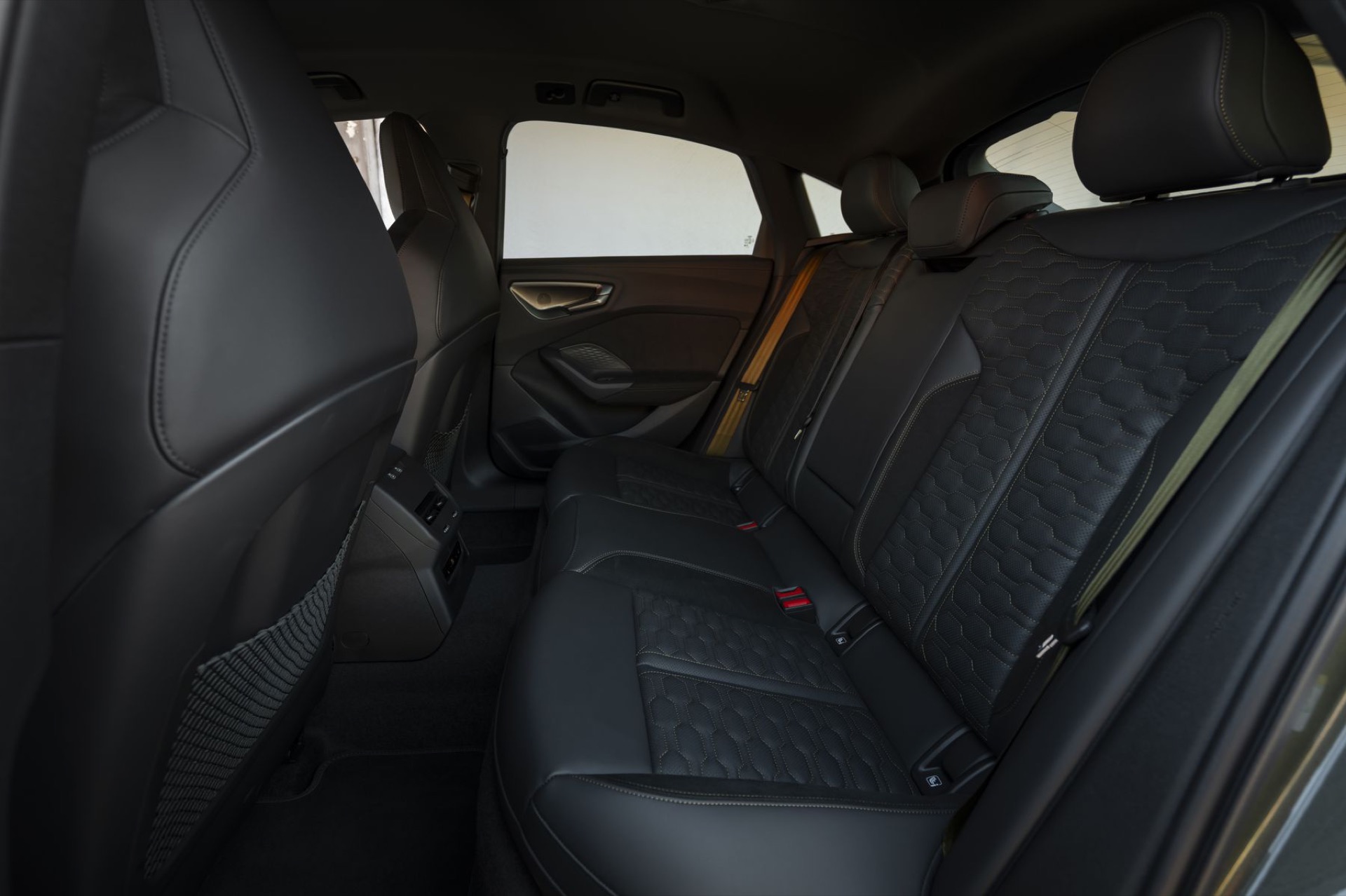
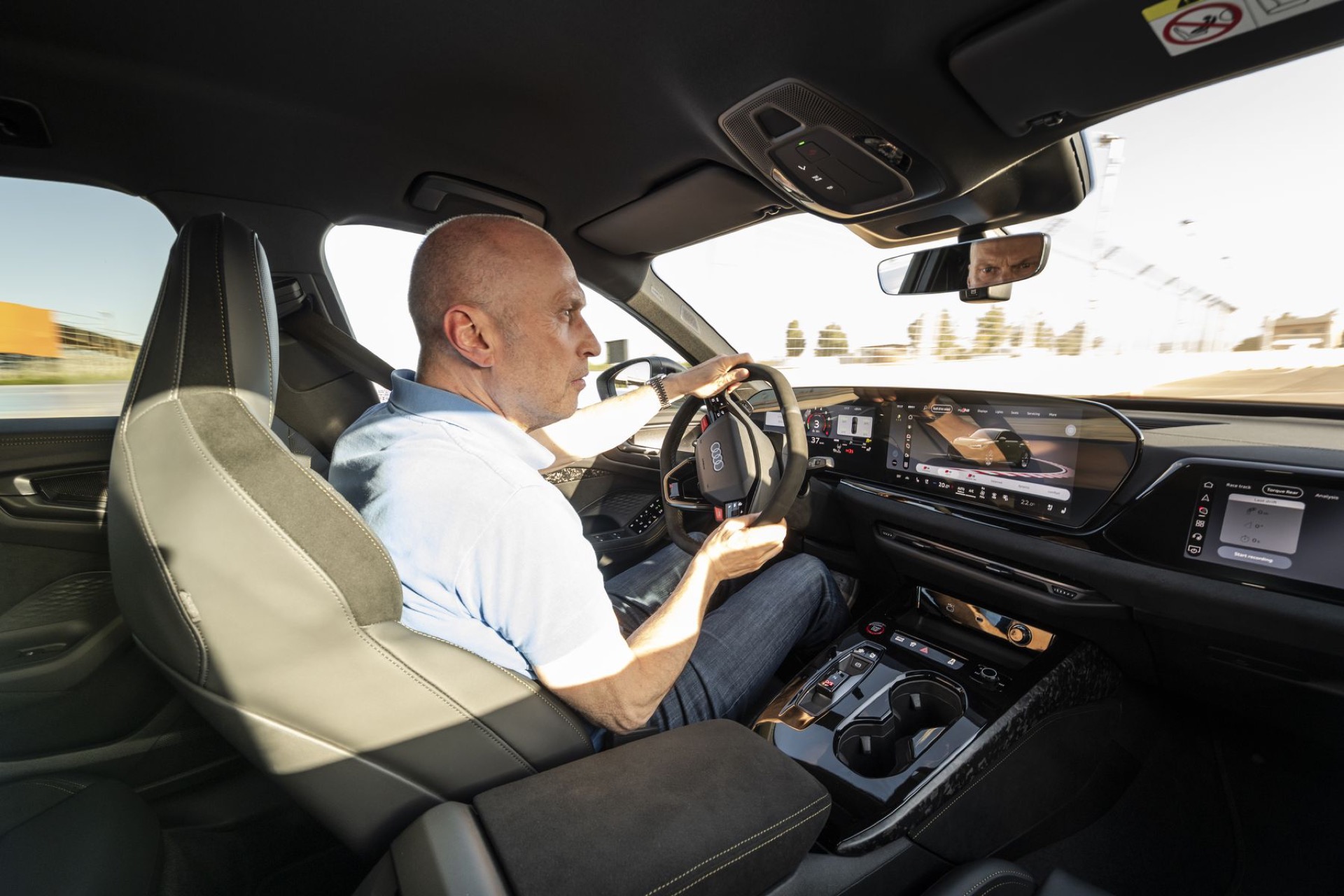
Audi interiors were once among the brand’s greatest strengths, known for exquisite materials and impeccable build quality. Today that reputation remains only partially intact. Details such as the four rings simply applied to the steering wheel hub or the plastic door handles feel less premium than expected. Pressing buttons on the door panel moves the entire module, far removed from the solid tactile quality Audi once delivered. Rear passengers face a centre console made of hard plastic. That is disappointing in a car starting at €106,200 for the saloon and €107,850 for the Avant.
The infotainment graphics also feel uninspired. While the digital instruments offer several display options, a classic layout with analogue-style speedometer and rev counter is missing.