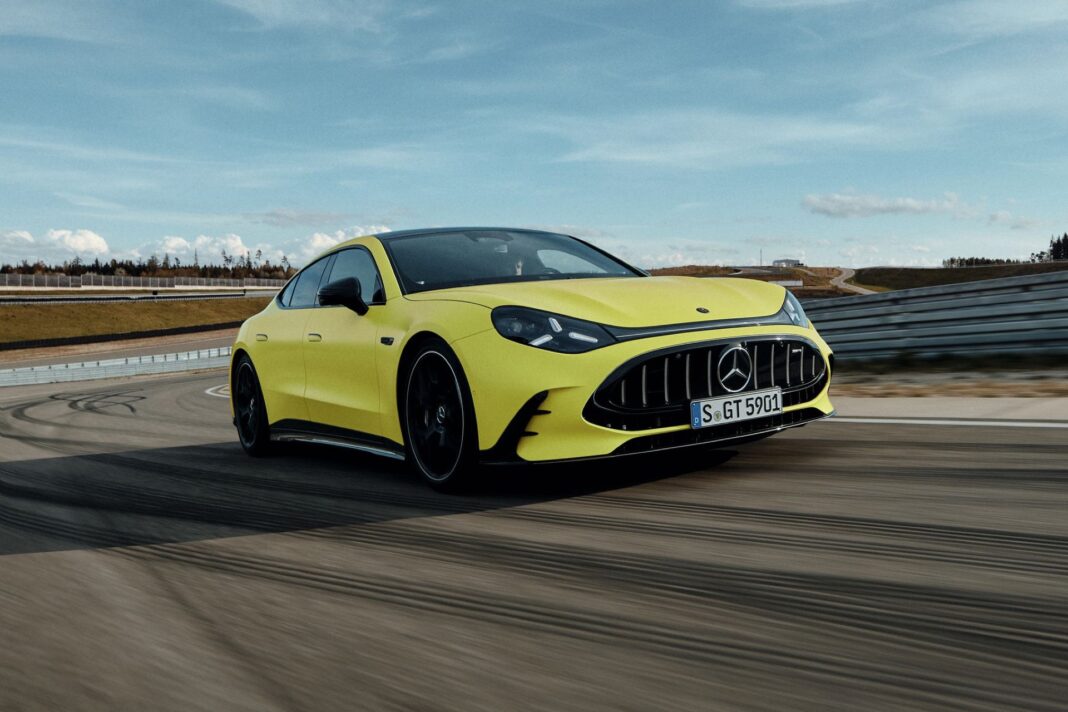
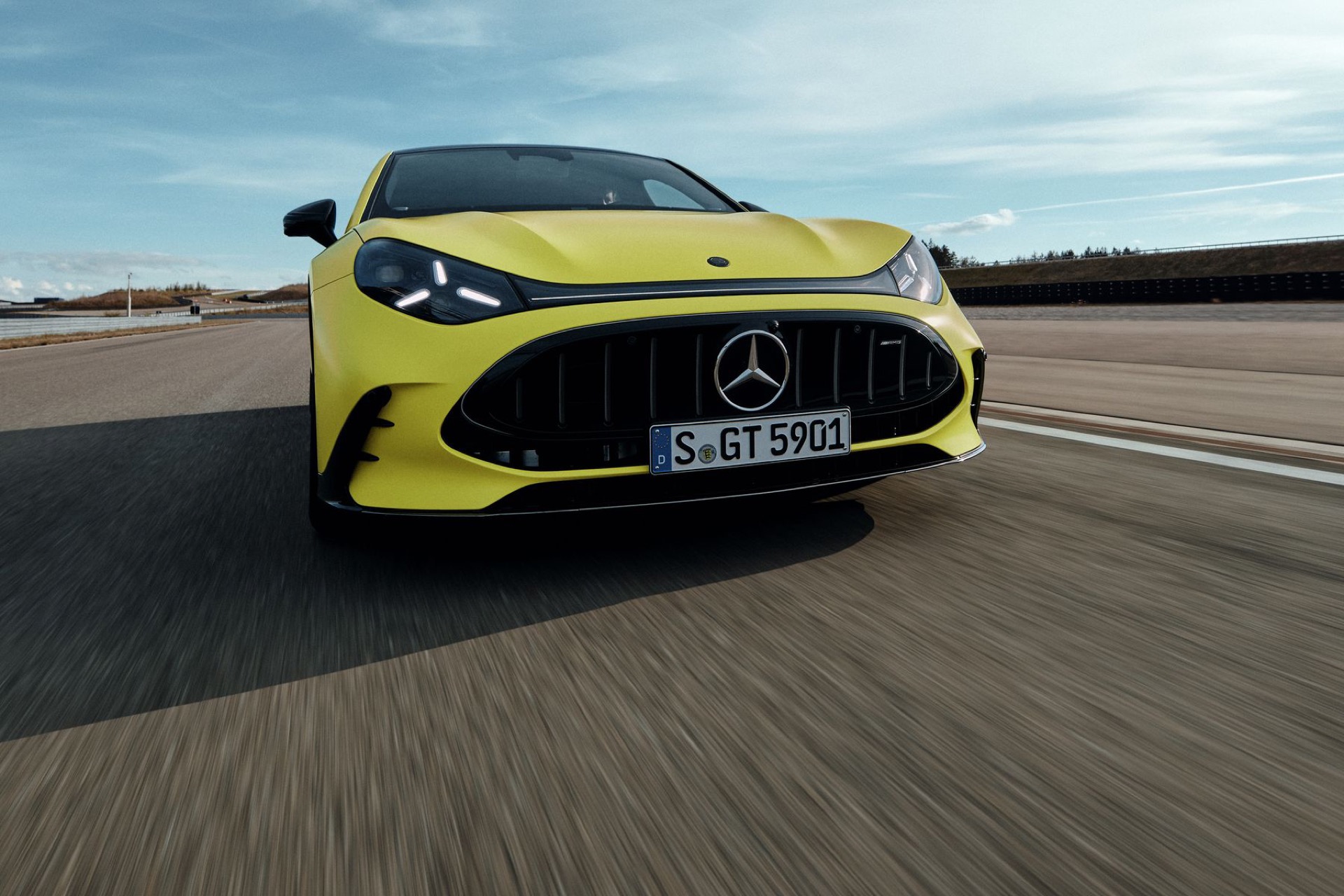
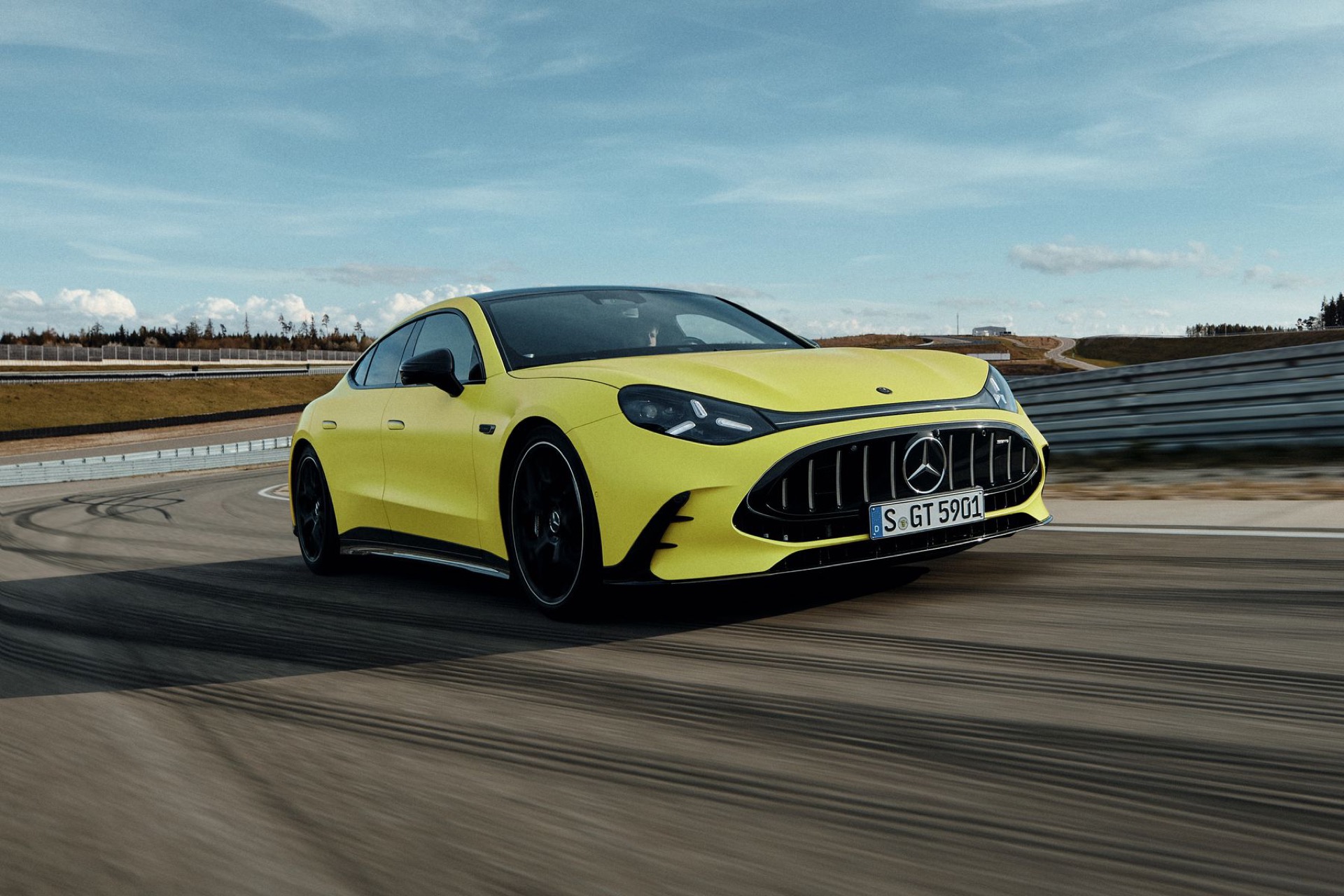
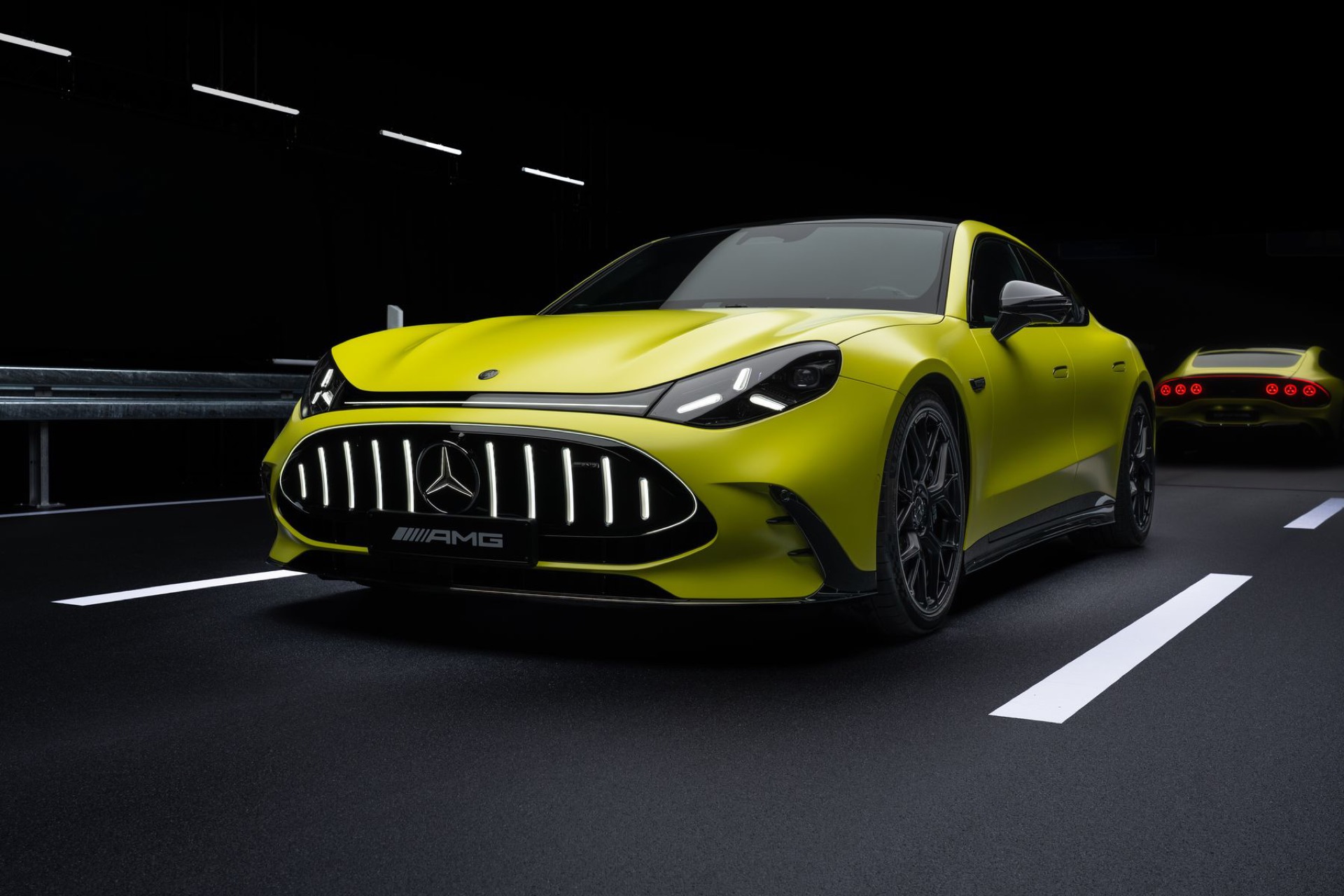
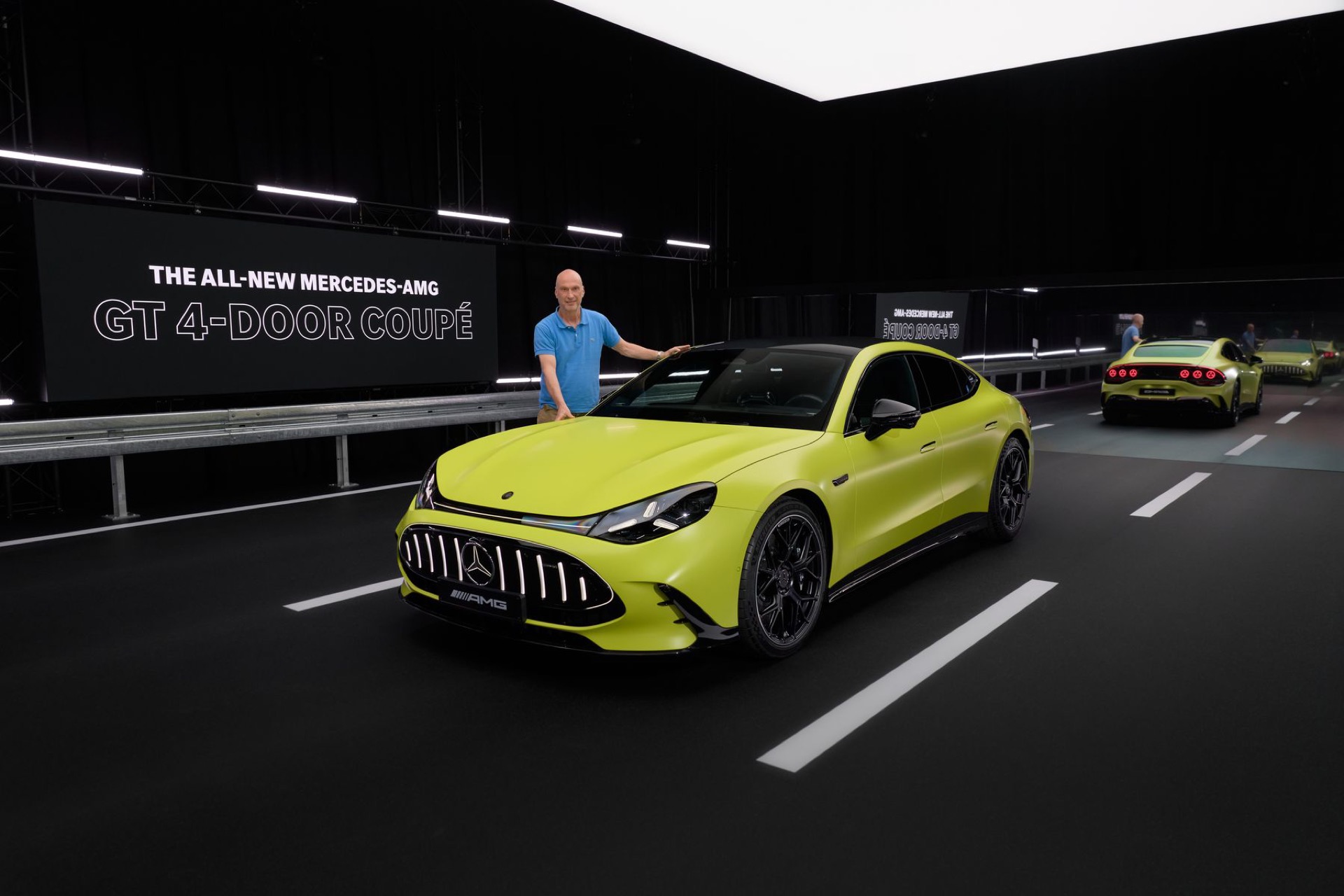
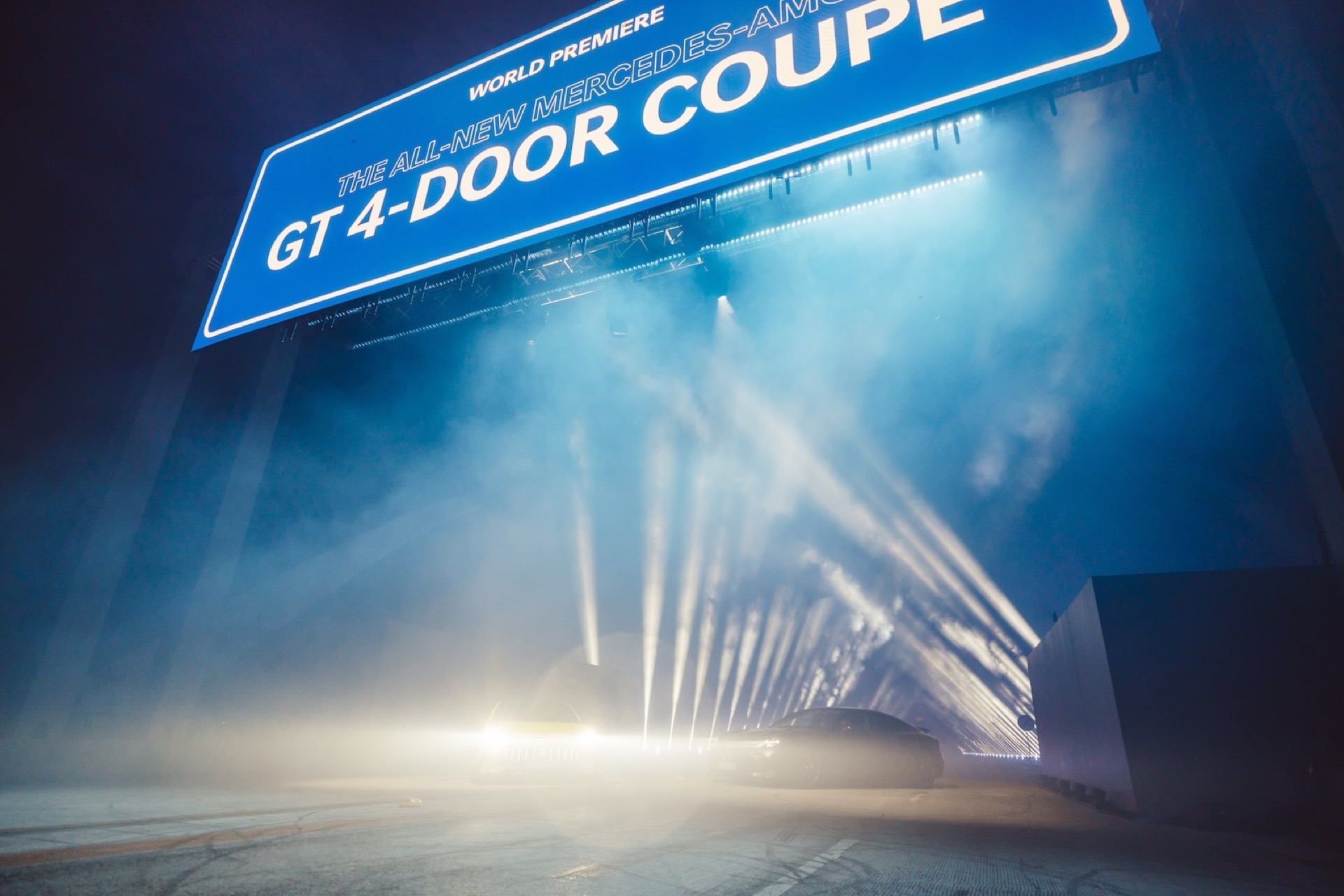
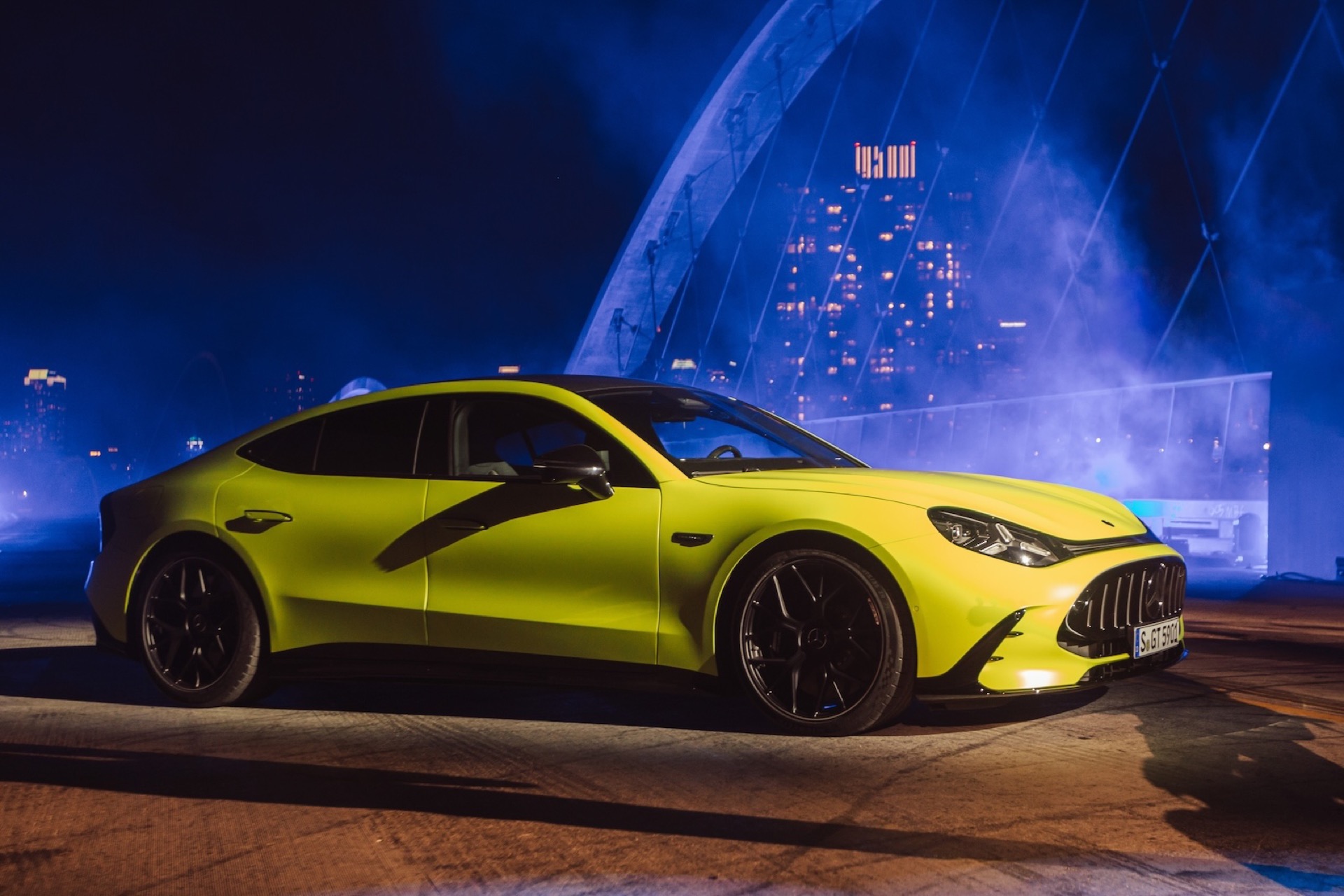
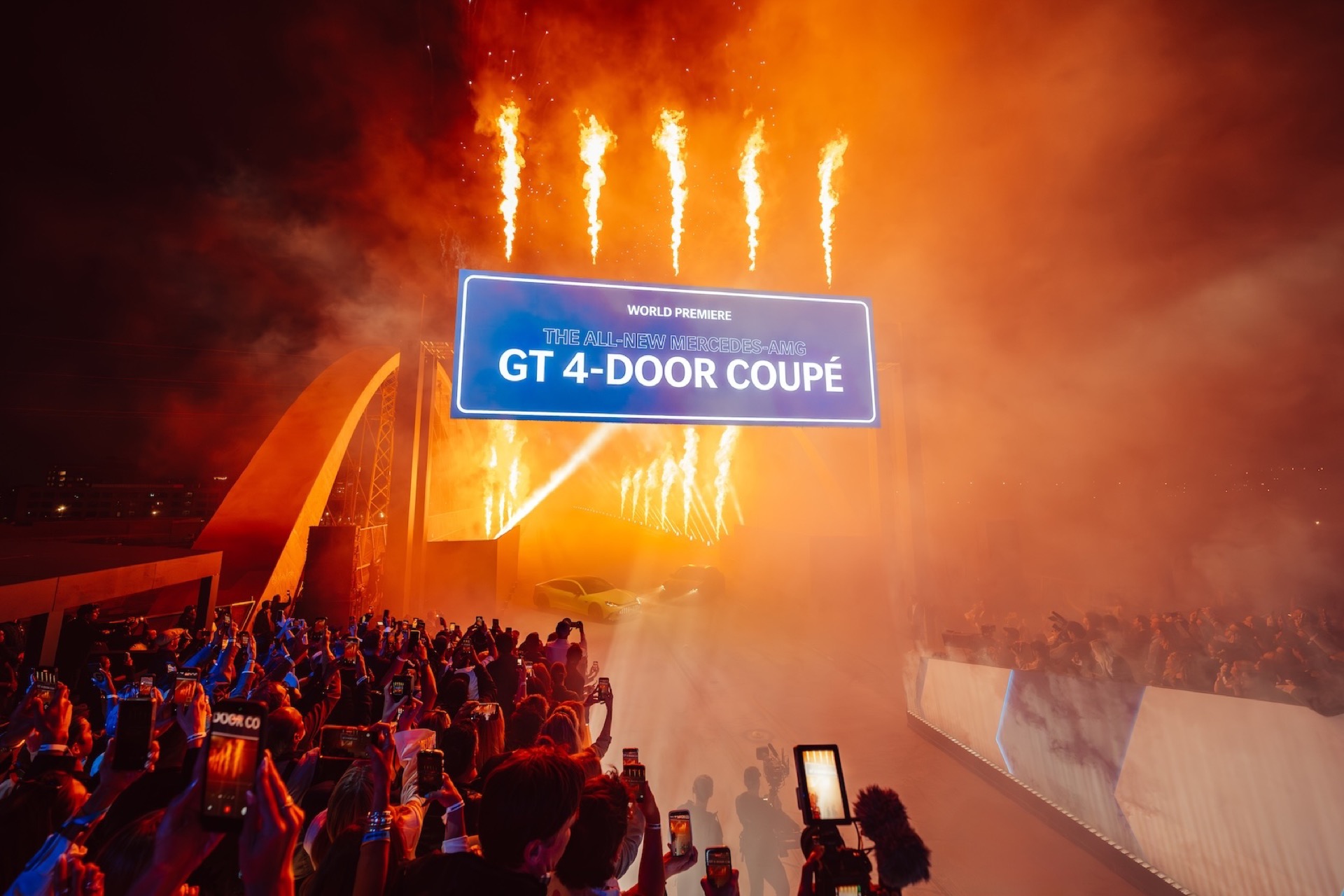
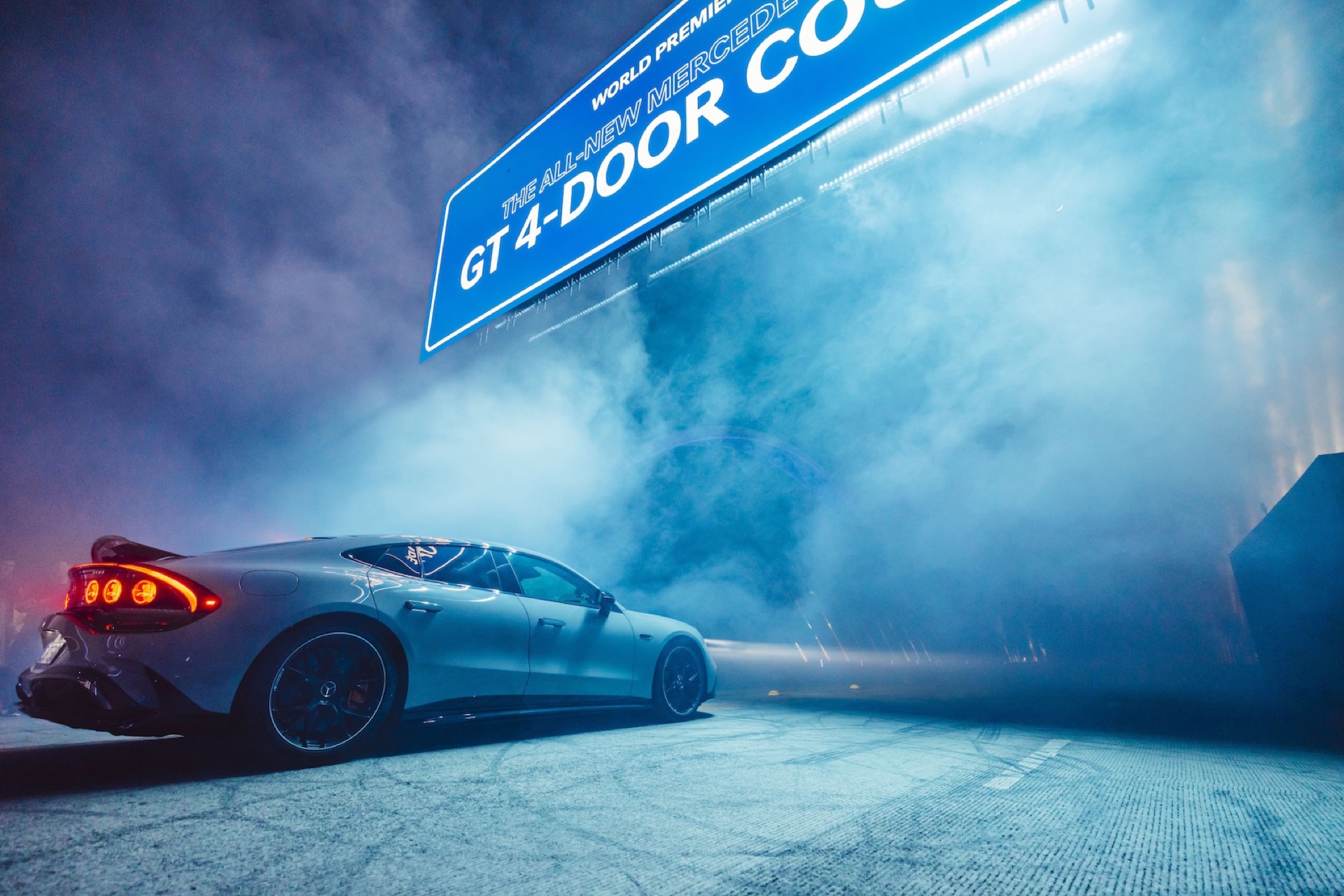
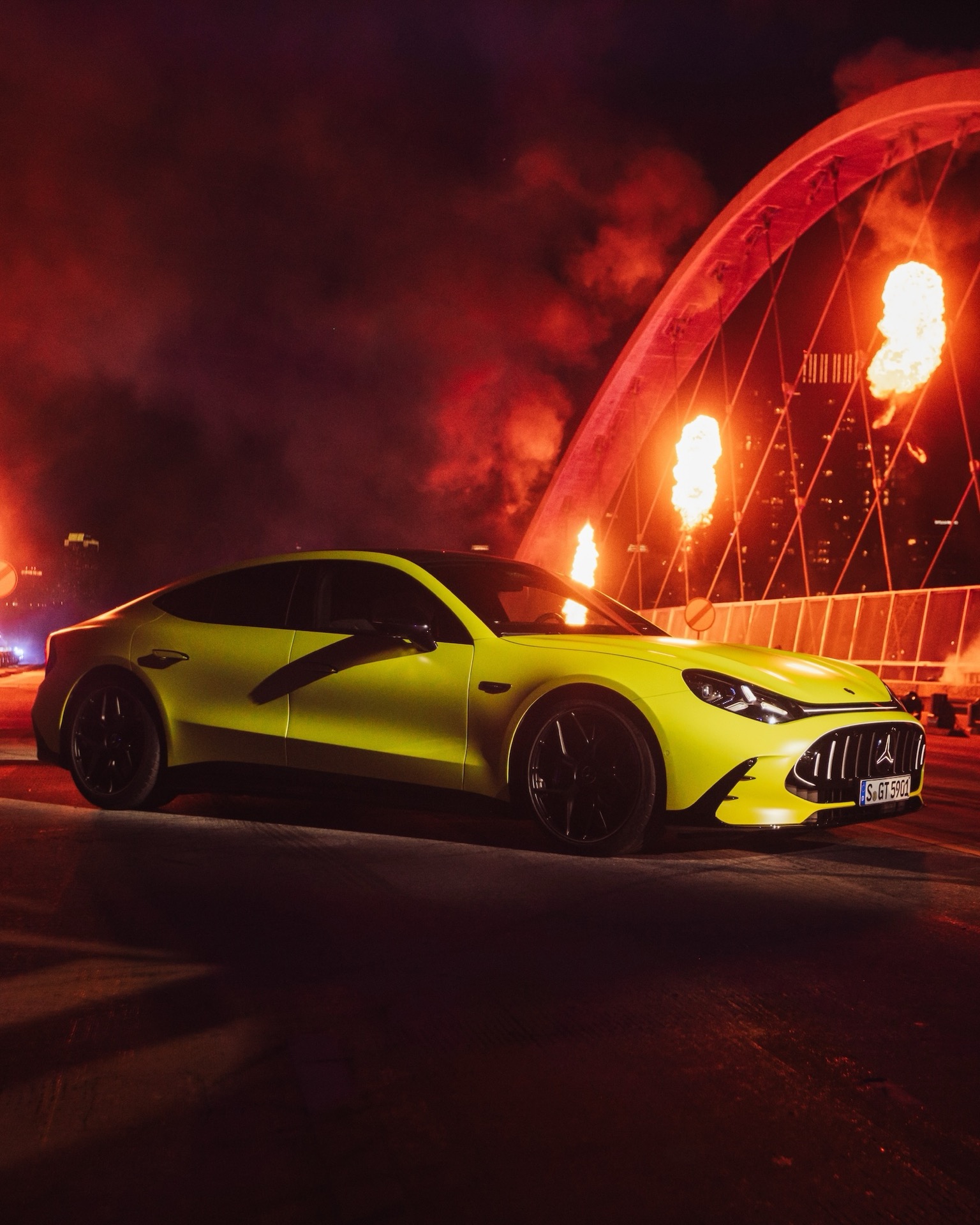
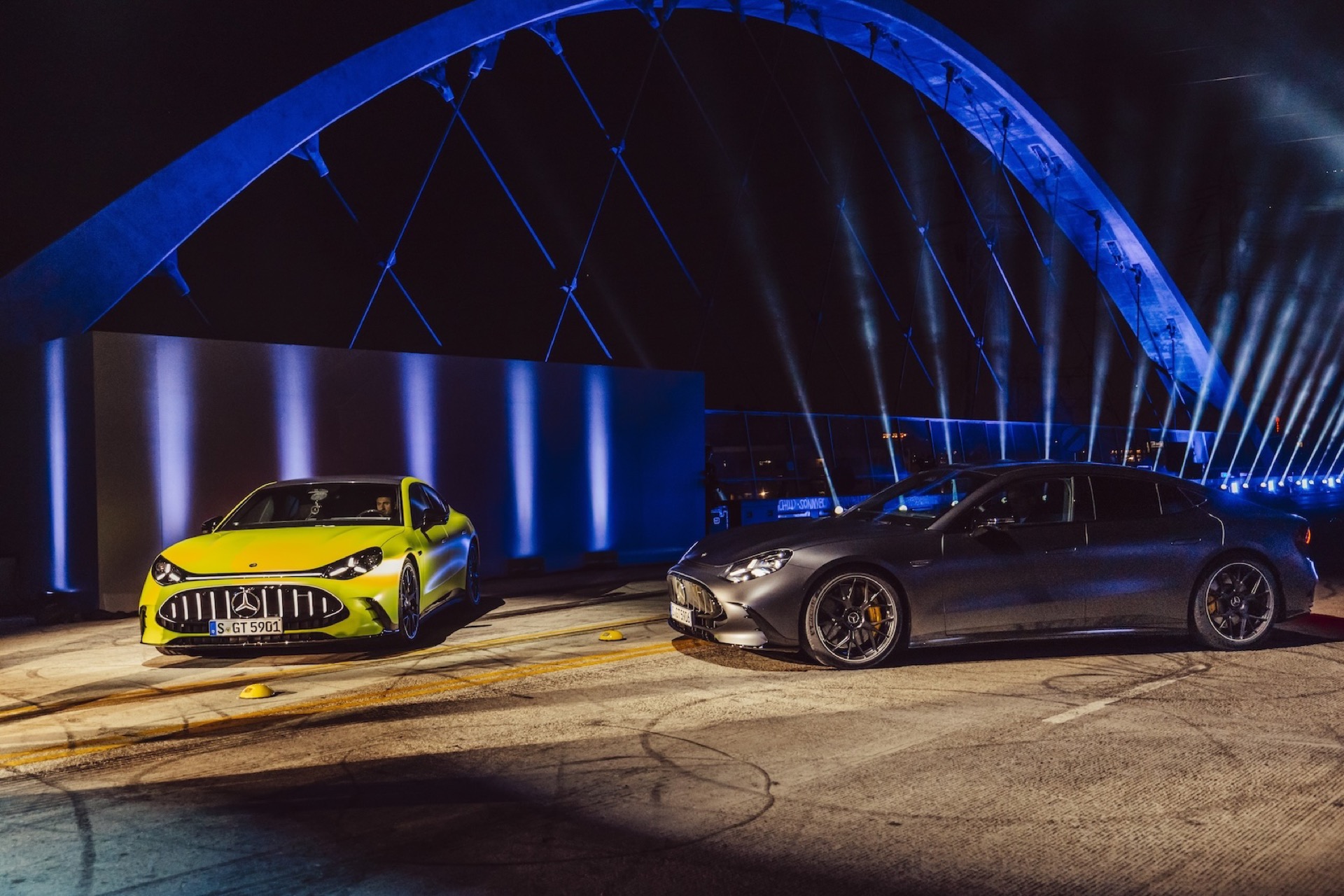
With the new AMG GT four-door EV, Mercedes-AMG is targeting rivals such as the Porsche Taycan, Xiaomi SU7 and Audi e-tron GT with staggering levels of electric performance. For the car’s dramatic world premiere, Mercedes transformed Los Angeles’ famous 6th Street Bridge into a temporary German autobahn. More than 500 invited guests celebrated the debut of the electric AMG, a production car designed to deliver on the promise of the sensational AMG GT XX concept.
The scale of the launch was almost unheard of in today’s automotive industry. Mercedes shut down an entire bridge complex in downtown Los Angeles, blasted through the city at full pace and finished the evening with a live performance from Blink-182. The message was clear: AMG intends to arrive in the electric performance segment with force.
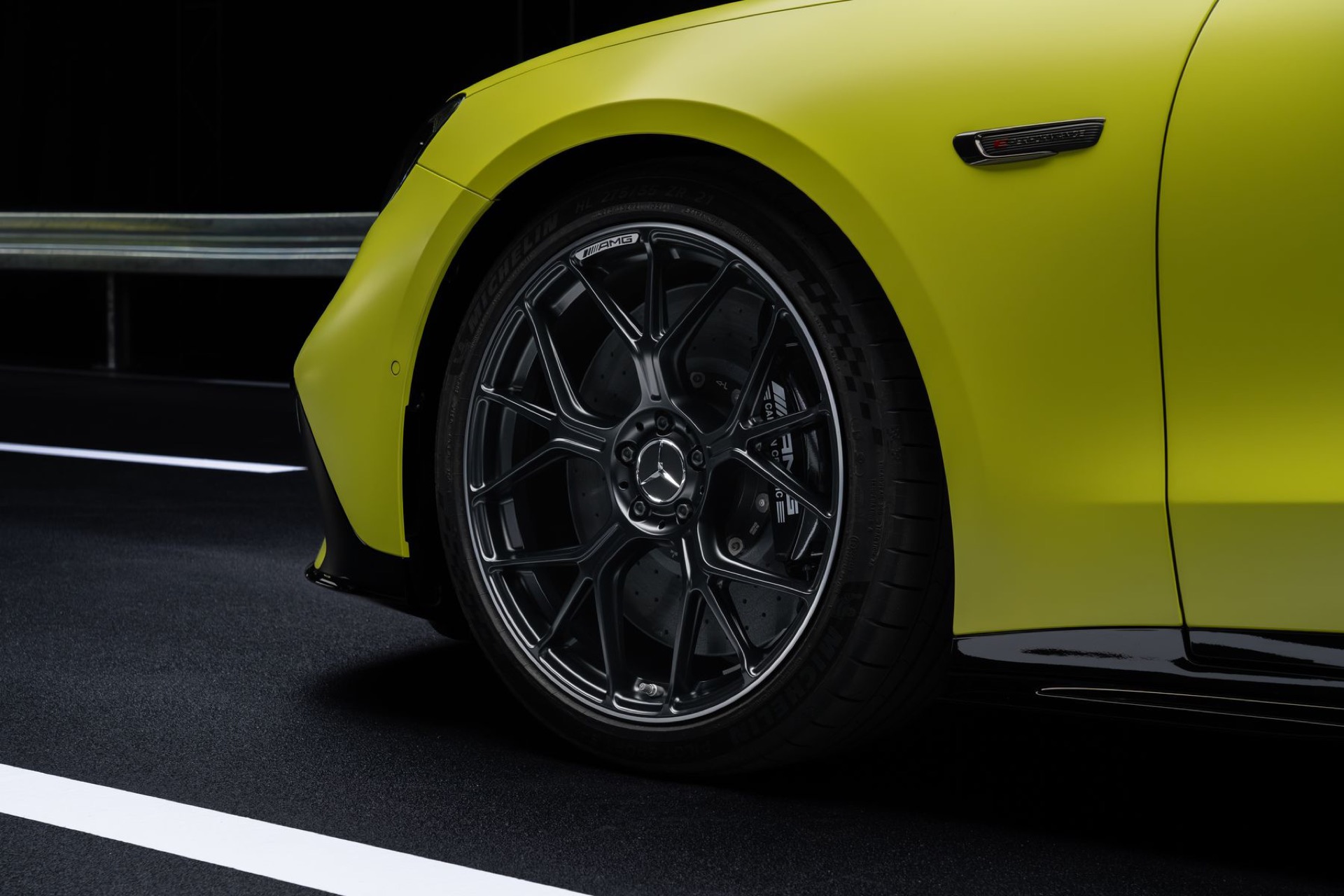
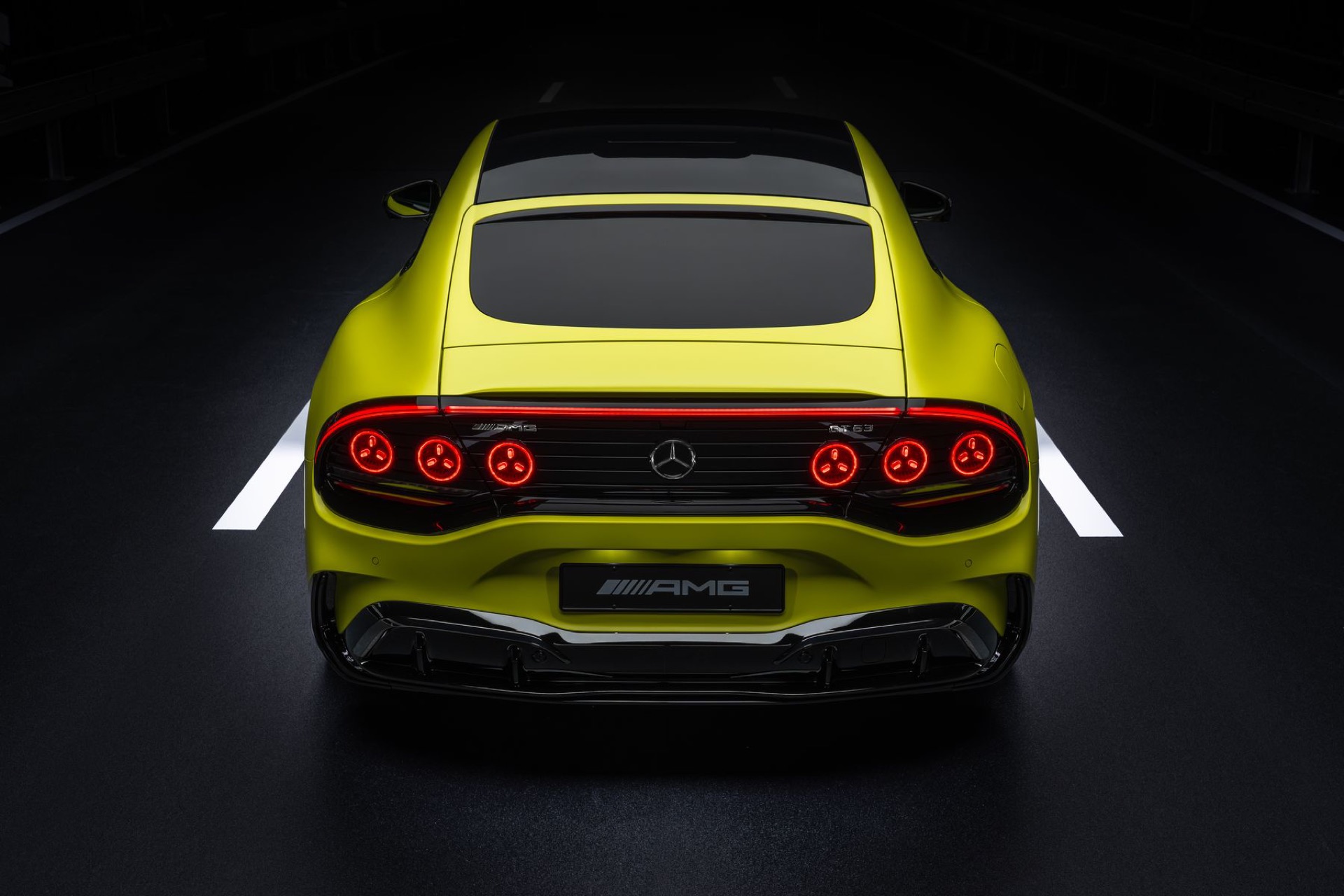
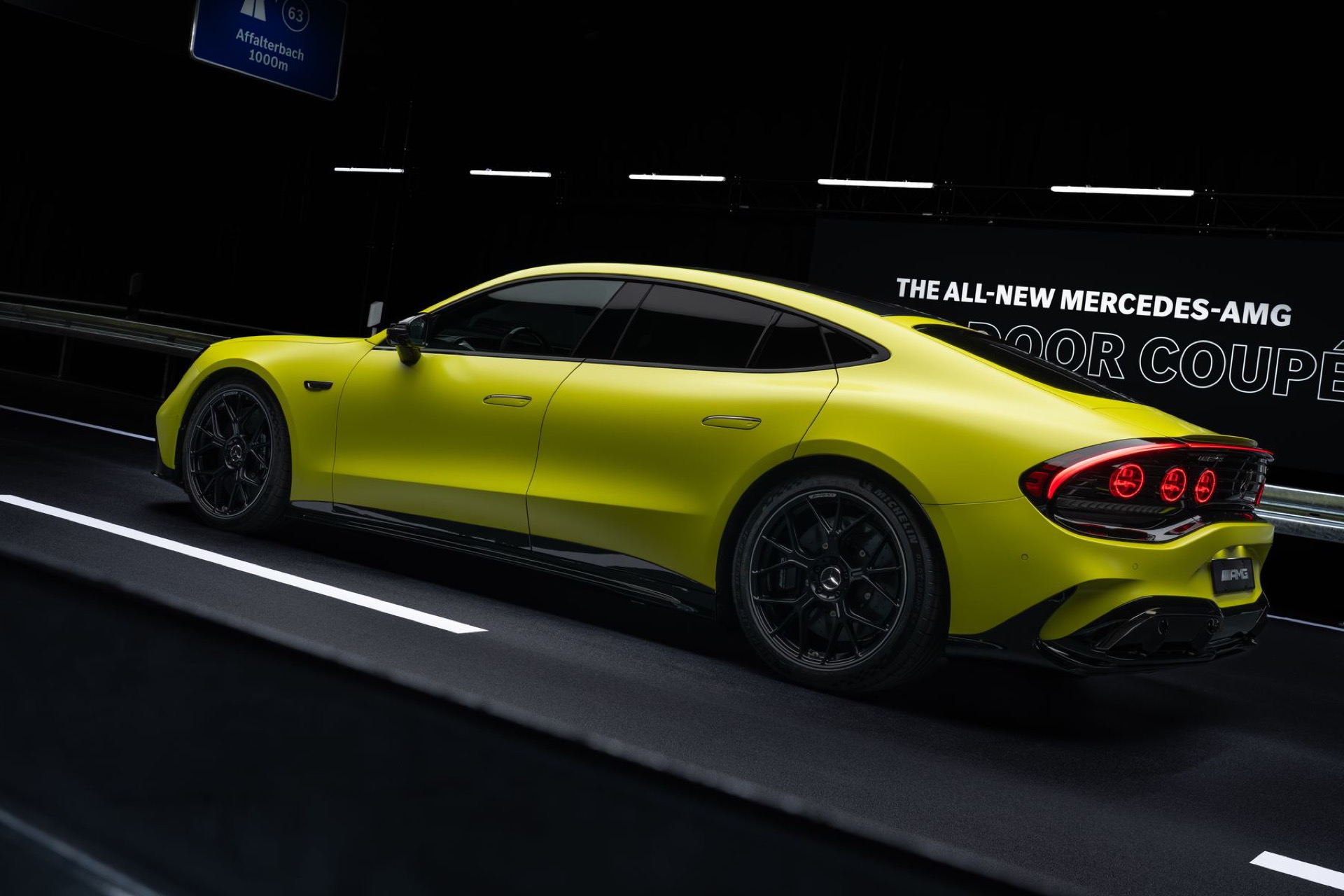
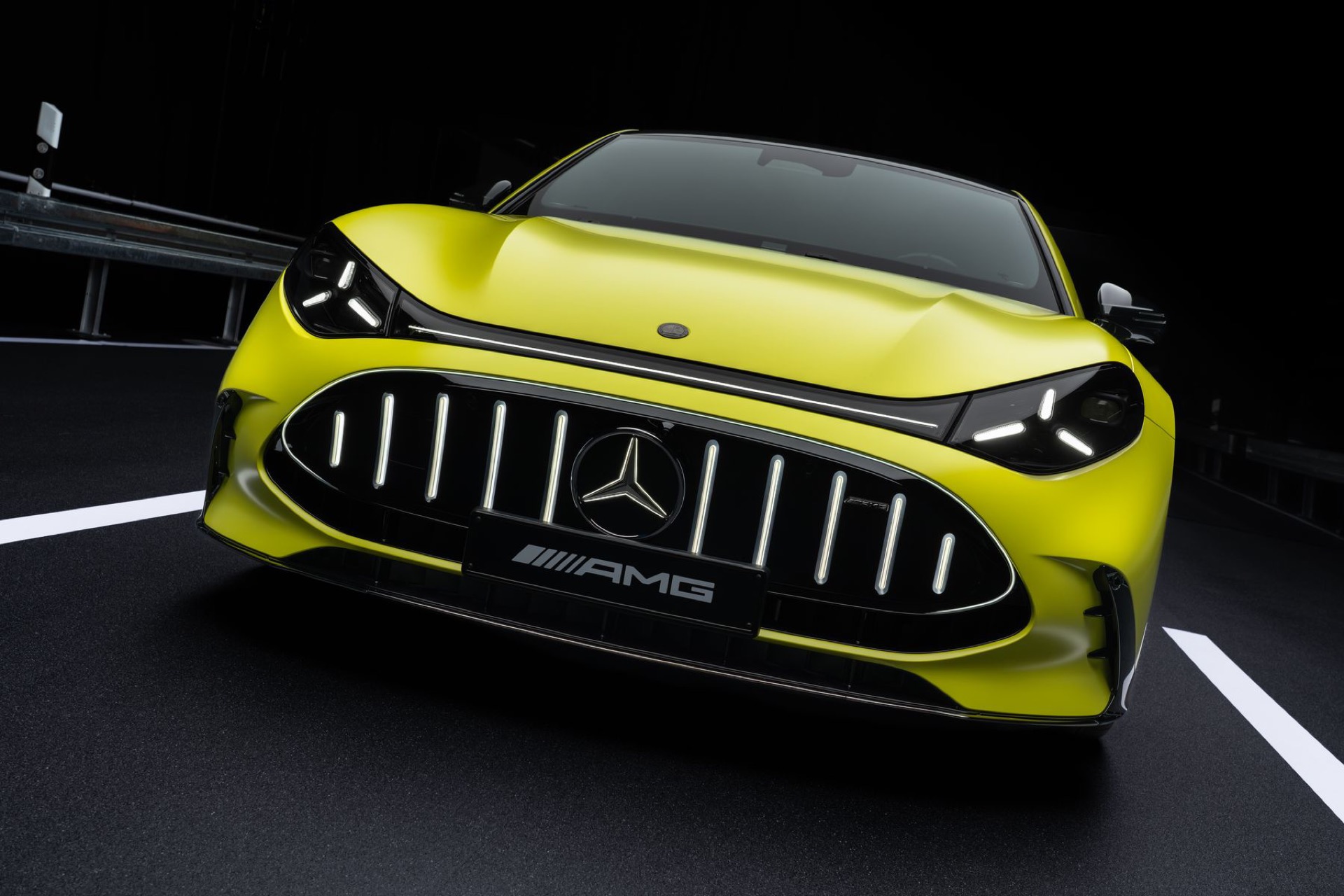


And it has little choice.
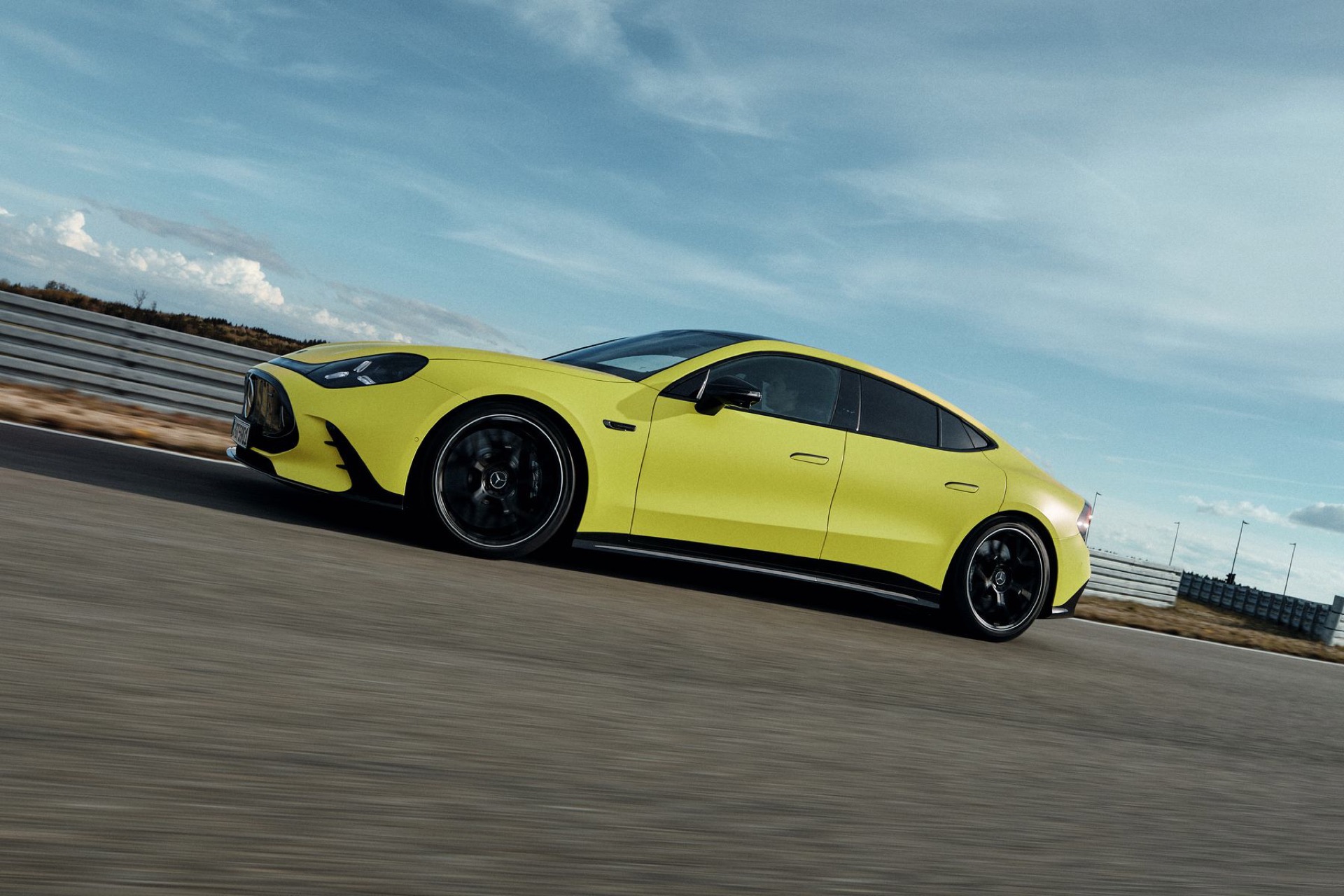
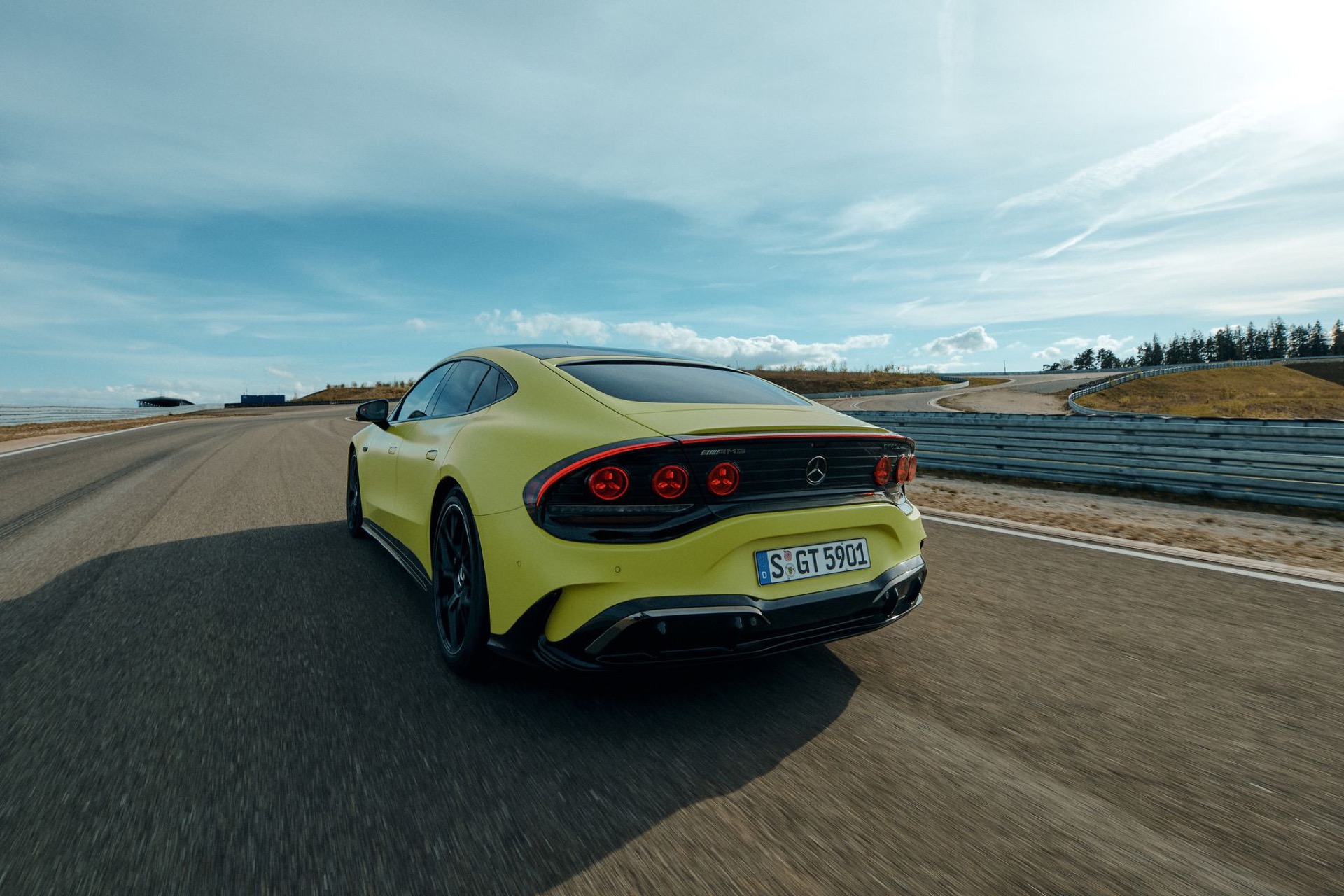
Porsche, Tesla, Audi and Xiaomi already occupy the high-performance EV space. Now AMG is responding with a four-door electric flagship offering aggressive styling and up to 860 kW / 1,169 PS. Not enough for outright EV power records perhaps, but still a formidable statement. More importantly, this is the first production car based on AMG’s all-new AMG.EA platform, making it a defining moment for the brand’s electric future.
Even Ola Källenius, who previously led AMG in Affalterbach, understands the significance. “The Mercedes-AMG GT 4-Door Coupe pushes performance boundaries and delivers the emotion our customers expect from AMG,” he explains.
Emotion, however, has traditionally meant loud combustion engines and brutal V8 character. AMG now hopes to recreate that appeal through advanced electric technology.
At the heart of the 5.04-metre saloon are axial-flux motors developed by British engineering company Yasa, now fully integrated into Mercedes-Benz. Unlike conventional radial-flux motors, axial-flux designs direct magnetic flow along the axis rather than outward from it. The result is a motor that is dramatically thinner, lighter and far more power-dense.
The front motor measures barely nine centimetres wide, while the two rear units are around eight centimetres thick each. The packaging benefits are enormous and underline AMG’s focus not simply on headline power, but on agility and chassis dynamics.
The entry-level GT 55 4MATIC+ develops 600 kW / 816 PS and 1,800 Nm of torque. Above it sits the GT 63 4MATIC+ with 860 kW / 1,169 PS and an outrageous 2,000 Nm.
To deploy that performance effectively, the three motors must work seamlessly together. At the rear, AMG combines two axial-flux motors with silicon-carbide inverters and a compact planetary gearbox. At the front, a separate motor includes a disconnect unit which disengages the front axle under light loads to reduce drag losses before reconnecting instantly when additional traction or performance is required.
The figures are predictably dramatic.
The GT 63 reaches 100 km/h in 2.4 seconds and 200 km/h in just 6.8 seconds. The GT 55 follows closely behind with 2.8 seconds to 100 km/h and 9.0 seconds to 200 km/h. With the optional Driver’s Package, both models reach 300 km/h.
Interestingly, AMG is emphasising sustained performance rather than single-launch headline numbers. The GT 63 can maintain full boost capability for up to 63 seconds, while the GT 55 manages 55 seconds. Additional temporary power boosts are available through steering wheel paddles, unlocking another 150 PS in the GT 63 and 68 PS in the GT 55.
The battery system is equally ambitious.
Capacity stands at 106 kWh, paired with an 800-volt electrical architecture. The battery contains 2,660 cylindrical cells across 18 modules, each individually cooled by electrically non-conductive oil. Mercedes claims cooling performance of at least 20 kW, significantly beyond most current systems.
Cell chemistry includes NCMA cathodes, silicon-rich anodes and aluminium casings designed to improve thermal management and charging consistency. Despite the huge outputs, AMG claims WLTP range figures approaching 700 kilometres with energy consumption between 17.9 and 21 kWh/100 km.
The previously discussed one-megawatt charging capability remains absent for now, but charging speeds still reach an impressive 600 kW. Mercedes says the battery can recharge from 10 to 80 percent in around 11 minutes.
To manage its considerable 2.5-tonne mass, the AMG GT uses a highly advanced chassis setup. The car features air suspension with semi-active roll stabilisation, hydraulically linked dampers and multi-stage air springs. Aerodynamics are equally sophisticated, with active Venturi elements beneath the floor, active rear spoiler systems and adaptive front air panels all working together to generate downforce.
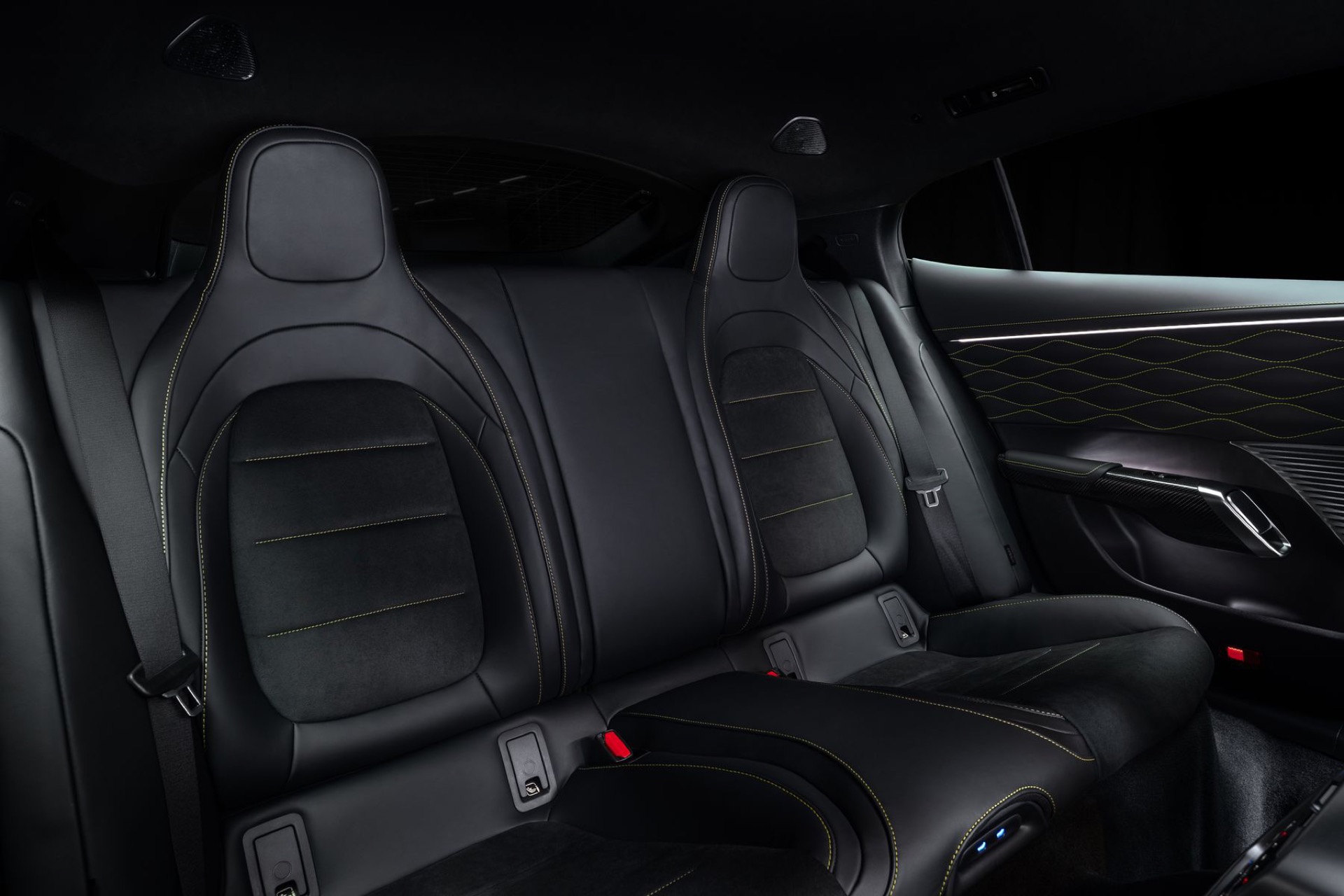
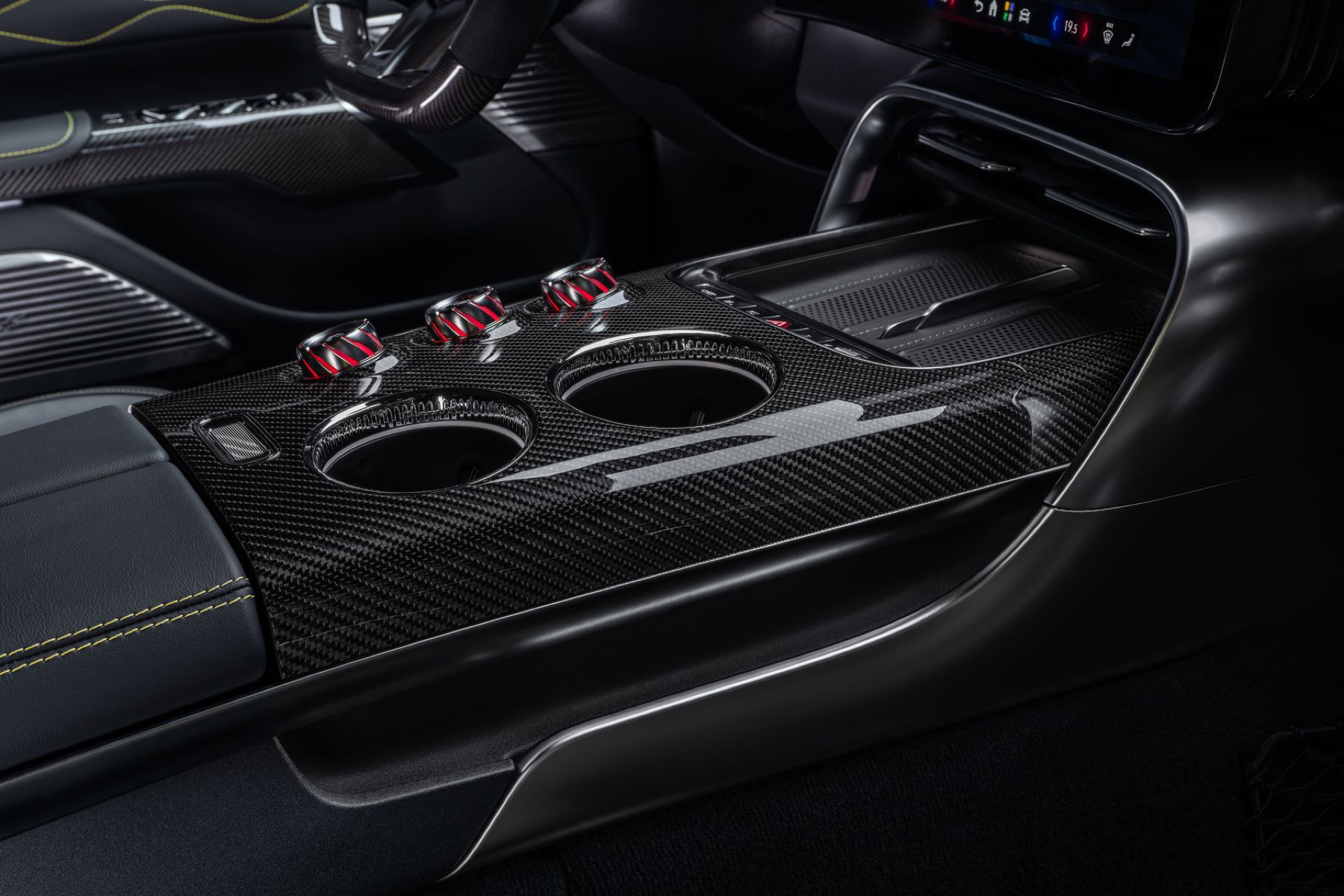
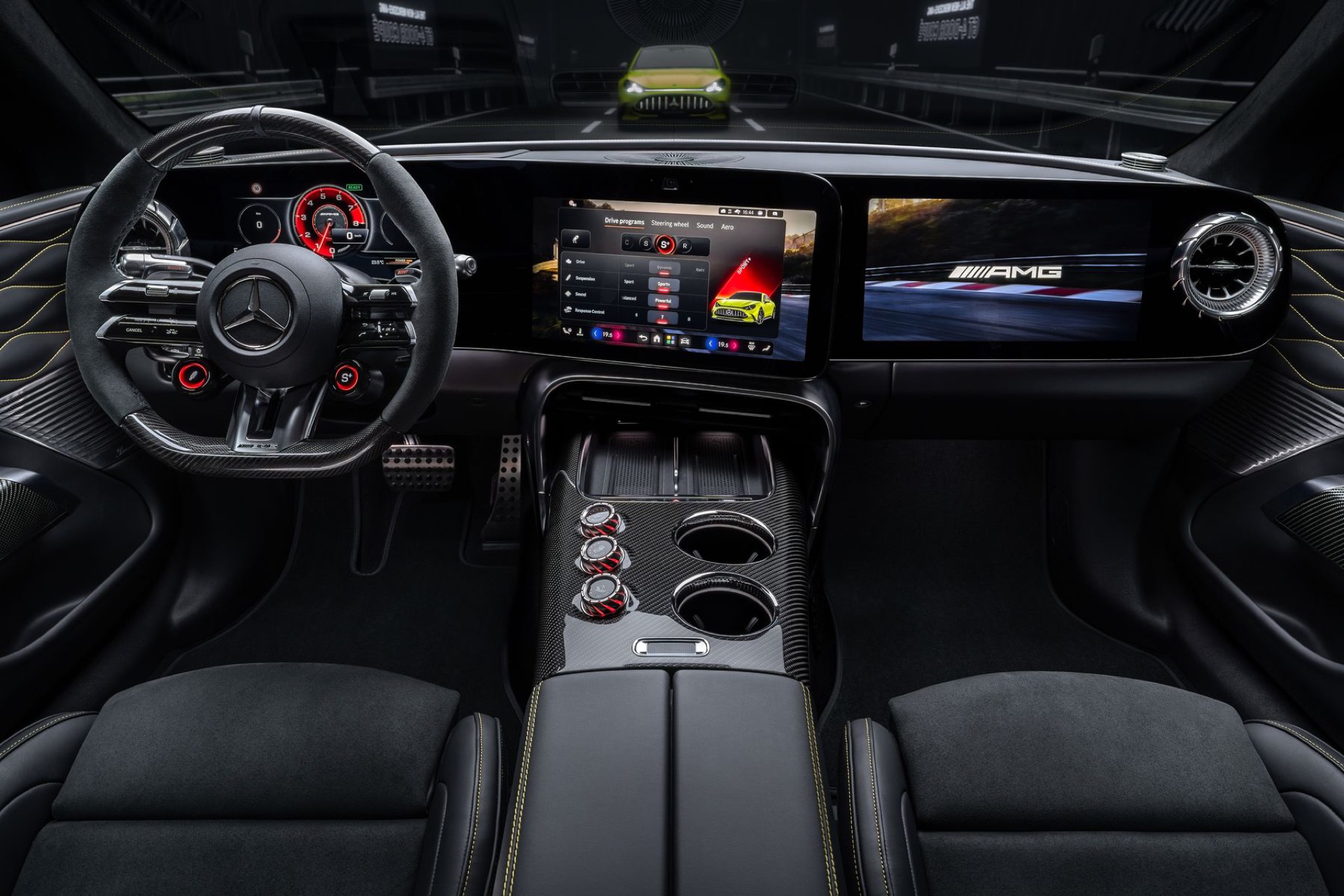
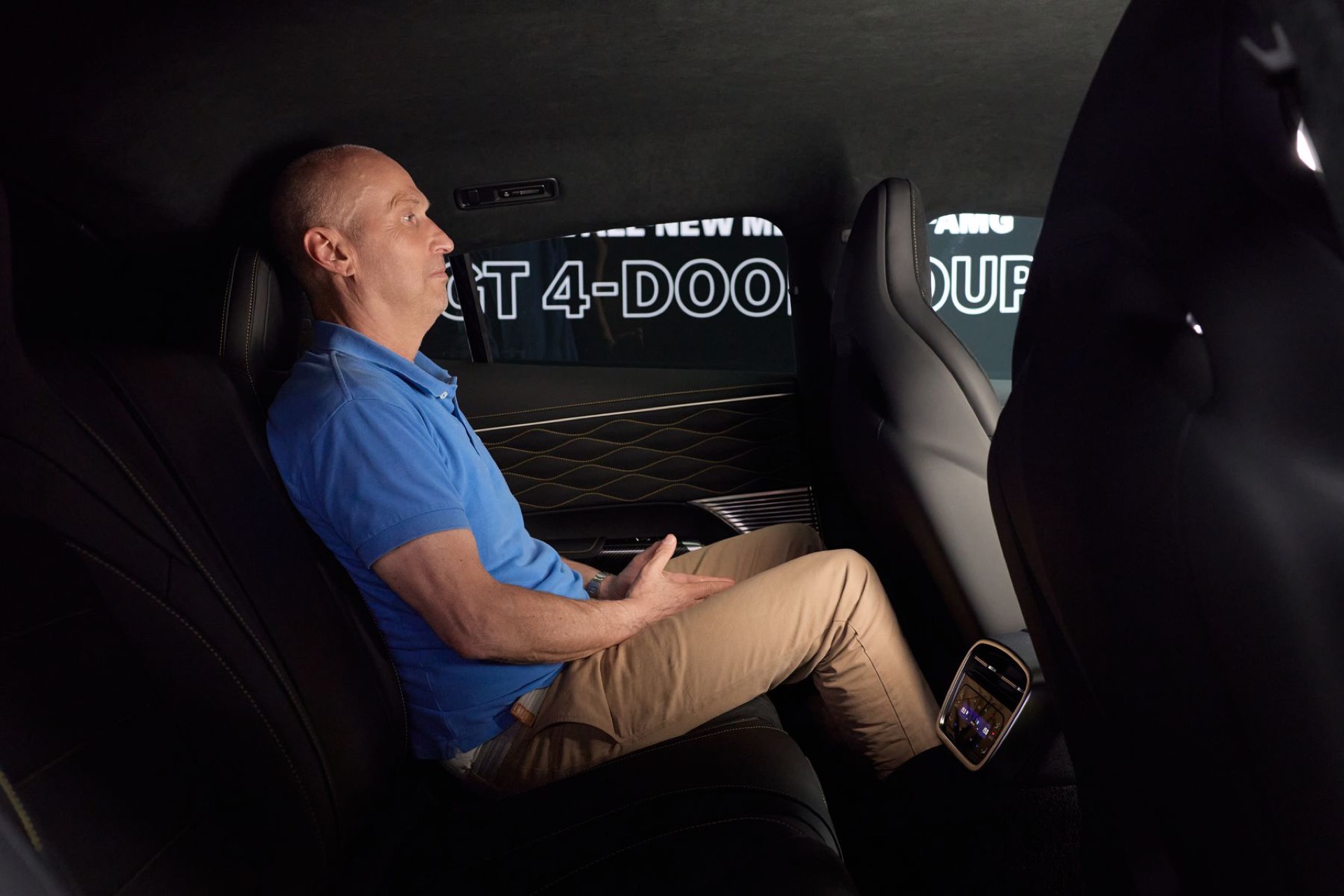
Inside, the cabin adopts a heavily digital, driver-focused approach. A 10.2-inch instrument cluster merges visually with a 14.0-inch central display, while a matching passenger screen is optional. The new MB.OS software platform integrates AI systems including OpenAI ChatGPT, Microsoft Bing and Google Gemini.
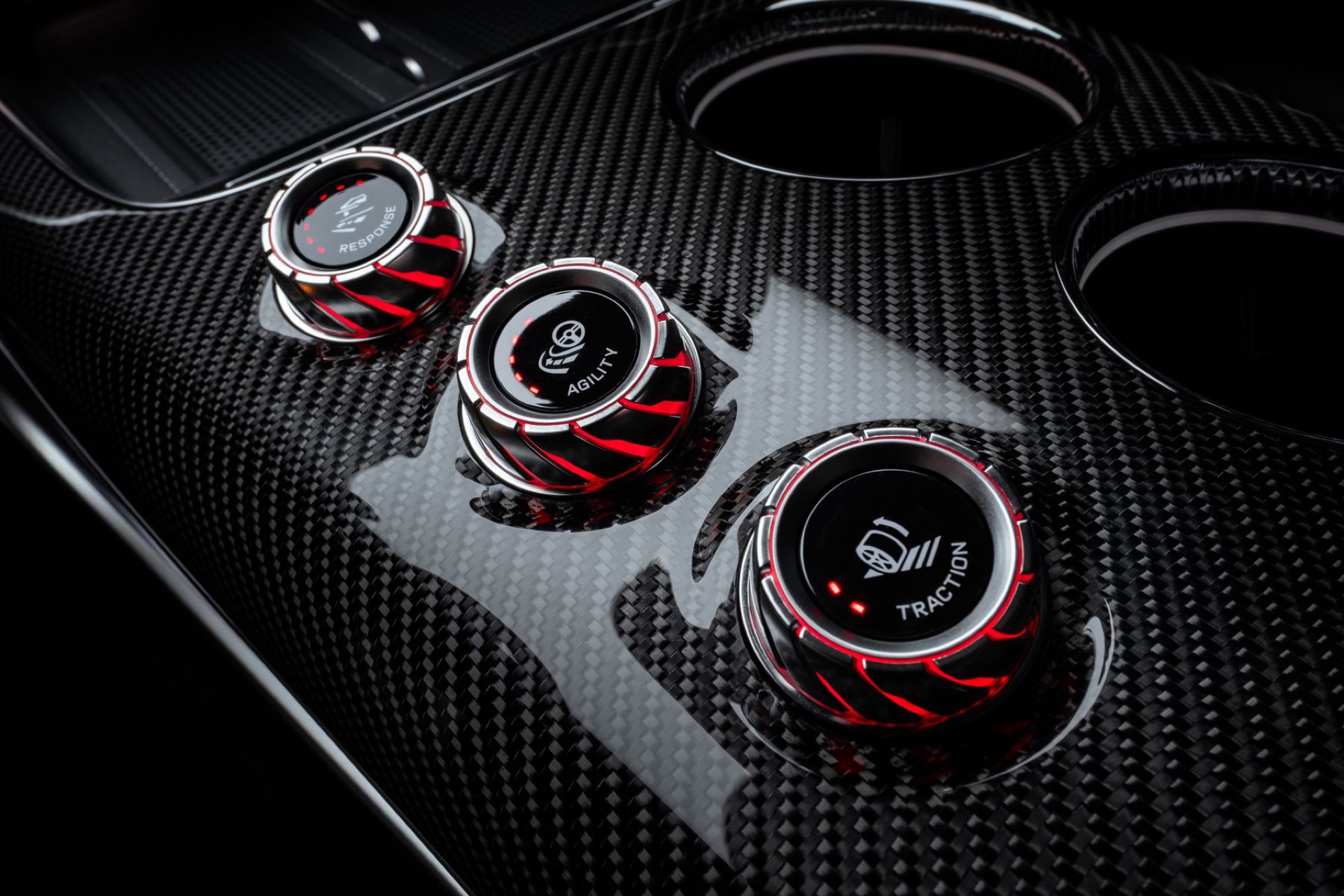
To inject some traditional AMG drama, the AMG FORCE S+ mode simulates V8 acoustics and artificial shift interruptions under acceleration. Whether enthusiasts embrace the digital theatre remains to be seen, but AMG clearly understands that emotion matters just as much as raw numbers.
Pricing is expected to mirror the outgoing combustion-powered AMG GT four-door range. The GT 55 4MATIC+ is likely to begin around €160,000, while the GT 63 4MATIC+ could approach €190,000.