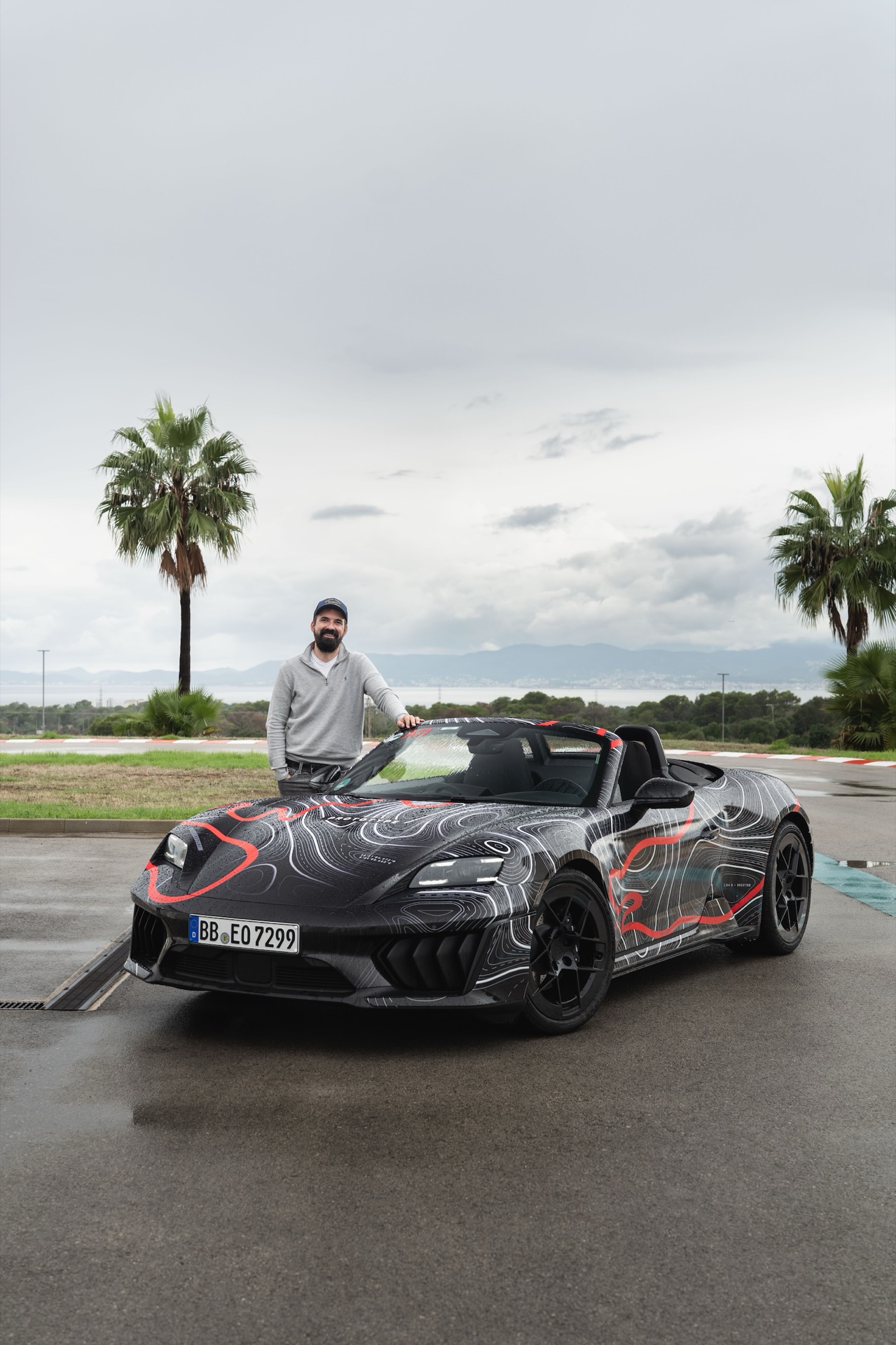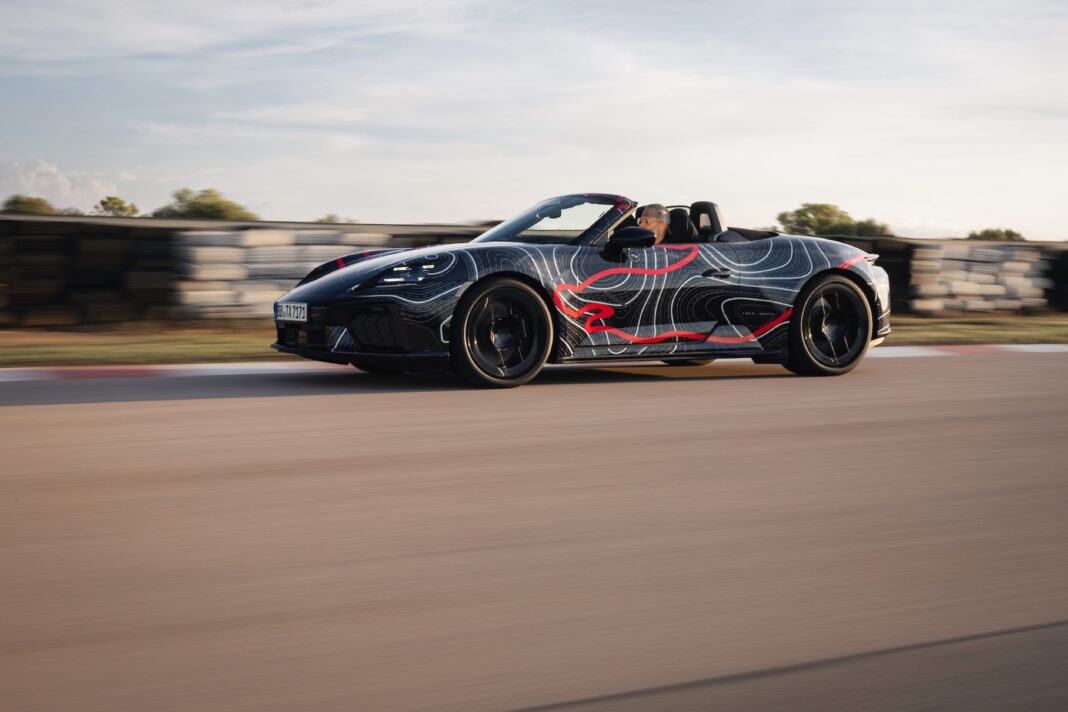
Could even the most devoted Porsche traditionalists struggle to distinguish this electric prototype from a genuine flat-six when it comes charging down a deserted mountain pass? We joined Porsche’s engineers for a development drive in the new electric Boxster, and the results were quite a surprise.
The automotive world seems increasingly destined to disappear into a sea of soulless electric vehicles, silently accelerating with little sense of character or occasion. Even the Porsche Boxster, one of the purest expressions of open-top driving pleasure, is preparing to abandon petrol in favour of electricity. Unsurprisingly, there has been considerable nervousness in Weissach about such a fundamental transformation. Yet the prototype sweeps those concerns aside with an unexpectedly broad grin.
Anyone fearing that Porsche might deliver another emotionless, two-and-a-half-tonne electric heavyweight, capable of rearranging your internal organs under acceleration but offering little else, can breathe a sigh of relief. The electric Boxster certainly delivers enormous acceleration, but thankfully avoids the excessive and often uncontrollable brutality that makes so many modern electric performance cars feel rather pointless. Instead, Porsche has concentrated on precisely metered power delivery, predictable responses and maximum driver involvement.
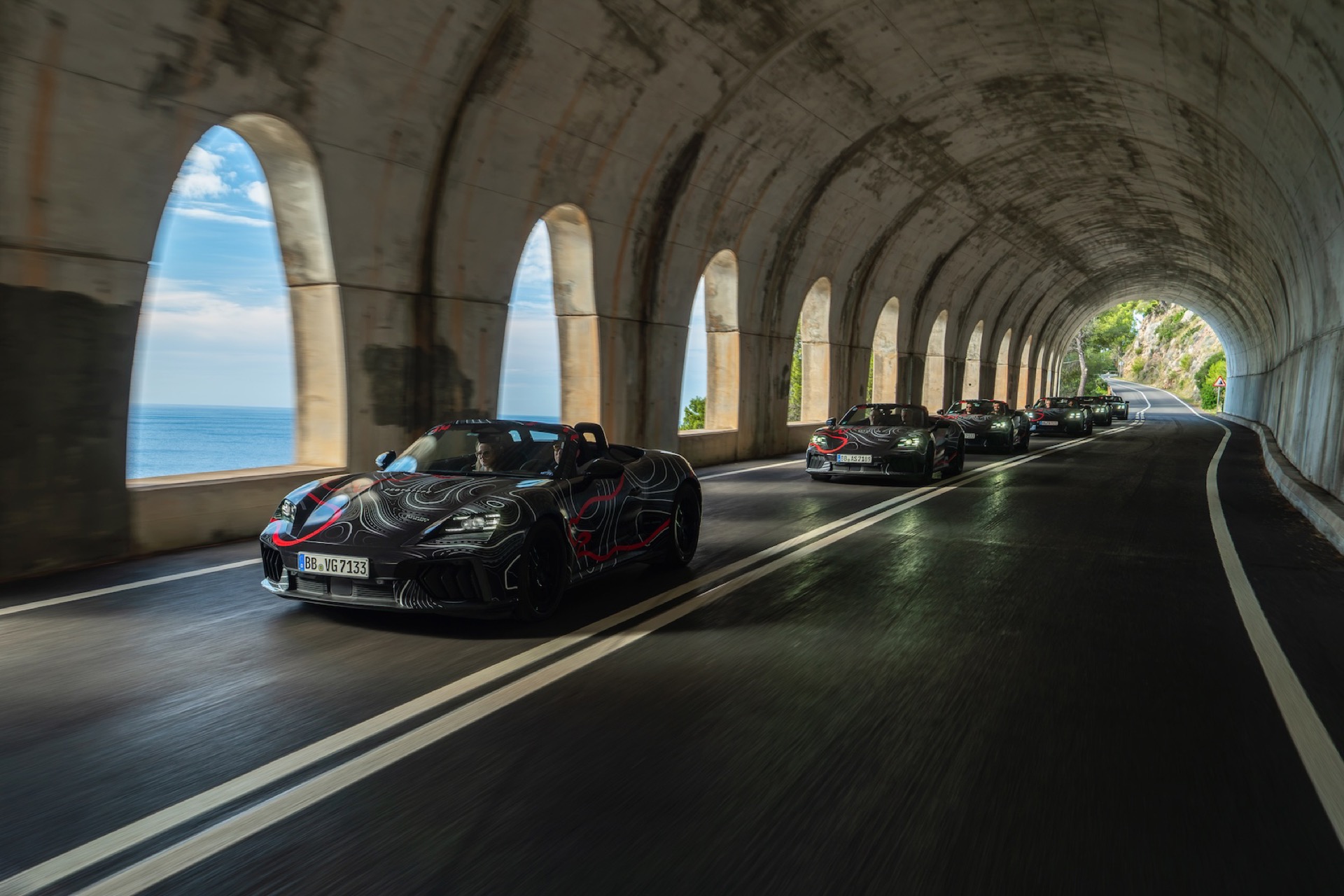
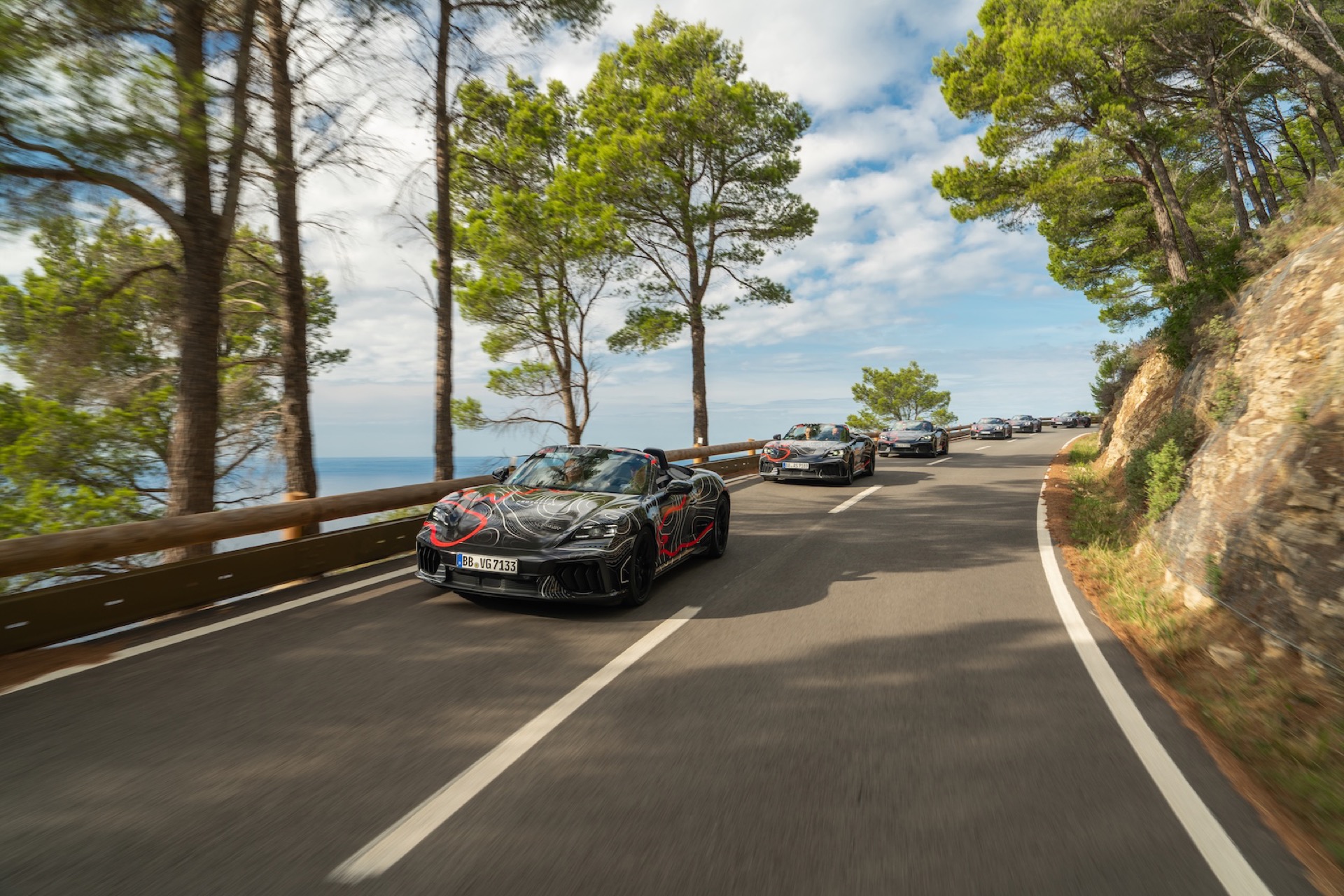
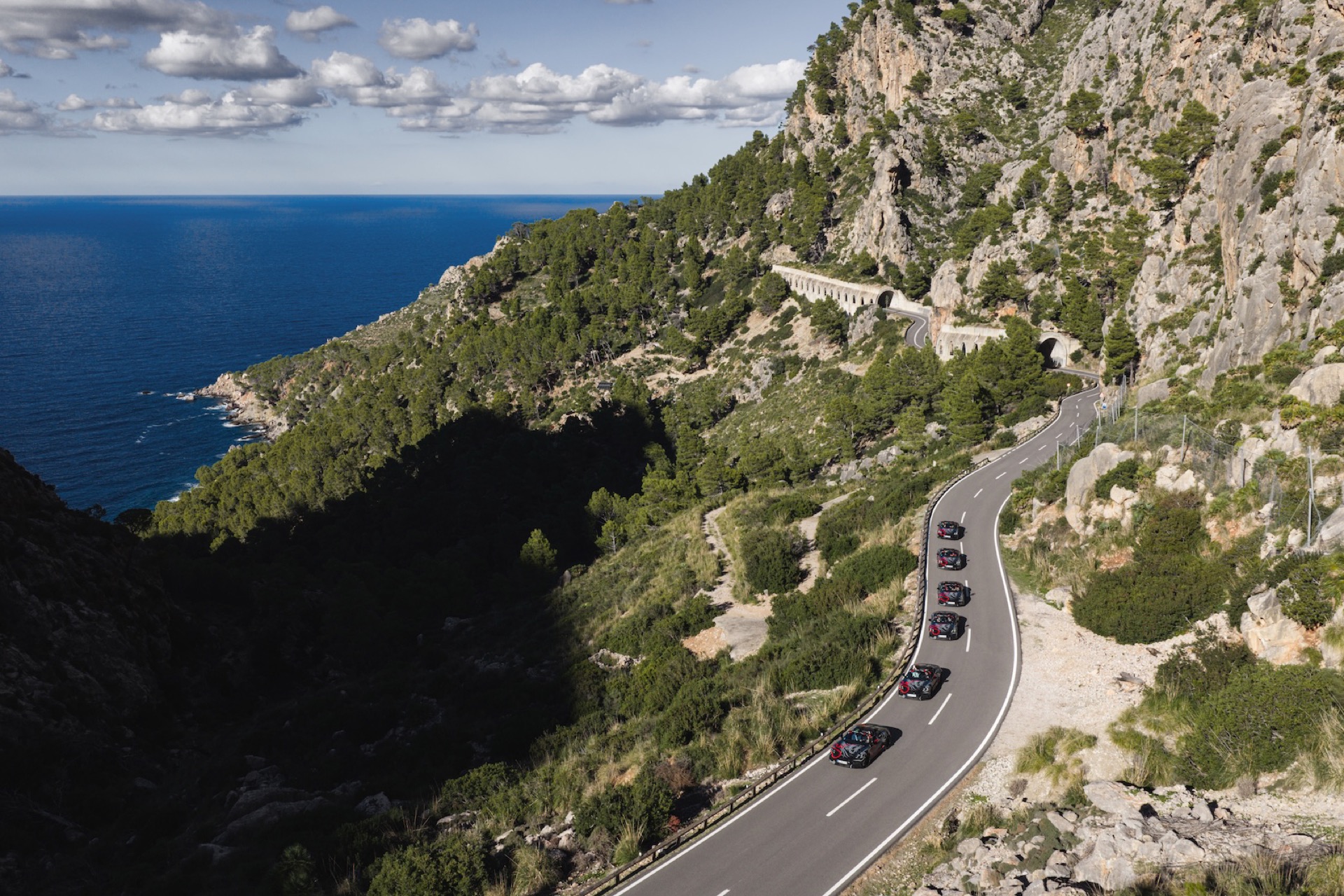
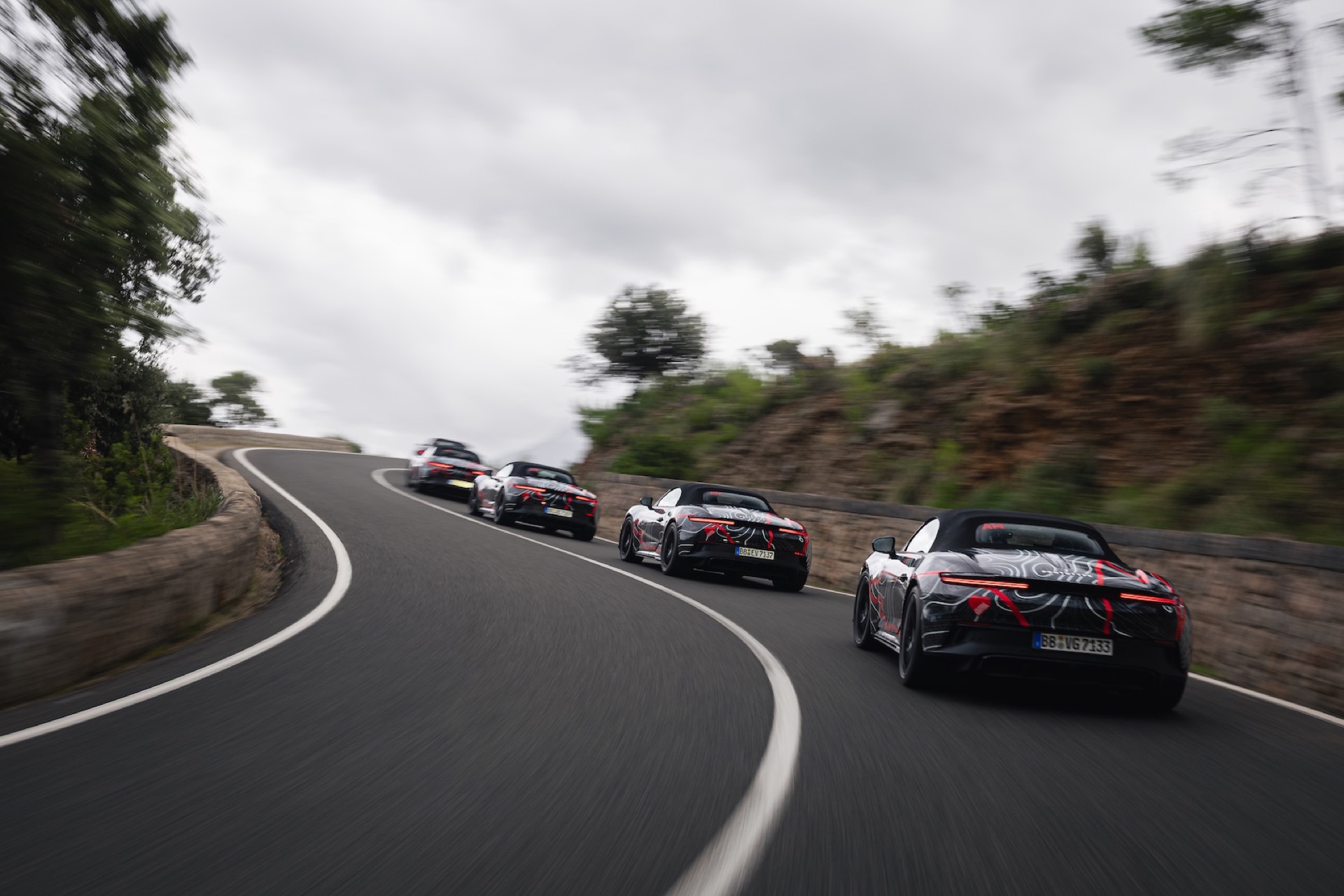
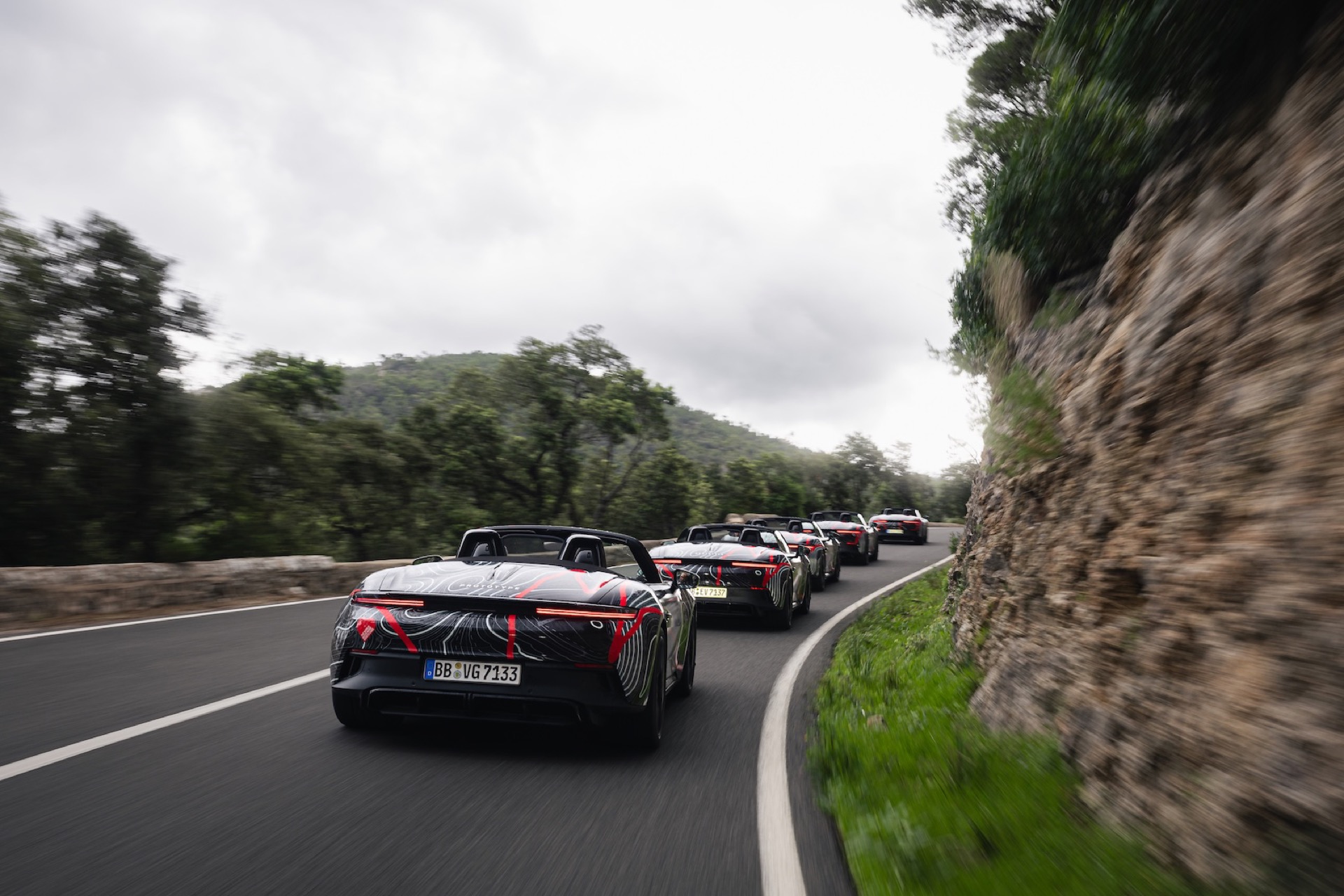
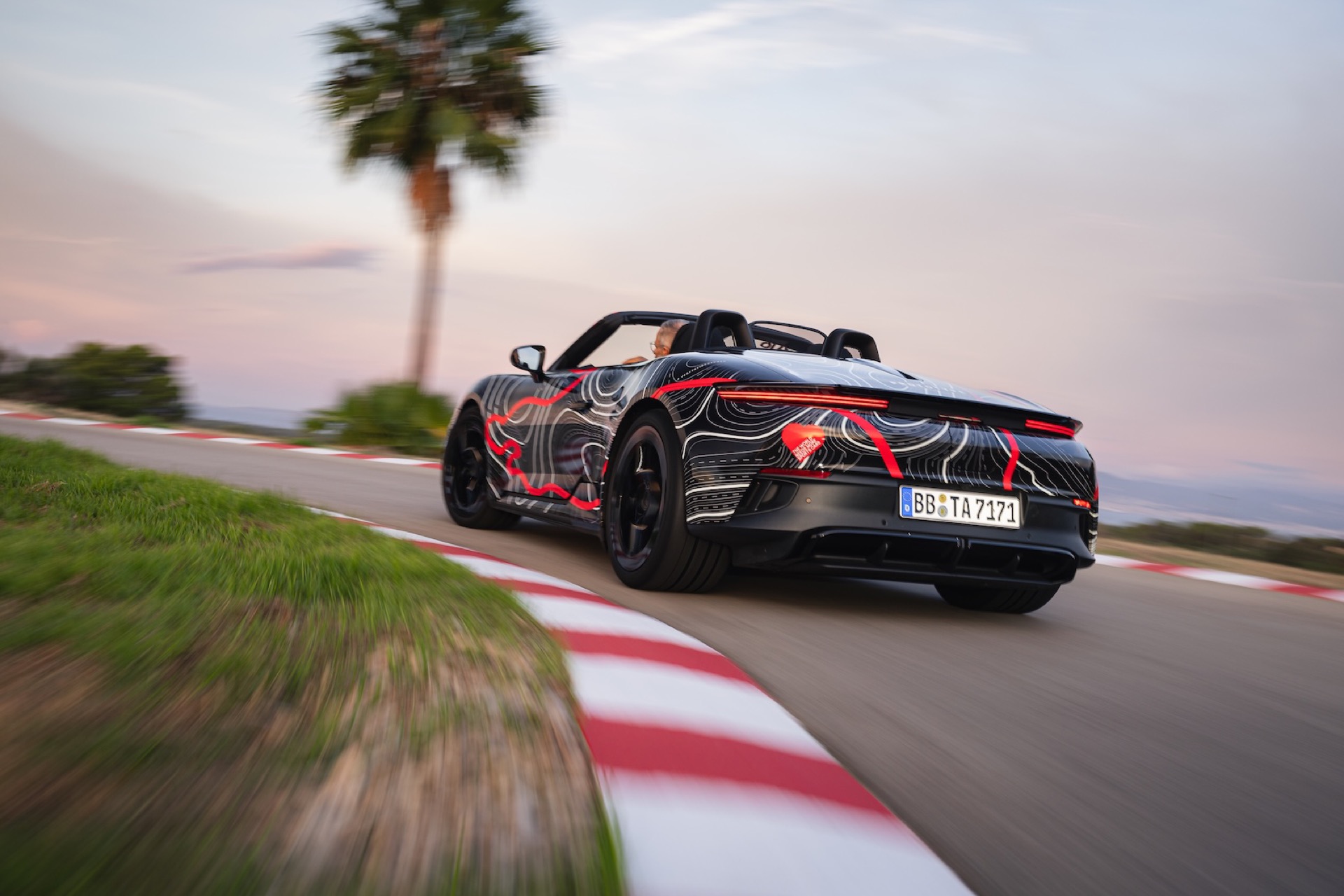
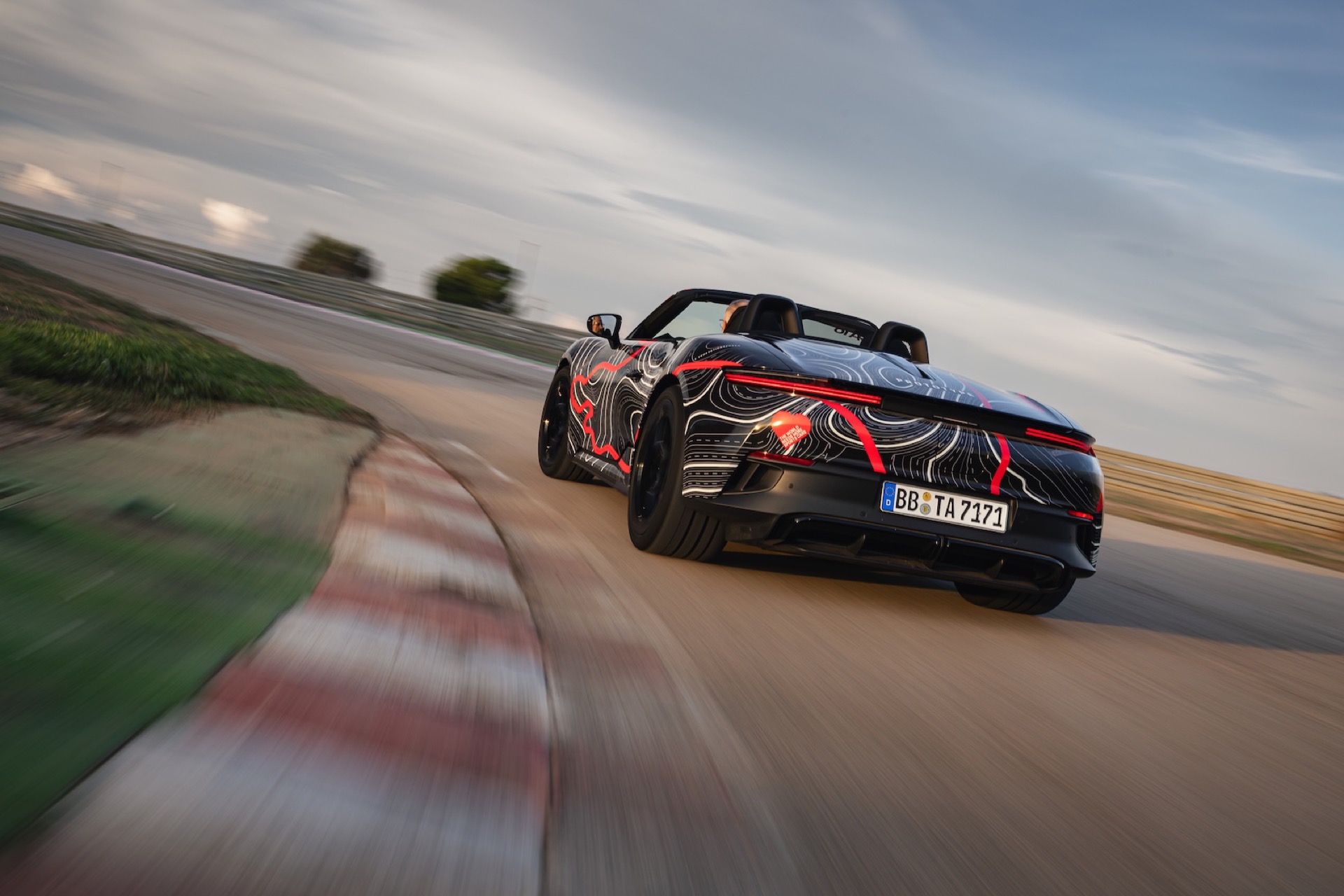
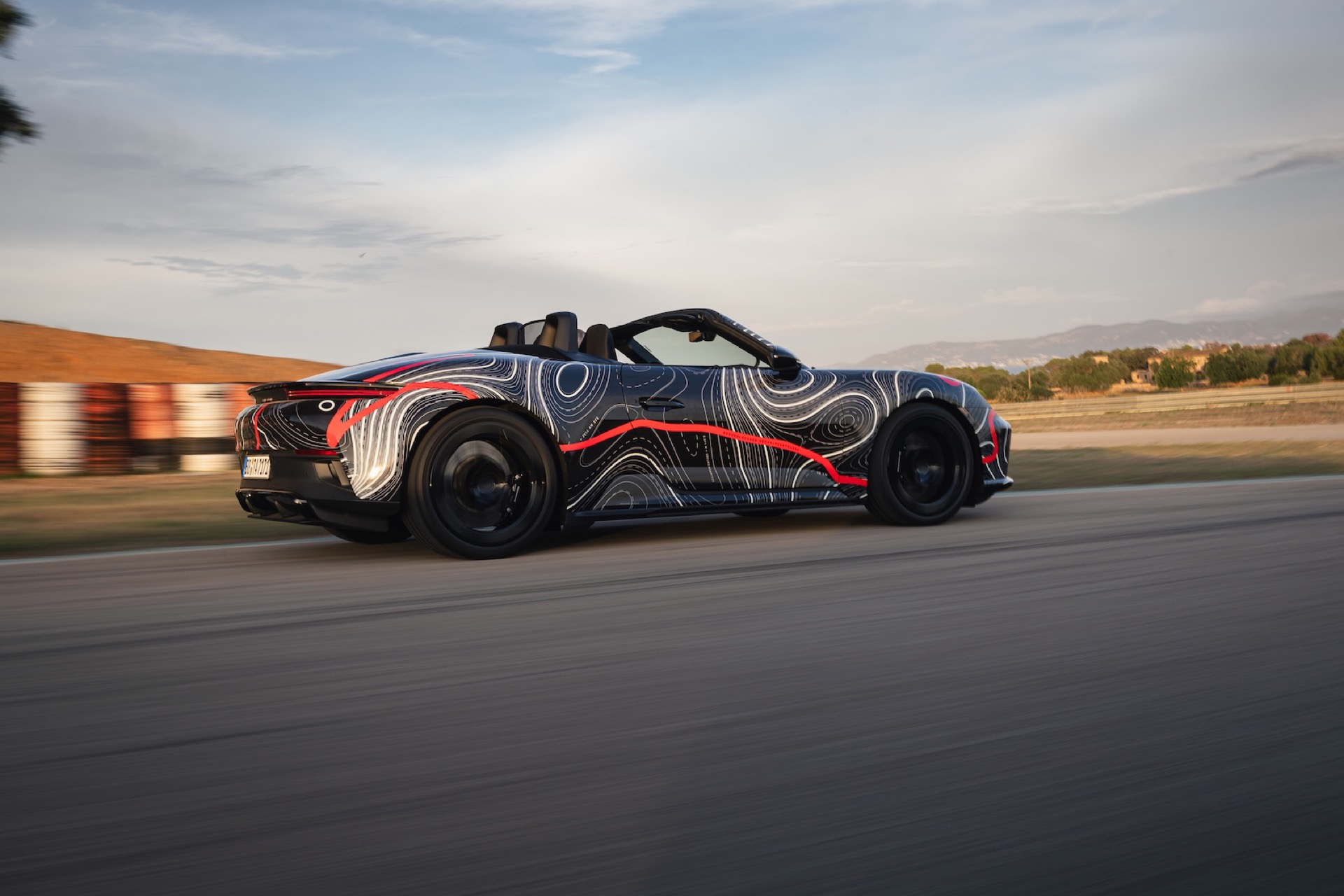
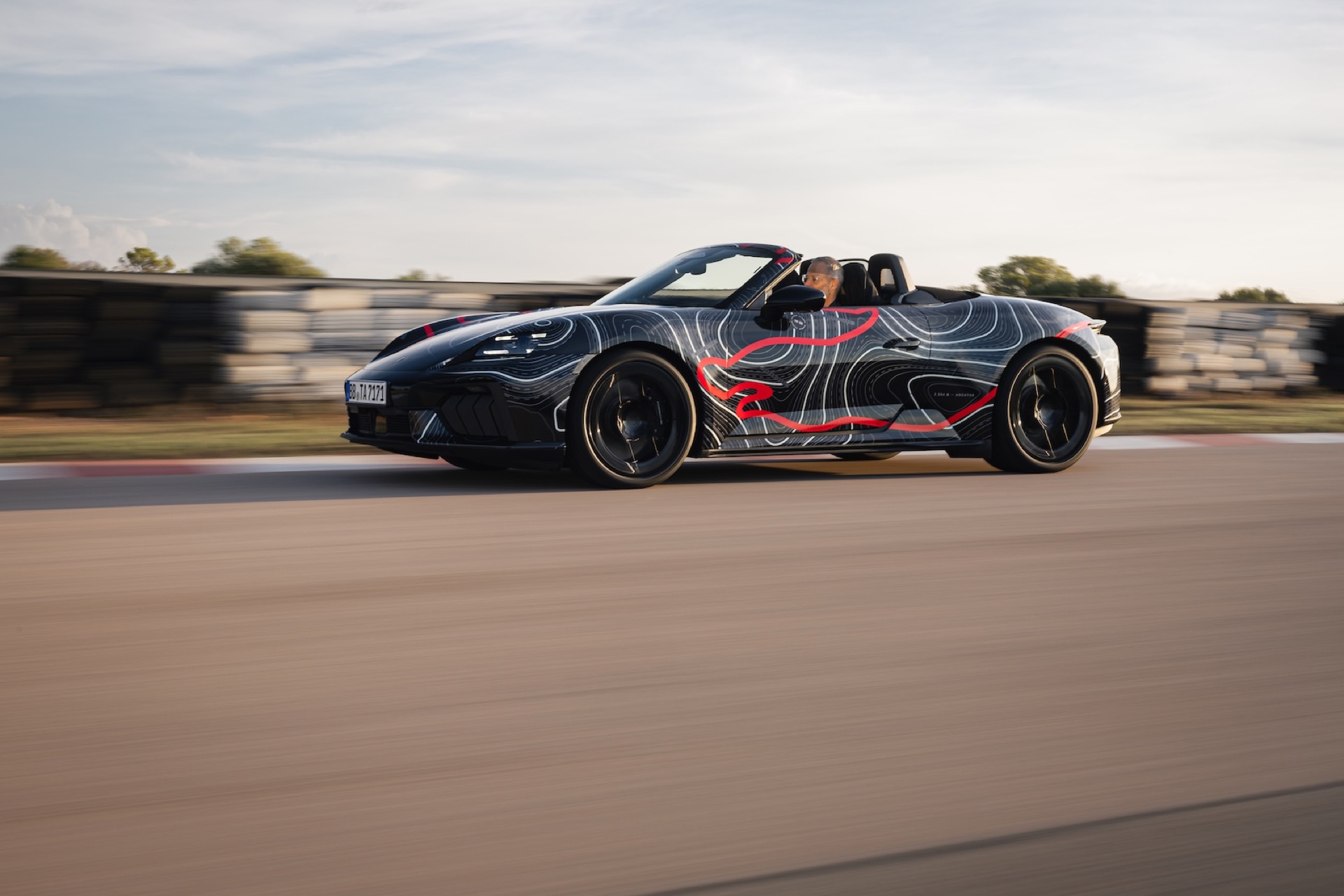
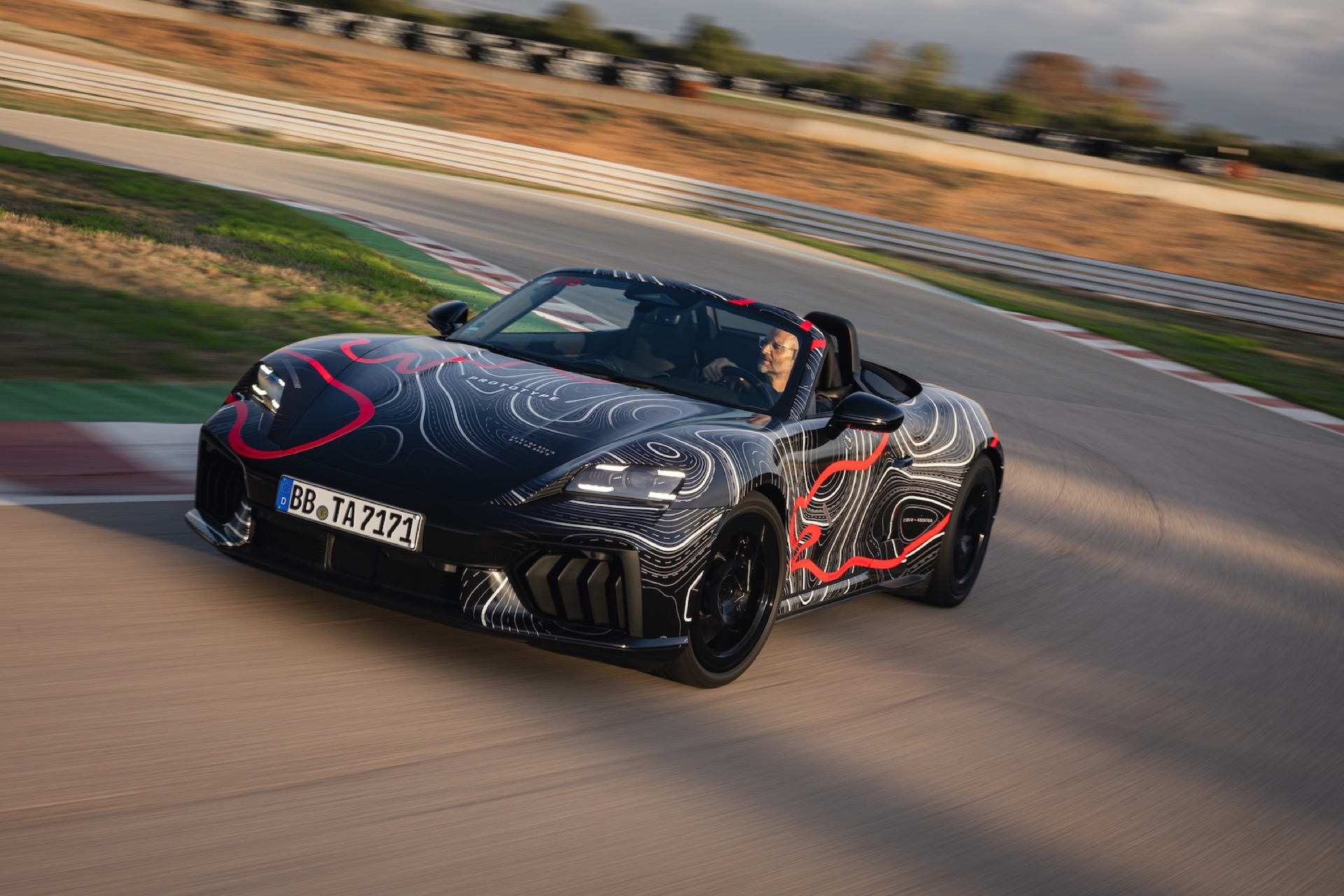
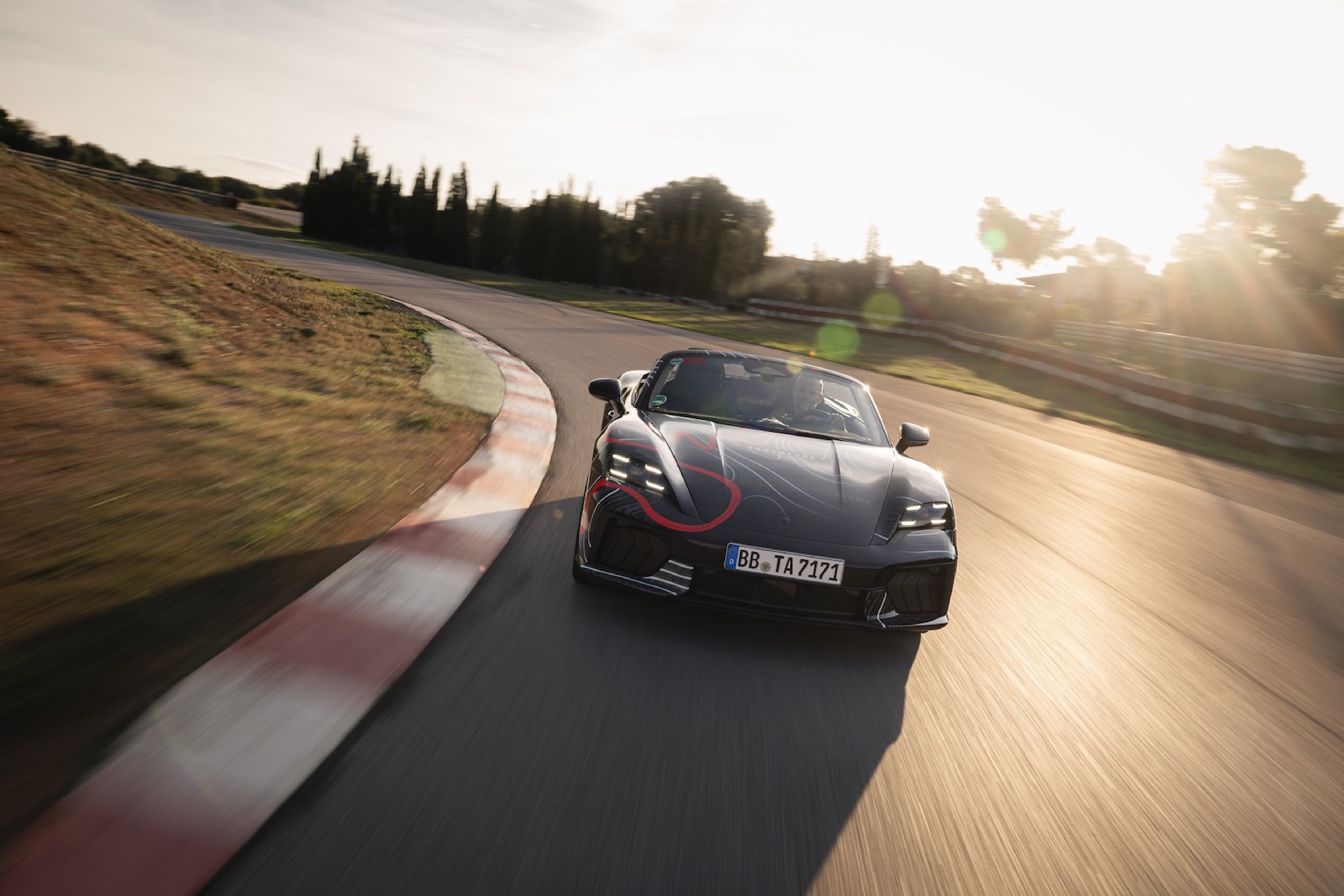
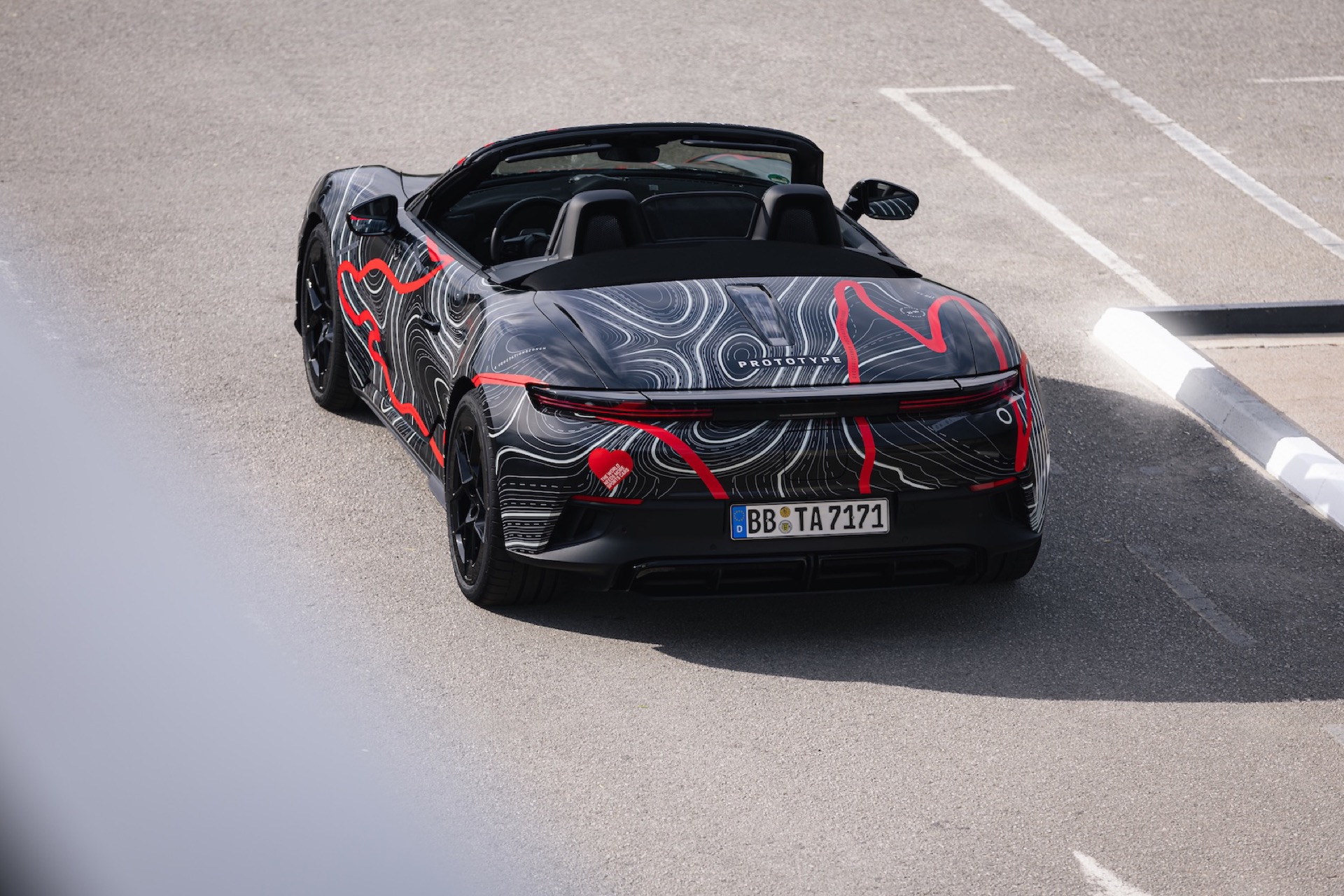
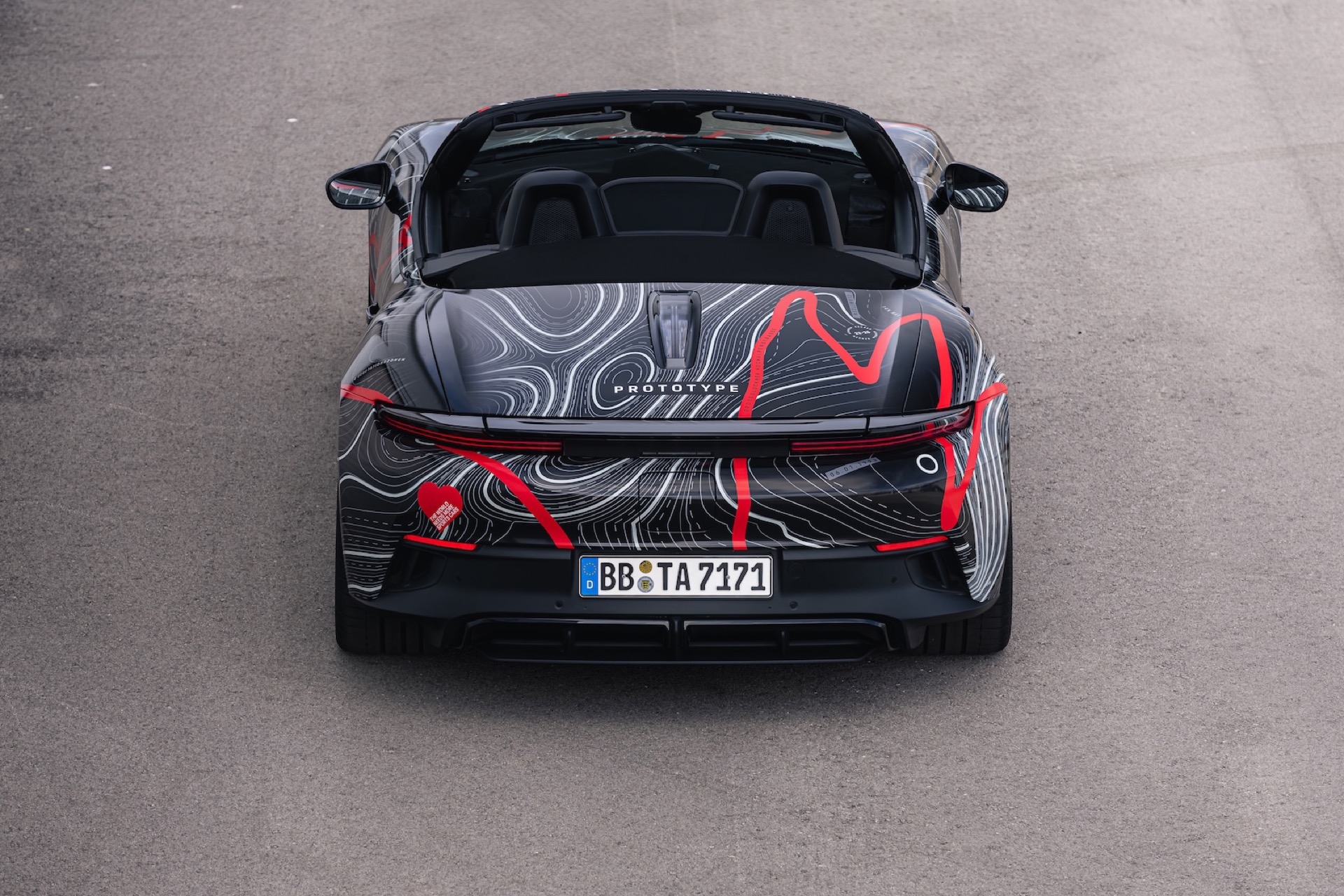
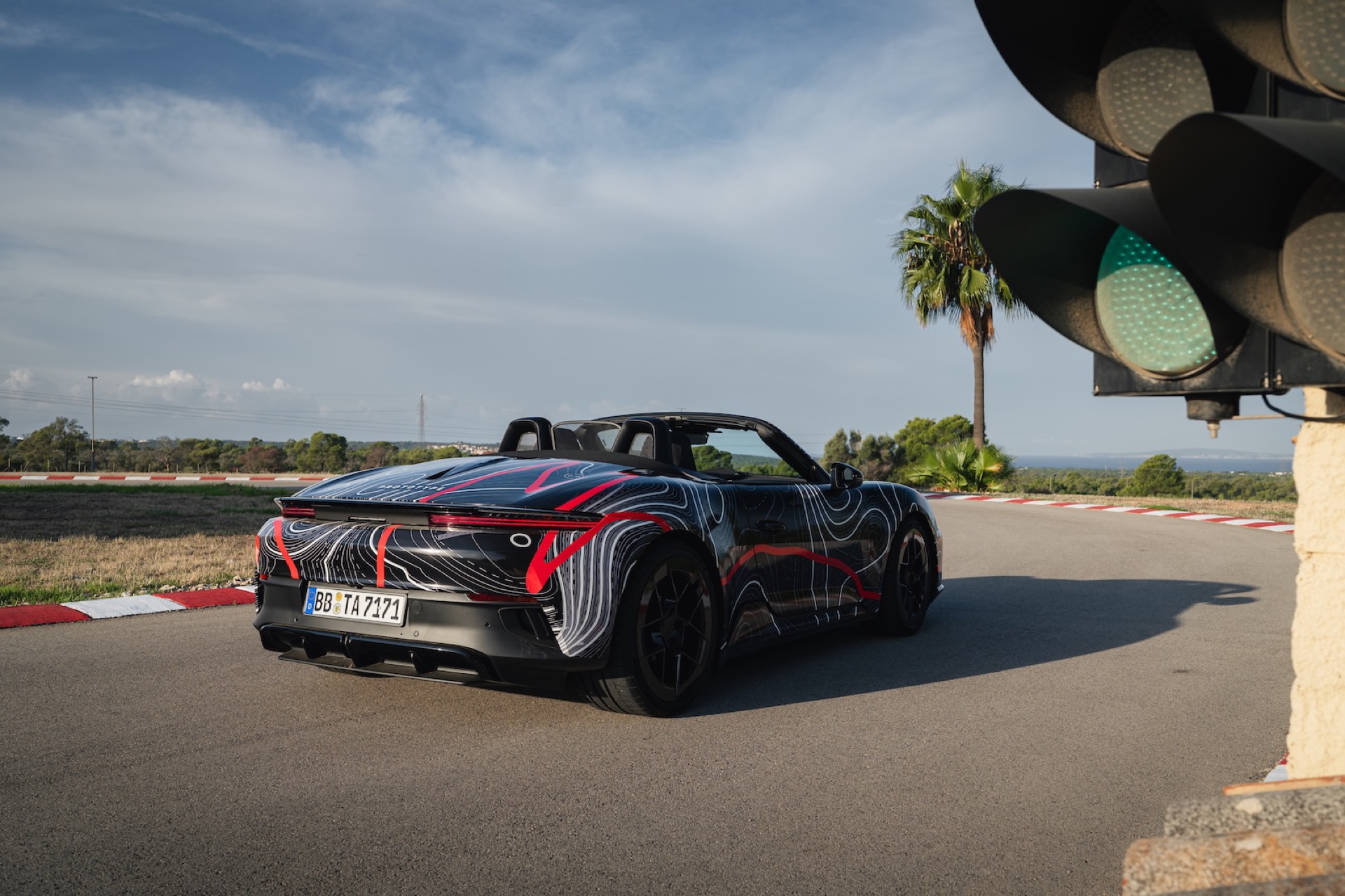
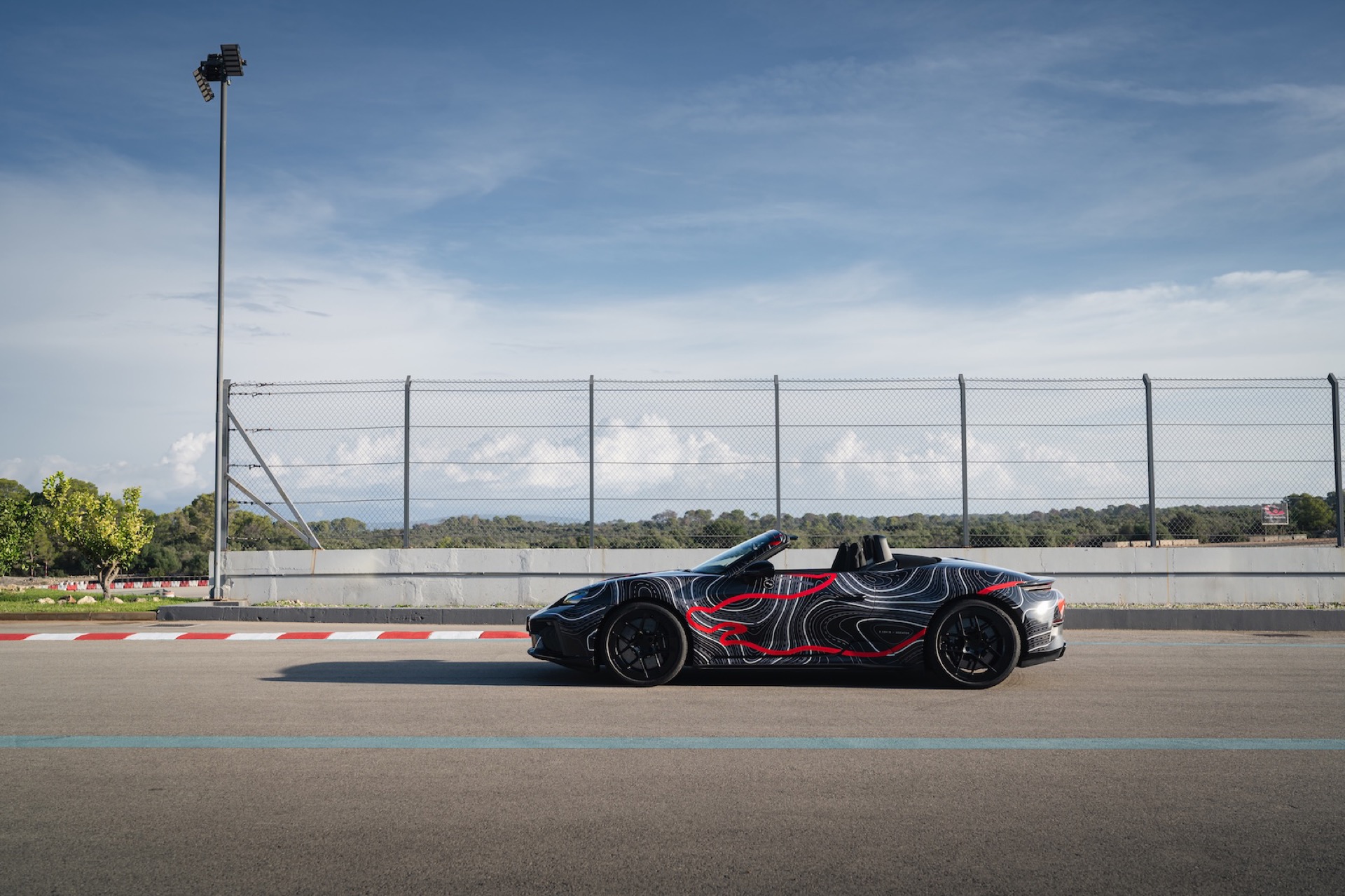
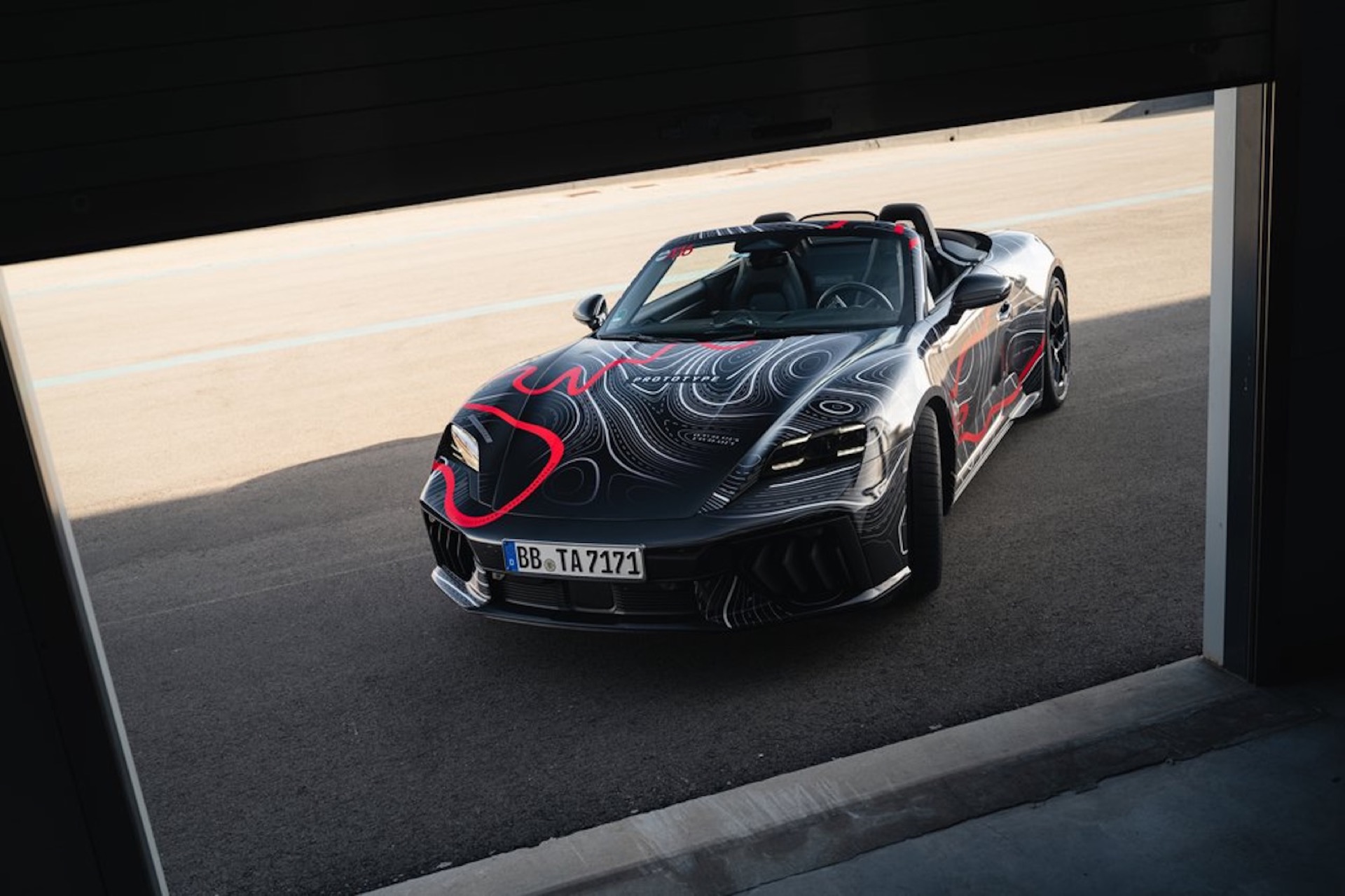
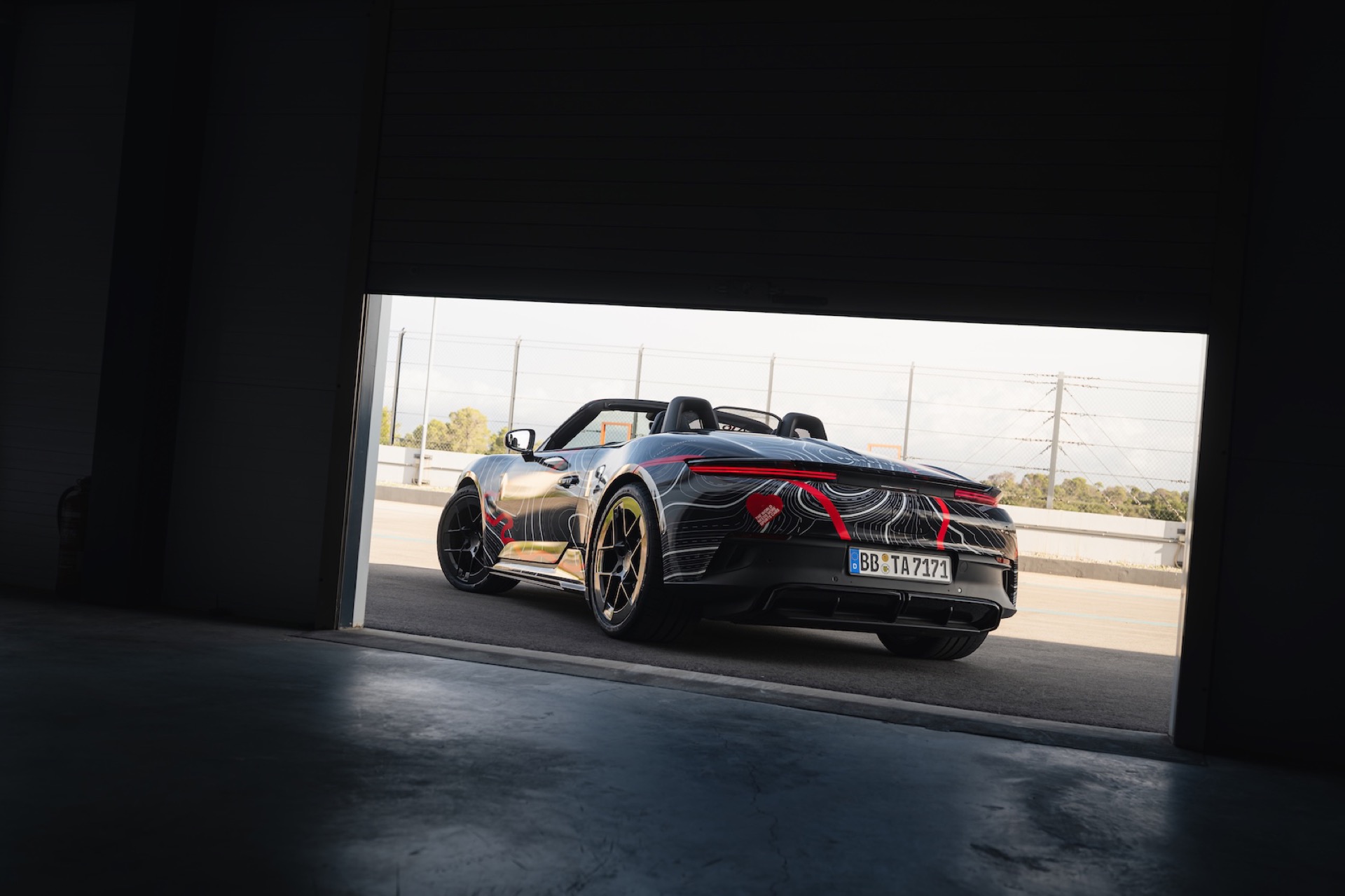
The engineers are not yet revealing the car’s kerb weight, although conversations suggest it will be broadly comparable with a conventional 911, putting it somewhere around 1.8 tonnes. That would certainly fit with the performance of the range-topping prototype we drove. Its acceleration feels remarkably similar to that of the outgoing four-litre Boxster models, suggesting an output approaching 500 PS. The real engineering achievement, however, lies beneath the bodywork.
Porsche’s engineers have made extensive use of the 911 parts catalogue when developing the electric Boxster. The new roadster borrows the basic front and rear axle architecture from its larger sibling, along with the steering and braking systems of the 911 Carrera GTS. Rear-wheel steering, fitted to the smaller roadster for the first time, combines with a battery mounted low behind the occupants to produce a car that feels extraordinarily agile through tight corners. On a twisting mountain road, the electric Boxster changes direction with an immediacy and precision that makes it feel wonderfully compact, without the cumbersome behaviour associated with many heavy electric performance cars.
Of course, even the finest chassis can feel rather lifeless if the driving experience lacks an emotional connection. This is where Porsche’s engineers have introduced perhaps the most fascinating feature of the entire car: the E-Shift system. This is far more than a simple attempt to imitate gear changes. Instead, Porsche has created an elaborate mechanical illusion, complete with simulated engine behaviour, carefully calculated interruptions in power delivery and a soundtrack that is astonishingly convincing.
Even at a standstill, the Boxster adopts a slightly uneven simulated idle, sending subtle vibrations through the floor and into the steering wheel. Pull one of the paddles behind the wheel and the electronics respond with a carefully judged interruption in acceleration, a distinct jolt through the seat and a rev counter that behaves as though it were connected to a combustion engine. The attention to detail is remarkable, creating a sense of mechanical involvement that is rarely found in an electric car.
The accompanying E-Sound has been developed to reproduce the familiar soundtrack of Porsche’s naturally aspirated flat-six engines, and the results are extraordinary. For its acoustic inspiration, Porsche turned to the 3.4-litre six-cylinder engine of the 981-generation Boxster GTS, a car produced before the introduction of petrol particulate filters and equipped with a particularly characterful sports exhaust. Engineers spent weeks meticulously recording and analysing the engine’s soundtrack under virtually every conceivable operating condition. Using an array of microphones, they captured the characteristics of the naturally aspirated flat-six and transformed the results into digital data that can be interpreted by the electric Boxster’s control systems.
Crucially, the system does not simply play a prerecorded soundtrack. Instead, it calculates the sound continuously according to the car’s operating conditions, responding to changes in load, acceleration and simulated engine speed. As a result, lifting off the accelerator, changing gear or provoking the occasional exhaust crackle produces subtly different sounds each time. The effect is remarkably authentic, so convincing, in fact, that we suspect as many as 80 per cent of existing Boxster owners would struggle to distinguish between the electric imitation and a genuine flat-six in a blind test.
Approaching a tight hairpin, you pull the paddle twice to simulate two downshifts. The rev counter responds, the drivetrain delivers the appropriate sensations, and the soundtrack follows every movement. Accelerate towards the next corner and the simulated engine races towards an 8,000 rpm limiter, complete with the familiar stuttering sensation before the next gear change. All the while, the wind rushes through the open cabin, carrying away any lingering scepticism.
This is ultimately the greatest achievement of the E-Shift system. It transforms what could have been a technically excellent but emotionally detached electric sports car into something with genuine character. Rather than delivering an uninterrupted wall of electric torque, the system recreates the progressive power delivery and increasing urgency of a naturally aspirated engine. Subtle vibrations, simulated changes in engine speed and carefully engineered imperfections all contribute to the experience. The electric Boxster actually feels like a Boxster.
Some purists will inevitably regard such digital theatre as automotive sacrilege. Artificial sounds, simulated gear changes and computer-generated mechanical sensations might seem completely at odds with everything that has traditionally made a Porsche sports car special. Yet once behind the wheel, sitting low to the asphalt, with the smell of hot rubber in the air and the car carving through a succession of demanding corners, the technology responsible for the experience quickly becomes irrelevant. What matters is how the car makes you feel, and the electric Boxster delivers precisely the sort of excitement and emotional engagement that many had feared would disappear with the combustion engine.
Even Porsche rally legend Walter Röhrl, a man who has hardly been known for his enthusiasm towards electric mobility, appears to have been won over. Following extensive development drives, Röhrl reportedly gave the car his approval, suggesting that this was finally an electric sports car that made sense. That is no small endorsement from someone who has spent decades demonstrating just how rewarding a properly engineered Porsche can be.
Nevertheless, there is one important qualification: you really have to drive the electric Boxster to believe it. Descriptions alone cannot entirely convey the experience. You need to hear the soundtrack, feel the simulated gear changes and discover how naturally the entire package works together. The remarkable thing about the electric Boxster is that it feels more like a Boxster than an electric car.
Naturally, there will be compromises. Its driving range will inevitably be shorter than that of the petrol-powered model, particularly when driven enthusiastically. We would anticipate something in the region of 350 kilometres when the car is used as its engineers intended. Charging will also take longer than simply filling the tank with premium petrol, regardless of how sophisticated the electrical architecture might be.
But does that really matter quite so much in a car like this? A Porsche sports car has never been about achieving the lowest possible running costs or delivering the most efficient solution for a stressful daily commute. It is about enjoyment, indulgence and celebrating the finer things in life. For many owners, a Boxster is unlikely to be the only car in the garage, nor does it necessarily need to excel at every mundane aspect of everyday transport. Its primary purpose is to create an emotional connection with its driver.
In that respect, the electric Boxster succeeds just as convincingly as its combustion-engined predecessors, perhaps even more so. The extensive use of 911 chassis technology has clearly paid dividends, giving the smaller roadster a level of precision, agility and composure that makes it an absolute delight on a challenging road. Porsche appears to have understood that replacing an engine with an electric motor is only part of the challenge. Preserving the character that made the original car so desirable is considerably more difficult, yet the engineers in Weissach seem to have achieved precisely that.
We would wager that even some of the most determined electric vehicle sceptics will climb out of the new Boxster with a rather different perspective after their first enthusiastic drive. With an anticipated price of less than €100,000, the electric roadster should remain comfortably below its larger 911 sibling, providing another compelling reason to consider it. The Porsche Boxster Electric might represent a fundamental departure from tradition, but after our first encounter, one thing is clear: the spirit of the Boxster is very much alive.
Fabian Mechtel