While most car manufacturers have significantly reduced their involvement in the classic car world in recent years, Mercedes-Benz is taking a very different approach. With the opening of Fellbach II, the Stuttgart-based manufacturer has more than doubled the size of its Classic Center in one fell swoop. Classic car enthusiasts will certainly welcome the investment, while rival manufacturers might well look on with envy.
There is hardly a presentation by a European car manufacturer these days that doesn’t include a reminder of just how important the brand’s heritage is. Executives regularly emphasise that their history, and particularly the automotive icons of previous decades, represents one of the key differences between established manufacturers and ambitious newcomers, especially those emerging from China.
It all sounds rather convincing, but the reality often tells a different story. Most manufacturers have substantially scaled back their classic car activities in recent years. Their presence at major historic motoring events, from the Mille Miglia and Goodwood Festival of Speed to classic car rallies, Rétromobile, Amelia Island and Monterey Car Week, is considerably smaller than it once was.
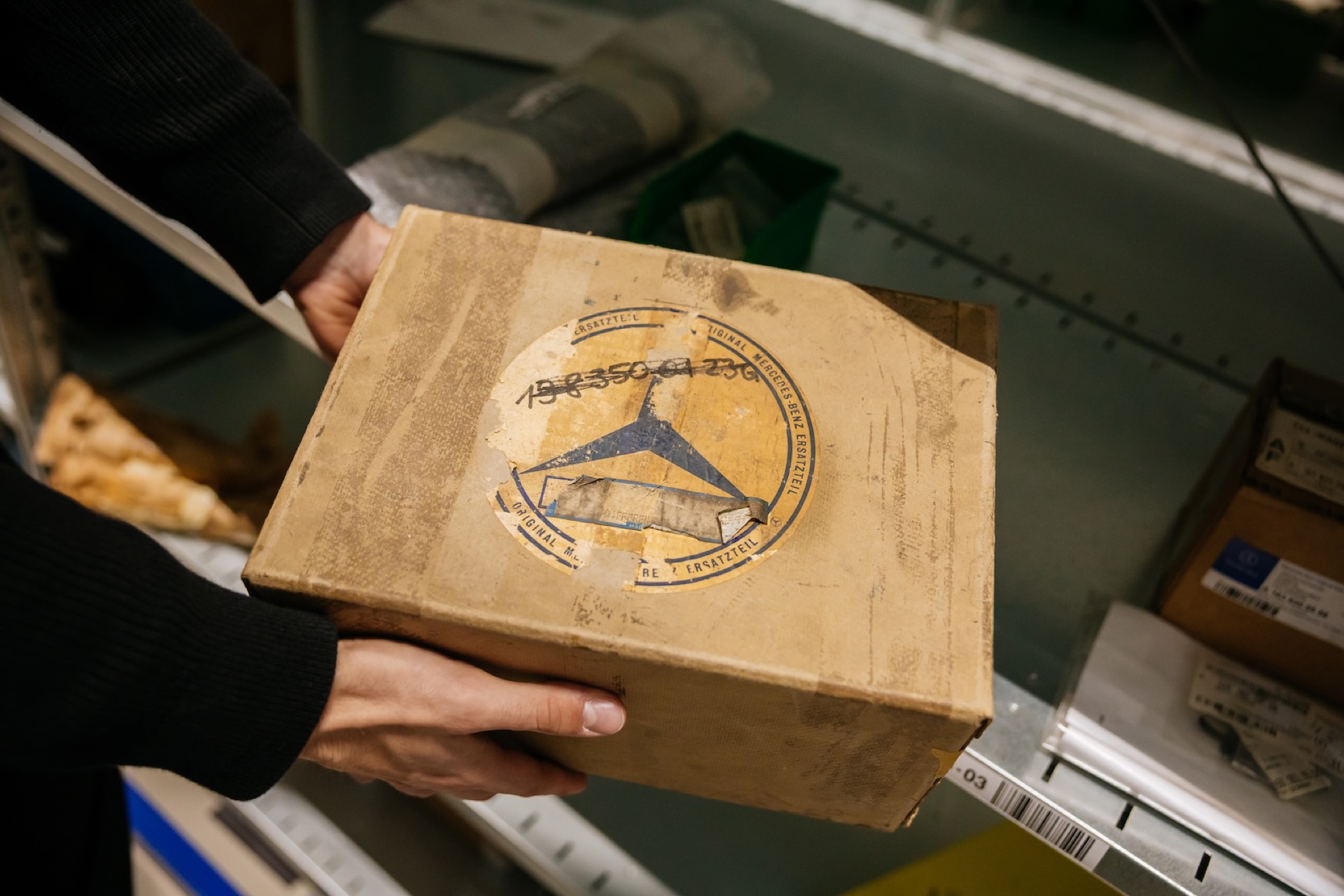
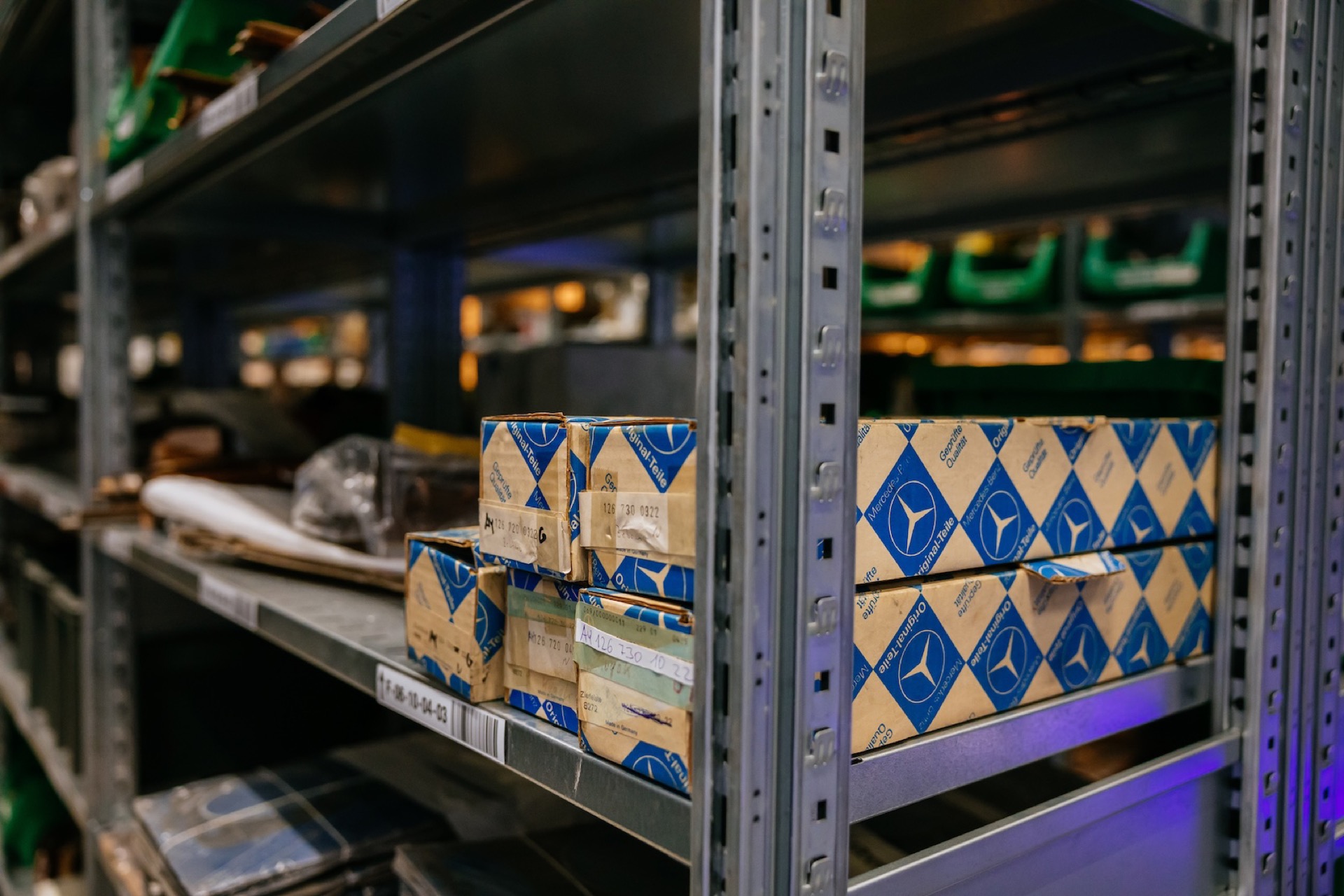
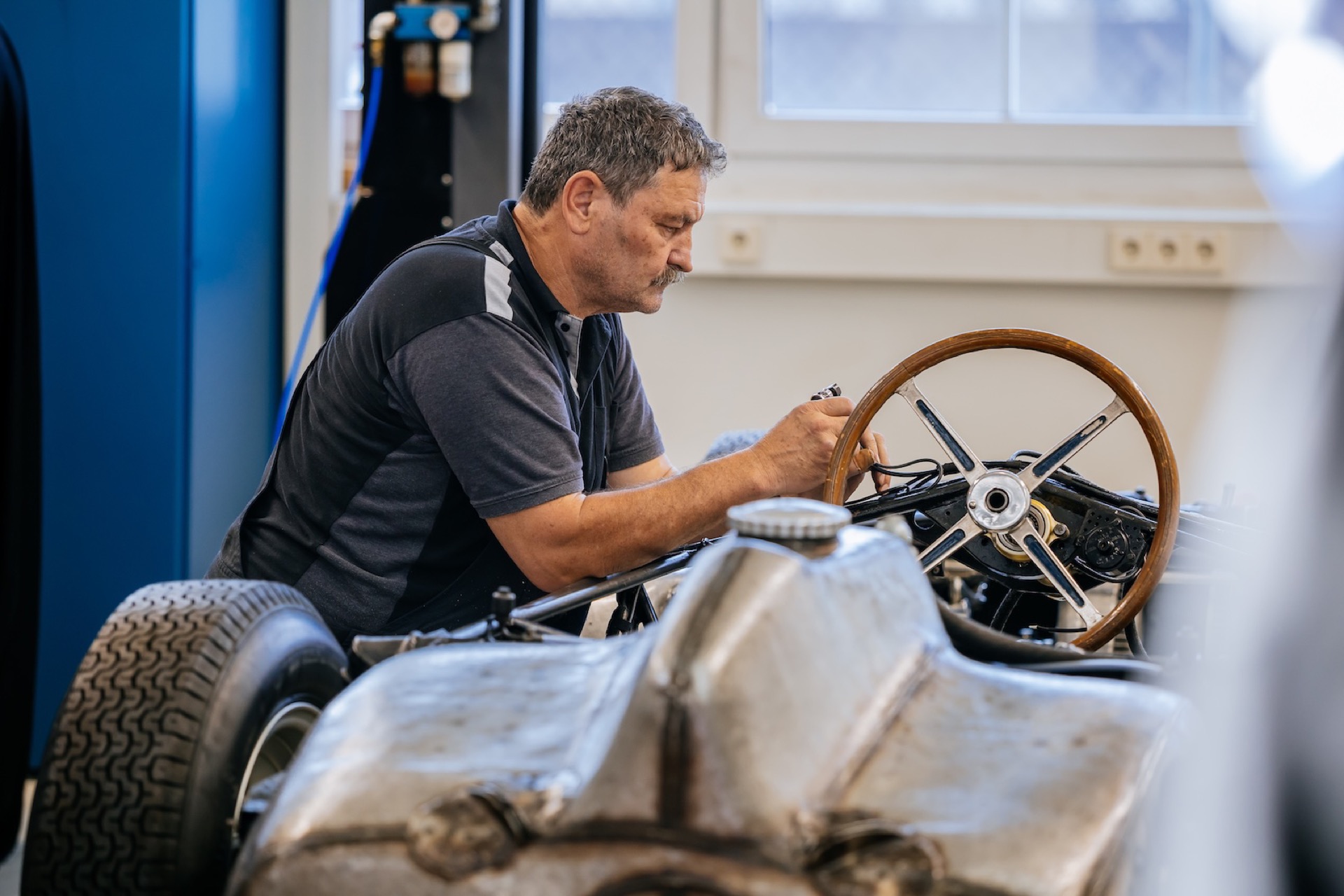
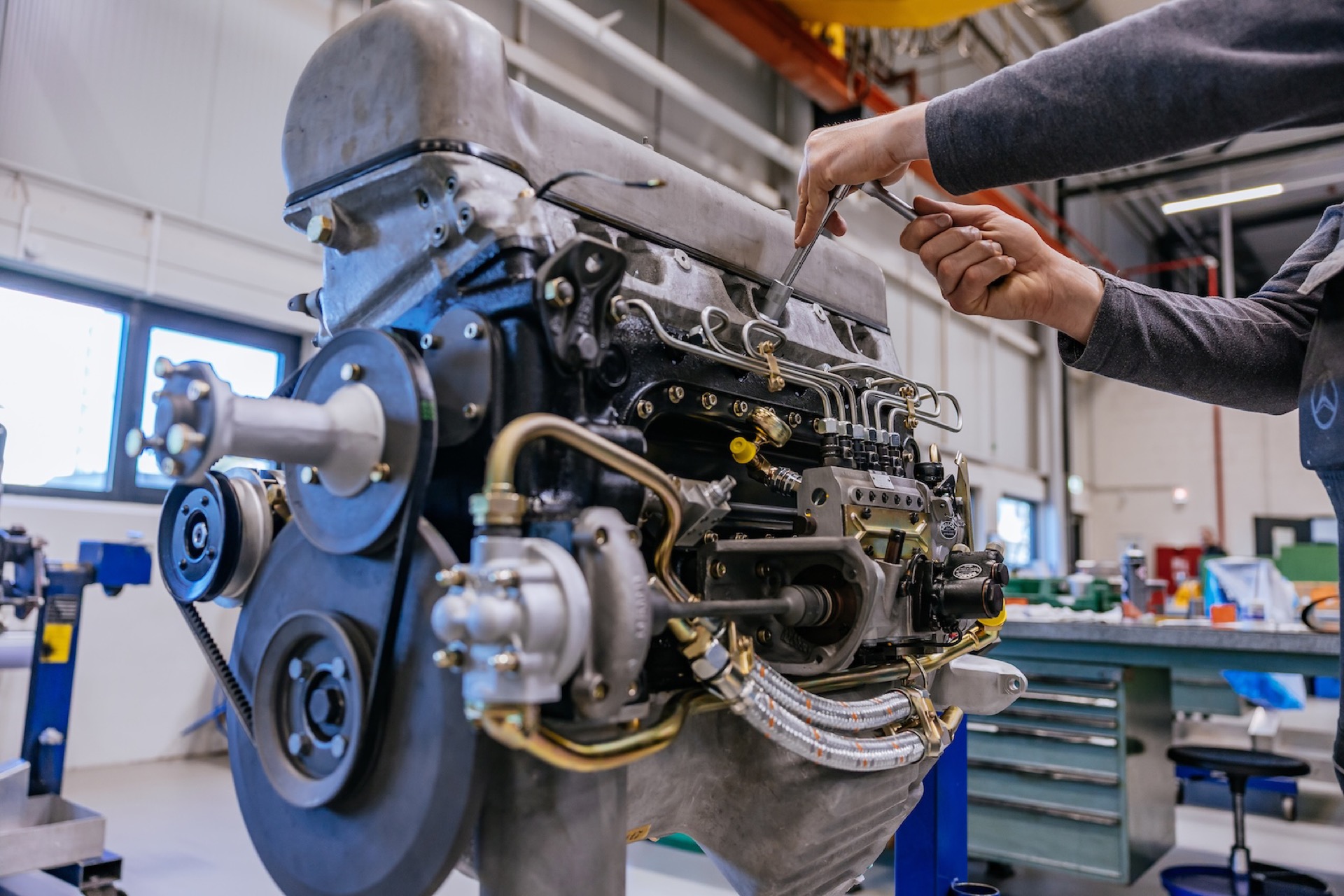
An increasing focus on digital activities and ever-tighter budgets have left many in the classic car community feeling rather neglected. For some manufacturers, celebrating their heritage has become little more than an exercise in paying lip service to the past.
Mercedes-Benz, however, is heading in precisely the opposite direction.
While manufacturers including BMW, Jaguar Land Rover, Opel, Porsche and the various brands within the Volkswagen and Stellantis groups have reduced their direct involvement in the classic car scene, Mercedes-Benz continues to expand its operations.
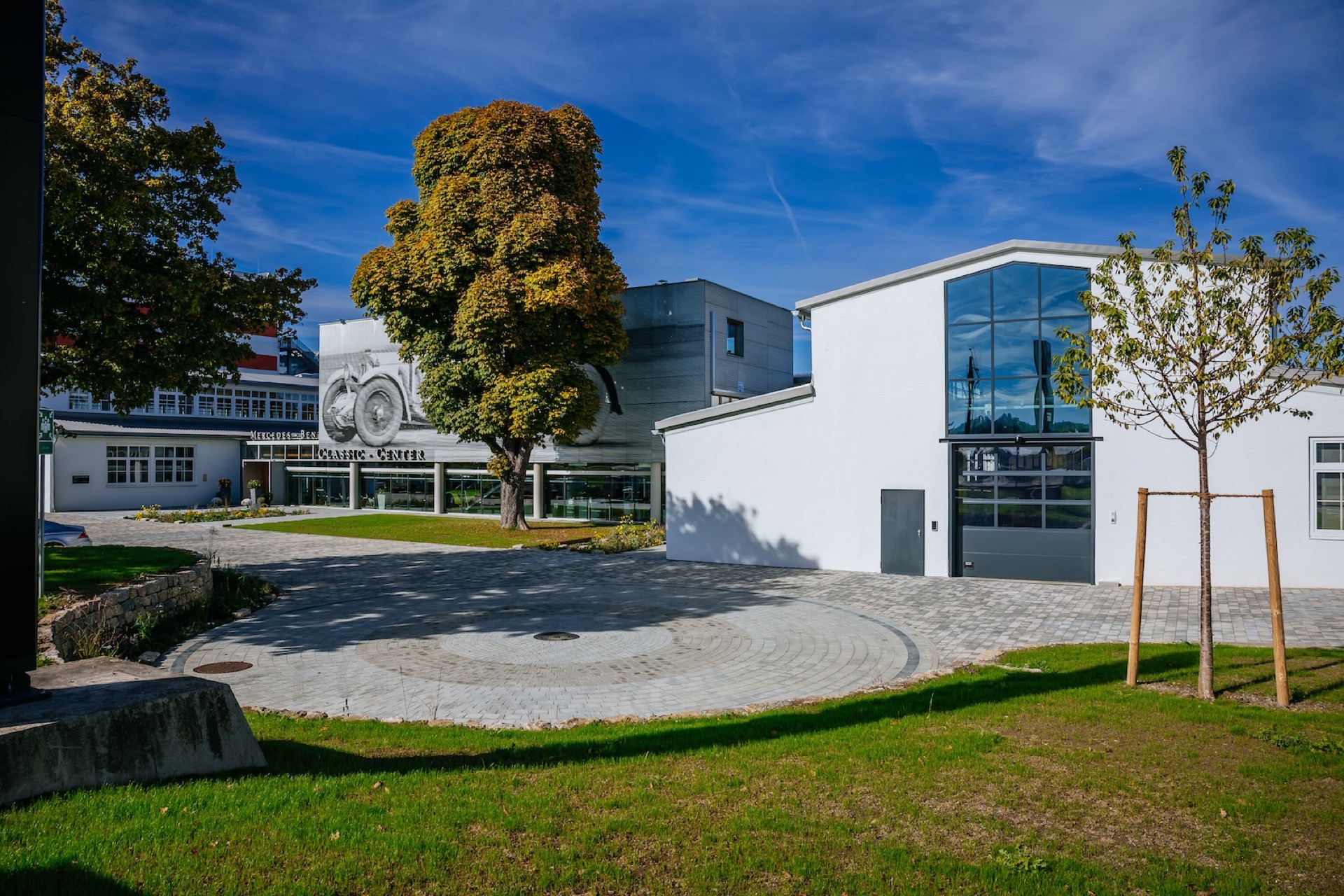
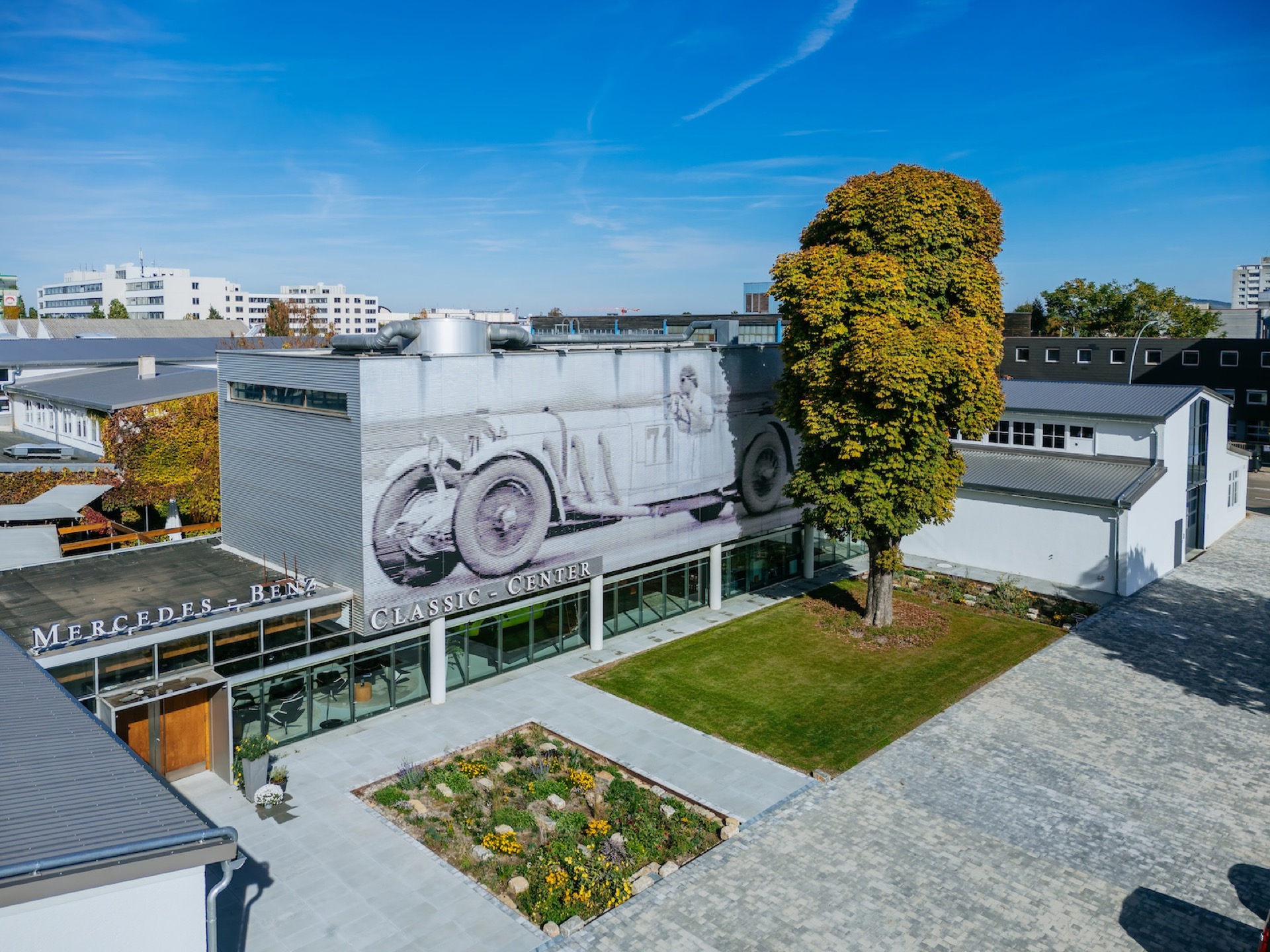
Four years ago, the manufacturer established a new Classic Center in a vast Boeing facility in Long Beach, catering to the important American market. Now, Mercedes-Benz Heritage has completed its expansion programme with a substantial enlargement of its existing Classic Center in Fellbach, just 15 minutes from the Mercedes-Benz Museum in Stuttgart.
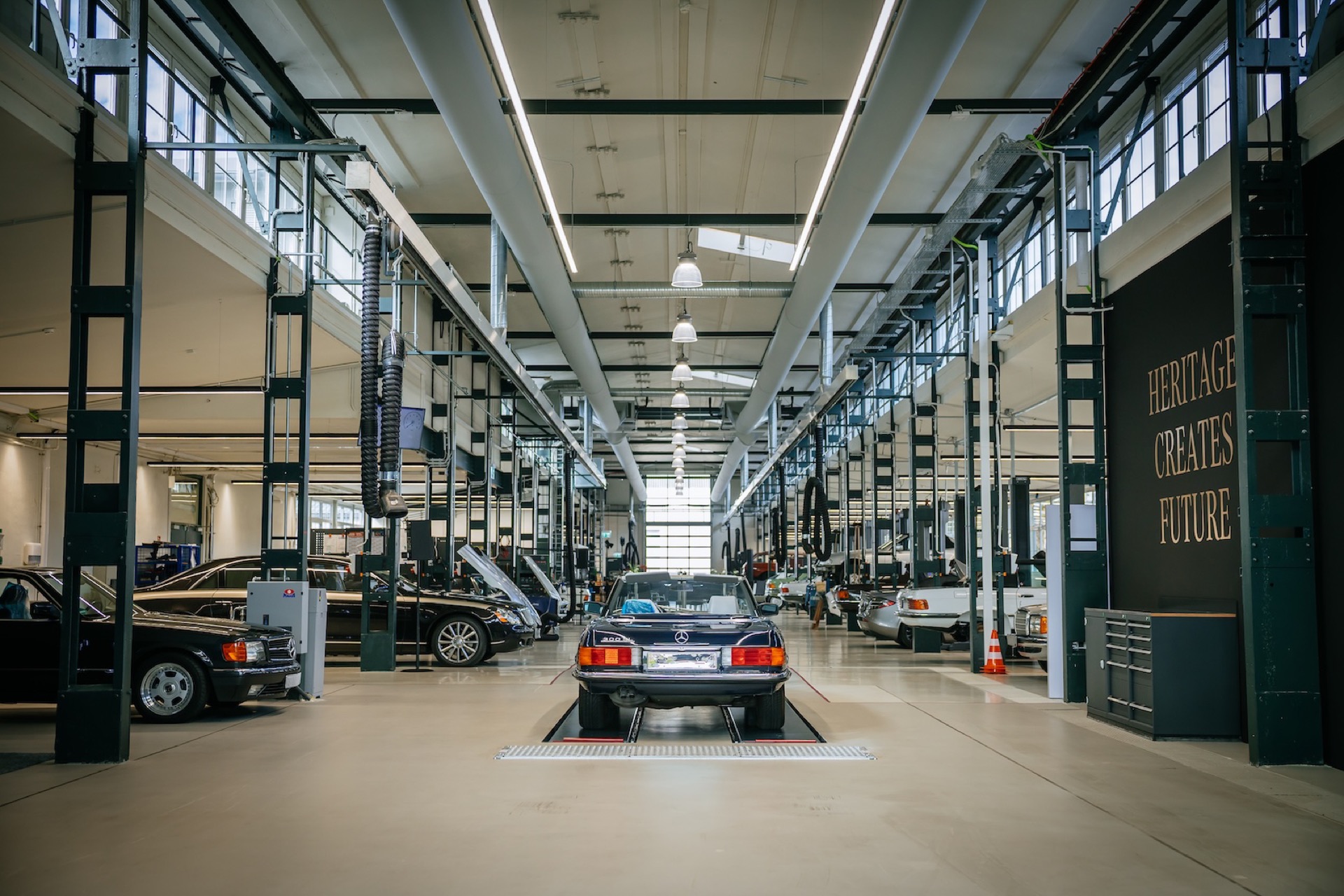
Following more than a year of redevelopment, the facility has more than doubled in size.
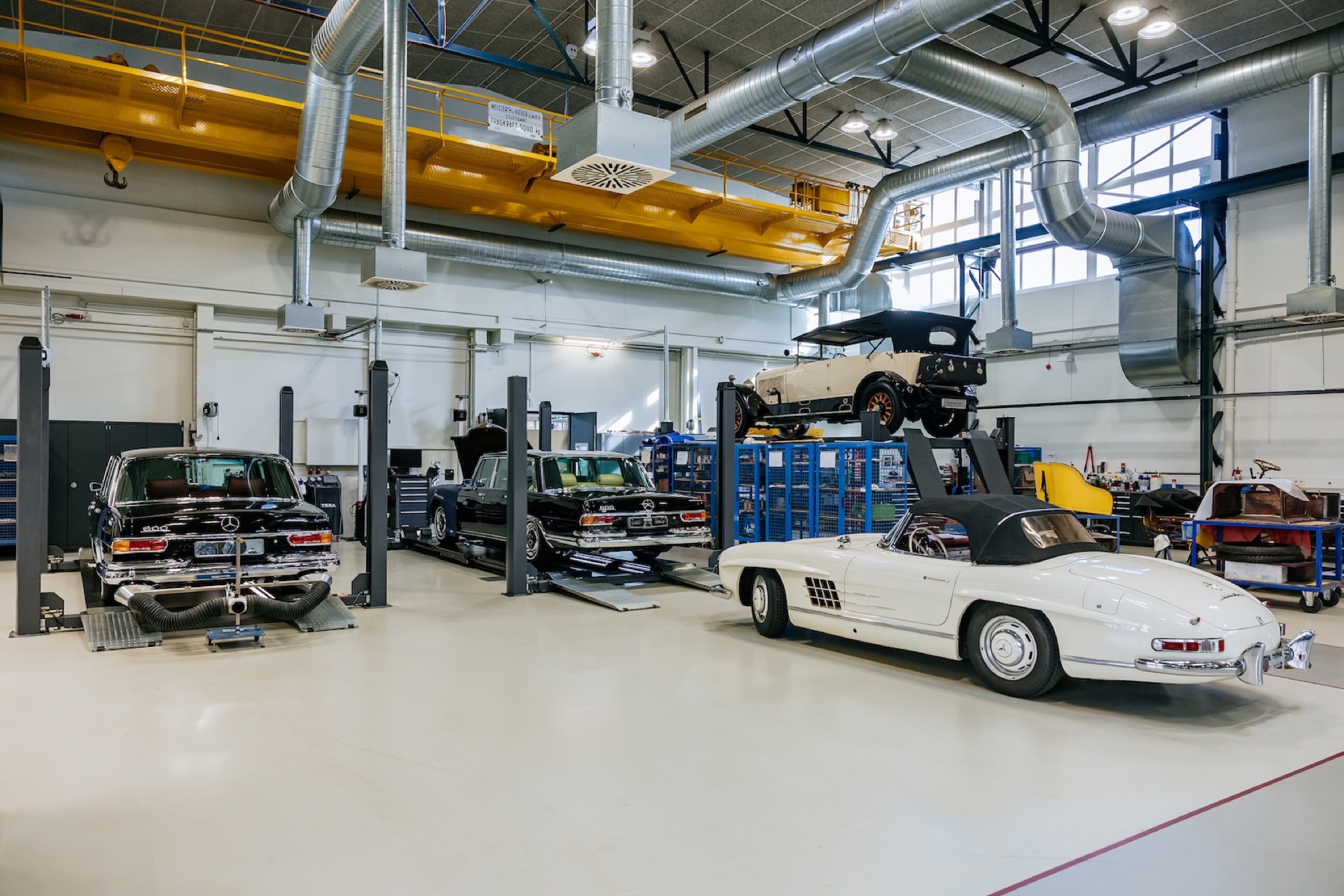
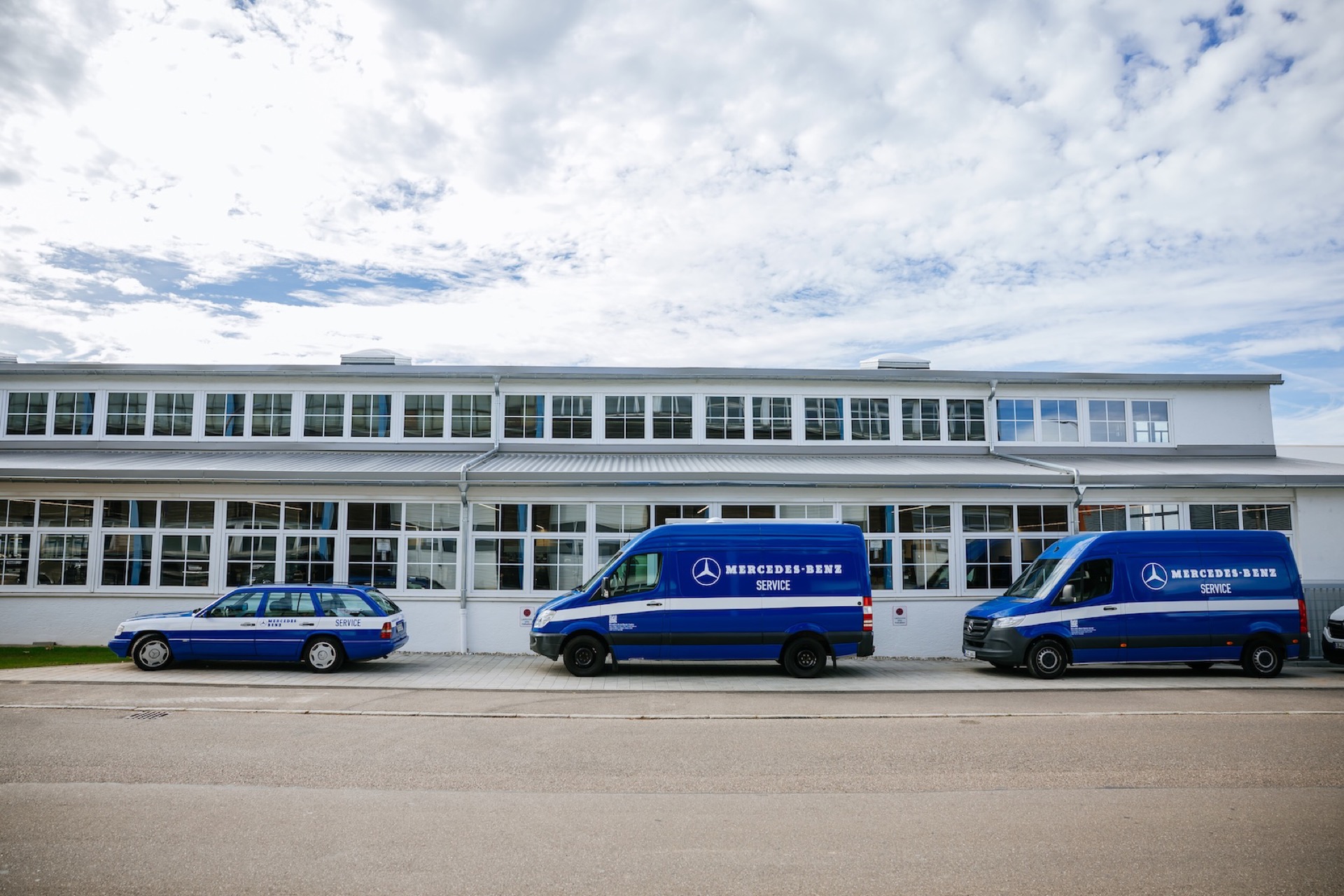
Under the leadership of site manager Thomas Armbrecht, Mercedes-Benz Heritage now operates across 18,000 square metres, offering a comprehensive range of services for classic Mercedes-Benz vehicles spanning every era and model generation.
Foto: Thomas Niedermueller / www.niedermueller.de
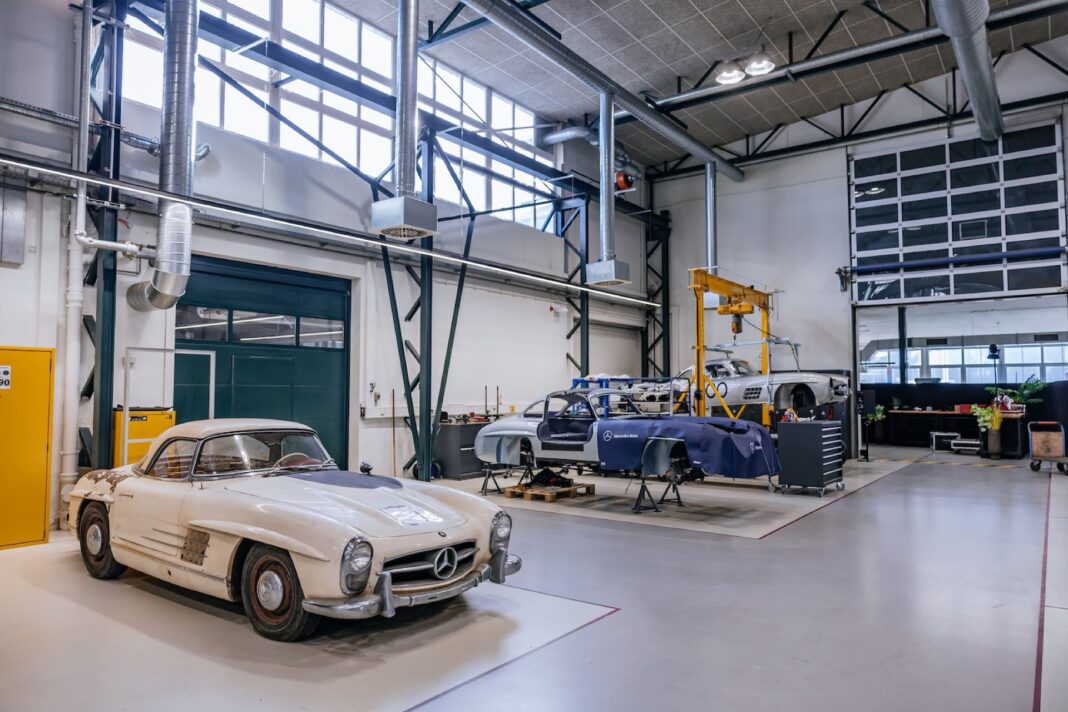
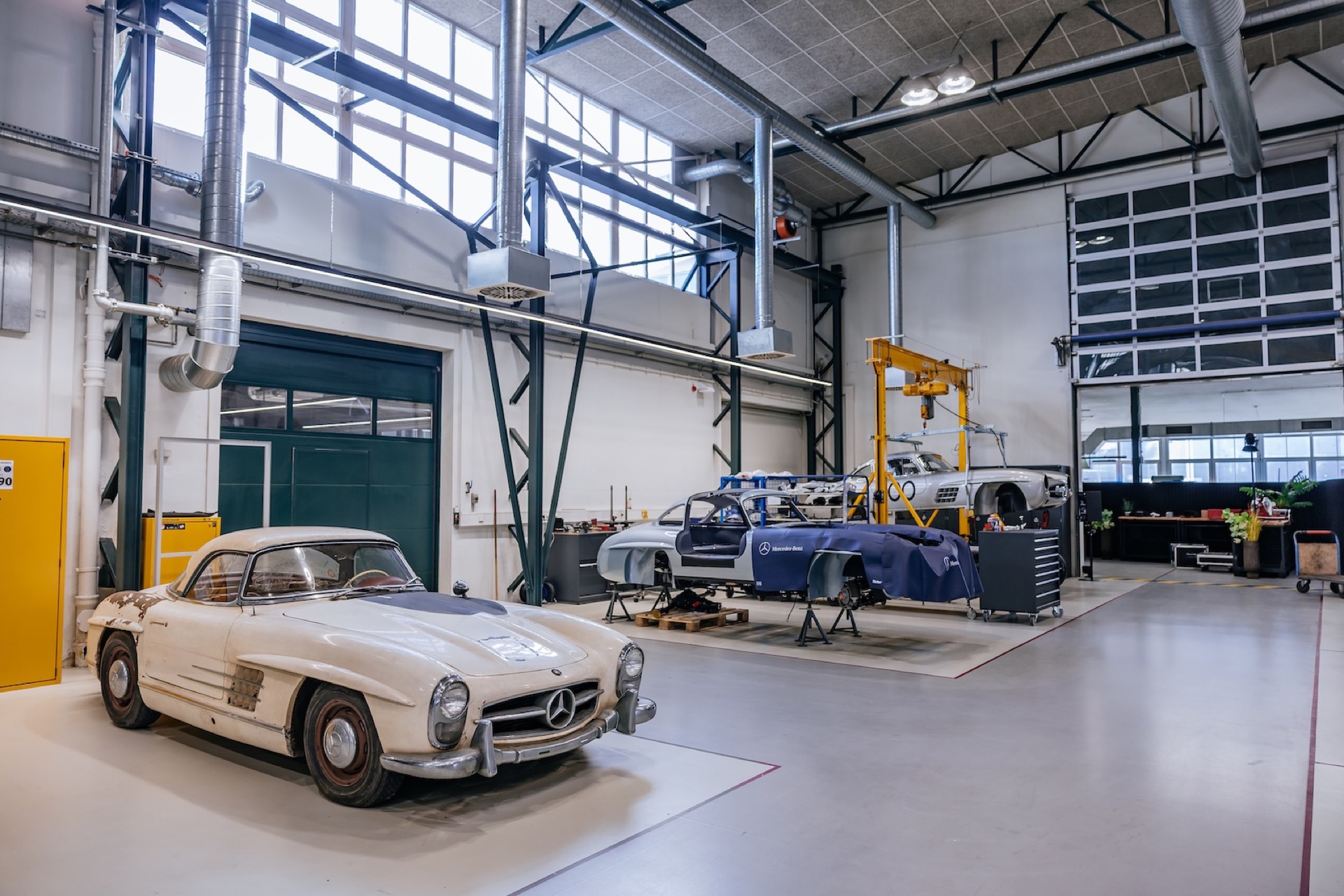
One of the most significant developments is the return of specialist work that previously had to be outsourced to external companies. The enormous new workshop building, internally designated Fellbach II, allows Mercedes-Benz Classic to bring these operations back under its own roof.
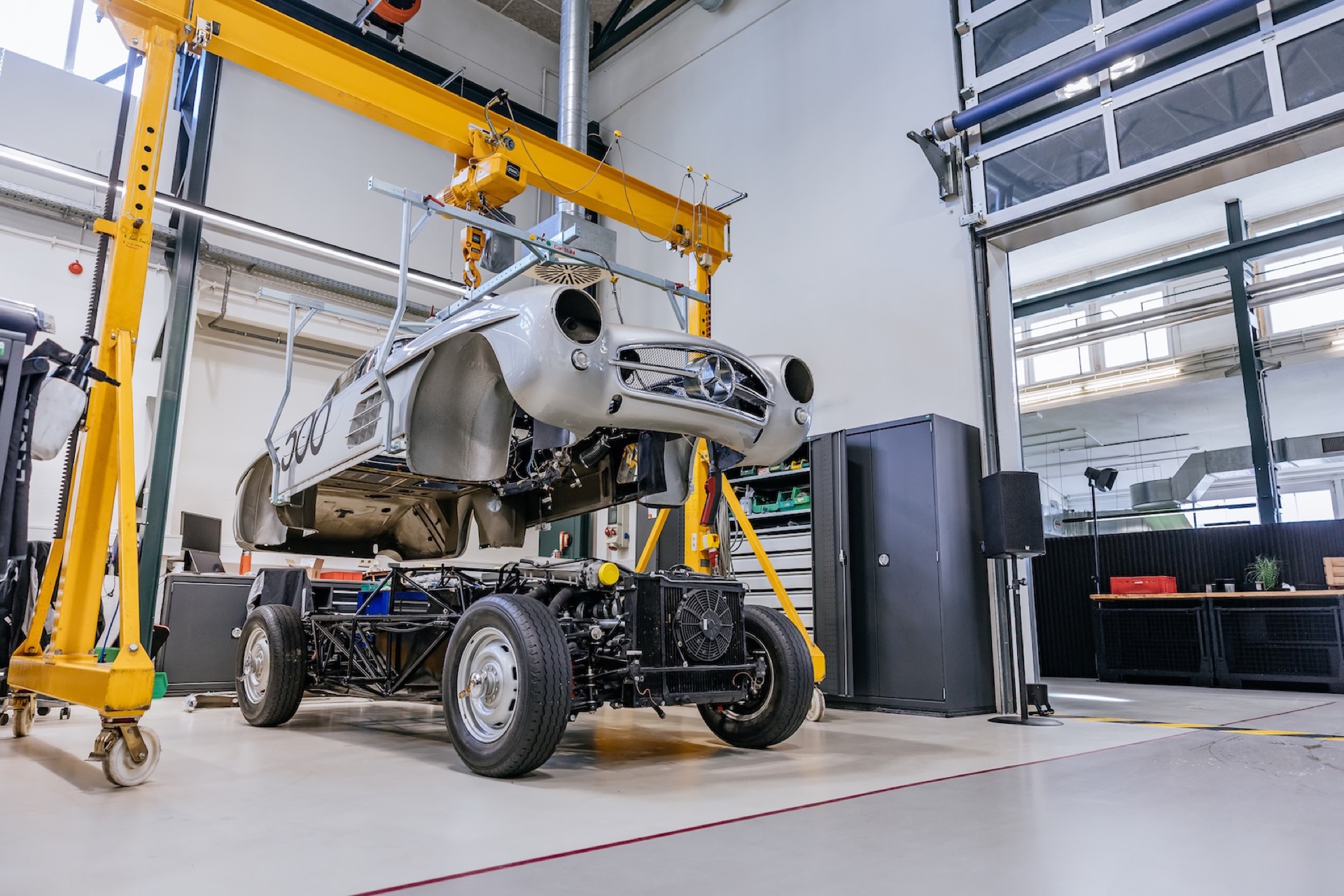
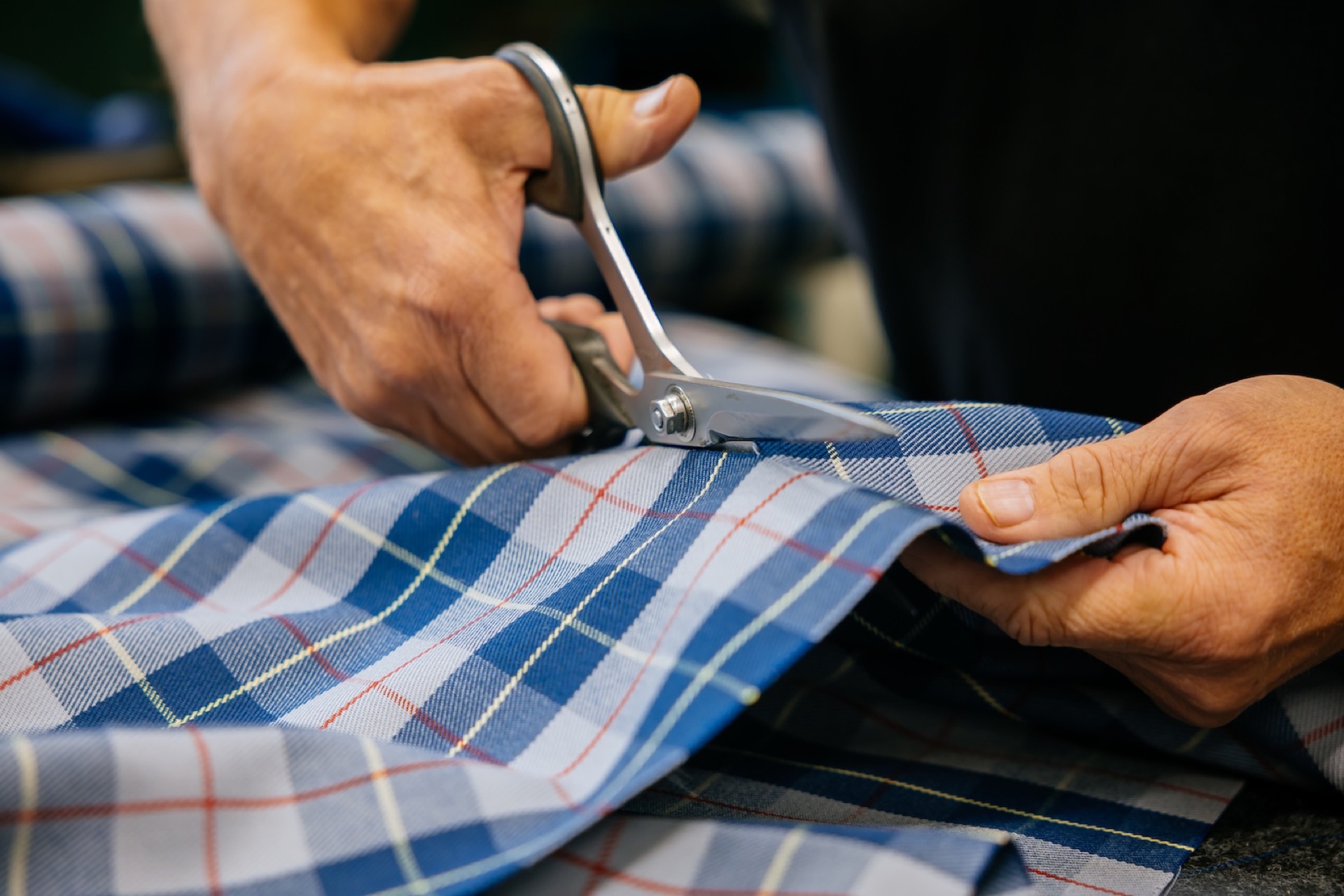
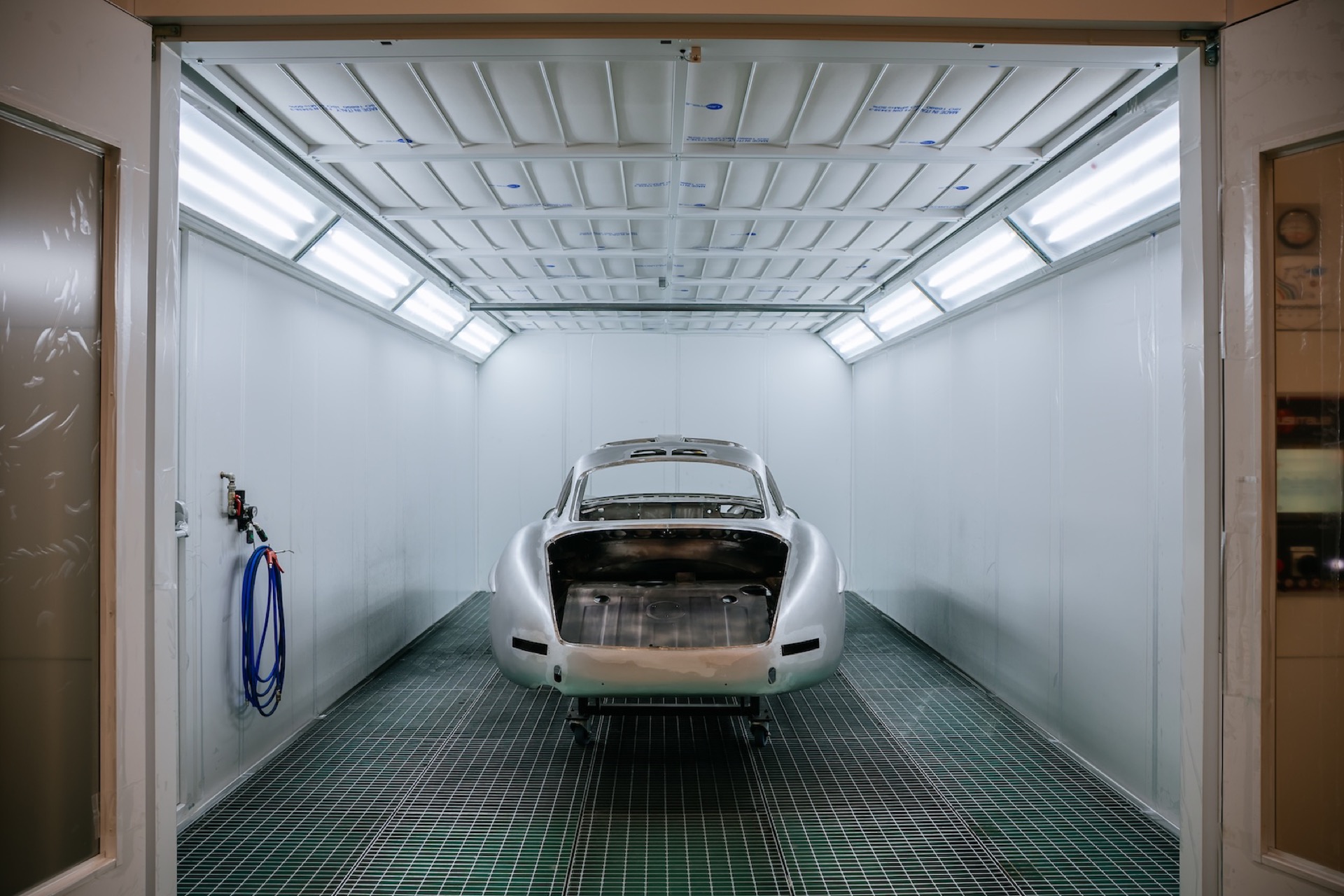
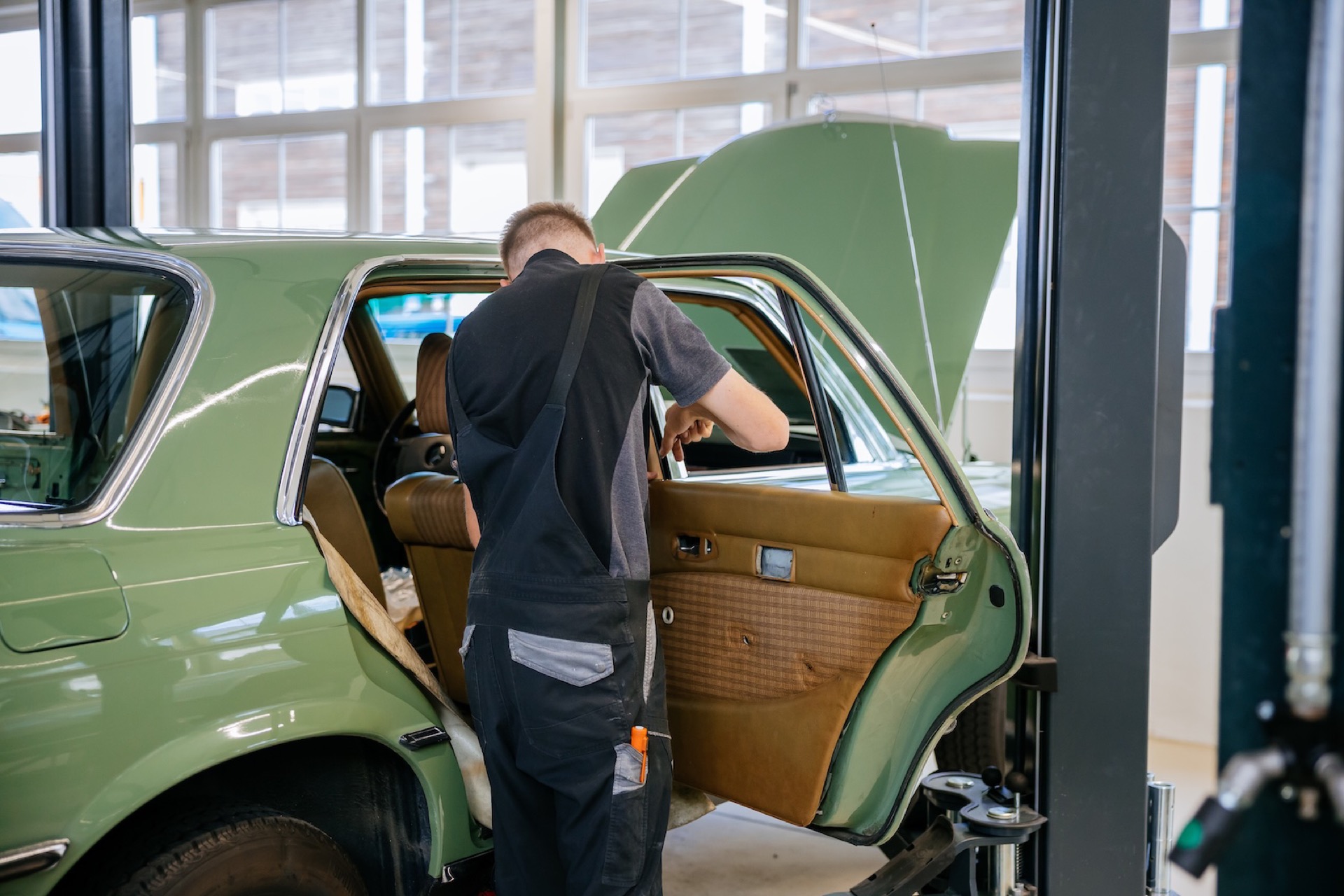
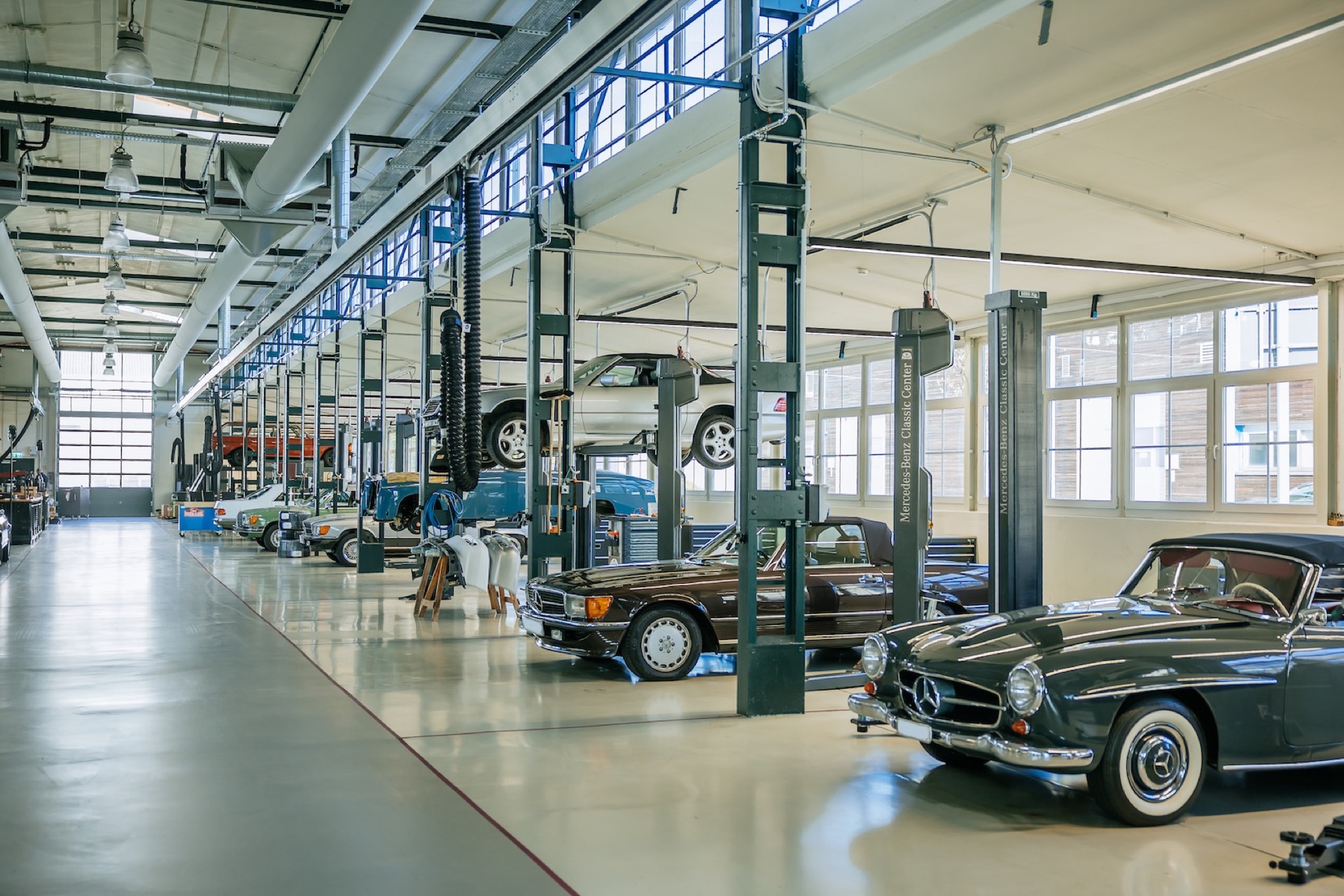
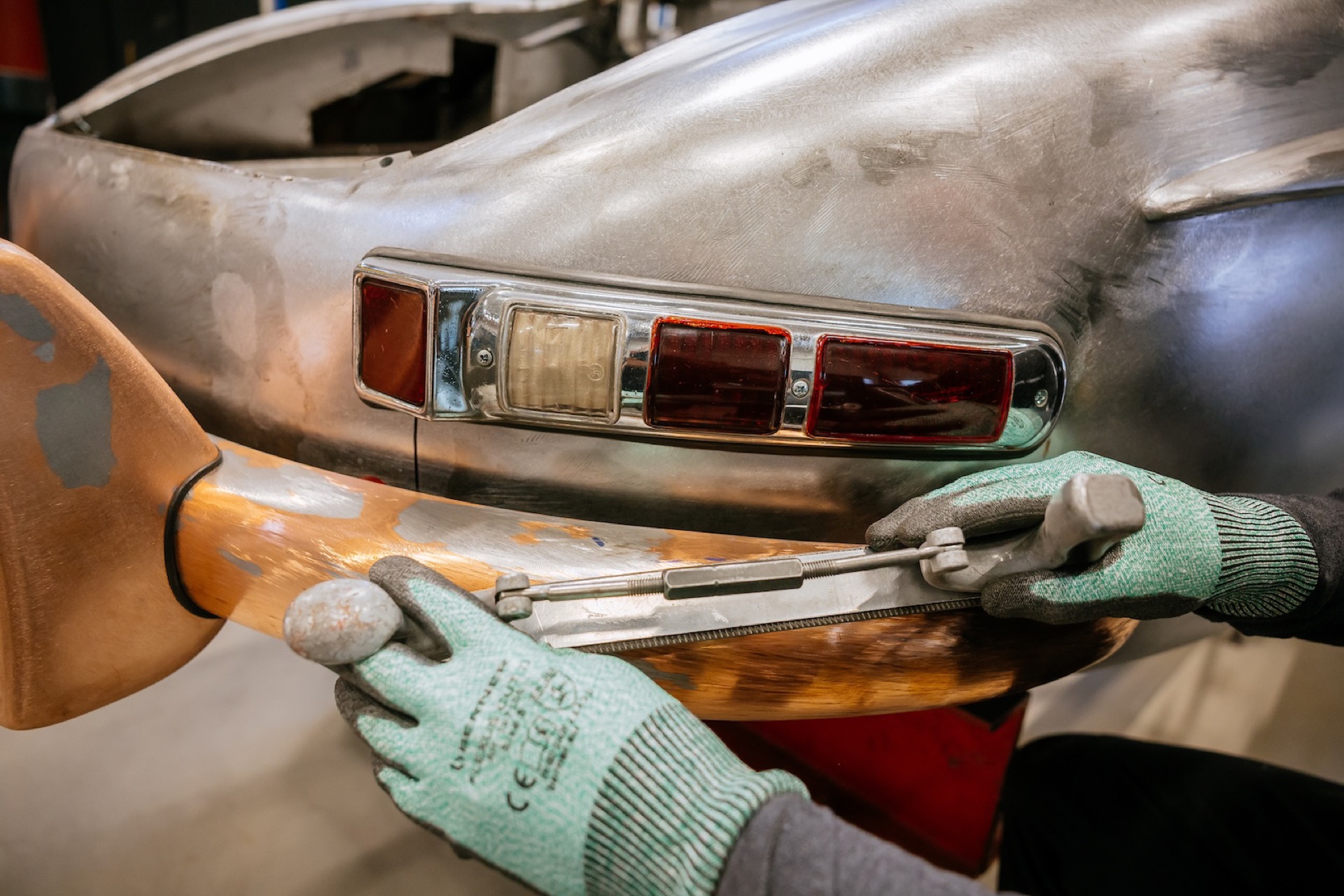
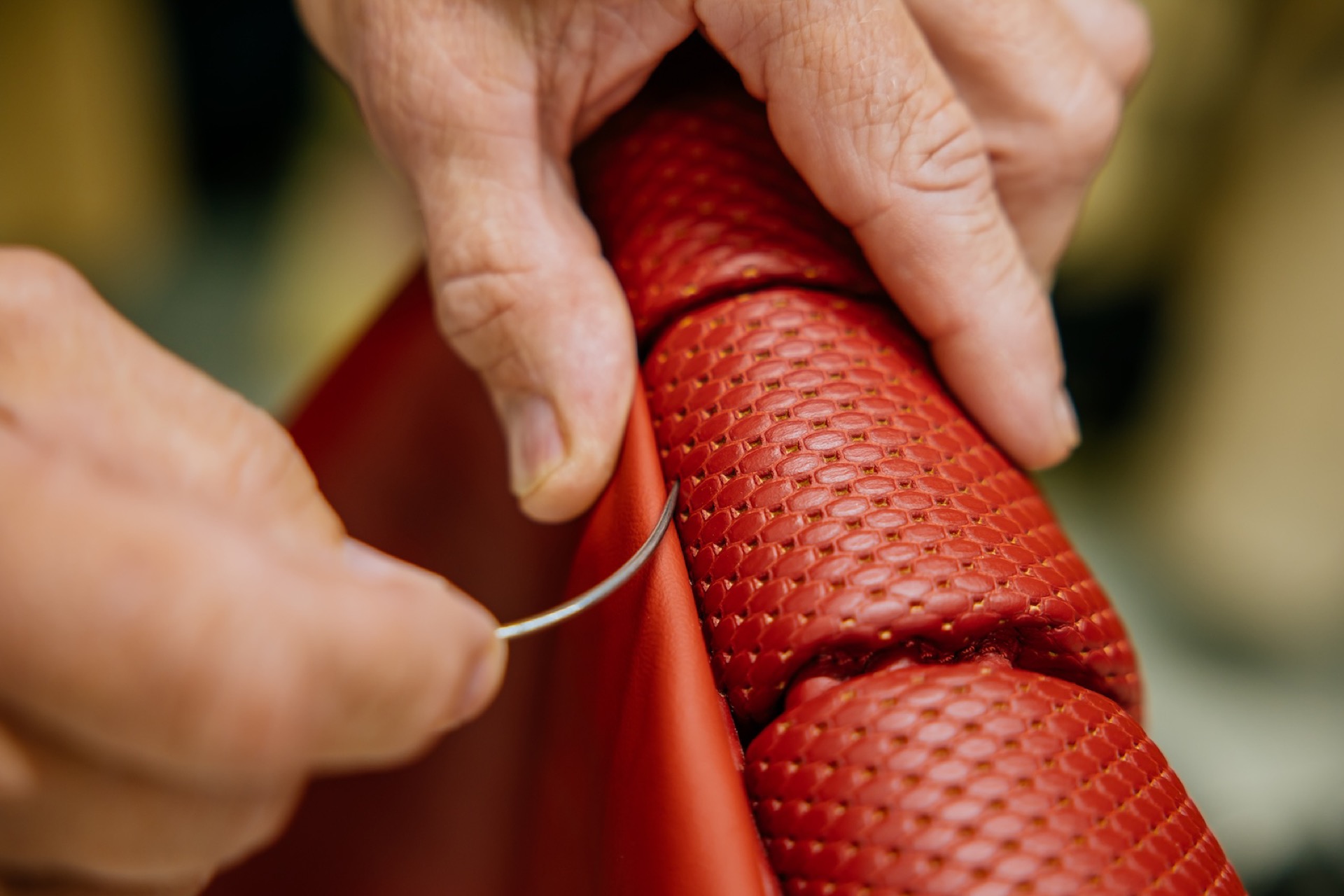
The expanded facilities include a new paint shop and engine test bench, alongside specialist machinery for metalworking and the machining of engine components. Dedicated areas have also been created for upholstery and electronics work, allowing a much broader range of restoration and maintenance activities to be carried out entirely in-house.
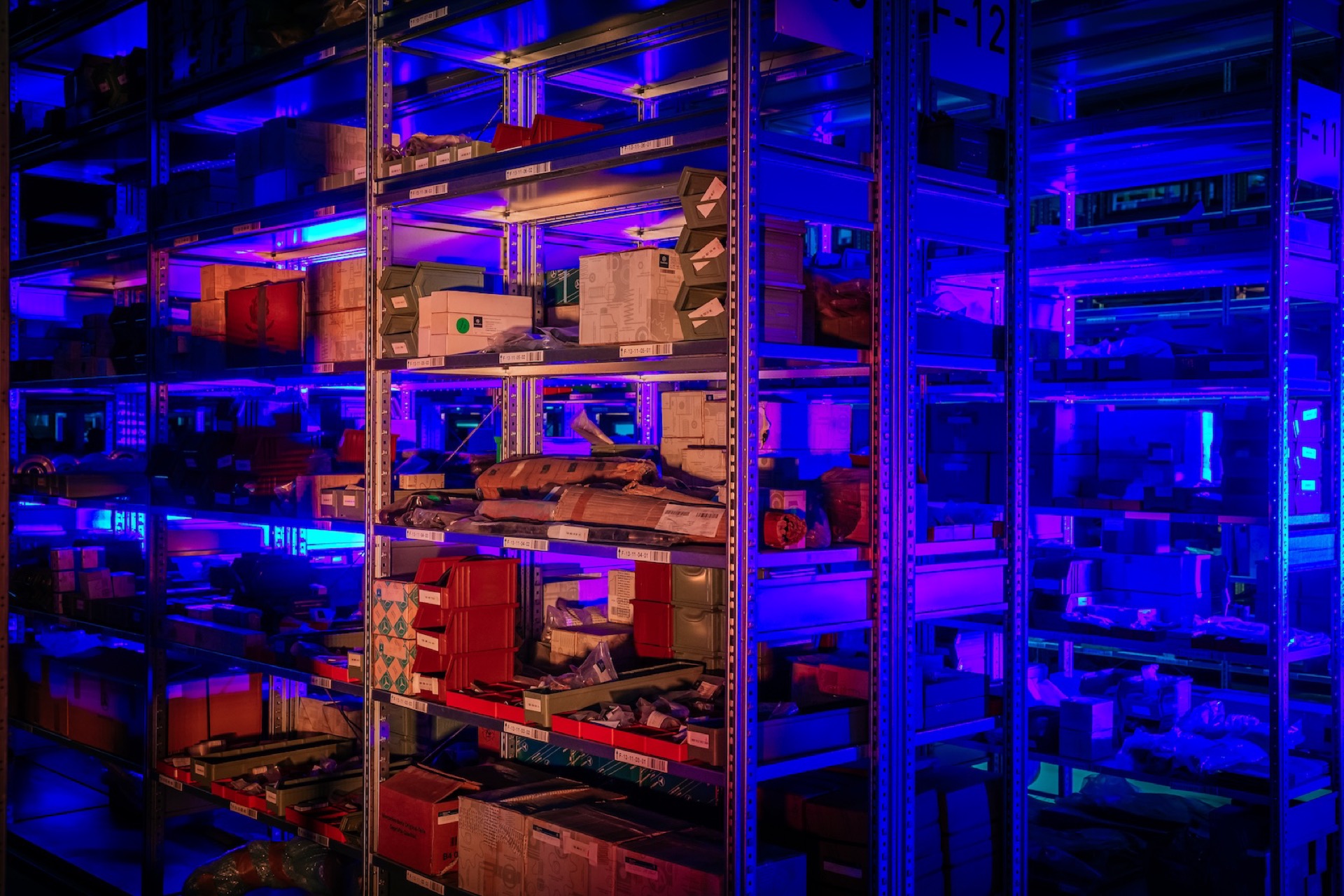
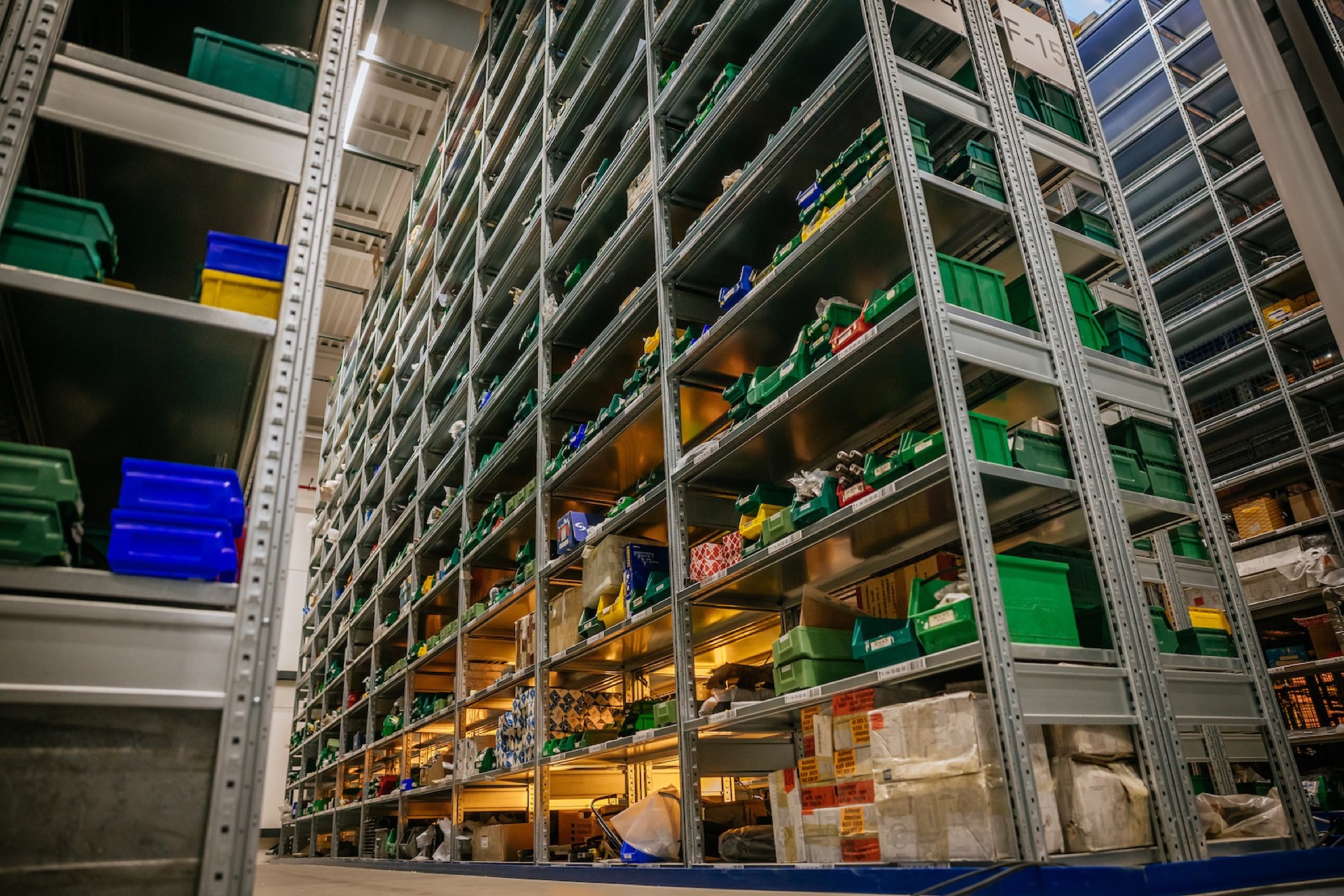
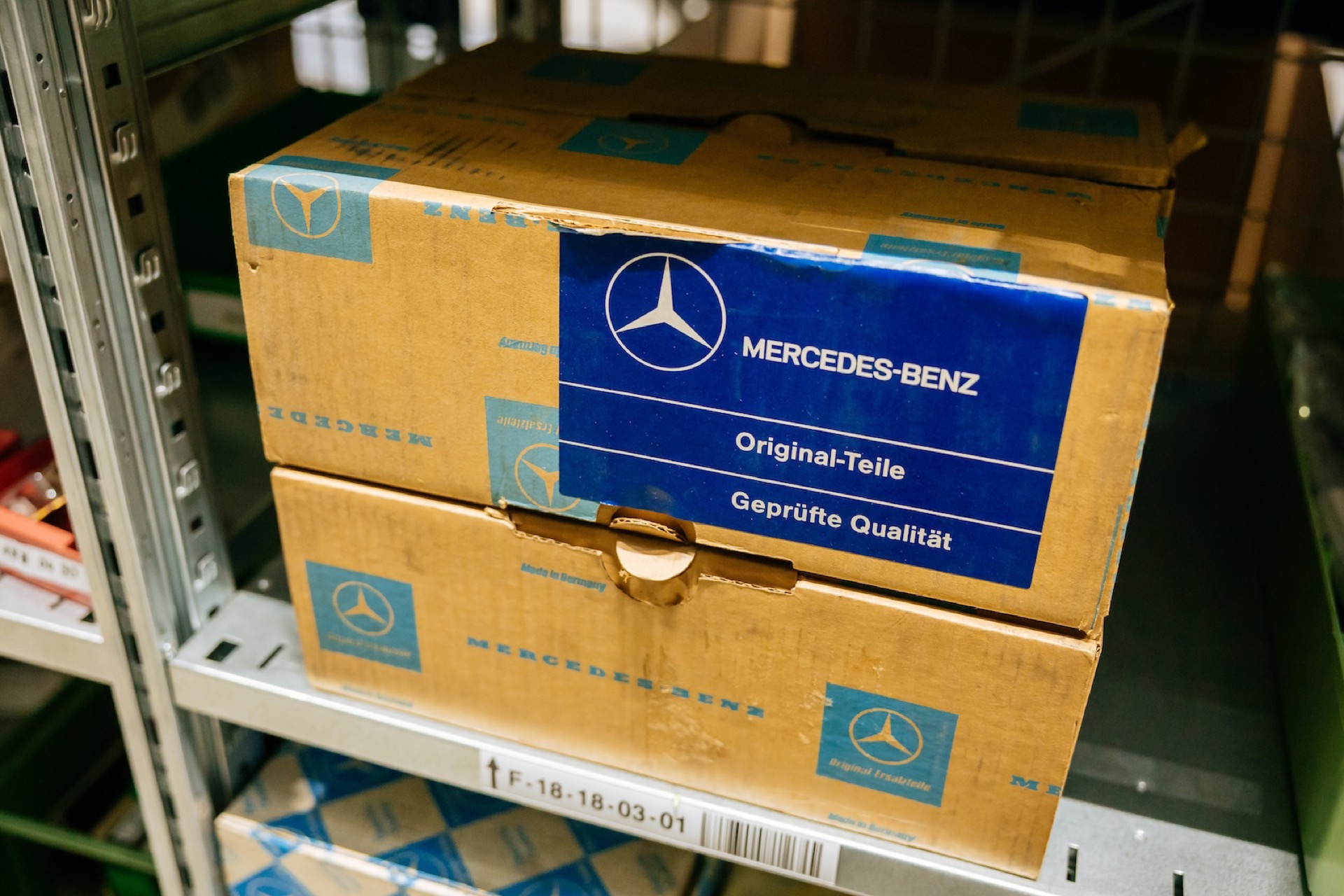
As a result, Mercedes-Benz can now offer everything from routine servicing and repairs to comprehensive restorations, vehicle sales, inspections, valuations and the supply of original parts.
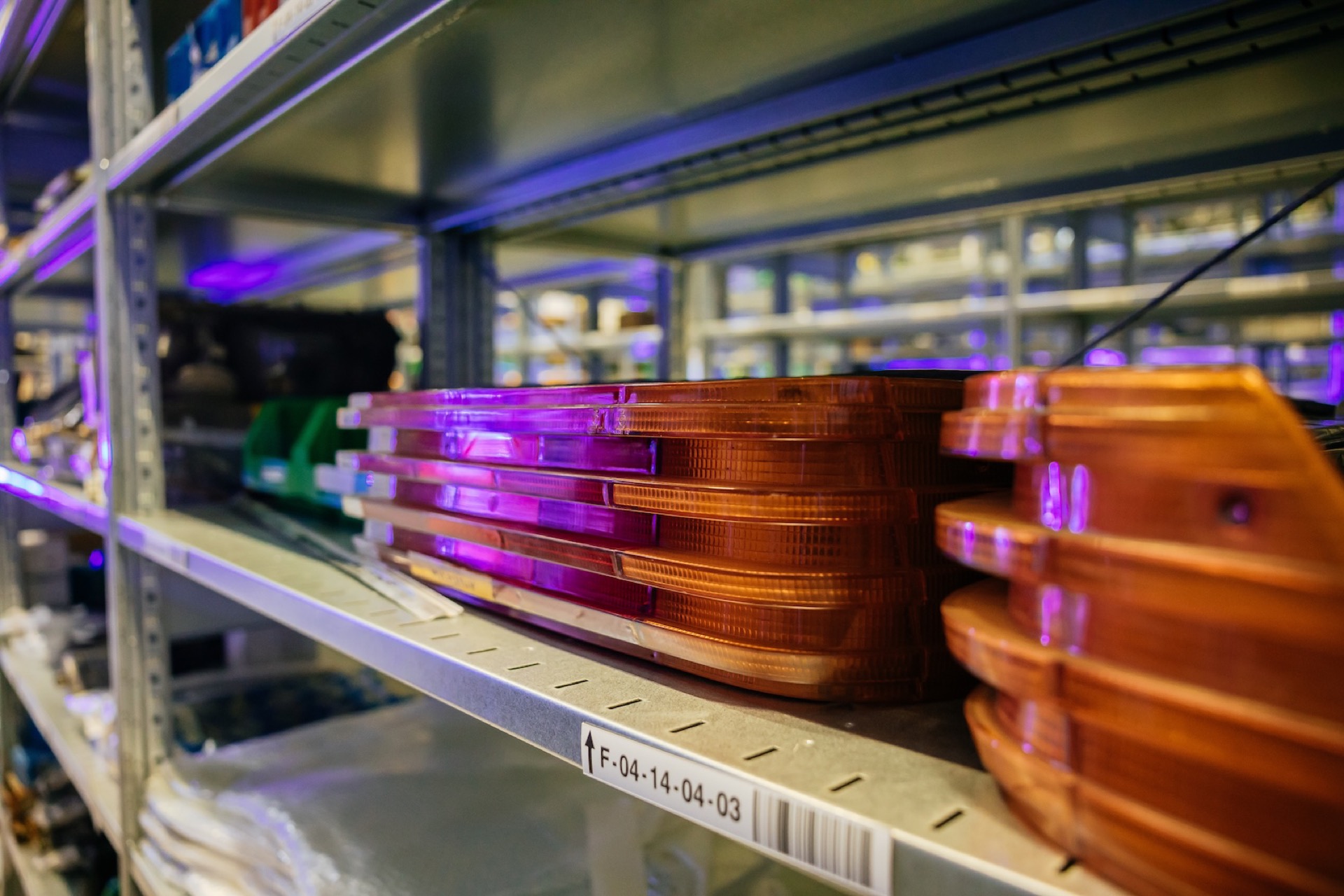
With approximately 10,000 square metres dedicated to workshop operations and ten vehicle lifts with double workstations, the Fellbach facility is now the world’s largest restoration, servicing and repair centre for classic Mercedes-Benz vehicles.
Foto: Thomas Niedermueller / www.niedermueller.de
“The extensive expansion of the Classic Center represents a milestone for Mercedes-Benz Heritage,” says Marcus Breitschwert, CEO of Mercedes-Benz Heritage.
“Our comprehensive range of services, dedicated to the long-term preservation of classic Mercedes-Benz vehicles, demonstrates what our brand stands for: the highest quality, the preservation of our history and a clear focus on the future.”
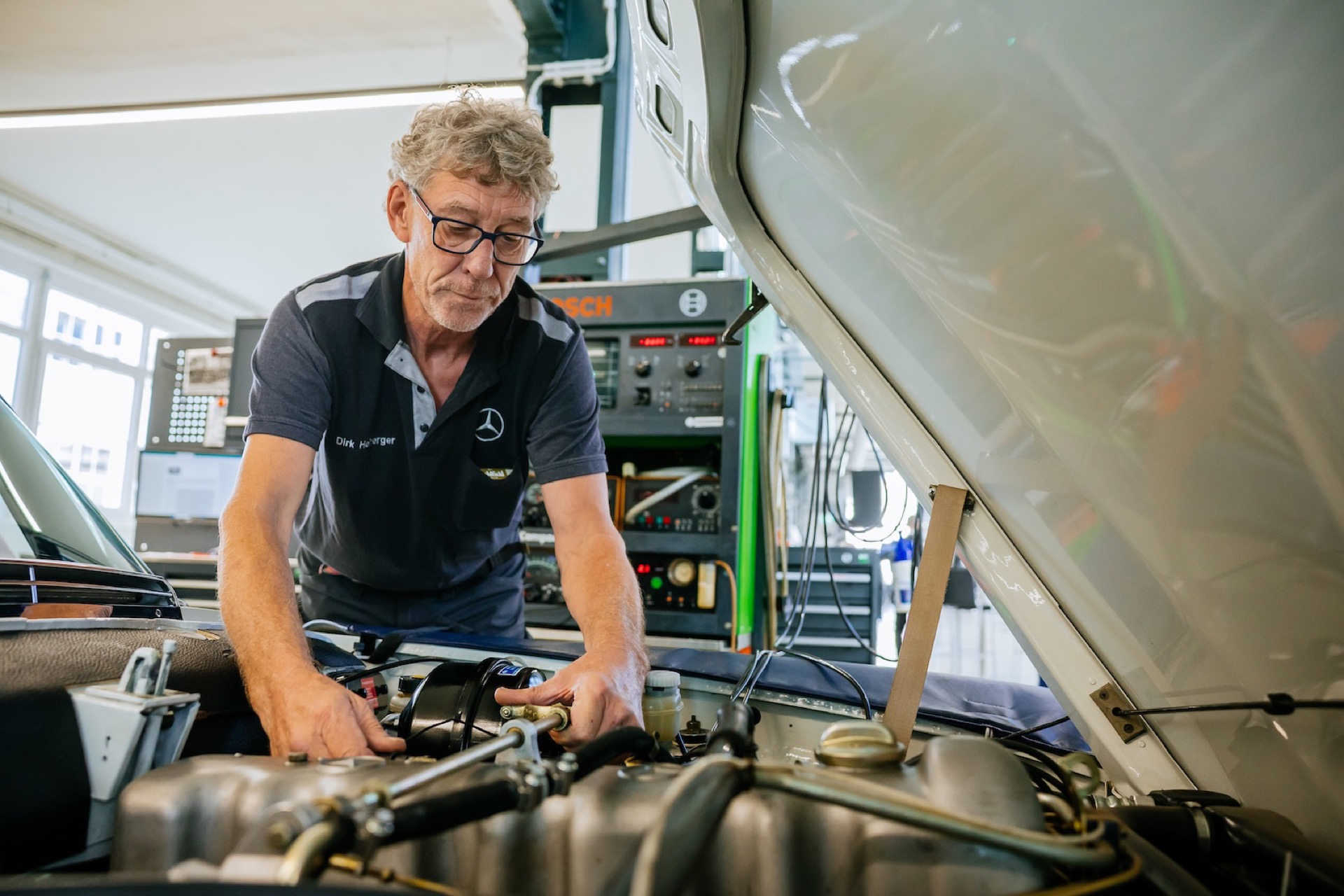
The expansion isn’t limited to buildings and equipment. The workforce at Fellbach has also grown to 70 employees, with 60 specialists working directly in the workshops. Additional experts from various specialist disciplines are expected to join the team.
“We’re going on the offensive,” explains Thomas Armbrecht. “I want to maintain control over the quality of the work, whether it’s a Mercedes 300 SL or a modern classic.”
Foto: Thomas Niedermueller / www.niedermueller.de
That commitment to quality also extends to the preservation of specialist knowledge, something that has become increasingly important as experienced craftsmen approach retirement and the industry faces a growing shortage of traditional skills.
At Fellbach, experienced specialists work closely with the next generation of technicians, passing on expertise that cannot necessarily be acquired through conventional automotive training.
Through dedicated mentoring programmes, young employees who have completed apprenticeships in modern automotive disciplines spend extended periods working alongside experienced craftsmen. The aim is to ensure that the knowledge required to restore, maintain and repair historic Mercedes-Benz vehicles remains within the company for decades to come.
It is an investment that goes well beyond the immediate commercial opportunities presented by the growing classic car market.
Foto: Thomas Niedermueller / www.niedermueller.de
Alongside its customer-facing activities, the Classic Center has also been responsible for maintaining Mercedes-Benz’s own historic vehicle collection for decades. Today, that collection comprises more than 1,100 vehicles, spanning the manufacturer’s extraordinary automotive history.
Original documentation from the corporate archives helps preserve the individual histories of these vehicles, from historic Grand Prix racing cars to the very last examples produced on the assembly line at the end of a model’s production run.
For Mercedes-Benz, the investment in Fellbach II is therefore about considerably more than creating additional workshop capacity. It represents a commitment to keeping its automotive heritage alive, ensuring that both the vehicles and the expertise required to preserve them remain available to future generations.
At a time when so many manufacturers are reducing their involvement in the classic car world, Mercedes-Benz is making a strong statement. Rather than simply celebrating its history in marketing campaigns and anniversary presentations, the Stuttgart manufacturer is investing heavily in protecting it.
Foto: Thomas Niedermueller / www.niedermueller.de